
Why Dogs Jump Up
You arrive home after being out for a while.
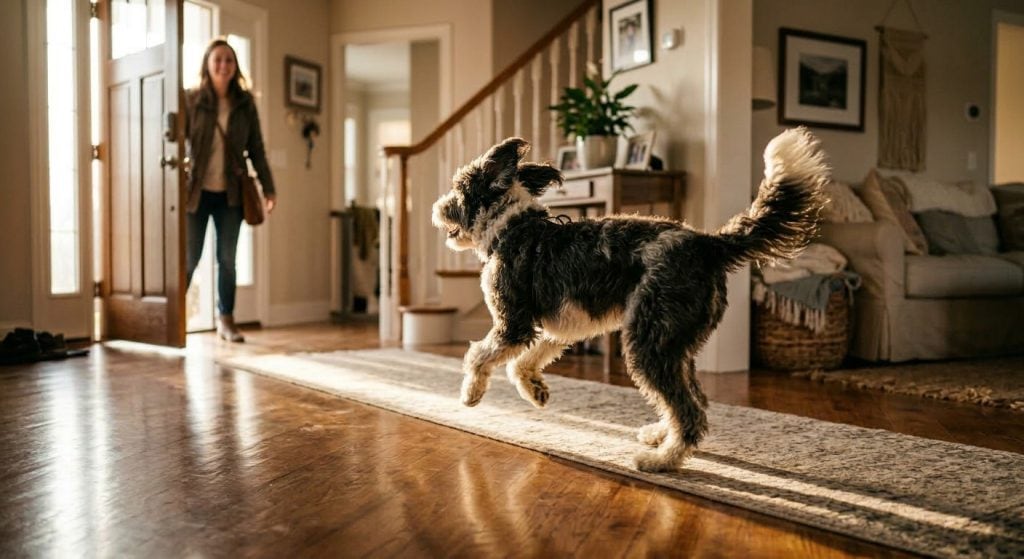
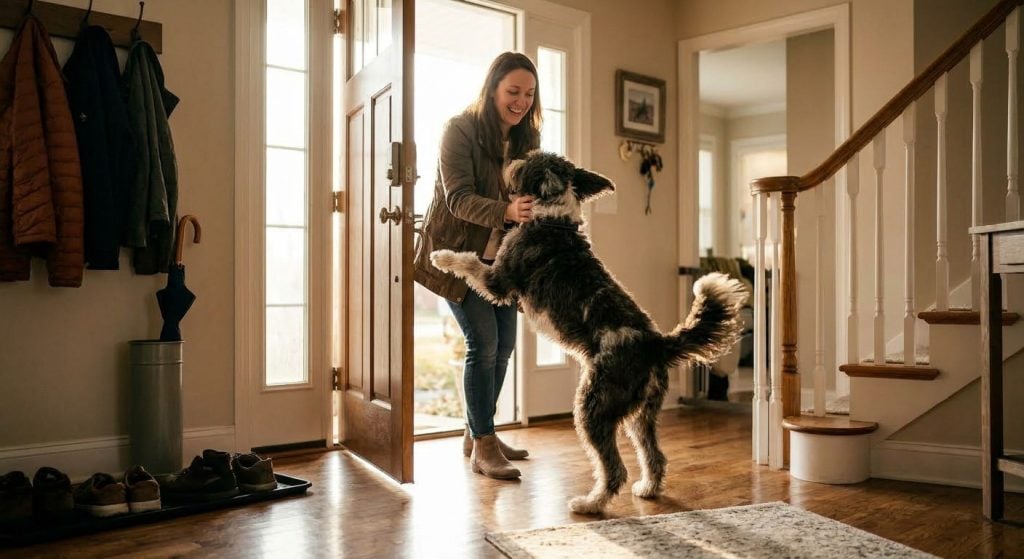
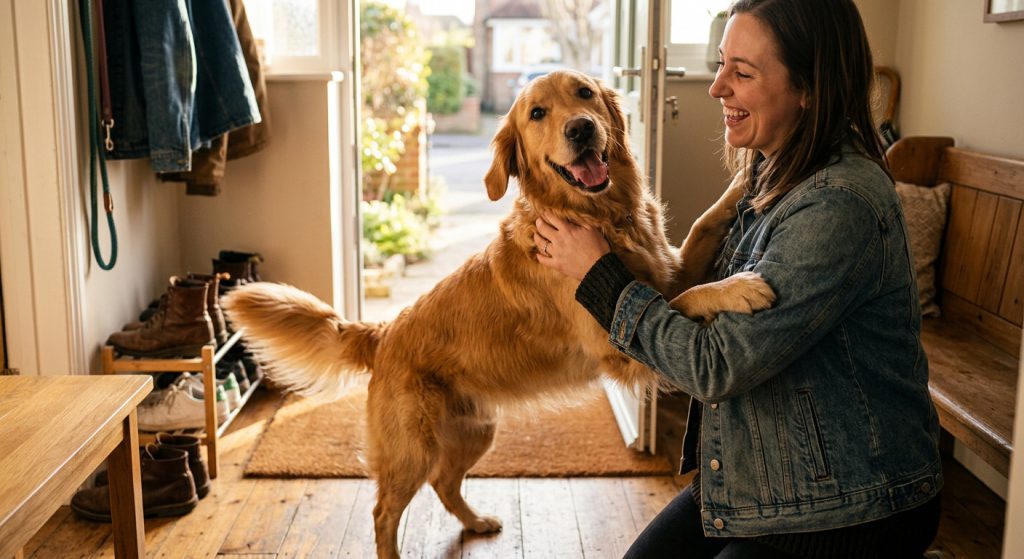
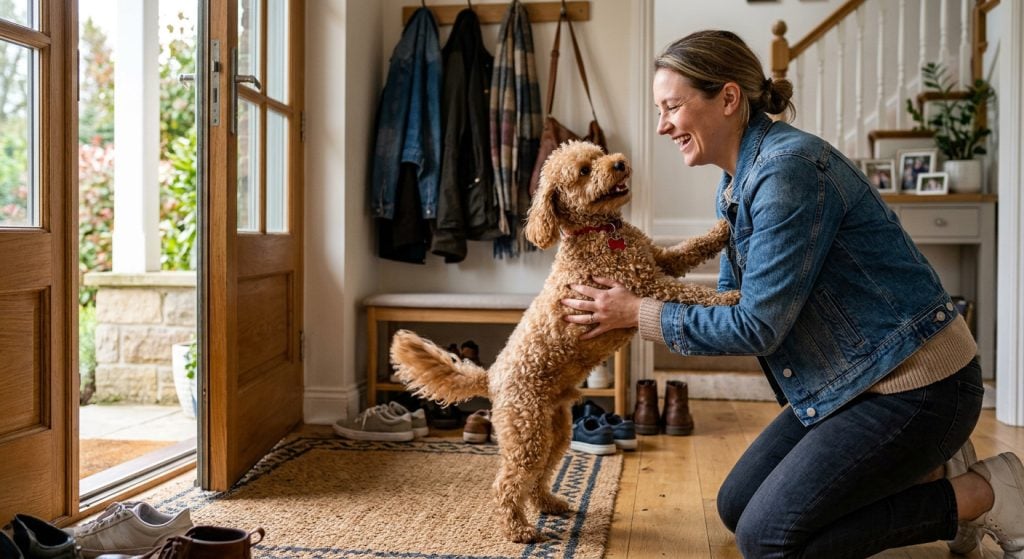
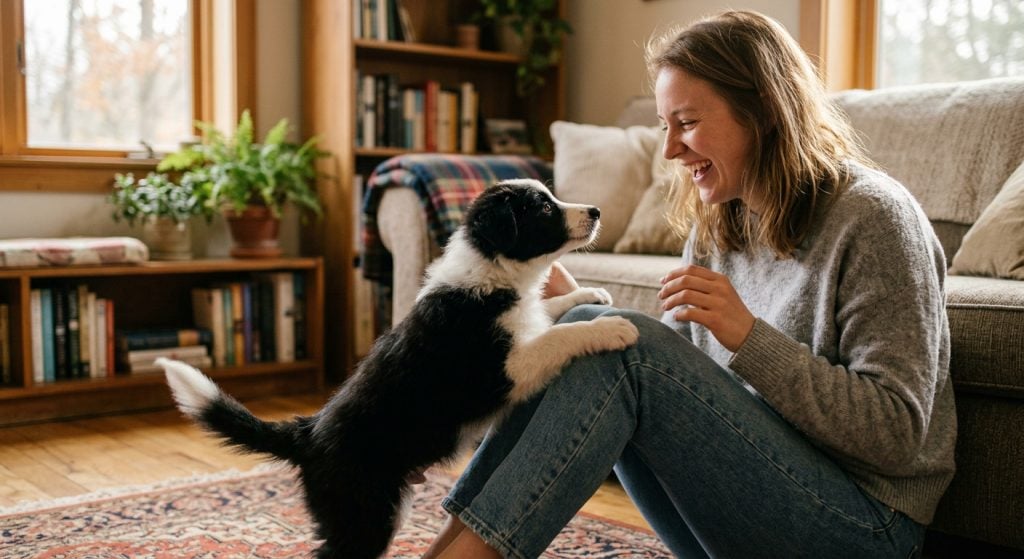
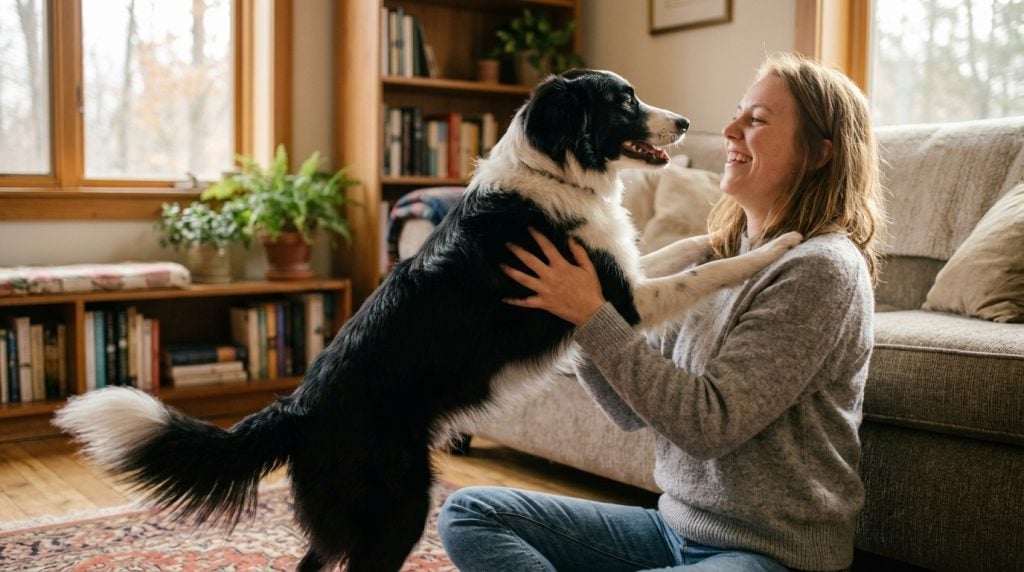
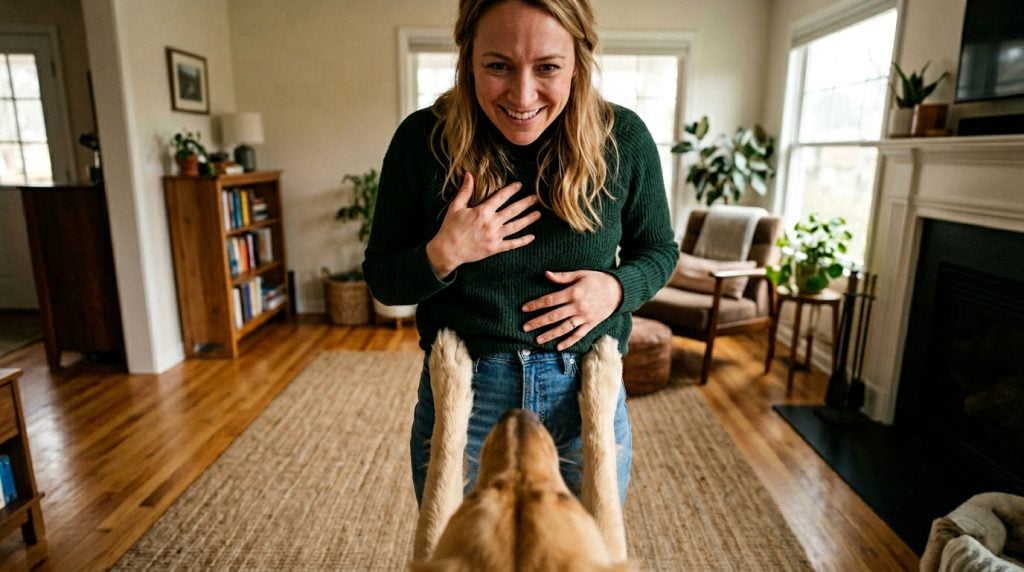
Before you’ve even had a chance to take your shoes off, your dog rushes toward you, tail wagging, body wiggling with excitement. In a moment they lift their front paws and jump up, trying to reach your face.
For many dog owners, this is a familiar greeting.
And if we’re honest, there is something rather wonderful about that moment. Even if you’ve only been gone a few minutes — perhaps just stepping outside to move the car or collect something from the driveway — your return can feel like the highlight of your dog’s day.
Dogs greet the people they love with a level of enthusiasm that can make us feel incredibly valued. In many ways, we are a central part of our dog’s world.
That kind of enthusiastic welcome is something many of us secretly enjoy — even if we’ve only been gone for a few minutes.
It’s the kind of joyful welcome many of us probably wouldn’t mind seeing a little more often in everyday life.
At the same time, that excitement can sometimes become a little overwhelming. Muddy paws, sharp claws, or a large dog launching upward can quickly turn a warm greeting into something more chaotic.
From a human perspective, jumping up can sometimes feel like bad manners.
But when we pause and look at the behaviour from a dog’s point of view, it often becomes much easier to understand.
Dogs Naturally Greet Face to Face
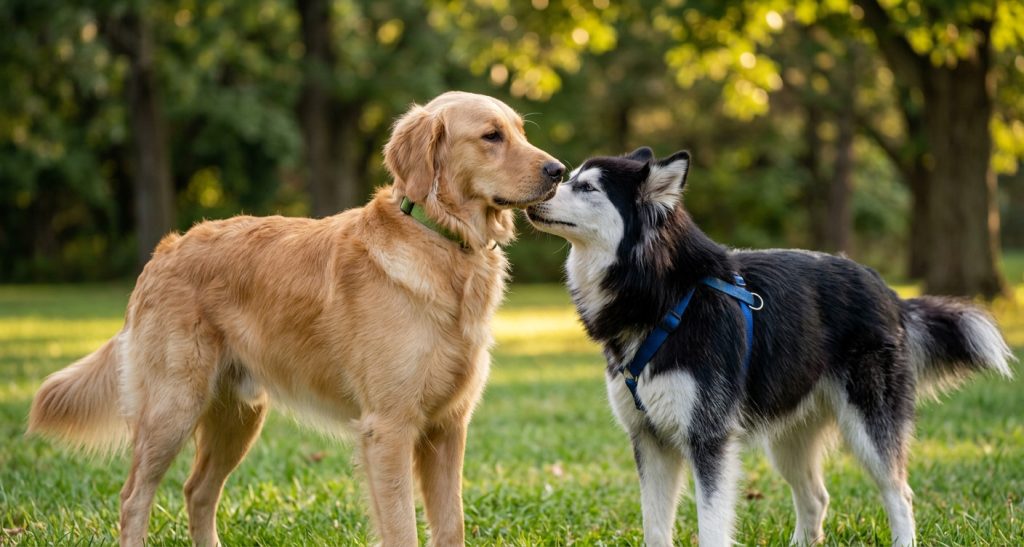
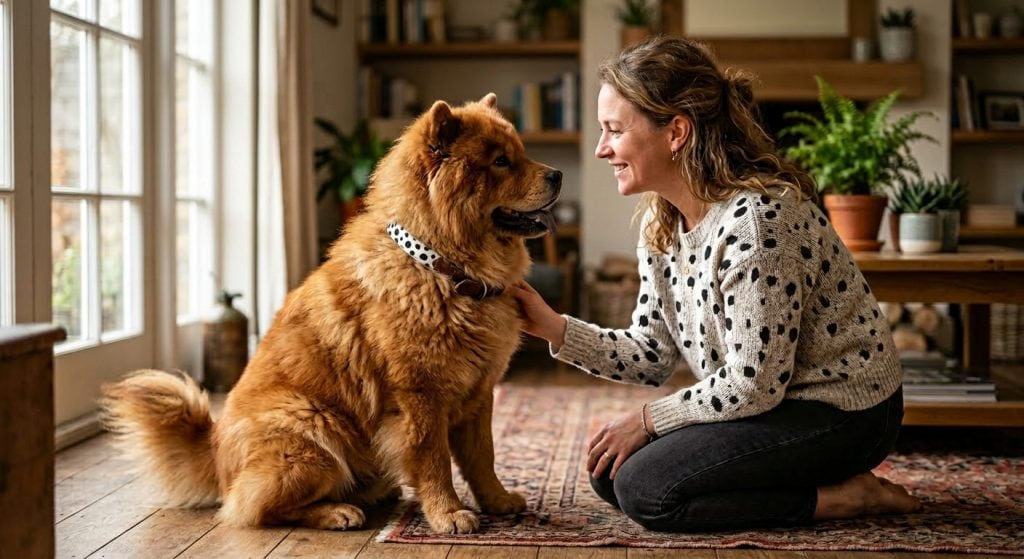
Dogs are social animals, and much of their communication happens around the face.
When dogs greet each other, they often approach head-to-head, sniffing and observing facial signals to gather information.
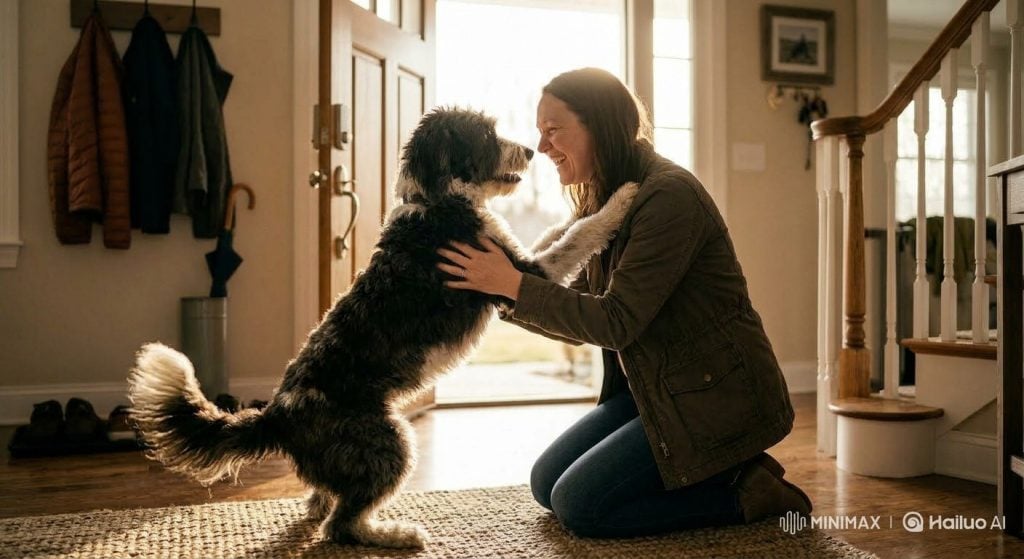
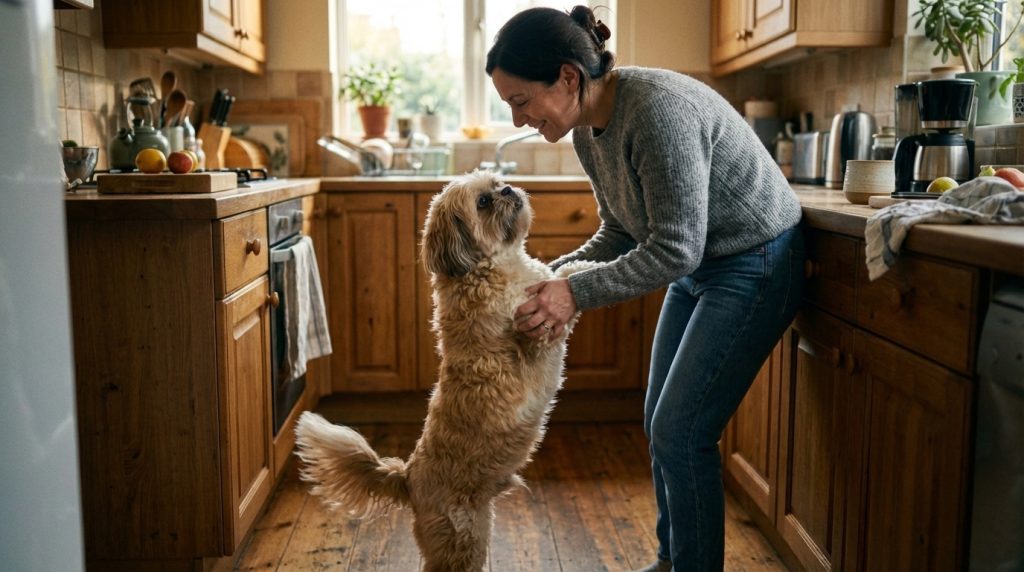
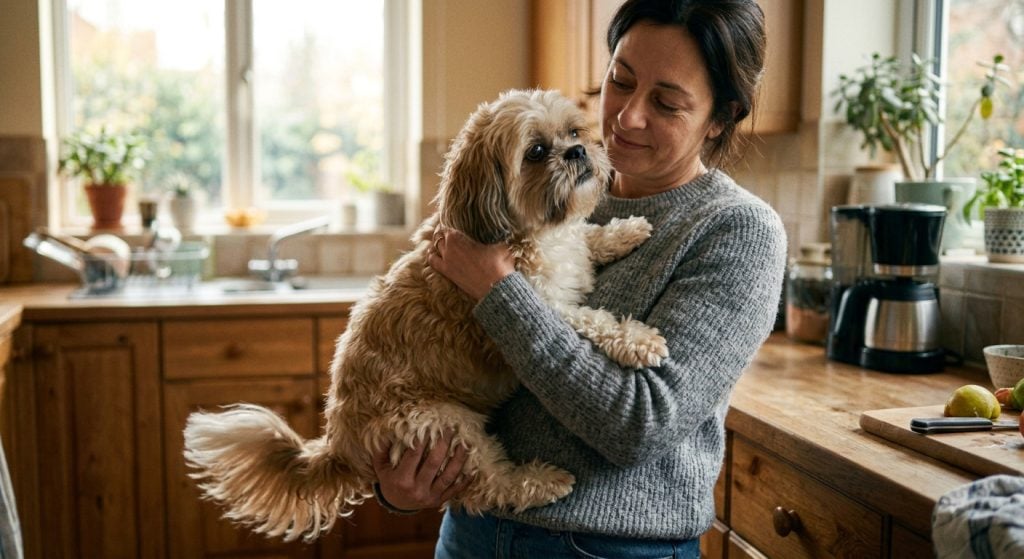
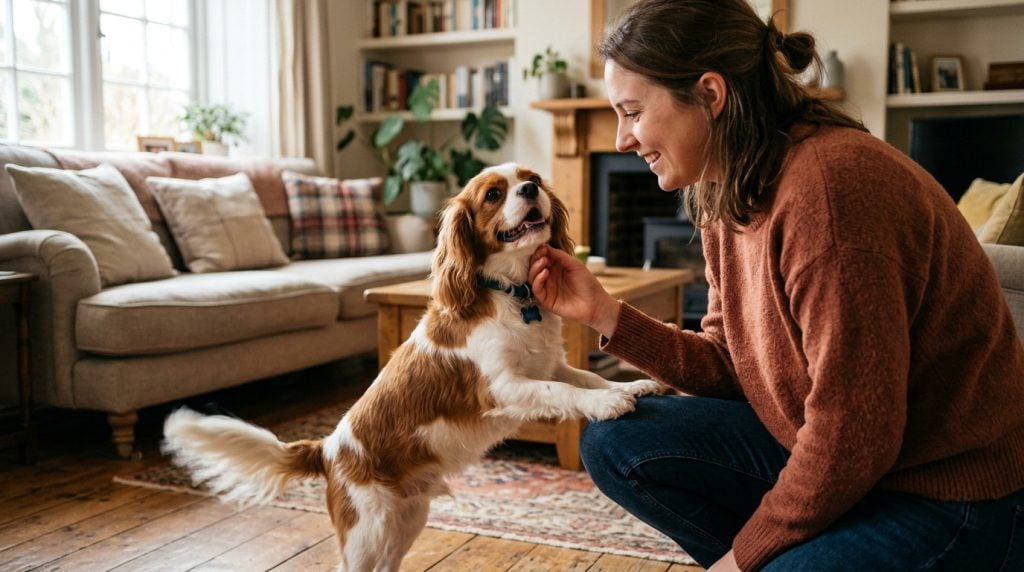
Your dog may try to jump up because they are attempting to reach your face in the same way they might greet another dog.
From their perspective, jumping up can simply be an enthusiastic way of saying hello.
Excitement and Emotion
Jumping up is also closely connected to excitement.
When dogs feel happy to see someone — whether it’s their owner, a visitor, or a familiar friend — their emotions can quickly become intense.
Their body language often reflects this excitement:
- fast wagging tails
- wiggling bodies
- bouncing movements
- jumping upward toward people
These behaviours are not usually intended to cause problems. They are simply expressions of excitement and social enthusiasm.
Attention Reinforces the Behaviour
Over time, jumping can also become a learned behaviour.
Dogs quickly notice which actions bring them attention from people.
If a dog jumps up and someone responds — by talking to them, touching them, or even pushing them away — the dog may interpret this as engagement.
From the dog’s perspective, the jumping successfully gained attention.
Because dogs are very good at recognising patterns, they may repeat the behaviour the next time they greet someone.
Puppies Often Start the Habit
Many dogs first learn this behaviour as puppies.
When puppies jump up toward people, the reaction is often laughter, affection, and excited interaction.
While this is completely natural — puppies are hard to resist — it can unintentionally teach the puppy that jumping is a good way to get attention.
As the dog grows larger, the same behaviour can become more difficult to manage.
But the behaviour itself usually began as a friendly and enthusiastic greeting.
Why Understanding This Matters
Once we begin looking at jumping up through the lens of dog behaviour, it becomes easier to see what the dog is trying to communicate.
Dogs are not jumping up to be rude or disobedient.
They are often responding to:
- excitement
- social greeting instincts
- a desire for attention
- learned patterns from past experiences
Seeing the behaviour in this way can help us approach it with more patience and understanding.
Helping Dogs Greet Calmly
Many dogs can learn calmer ways to greet people over time.
Because greeting is such an important social behaviour for dogs, the goal is not to stop greeting entirely, but to guide it into a calmer form.
Most of us genuinely enjoy seeing our dogs happy to see us. That enthusiastic welcome can be one of the most rewarding parts of sharing life with a dog.
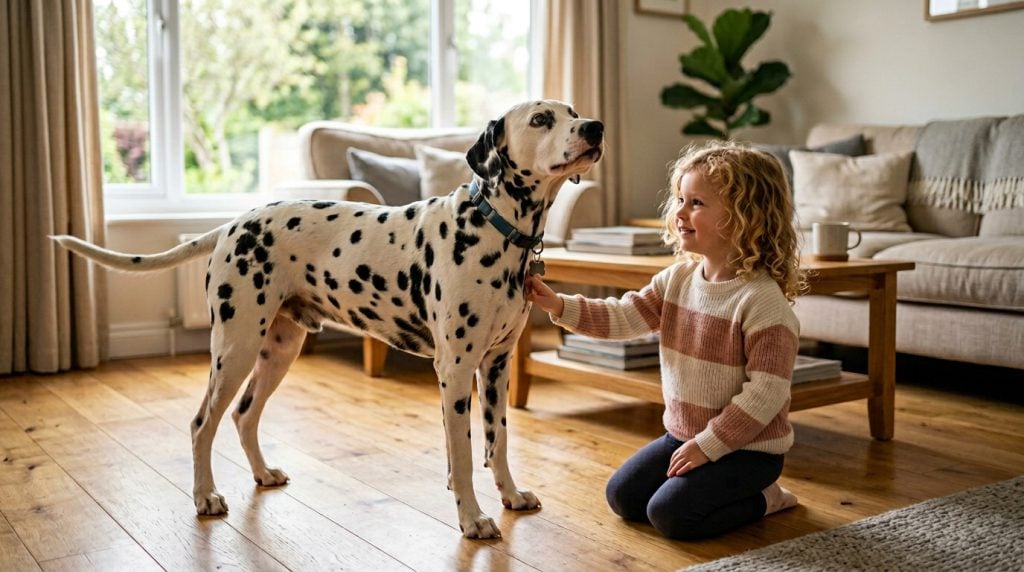
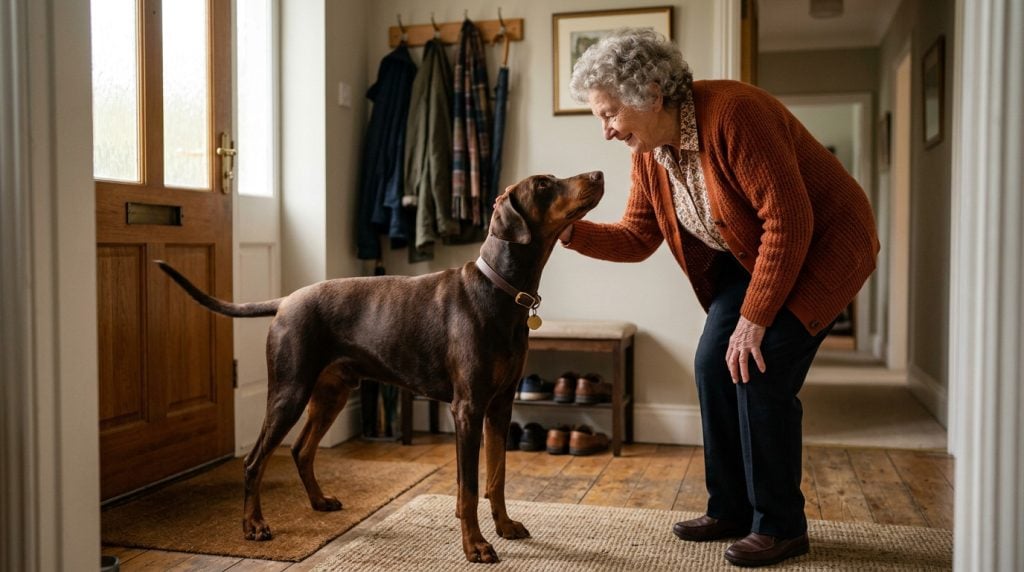
However, that level of excitement is not always comfortable for everyone. Young children or elderly visitors may feel unsteady if a dog jumps up, and some people simply feel nervous around dogs.
Helping dogs learn calmer greetings allows them to still express their excitement while keeping interactions safe and comfortable for everyone.
When dogs discover that calm behaviour brings attention and interaction, they can gradually learn to approach people in a more relaxed way.
This often takes consistency and patience, especially when excitement levels are high.
But with time, many dogs begin to understand that keeping their paws on the ground helps greetings stay calm and enjoyable for everyone.
Understanding Behaviour First
When we take the time to understand why dogs jump up, the behaviour becomes far less mysterious.
Dogs are not trying to be difficult or disrespectful.
They are simply expressing excitement and attempting to greet us in the way their instincts encourage.
And when we understand that perspective, guiding behaviour becomes much easier.
Explore More Dog Behaviour Topics
Understanding dog behaviour is an ongoing process. Each behaviour we see — whether it’s barking, jumping, following us around the house, or tilting their head — is part of how dogs communicate and experience the world.
These guides explore some of the most common behaviours owners notice and help explain what dogs may be thinking, feeling, or responding to in everyday situations.
What to Explore Next
Jumping up is often linked to excitement and connection, but it can feel overwhelming when it happens regularly.
These guides can help you better understand what your dog is feeling, how behaviours connect across situations, and why certain patterns keep appearing.

Learn More: Understand Your Dog – Dog Psychology for Beginners
If you would like to explore canine behaviour in more depth, the course Understand Your Dog – Dog Psychology for Beginners builds on the ideas introduced in this section.
Inside the course you’ll learn:
- how dogs interpret their environment
- how to read canine body language
- why common behaviours happen
- how to create calmer communication with your dog
The goal is not strict obedience training.
The goal is understanding the dog in front of us.
Because when we understand how dogs think, feel, and experience the world around them, guiding behaviour becomes easier for both dog and owner.