Why Dogs Lick You
You’re sitting on the sofa.
Your dog climbs up beside you, settles in close, and after a moment…
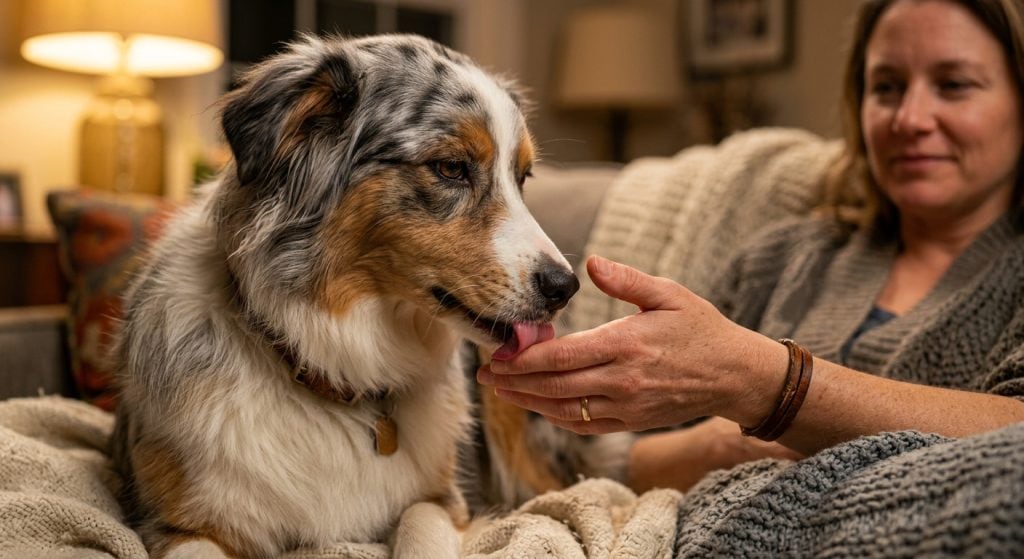
A gentle lick on your hand.
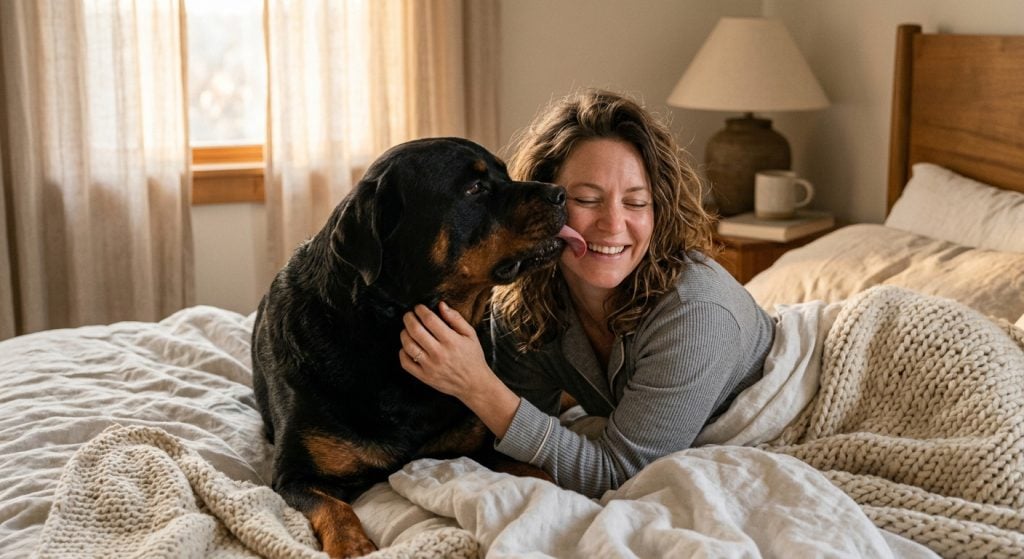
Maybe another on your face.
Sometimes it’s soft and slow.
Sometimes it’s enthusiastic, and impossible to ignore.
For many dog owners, it’s something we experience almost every day.
At times it feels affectionate.
At other moments, a little puzzling.
And occasionally, perhaps, a bit too much.
It’s one of those small behaviours that often makes us pause and wonder:
“Why does my dog lick me?”
A Natural Form of Communication
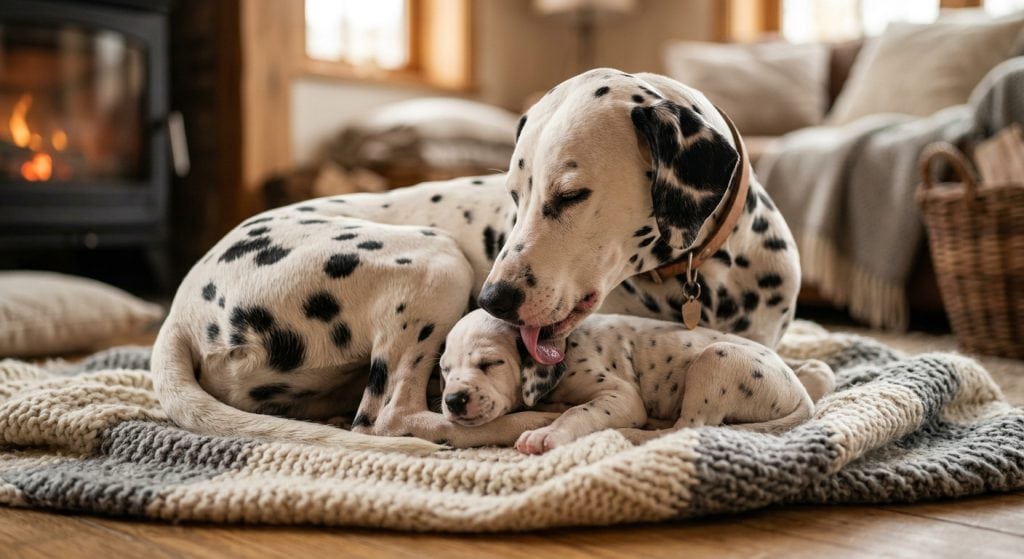
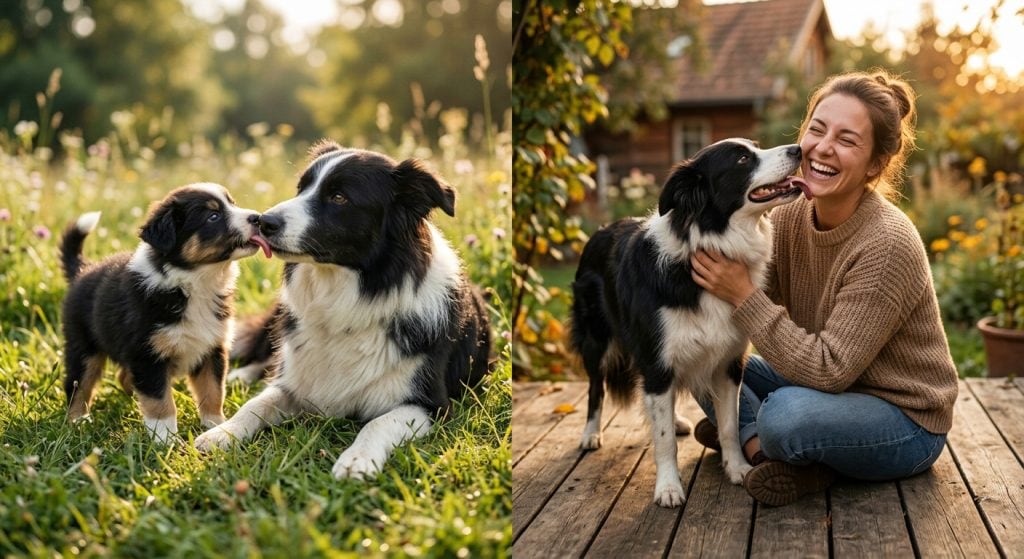
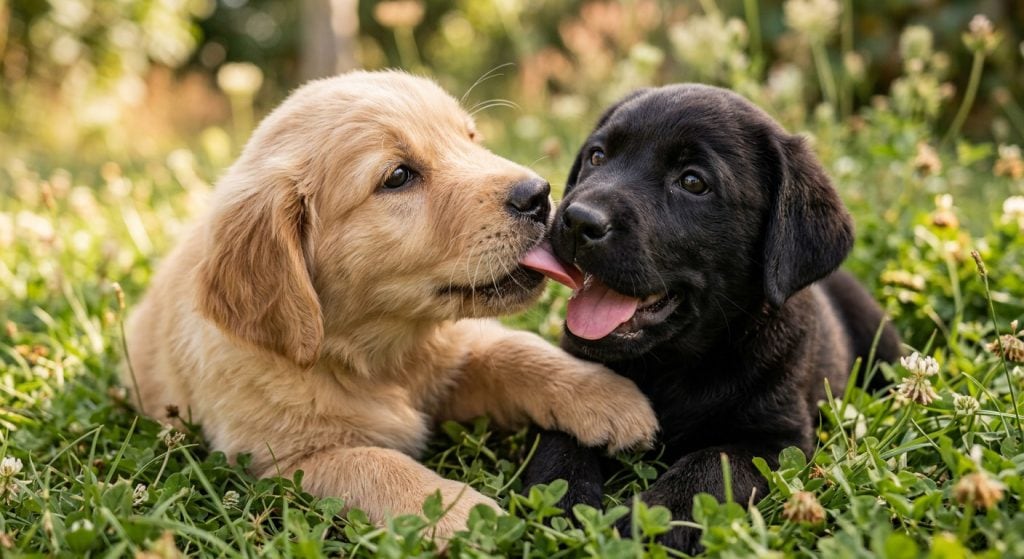
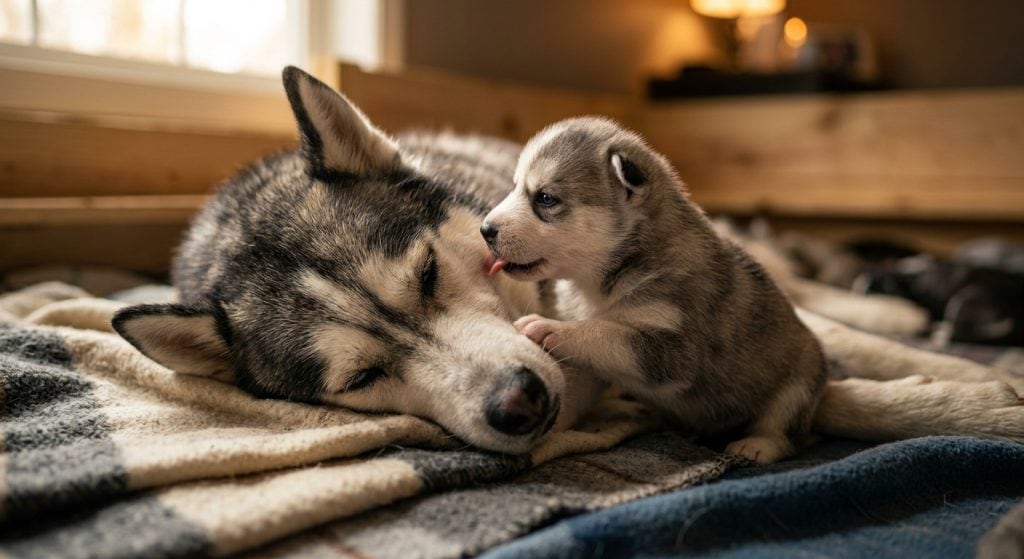
Licking is something dogs begin doing very early in life.
As puppies, they use it as part of their first interactions with their mother and littermates. It plays a role in bonding, communication, and care.
As they grow, this behaviour doesn’t disappear.
It simply becomes part of how they interact with the world around them.
So when your dog licks you, they may not be trying to do anything unusual at all.
They may simply be using one of the most natural forms of communication they have.
Connection and Affection
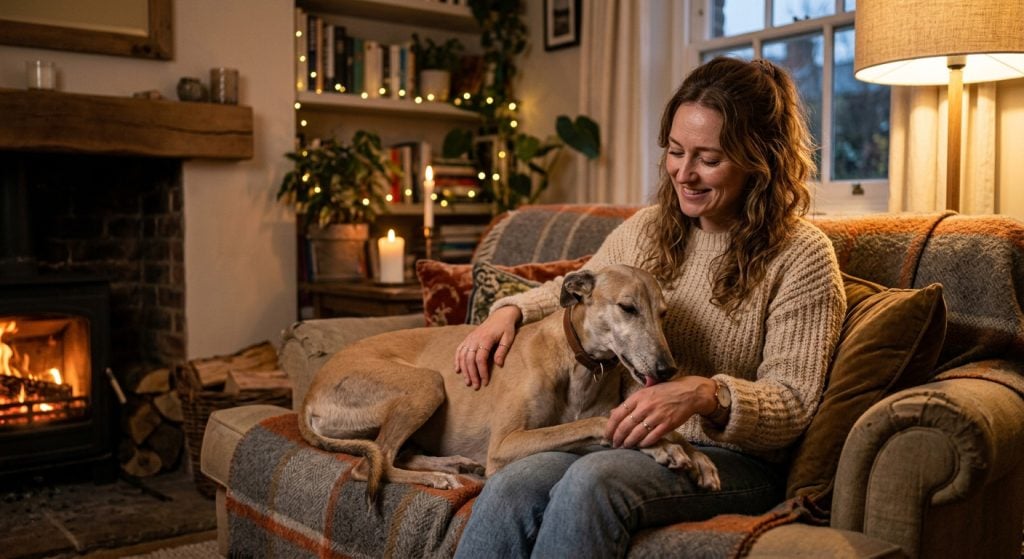
For many dogs, licking is closely linked to social connection.
Dogs don’t use words to greet or check in with one another. Instead, they rely on closeness, movement, and gentle contact.
A lick can be part of that.
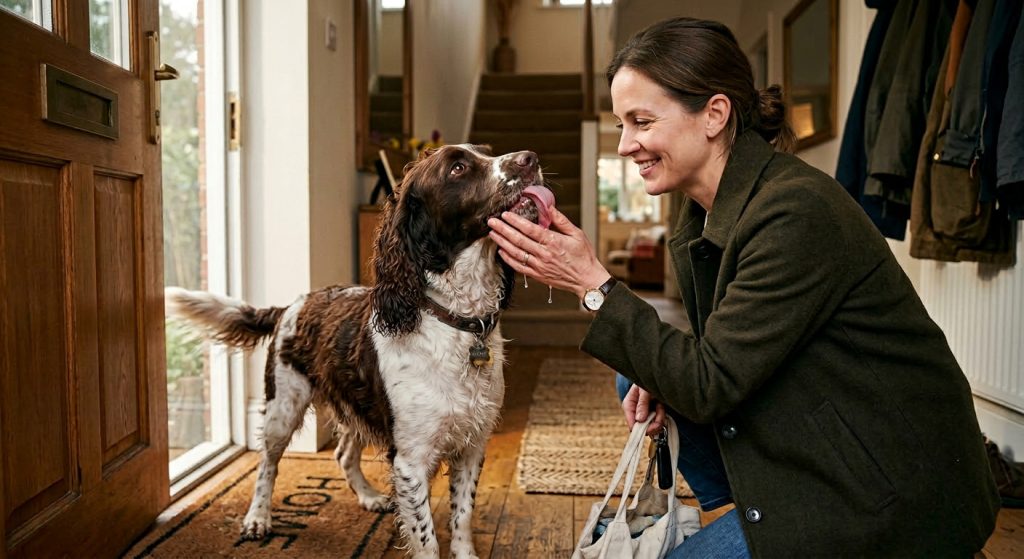
It might happen when you return home.
It might happen when you sit beside them.
Or simply when they want to stay connected to you in that moment.
For your dog, being near you matters.
And sometimes, a lick is just part of how they express that closeness.
For your dog, you are not just part of their life —
you are a central part of their world.
Exploring the World in Their Own Way
Dogs experience the world very differently from us.
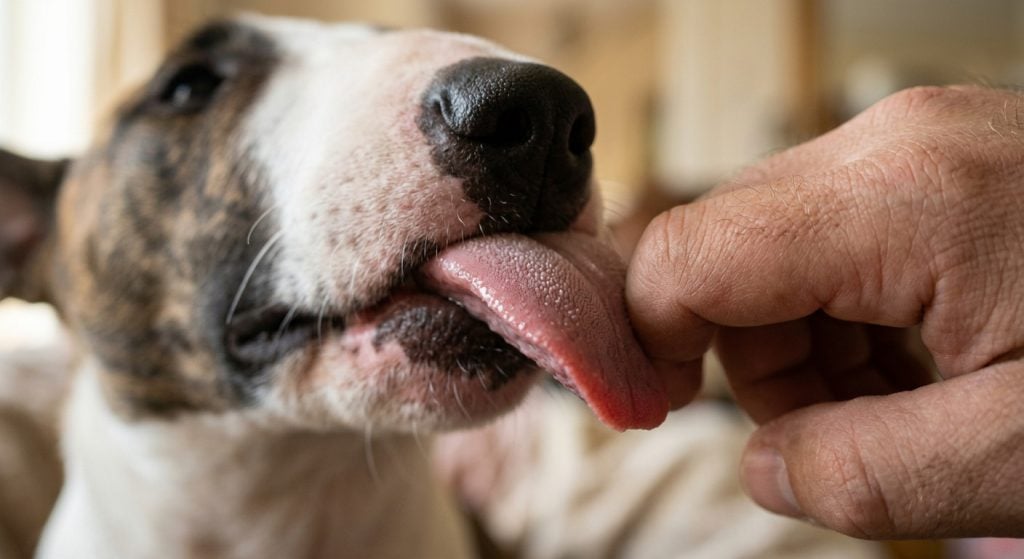
While we tend to rely on sight, dogs rely far more on scent — and even taste.
Your skin carries information about where you’ve been, what you’ve touched, and the environment around you.
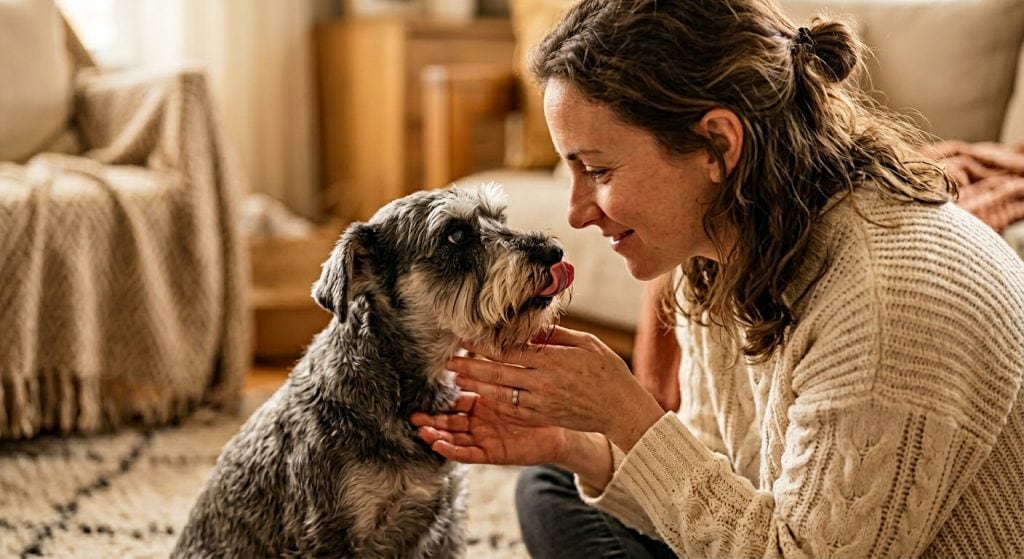
A lick can be a way of exploring that.
In this sense, licking is not always about affection.
Sometimes it is curiosity.
Your dog is simply gathering information in the way that feels most natural to them.
How Dogs Learn What Works
Over time, dogs begin to notice what brings interaction.
A small behaviour, like a lick, might lead to you speaking to them, looking at them, or reaching out to touch them.
Even subtle responses can be meaningful.
From your dog’s perspective, something simple has led to connection.
And when something leads to connection, it often gets repeated.
So what may begin as curiosity or closeness can gradually become part of a familiar pattern.
Not because your dog is trying to be demanding —
but because they have learned that this behaviour works.
Comfort and Calm
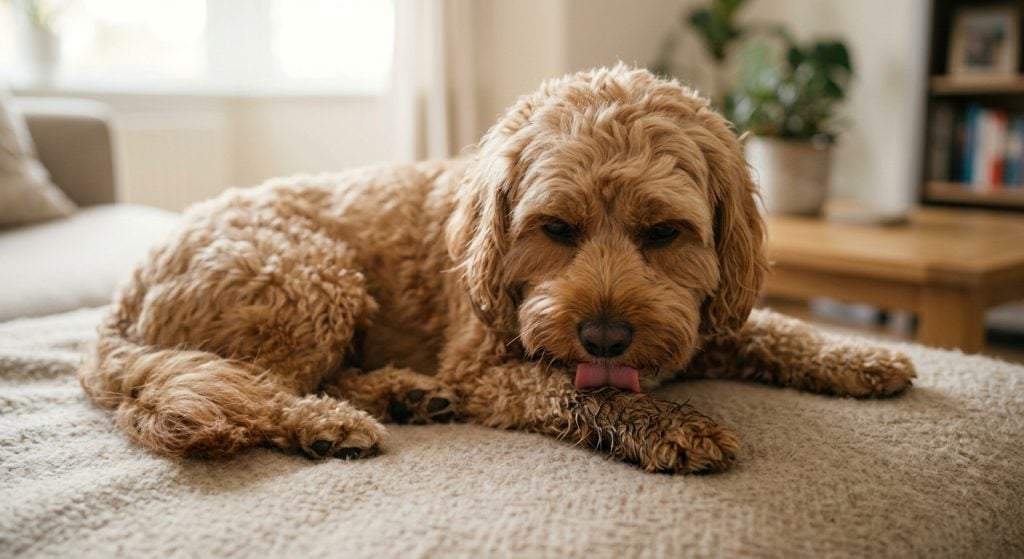
Licking can also have a calming effect for some dogs.
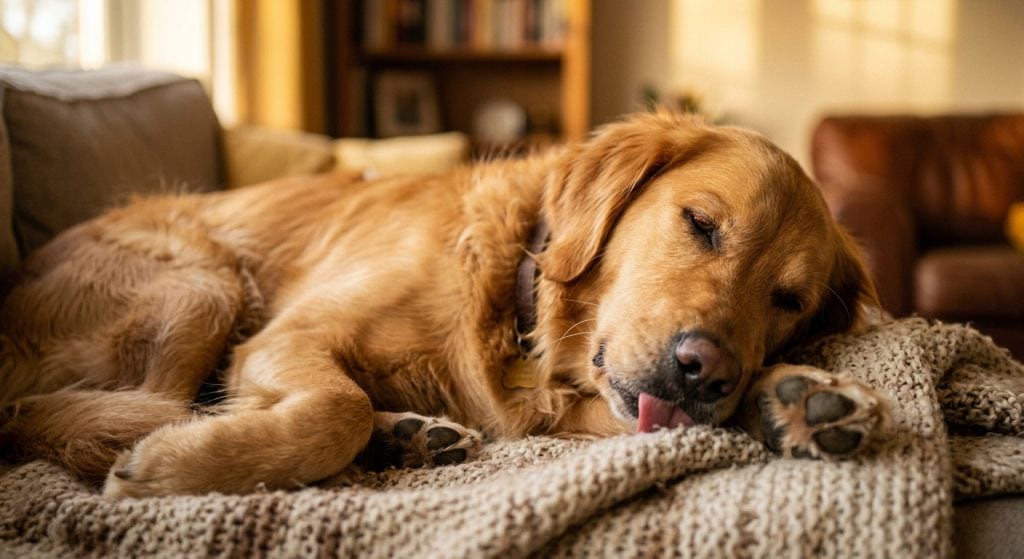
You might notice it more in quieter moments, when your dog is relaxed or settling down.
In these situations, licking can be part of how they soothe themselves.
Staying close, repeating a familiar behaviour, and maintaining gentle contact can all help a dog feel more at ease.
It becomes less about interaction, and more about comfort.
When Licking Becomes More Intense
In most cases, licking is completely normal.
However, there are times when it may become more frequent or harder to interrupt.
A dog that seems unable to settle without licking, or one that repeats the behaviour constantly, may be feeling unsettled or unsure.
In these moments, the behaviour itself is still natural.
But the intensity of it can tell us something about how the dog is feeling.
Looking at the wider situation often helps us understand what might be driving it.
Guiding the Behaviour Gently
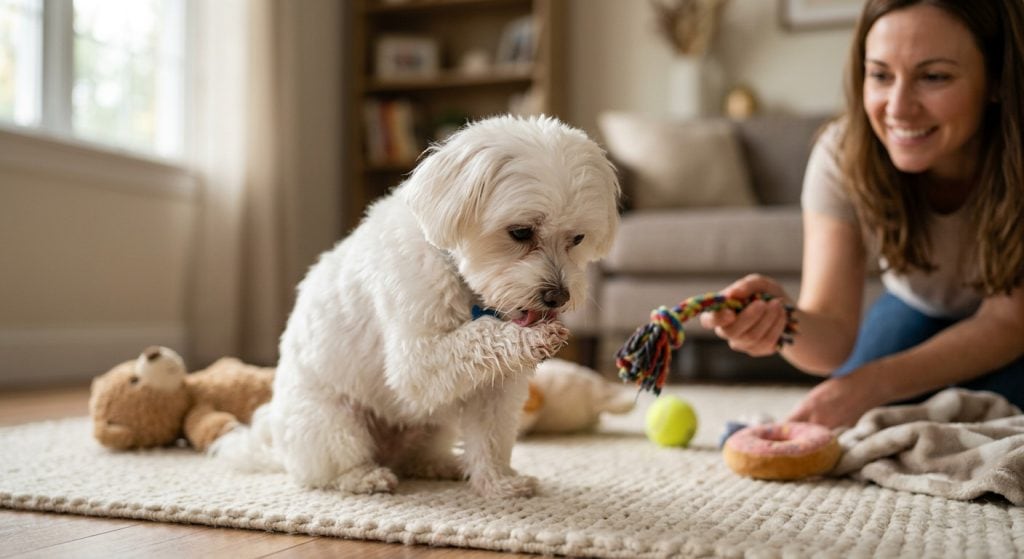
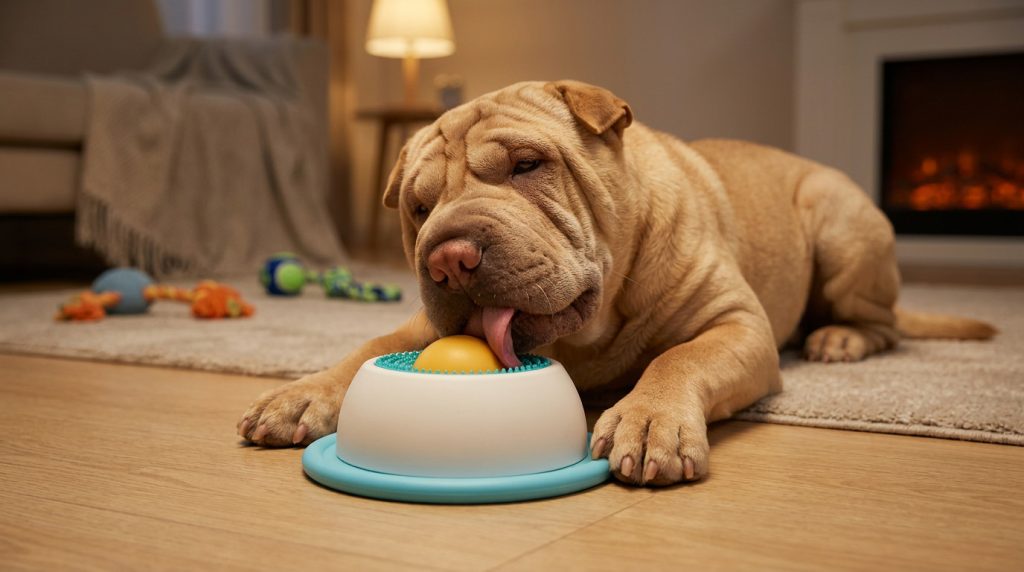
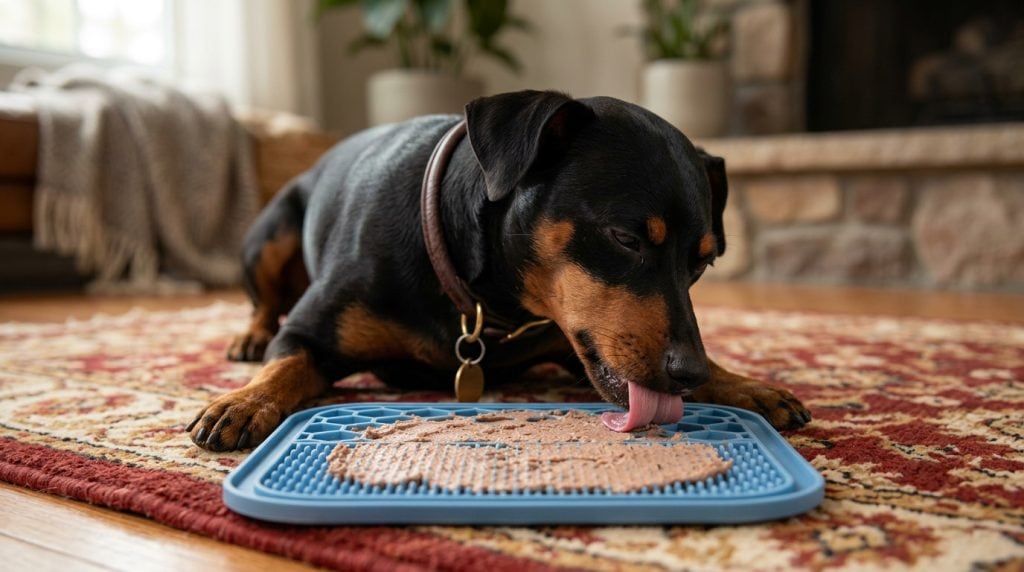
Because licking is a natural behaviour, the goal is not to stop it entirely.
Instead, it is about gently guiding how and when it happens.
If it begins to feel overwhelming, your response can shape what your dog learns over time.
Remaining calm, avoiding strong reactions, and gently redirecting attention can all help over time.
With consistency, many dogs begin to understand that calmer forms of interaction lead to the same connection.
The aim is not to remove the behaviour.
It is simply to help your dog find balance.
Why Understanding This Matters
When we take a moment to look at behaviour from a dog’s perspective, it often becomes much easier to understand.
Dogs are not licking to annoy or frustrate us.
They are simply responding to instinct, curiosity, habit, or connection.
They are responding to instinct, curiosity, habit, or connection.
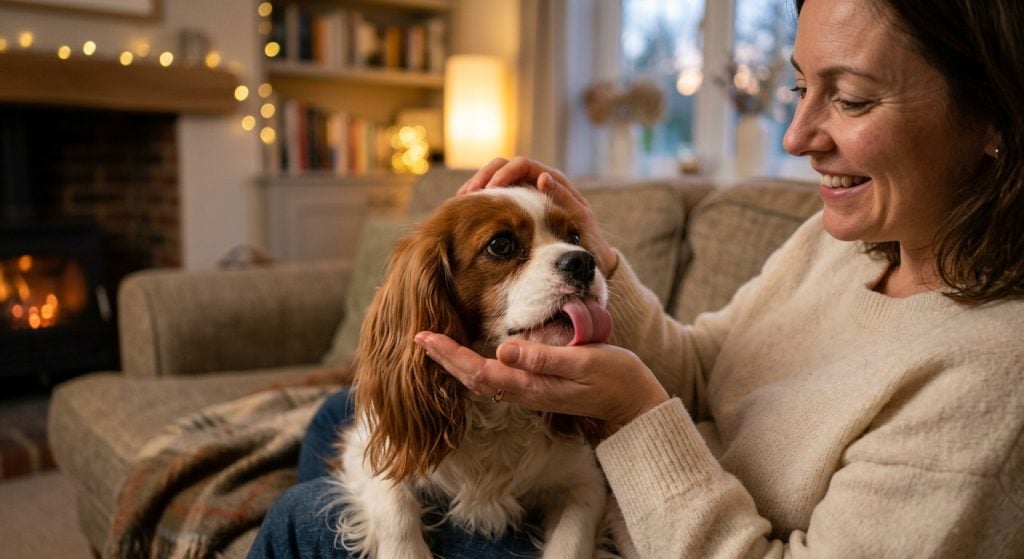
In many homes, a dog gently licking their owner is simply part of the relationship they share.
And when we understand what may be behind that behaviour, we can respond in a way that feels calm, clear, and supportive.
Because when behaviour makes sense, it becomes much easier to guide.
Explore More Dog Behaviour Topics
Understanding dog behaviour is an ongoing process. Each behaviour we see — whether it’s barking, jumping, following us around the house, or tilting their head — is part of how dogs communicate and experience the world.
These guides explore some of the most common behaviours owners notice and help explain what dogs may be thinking, feeling, or responding to in everyday situations.
What to Explore Next
Licking can mean different things depending on the situation, from communication and reassurance to habit and emotional response.
These guides can help you better understand what your dog is feeling, how connection behaviours develop, and how to interpret everyday interactions with your dog more clearly.

Deepen Your Understanding of Dog Behaviour
If you would like to explore canine behaviour in more depth, the course Understand Your Dog – Dog Psychology for Beginners builds on the ideas introduced in this guide.
Inside the course you’ll learn:
• how dogs interpret their environment
• how to read canine body language
• why common behaviours happen
• how to create calmer communication with your dog
The goal is not strict obedience training.
It is understanding.
Because when we understand how dogs think, feel, and experience the world around them, guiding behaviour becomes easier for both dog and owner.