

How Dogs See the World
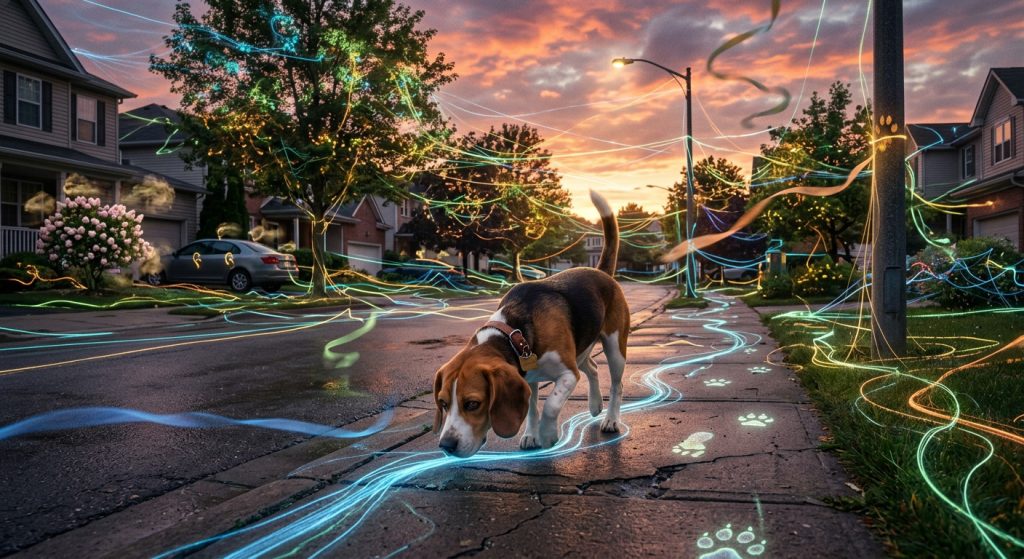
You step outside with your dog for a walk.
To you, the street probably looks the same as it did yesterday. The same houses. The same pavement. The same trees lining the road.
But your dog pauses almost immediately.
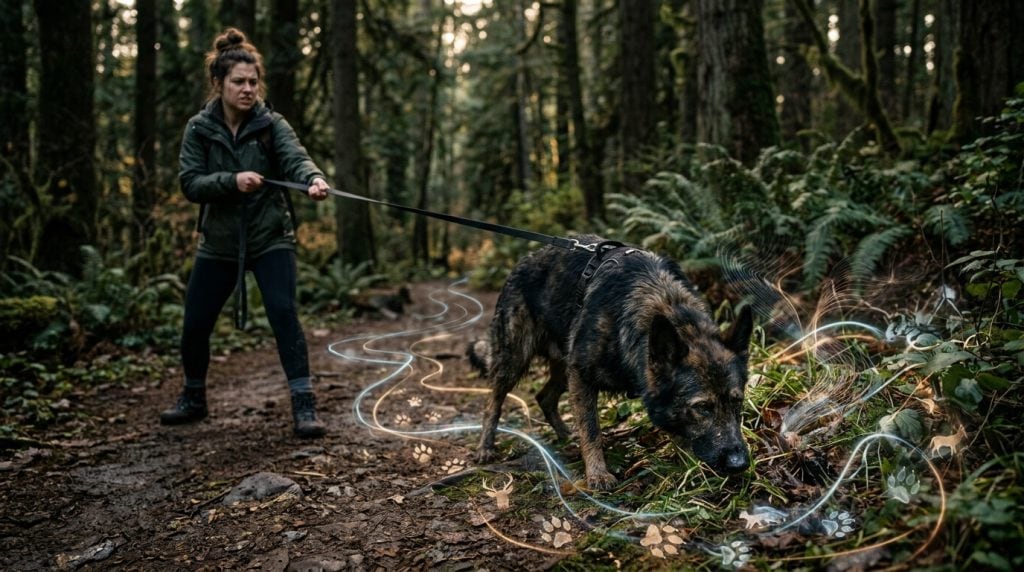
They lower their nose to the ground, sniff carefully, move a few steps, sniff again, and suddenly become very interested in a small patch of grass that looks completely ordinary to you.
A minute later they stop again at a lamppost.
Then again at the corner.
From a human point of view, it can sometimes feel like your dog is getting distracted by nothing.
But for your dog, those small pauses are not distractions at all.
They are information.
Because while we experience the world mostly through sight, dogs experience it in a completely different way.
Understanding that difference is one of the most important steps in understanding your dog’s behaviour.
Dogs Experience the World Differently
Humans rely heavily on what we see.
We look around to understand what is happening. Our brains quickly process shapes, colours, and movement to build a picture of our surroundings.
Dogs, however, experience the world through a much richer combination of senses.
For them, the environment is not just a visual scene.
It is a landscape filled with scents, emotional signals, movement, and patterns.
Where we might see a quiet street, a dog may be detecting layers of information about everything that has happened there recently.
Who passed by.
Which animals were nearby.
Whether another dog felt relaxed or anxious.
And how long ago those events took place.
To imagine this more clearly, try a simple thought for a moment.
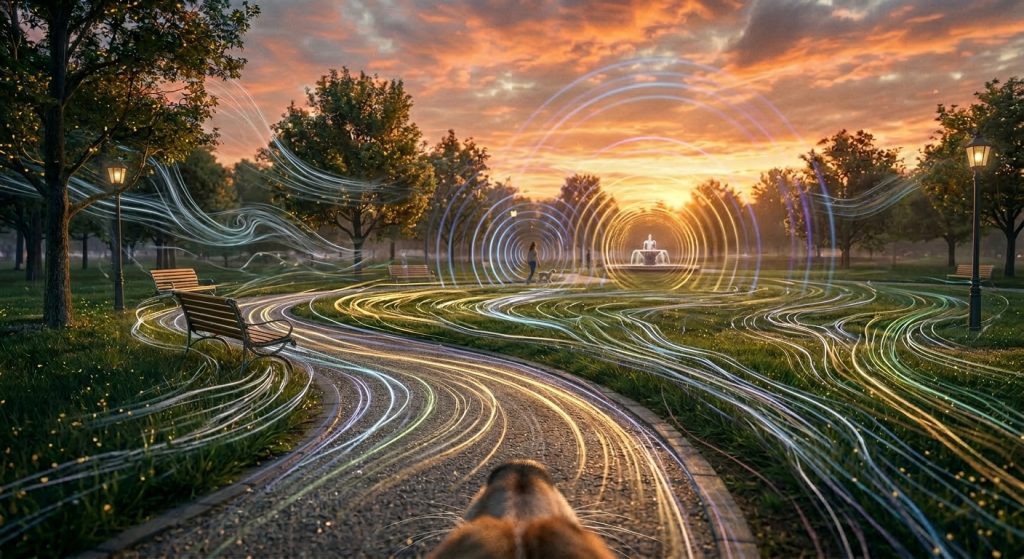
Picture walking through your local park. But instead of relying mostly on what you can see, imagine closing your eyes and becoming aware of everything else.
The smells drifting through the air.
The distant sounds around you.
The feeling of the space you’re standing in.
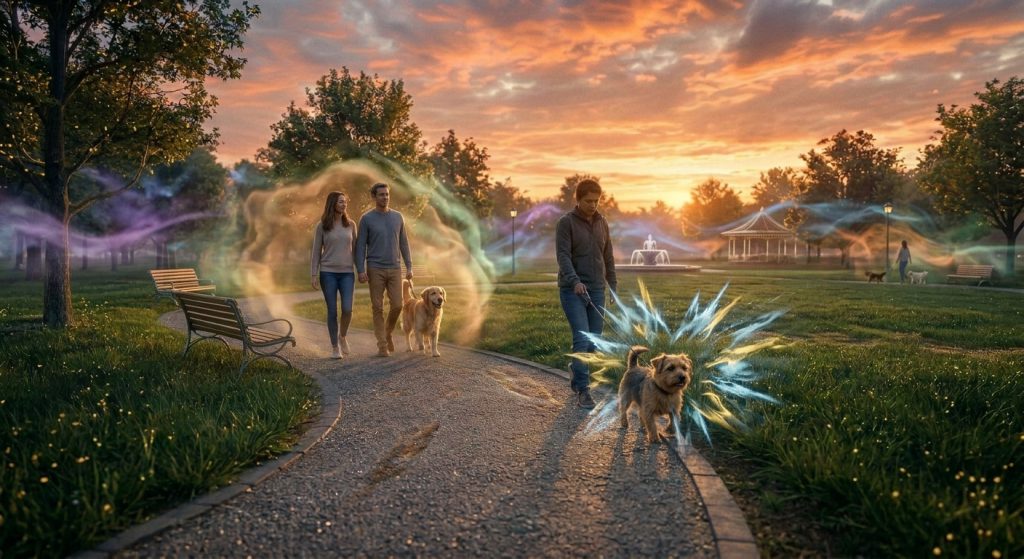
The emotional atmosphere of the environment.
For dogs, the world often feels a little more like that.
They are constantly gathering information through senses that humans rarely rely on so strongly.
In many ways, dogs are always reading the environment around them — just not in the same way we do.
Human

Smell

Sound
Emotion
The Five Ways Dogs Read the World
When dogs move through the world, they are constantly gathering information.
But they do not rely on the same senses that humans do.
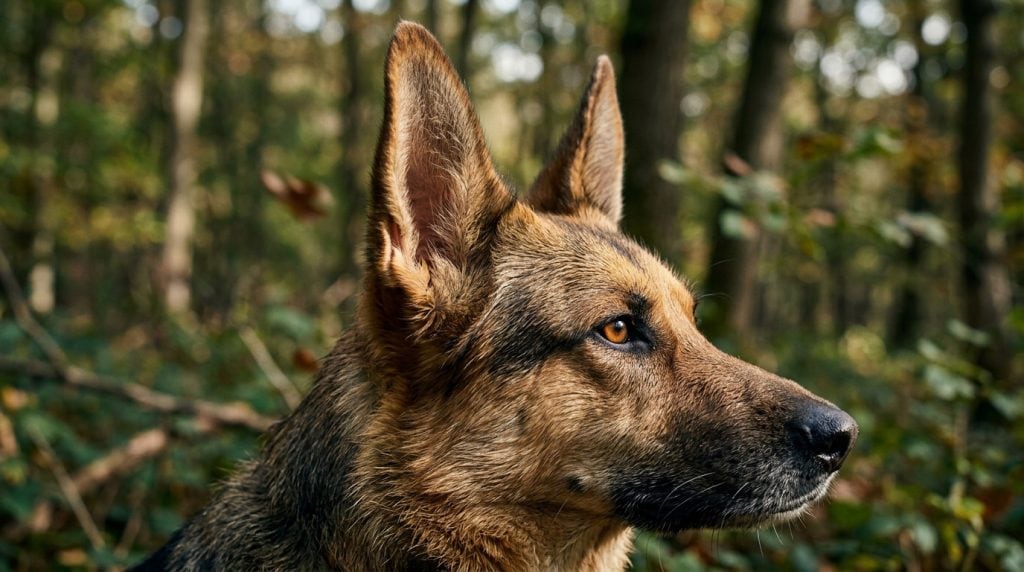
Instead, dogs tend to interpret their surroundings through a small number of key channels.
You can think of these as the main ways dogs read the world around them:
• Scent — information left behind by animals, people, and environments
• Sight — especially movement and changes in the environment
• Sound — subtle noises humans often ignore
• Emotion — the tone and atmosphere of a situation
• Experience — instincts and things the dog has learned over time
Every moment of your dog’s day is shaped by a combination of these signals.
When we begin to understand these channels, many behaviours that once seemed confusing start to make much more sense.
The sections below explore each of these ways dogs interpret the world.
The Power of Scent
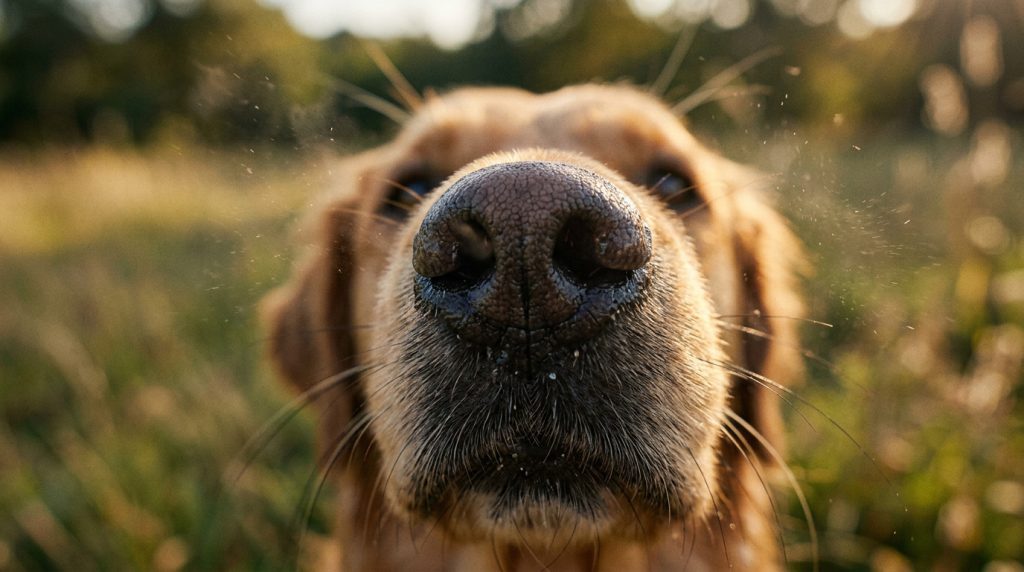
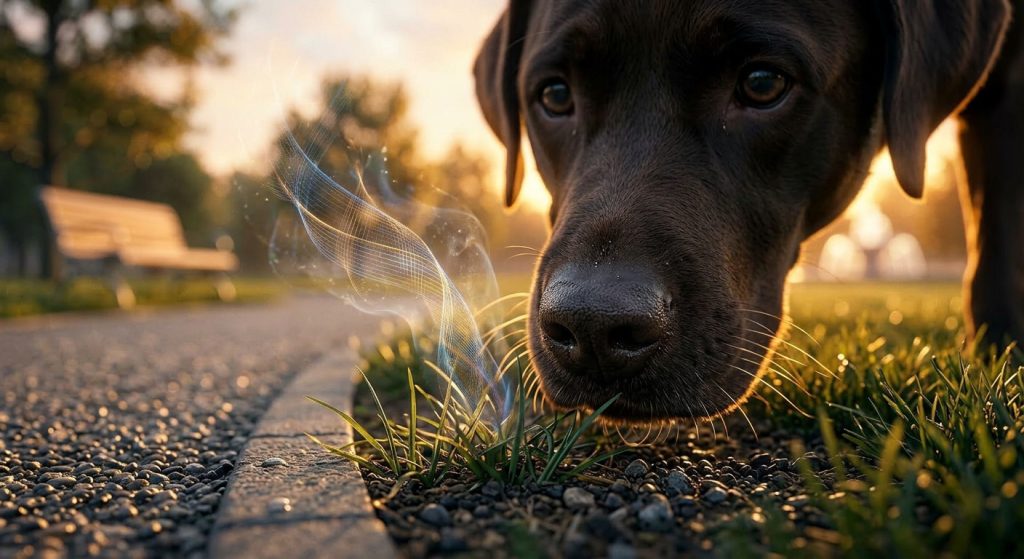
A dog’s sense of smell is at the centre of how they understand their surroundings.
While humans experience the world visually, dogs experience much of it through their noses.
When a dog stops to sniff the ground during a walk, they are not simply being curious.
They are gathering information.
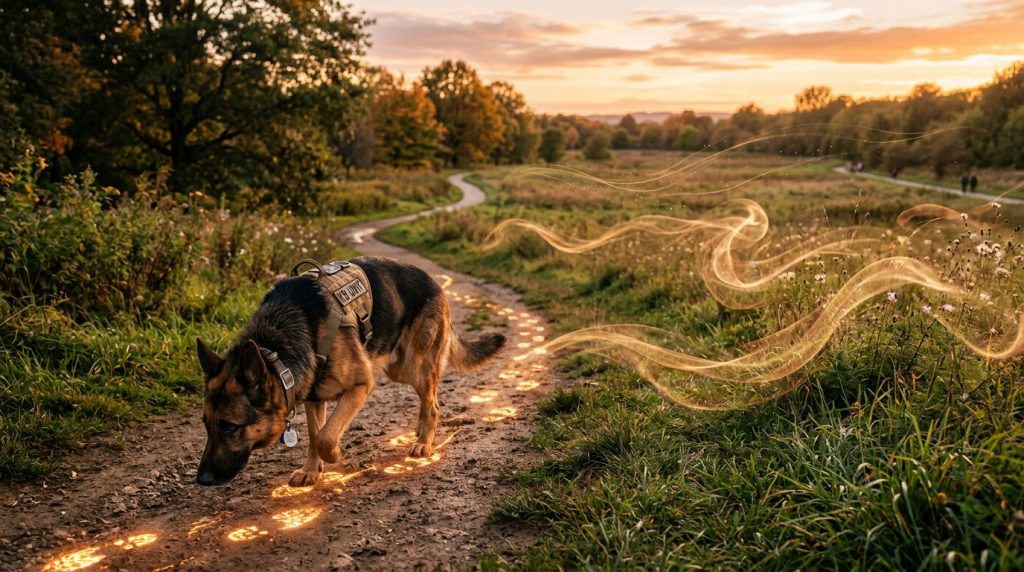
A single scent can tell them:
- which animals have passed by
- whether another dog recently visited the area
- how long ago the scent was left
- which direction the animal travelled
What looks like an ordinary patch of grass to us can be full of detailed information for a dog.
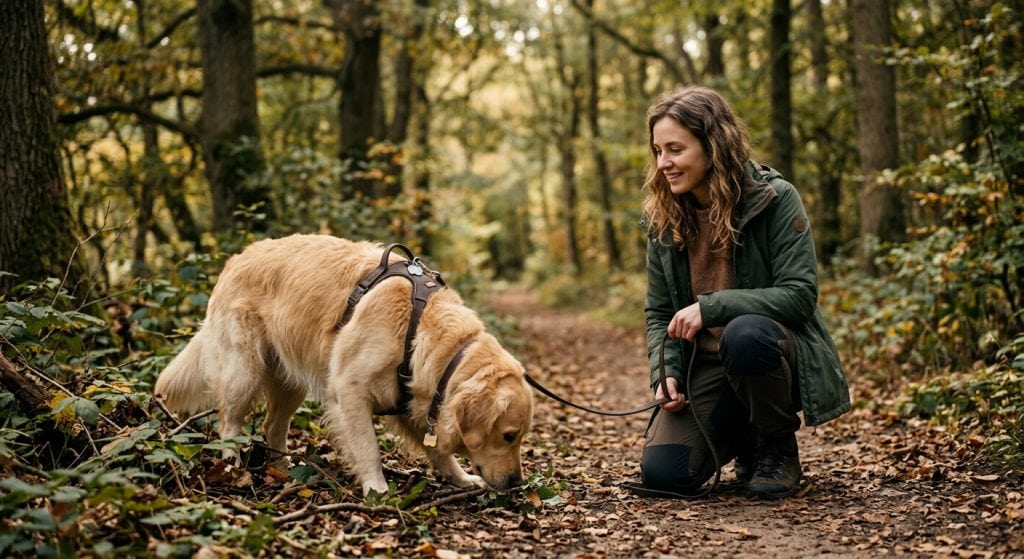
This is why many dogs naturally stop to sniff frequently during walks. It is one of the main ways they explore and understand their environment.
Allowing dogs the opportunity to sniff is not just normal behaviour — it can also be calming and mentally enriching.
From your dog’s perspective, sniffing is how they read the world around them.
What Dogs See
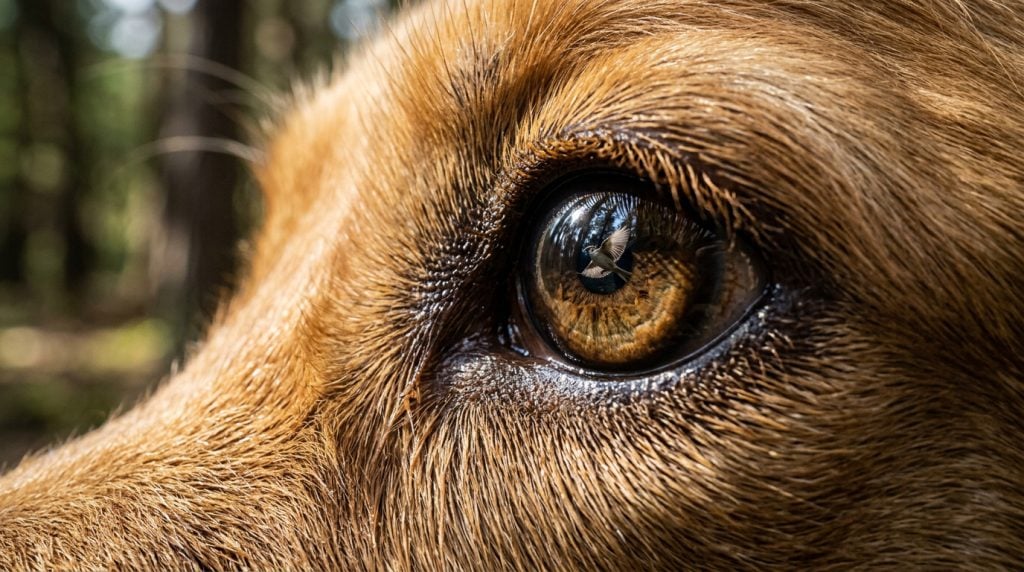
Although smell plays the leading role, sight is still an important part of how dogs experience the world.
However, their vision works a little differently from ours.
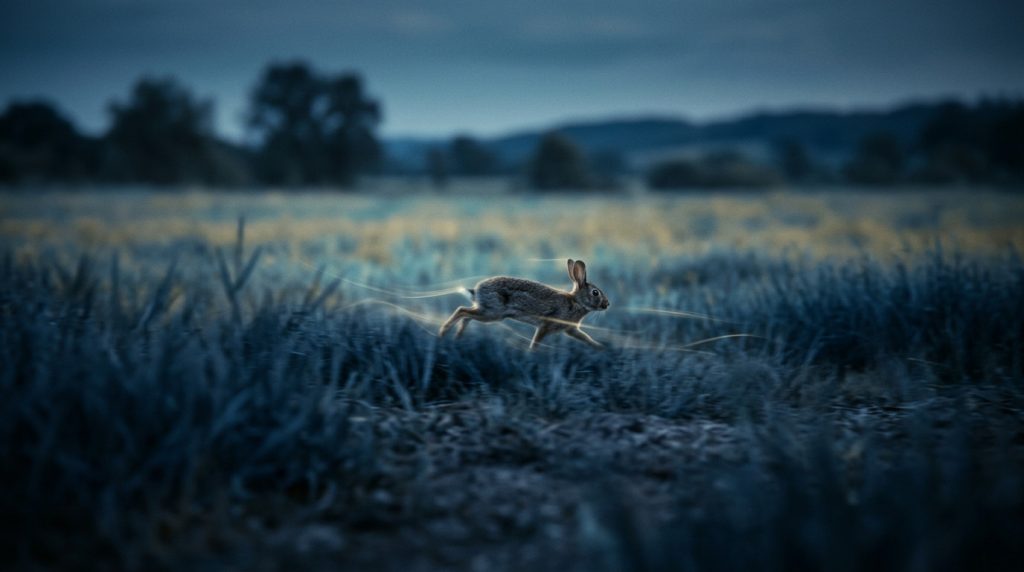
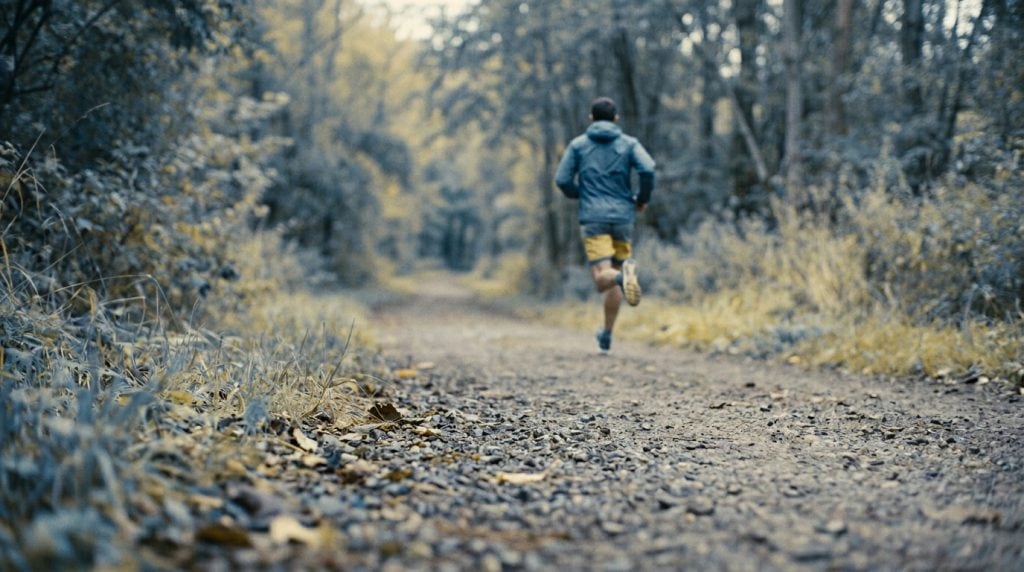
Dogs tend to notice movement far more easily than fine visual detail.
Their eyes are also well adapted for seeing in low light, which reflects their evolutionary history as animals that were active at dawn and dusk.
They do not see the same range of colours that humans do, but they are very good at detecting motion and changes in their surroundings.
This is why your dog might suddenly become alert to something moving in the distance that you haven’t yet noticed.
From a dog’s perspective, movement often signals something important worth paying attention to.
Dogs Are Highly Aware of Emotion
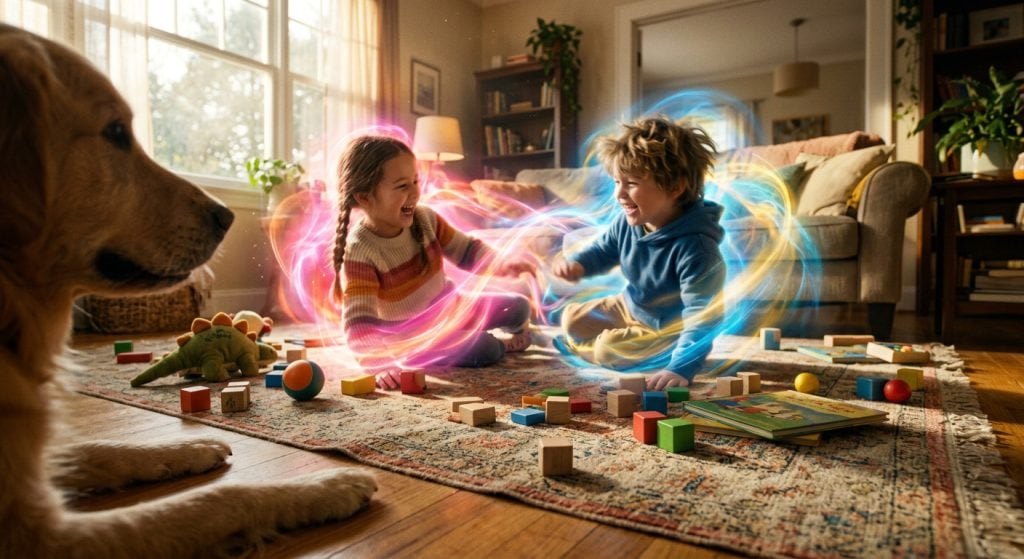
Dogs are also extremely skilled at reading emotional signals.
Even though they do not understand human language in the way we do, they are excellent observers of body language and tone.
Your dog is constantly paying attention to things such as:
- how you move
- the tone of your voice
- changes in your posture
- the overall atmosphere in the environment
Dogs often respond to the emotional tone of a situation long before they understand anything else about it.
If an environment feels calm and predictable, dogs usually feel more relaxed.
If an environment feels tense, noisy, or unpredictable, dogs may become more alert or cautious.
In this way, dogs are not just responding to what is happening around them — they are also responding to how it feels.



Instinct and Learning
A dog’s behaviour is shaped by both instinct and experience.
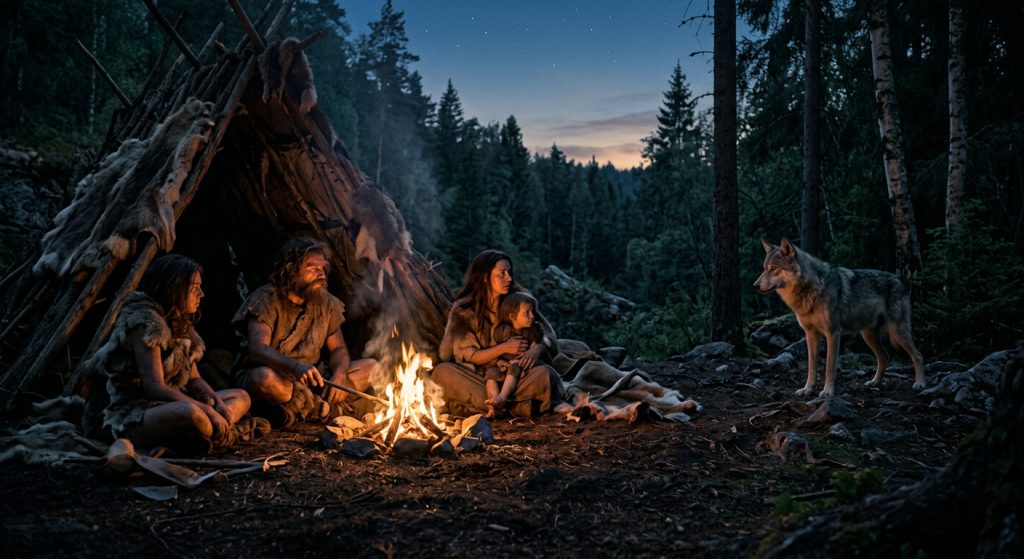
Instinct gives dogs natural tendencies that helped their ancestors survive, such as:
- following scent trails
- staying aware of movement
- exploring their surroundings
- remaining close to social companions
But as dogs live alongside humans, they also learn from their daily experiences.
They begin to recognise patterns:
- when meals usually happen
- where walks begin
- which places feel safe
- which situations feel confusing or overwhelming
Over time, this combination of instinct and learning shapes how each dog behaves.
When we look at behaviour through this lens, it becomes easier to see that most behaviours are simply dogs responding to the world as they understand it.
Why This Matters for Owners
Many common misunderstandings between dogs and owners happen because we naturally interpret behaviour from a human perspective.
But dogs are not experiencing the same world that we are.
When a dog stops repeatedly to sniff during a walk, they are not being stubborn.
When a dog becomes excited by movement, they are not being deliberately difficult.
They are simply responding to the information their senses are picking up.
When we begin to understand how dogs experience their environment, their behaviour starts to make much more sense.
And when behaviour makes sense, it becomes much easier to guide calmly and clearly.

Seeing the World Through Your Dog’s Eyes
Living with a dog becomes much easier when we take a moment to consider how the world might look — and feel — from their perspective.
Dogs are not trying to challenge us or frustrate us.
They are simply responding to the world through their instincts, their senses, and their experiences.
When we learn to understand that world, communication with our dogs becomes far clearer.
And the relationship between dog and owner often becomes calmer and more connected as a result.
Explore More Dog Behaviour Topics
Understanding dog behaviour is an ongoing process. Each behaviour we see — whether it’s barking, jumping, following us around the house, or tilting their head — is part of how dogs communicate and experience the world.
These guides explore some of the most common behaviours owners notice and help explain what dogs may be thinking, feeling, or responding to in everyday situations.
What to Explore Next
Dogs experience the world very differently from humans, and many everyday behaviours make more sense once we understand how they process scent, movement, sound, and emotion.
These guides can help you better understand how dogs communicate, respond to their environment, and interpret the world around them.


Learn More: Understand Your Dog – Dog Psychology for Beginners
If you would like to explore canine behaviour in more depth, the course Understand Your Dog – Dog Psychology for Beginners is designed to help owners better understand how dogs think, feel, and communicate.
Inside the course you will learn:
- how dogs interpret human behaviour
- how to read canine body language
- why common behaviours occur
- how to create calm and clear communication with your dog
The goal is not strict training or obedience.
It is understanding.
Because when we begin to understand how dogs experience the world, we can start to support them in a way that feels natural, calm, and reassuring for both dog and owner.