
Schneagle
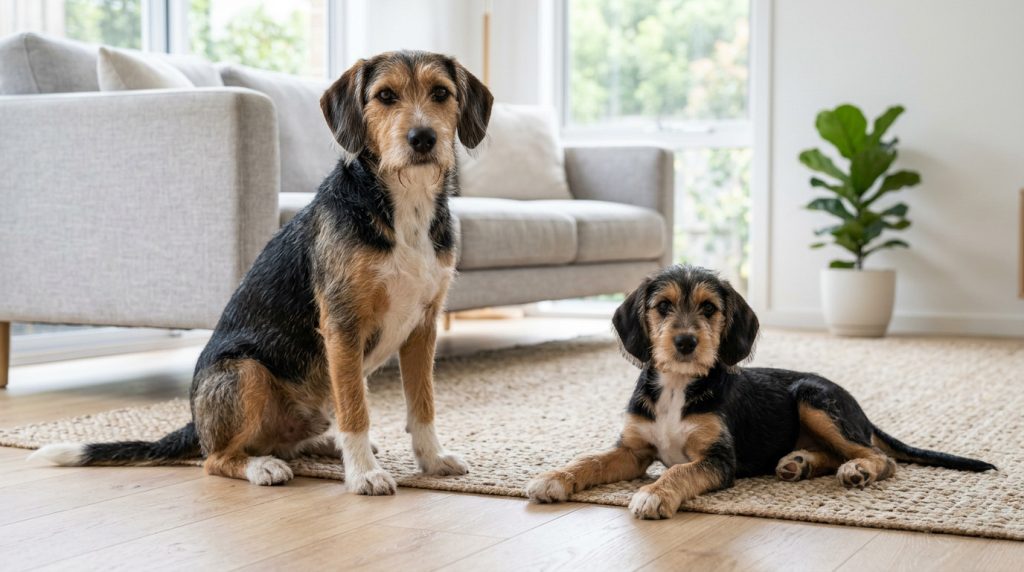
Living with a Schneagle often means enjoying a lively yet manageable companion. These dogs bring together the spirited nature of the Beagle with the affectionate charm of the Miniature Schnauzer. Owners frequently find that Schneagles are keen to be part of family activities, whether that's a walk around the block or a quiet evening at home.
At a glance
Core care
- Size: Small
- Energy: Moderate
- Grooming: Low
- Shedding: Moderate
Support style
- Sensitivity: Moderate
- Training style: Moderate
Breed guide
Choose a section to explore. These notes describe common patterns, but individual dogs vary widely.
The Schneagle, a delightful mix of the Beagle and Miniature Schnauzer, inherits a blend of traits from both its parent breeds. Originally, Beagles were bred for hunting, known for their keen sense of smell and tracking abilities, while Miniature Schnauzers were developed as farm dogs, adept at catching rats and guarding the homestead. This combination results in a dog that is both curious and alert, often displaying a strong desire to explore its surroundings and engage with its family.
Physically, Schneagles are small but sturdy, typically showcasing a mix of the Beagle’s smooth coat and the Schnauzer’s wiry fur. This unique combination means that their grooming needs are relatively low, as their coat requires only occasional brushing to maintain its condition. Owners often appreciate their moderate shedding, which makes them a manageable choice for those who prefer less fur around the home. Their compact size also makes them suitable for various living environments, from apartments to larger homes.
In terms of temperament, Schneagles are known for their friendly and sociable nature. They tend to bond closely with their families and enjoy being involved in daily activities. While they may exhibit some independence, likely inherited from the Beagle side, they are generally eager to please and responsive to training. However, each Schneagle can vary, with some showing more of the Beagle’s tenacity or the Schnauzer’s spirited personality.
Prospective owners should be prepared for a dog that thrives on interaction and mental stimulation. While Schneagles are generally adaptable, it’s important to remember that individual dogs can differ significantly. Factors such as early socialisation, training, and the environment will all play a role in shaping a Schneagle’s behaviour and personality.
Schneagles are often described as being quite sociable, enjoying the company of their human family and other pets. This social nature likely stems from both parent breeds, as Beagles are known for their pack mentality and Schnauzers for their affectionate disposition. Owners often notice that their Schneagle is happiest when they are part of the action, whether that’s joining in on a family walk or simply lounging nearby during a quiet evening.
Their moderate sensitivity means that Schneagles can pick up on the moods of their owners, often responding with comforting companionship. This trait makes them particularly endearing to those who value a dog that seems to understand their emotional state. However, this sensitivity also means they may not respond well to harsh training methods, preferring a gentle and consistent approach.
Trainability in Schneagles is generally moderate, with many owners finding success through positive reinforcement techniques. They are intelligent and willing to learn, but their independent streak, particularly from the Beagle side, can sometimes lead to moments of stubbornness. Patience and consistency are key, and many owners find that training sessions are more productive when they are kept short and engaging.
Overall, Schneagles tend to be adaptable dogs that fit well into a variety of households. While they enjoy social interaction, they are also capable of entertaining themselves with toys or puzzles when necessary. It’s important for potential owners to recognise that while general tendencies can be outlined, each Schneagle will have its own unique personality shaped by its environment and experiences.
A typical day for a Schneagle involves a balance of moderate exercise and mental stimulation. These dogs enjoy daily walks, which cater to their natural curiosity and desire to explore. A brisk walk around the neighbourhood or a trip to the local park usually suffices to meet their physical needs, though they also appreciate the chance to sniff around and investigate their surroundings.
In addition to walks, Schneagles benefit from interactive play sessions. Games like fetch or tug-of-war can be excellent for burning off energy and keeping them engaged. Puzzle toys and treat-dispensing games are also great for mental enrichment, tapping into their problem-solving abilities and keeping their minds sharp.
As with many breeds, the exercise needs of a Schneagle can change with age. Puppies and younger dogs tend to be more energetic, requiring additional playtime and shorter, more frequent walks. As they mature, their energy levels may decrease slightly, but they will still appreciate regular activity to maintain their health and happiness.
Owners should be mindful not to over-exercise their Schneagle, especially in extreme weather conditions. It’s important to monitor their activity levels and adjust as necessary to prevent exhaustion or injury. By providing a balanced routine of physical and mental activities, owners can ensure their Schneagle remains a happy and well-adjusted member of the family.
Training a Schneagle can be a rewarding experience, often characterised by their eagerness to learn and please. Many owners find that their Schneagle responds well to positive reinforcement techniques, such as treats, praise, and play. This approach helps to build a strong bond between dog and owner, fostering trust and cooperation.
Impulse control can be an area where Schneagles require some guidance, particularly if they inherit a strong scent drive from their Beagle lineage. Training sessions that focus on recall and basic commands can be beneficial in managing these instincts. Consistent practice and reinforcement are key to helping them develop good habits and self-control.
Adolescence can be a challenging time for Schneagle owners, as their dogs may test boundaries and exhibit more independent behaviour. Patience and persistence are essential during this stage, as is maintaining a consistent training routine. Engaging them in activities that challenge their minds and bodies can help channel their energy positively.
Ultimately, the success of training a Schneagle lies in understanding their unique blend of traits and adapting methods to suit their personality. Building a strong relationship based on trust and mutual respect will go a long way in ensuring a well-behaved and happy companion. For those new to dog ownership or seeking additional guidance, the course “Puppy Beginnings: Building a Calm Start” can provide valuable insights and techniques.
Schneagles are adaptable dogs that can thrive in a variety of living environments. Their small size and moderate energy levels make them well-suited to both apartment living and homes with larger outdoor spaces. As long as they receive regular exercise and mental stimulation, they are generally content in most settings.
Families with children often find Schneagles to be a delightful addition, as they tend to be playful and affectionate. They usually enjoy the company of kids and can be quite gentle, though supervision is always recommended to ensure positive interactions. Their social nature also means they can get along well with other pets, provided they are introduced properly and given time to adjust.
For individuals or couples, Schneagles offer companionship and a manageable energy level. They are often happy to join in on activities or simply relax at home, making them versatile companions for various lifestyles. Their moderate grooming needs and adaptability further enhance their suitability for different households.
Ultimately, the key to a successful match with a Schneagle lies in understanding their social and exercise needs. Prospective owners should be prepared to engage with their Schneagle regularly, providing opportunities for play, exploration, and bonding. By doing so, they can enjoy a rewarding relationship with this charming mixed breed.
The health and wellbeing of a Schneagle are closely tied to their daily care and lifestyle. Like all dogs, they benefit from regular veterinary check-ups to monitor their health and address any concerns early on. Preventive care, including vaccinations and parasite control, plays a crucial role in keeping them healthy and thriving.
Schneagles may be prone to certain health issues common to their parent breeds, such as hip dysplasia or ear infections. Regular monitoring and early intervention can help manage these conditions effectively. Owners should be attentive to any changes in behaviour or physical condition, as these can often be indicators of underlying health issues.
Maintaining a healthy weight through proper diet and exercise is essential for a Schneagle’s overall health. Obesity can exacerbate joint issues and lead to other health complications, so a balanced diet and regular activity are important. Consulting with a veterinarian about the best dietary plan can help ensure they receive the necessary nutrients without excess calories.
In addition to physical health, mental wellbeing is important for Schneagles. Providing mental stimulation through interactive toys and training can help prevent boredom and associated behavioural issues. By taking a proactive approach to their health and wellbeing, owners can enjoy a long and happy life with their Schneagle.
The Schneagle is a relatively recent addition to the world of designer dogs, combining the traits of the Beagle and Miniature Schnauzer. Each parent breed brings its own unique history and characteristics to the mix, resulting in a dog that is both charming and versatile. Beagles have a long history as scent hounds, originally bred for hunting small game. Their keen sense of smell and tracking ability made them popular among hunters, and these traits continue to influence the Schneagle’s curious and exploratory nature.
Miniature Schnauzers, on the other hand, were developed in Germany as farm dogs, known for their rat-catching skills and protective instincts. Their intelligence and spirited personality have been passed down to the Schneagle, contributing to its lively and alert demeanour. This blend of histories creates a dog that is both attentive and engaging, making them a delightful companion for many households.
The development of the Schneagle as a mixed breed likely began in the late 20th century, as interest in designer dogs grew. Breeders sought to combine the best traits of both parent breeds, resulting in a dog that is adaptable, friendly, and manageable in size. This hybridisation reflects a broader trend in dog breeding, where the focus is on creating companions that fit modern lifestyles.
Understanding the Schneagle’s origins helps explain many of its behaviours and traits. Their inquisitive nature, moderate energy levels, and social disposition are all rooted in the histories of the Beagle and Miniature Schnauzer. By appreciating this background, owners can better understand and meet the needs of their Schneagle, ensuring a harmonious and fulfilling relationship.
What shapes individual dogs
- Early social experiences
- Training approach
- Environment & routine
- Genetics & breeding
- Health & pain
- Age / life stage
The Schneagle, a delightful mix of the Beagle and Miniature Schnauzer, inherits a blend of traits from both its parent breeds. Originally, Beagles were bred for hunting, known for their keen sense of smell and tracking abilities, while Miniature Schnauzers were developed as farm dogs, adept at catching rats and guarding the homestead. This combination results in a dog that is both curious and alert, often displaying a strong desire to explore its surroundings and engage with its family.
Physically, Schneagles are small but sturdy, typically showcasing a mix of the Beagle’s smooth coat and the Schnauzer’s wiry fur. This unique combination means that their grooming needs are relatively low, as their coat requires only occasional brushing to maintain its condition. Owners often appreciate their moderate shedding, which makes them a manageable choice for those who prefer less fur around the home. Their compact size also makes them suitable for various living environments, from apartments to larger homes.
In terms of temperament, Schneagles are known for their friendly and sociable nature. They tend to bond closely with their families and enjoy being involved in daily activities. While they may exhibit some independence, likely inherited from the Beagle side, they are generally eager to please and responsive to training. However, each Schneagle can vary, with some showing more of the Beagle’s tenacity or the Schnauzer’s spirited personality.
Prospective owners should be prepared for a dog that thrives on interaction and mental stimulation. While Schneagles are generally adaptable, it’s important to remember that individual dogs can differ significantly. Factors such as early socialisation, training, and the environment will all play a role in shaping a Schneagle’s behaviour and personality.
Schneagles are often described as being quite sociable, enjoying the company of their human family and other pets. This social nature likely stems from both parent breeds, as Beagles are known for their pack mentality and Schnauzers for their affectionate disposition. Owners often notice that their Schneagle is happiest when they are part of the action, whether that’s joining in on a family walk or simply lounging nearby during a quiet evening.
Their moderate sensitivity means that Schneagles can pick up on the moods of their owners, often responding with comforting companionship. This trait makes them particularly endearing to those who value a dog that seems to understand their emotional state. However, this sensitivity also means they may not respond well to harsh training methods, preferring a gentle and consistent approach.
Trainability in Schneagles is generally moderate, with many owners finding success through positive reinforcement techniques. They are intelligent and willing to learn, but their independent streak, particularly from the Beagle side, can sometimes lead to moments of stubbornness. Patience and consistency are key, and many owners find that training sessions are more productive when they are kept short and engaging.
Overall, Schneagles tend to be adaptable dogs that fit well into a variety of households. While they enjoy social interaction, they are also capable of entertaining themselves with toys or puzzles when necessary. It’s important for potential owners to recognise that while general tendencies can be outlined, each Schneagle will have its own unique personality shaped by its environment and experiences.
A typical day for a Schneagle involves a balance of moderate exercise and mental stimulation. These dogs enjoy daily walks, which cater to their natural curiosity and desire to explore. A brisk walk around the neighbourhood or a trip to the local park usually suffices to meet their physical needs, though they also appreciate the chance to sniff around and investigate their surroundings.
In addition to walks, Schneagles benefit from interactive play sessions. Games like fetch or tug-of-war can be excellent for burning off energy and keeping them engaged. Puzzle toys and treat-dispensing games are also great for mental enrichment, tapping into their problem-solving abilities and keeping their minds sharp.
As with many breeds, the exercise needs of a Schneagle can change with age. Puppies and younger dogs tend to be more energetic, requiring additional playtime and shorter, more frequent walks. As they mature, their energy levels may decrease slightly, but they will still appreciate regular activity to maintain their health and happiness.
Owners should be mindful not to over-exercise their Schneagle, especially in extreme weather conditions. It’s important to monitor their activity levels and adjust as necessary to prevent exhaustion or injury. By providing a balanced routine of physical and mental activities, owners can ensure their Schneagle remains a happy and well-adjusted member of the family.
Training a Schneagle can be a rewarding experience, often characterised by their eagerness to learn and please. Many owners find that their Schneagle responds well to positive reinforcement techniques, such as treats, praise, and play. This approach helps to build a strong bond between dog and owner, fostering trust and cooperation.
Impulse control can be an area where Schneagles require some guidance, particularly if they inherit a strong scent drive from their Beagle lineage. Training sessions that focus on recall and basic commands can be beneficial in managing these instincts. Consistent practice and reinforcement are key to helping them develop good habits and self-control.
Adolescence can be a challenging time for Schneagle owners, as their dogs may test boundaries and exhibit more independent behaviour. Patience and persistence are essential during this stage, as is maintaining a consistent training routine. Engaging them in activities that challenge their minds and bodies can help channel their energy positively.
Ultimately, the success of training a Schneagle lies in understanding their unique blend of traits and adapting methods to suit their personality. Building a strong relationship based on trust and mutual respect will go a long way in ensuring a well-behaved and happy companion. For those new to dog ownership or seeking additional guidance, the course “Puppy Beginnings: Building a Calm Start” can provide valuable insights and techniques.
Schneagles are adaptable dogs that can thrive in a variety of living environments. Their small size and moderate energy levels make them well-suited to both apartment living and homes with larger outdoor spaces. As long as they receive regular exercise and mental stimulation, they are generally content in most settings.
Families with children often find Schneagles to be a delightful addition, as they tend to be playful and affectionate. They usually enjoy the company of kids and can be quite gentle, though supervision is always recommended to ensure positive interactions. Their social nature also means they can get along well with other pets, provided they are introduced properly and given time to adjust.
For individuals or couples, Schneagles offer companionship and a manageable energy level. They are often happy to join in on activities or simply relax at home, making them versatile companions for various lifestyles. Their moderate grooming needs and adaptability further enhance their suitability for different households.
Ultimately, the key to a successful match with a Schneagle lies in understanding their social and exercise needs. Prospective owners should be prepared to engage with their Schneagle regularly, providing opportunities for play, exploration, and bonding. By doing so, they can enjoy a rewarding relationship with this charming mixed breed.
The health and wellbeing of a Schneagle are closely tied to their daily care and lifestyle. Like all dogs, they benefit from regular veterinary check-ups to monitor their health and address any concerns early on. Preventive care, including vaccinations and parasite control, plays a crucial role in keeping them healthy and thriving.
Schneagles may be prone to certain health issues common to their parent breeds, such as hip dysplasia or ear infections. Regular monitoring and early intervention can help manage these conditions effectively. Owners should be attentive to any changes in behaviour or physical condition, as these can often be indicators of underlying health issues.
Maintaining a healthy weight through proper diet and exercise is essential for a Schneagle’s overall health. Obesity can exacerbate joint issues and lead to other health complications, so a balanced diet and regular activity are important. Consulting with a veterinarian about the best dietary plan can help ensure they receive the necessary nutrients without excess calories.
In addition to physical health, mental wellbeing is important for Schneagles. Providing mental stimulation through interactive toys and training can help prevent boredom and associated behavioural issues. By taking a proactive approach to their health and wellbeing, owners can enjoy a long and happy life with their Schneagle.
The Schneagle is a relatively recent addition to the world of designer dogs, combining the traits of the Beagle and Miniature Schnauzer. Each parent breed brings its own unique history and characteristics to the mix, resulting in a dog that is both charming and versatile. Beagles have a long history as scent hounds, originally bred for hunting small game. Their keen sense of smell and tracking ability made them popular among hunters, and these traits continue to influence the Schneagle’s curious and exploratory nature.
Miniature Schnauzers, on the other hand, were developed in Germany as farm dogs, known for their rat-catching skills and protective instincts. Their intelligence and spirited personality have been passed down to the Schneagle, contributing to its lively and alert demeanour. This blend of histories creates a dog that is both attentive and engaging, making them a delightful companion for many households.
The development of the Schneagle as a mixed breed likely began in the late 20th century, as interest in designer dogs grew. Breeders sought to combine the best traits of both parent breeds, resulting in a dog that is adaptable, friendly, and manageable in size. This hybridisation reflects a broader trend in dog breeding, where the focus is on creating companions that fit modern lifestyles.
Understanding the Schneagle’s origins helps explain many of its behaviours and traits. Their inquisitive nature, moderate energy levels, and social disposition are all rooted in the histories of the Beagle and Miniature Schnauzer. By appreciating this background, owners can better understand and meet the needs of their Schneagle, ensuring a harmonious and fulfilling relationship.
What shapes individual dogs
- Early social experiences
- Training approach
- Environment & routine
- Genetics & breeding
- Health & pain
- Age / life stage
Want support with this?
This course is ideal for Schneagle owners looking to establish a strong foundation during the early stages of their dog's life.