
Frug
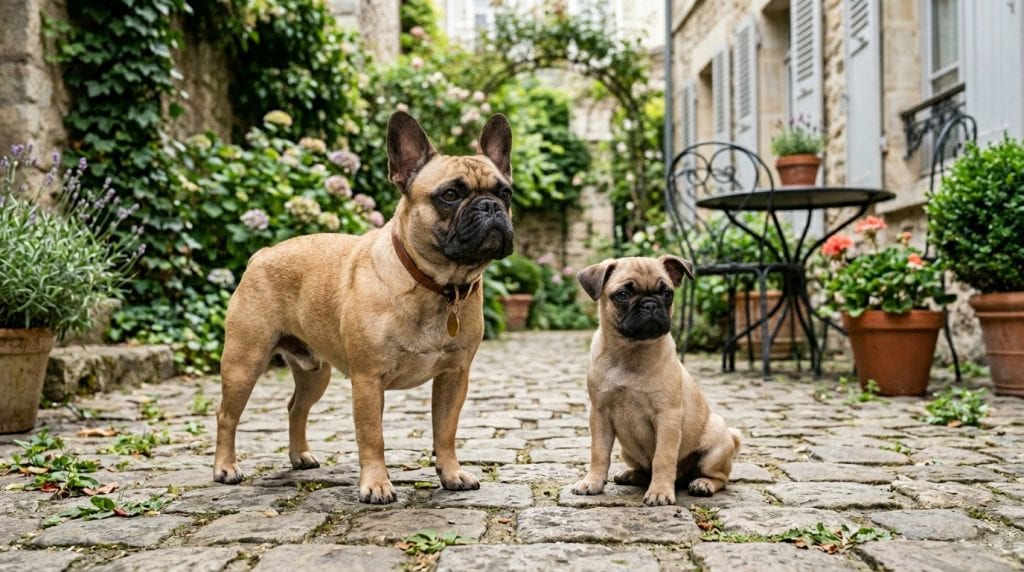
Living with a Frug is like having a small, lively companion who thrives on interaction. They often display a charming blend of curiosity and affection, making them delightful to have around. Owners frequently notice their Frug's keen interest in being part of family activities, whether it's a walk in the park or a quiet evening at home.
At a glance
Core care
- Size: Small
- Energy: Moderate
- Grooming: Low
- Shedding: Moderate
Support style
- Sensitivity: High
- Training style: Moderate
Breed guide
Choose a section to explore. These notes describe common patterns, but individual dogs vary widely.
The Frug, a delightful mix of the French Bulldog and the Pug, carries a rich heritage that influences its modern-day personality. This crossbreed was developed to combine the best traits of both parent breeds, resulting in a small dog with a big personality. The French Bulldog’s history as a companion dog and the Pug’s ancient roots as a lapdog contribute to the Frug’s affectionate and sociable nature. These dogs are often seen as charming companions who enjoy being in the company of their human families.
Physically, Frugs are small and sturdy, typically inheriting the compact build of both parent breeds. Their appearance often includes the distinctive bat-like ears of the French Bulldog and the expressive eyes of the Pug. This combination gives them a unique and endearing look that many find irresistible. In everyday life, their size makes them well-suited to apartment living, though they are equally happy in larger homes, provided they have ample opportunities for interaction and play.
In terms of temperament, Frugs are known for their lively and affectionate nature. Owners often notice their tendency to form strong bonds with family members, displaying loyalty and a desire to be involved in daily activities. While they are generally friendly and social, their high sensitivity means they can be quite attuned to the emotions of those around them. This sensitivity can make them excellent companions but also means they may require gentle handling and understanding.
It’s important to remember that while breed traits provide a general guide, individual Frugs can vary. Factors such as genetics, early socialisation, and environment play significant roles in shaping each dog’s personality. Prospective owners should be prepared for a dog that may display a range of behaviours, from playful and outgoing to more reserved and cautious, depending on their unique experiences and upbringing.
Frugs are often described as social butterflies, eager to make friends and be part of the action. This social nature is likely a blend of their parent breeds’ histories as companion animals, which have been bred to thrive on human interaction. Many Frug owners notice their dog’s enthusiasm for meeting new people and animals, making them a popular choice for families who enjoy a bustling household.
Their high sensitivity means that Frugs are particularly attuned to the emotions of their human companions. This can be a double-edged sword; while it makes them wonderfully empathetic pets, it also means they can become easily stressed by tension or loud environments. Owners often find that maintaining a calm and positive atmosphere helps their Frug feel secure and content.
Training a Frug can be a rewarding experience, though it requires patience and consistency. Their moderate trainability means they are capable of learning a variety of commands and tricks, but they may need extra encouragement and positive reinforcement. Frugs are known for their occasional stubborn streak, which can be managed with a gentle and understanding approach that respects their sensitive nature.
Overall, living with a Frug is a joyful experience, filled with playful antics and affectionate moments. They tend to thrive in environments where they feel loved and included, and they often repay that love tenfold. While they may have their quirks, such as occasional stubbornness or sensitivity to change, these traits are part of what makes each Frug a unique and cherished member of the family.
A typical day for a Frug involves moderate exercise, balanced with plenty of social interaction and mental stimulation. While they may not require the intense physical activity of larger breeds, they do enjoy regular walks and playtime. A brisk walk around the neighbourhood or a game of fetch in the garden can be just the ticket to keep a Frug happy and healthy.
Mental enrichment is equally important for this intelligent breed. Frugs often benefit from puzzle toys, interactive games, and training sessions that challenge their minds. Owners might find that their Frug enjoys learning new tricks or participating in scent games, which can provide both mental stimulation and bonding opportunities.
As Frugs age, their exercise needs may change. Puppies and young adults usually have bursts of energy and require more frequent activity, while older Frugs might prefer shorter, more leisurely outings. It’s essential to adjust their routine according to their life stage and individual health needs, ensuring they remain active and engaged throughout their lives.
Owners should be mindful of not overexerting their Frug, especially in hot weather, as their brachycephalic (short-nosed) anatomy can make them prone to overheating. Providing plenty of water and shade, and avoiding exercise during the hottest parts of the day, can help keep them safe and comfortable. With the right balance of activity and rest, Frugs can enjoy a fulfilling and active lifestyle.
Training a Frug often feels like a delightful blend of challenge and reward. These dogs are intelligent and eager to please, but their streak of independence can sometimes make training sessions interesting. Owners often find that a positive and patient approach works best, using treats and praise to encourage desired behaviours.
Consistency is key when training a Frug. They respond well to routines and clear expectations, which help them understand what is expected of them. Short, frequent training sessions tend to be more effective than longer ones, as they can maintain the Frug’s attention and enthusiasm without overwhelming them.
Impulse control can be an area where Frugs need extra support, especially during their adolescent phase. Owners may notice their Frug displaying typical puppy behaviours, such as jumping up or chewing, which can be managed with consistent training and redirection. Providing plenty of opportunities for mental and physical enrichment can also help channel their energy in positive ways.
Building a strong relationship based on trust and mutual respect is crucial when training a Frug. They thrive in environments where they feel secure and understood, and where their efforts are met with encouragement rather than frustration. With time and patience, most Frugs can learn a wide range of commands and tricks, becoming well-mannered and cherished companions.
Frugs tend to adapt well to various living environments, making them a versatile choice for many households. Their small size and moderate exercise needs mean they can thrive in both apartments and larger homes, provided they receive plenty of attention and interaction from their families. Owners often find that Frugs are happiest when they are included in daily activities and routines.
This breed generally does well in homes with children, as they are typically friendly and playful. However, due to their high sensitivity, it’s important to teach children how to interact gently and respectfully with their Frug. Supervised playtime can help ensure positive experiences for both the dog and the children, fostering a strong bond between them.
Frugs can also coexist peacefully with other pets, especially if they are introduced properly and given time to adjust. Their social nature often means they enjoy the company of other animals, though individual temperaments can vary. Owners should monitor initial interactions and provide guidance to ensure harmonious relationships.
Ultimately, the best home for a Frug is one where they are valued as a member of the family. They thrive in environments where they feel loved and included, and where their needs for companionship and activity are met. With the right care and attention, Frugs can bring joy and laughter to a wide range of households.
A Frug’s health is closely tied to their overall wellbeing and quality of life. Like all breeds, they can be prone to certain health issues, some of which are inherited from their parent breeds. Regular veterinary check-ups and preventive care are essential to help catch potential problems early and maintain their health.
One common concern for Frugs is their brachycephalic anatomy, which can lead to breathing difficulties, especially in hot or humid weather. Owners should be cautious about overexertion and ensure their Frug has access to cool, shaded areas during warmer months. Monitoring their breathing and seeking veterinary advice if any issues arise is crucial.
Skin and ear infections can also be more prevalent in Frugs, given their facial folds and ear structure. Regular cleaning and grooming can help prevent these issues, but owners should be vigilant for any signs of discomfort or irritation. If any symptoms are observed, consulting with a veterinarian is advisable.
Overall, a proactive approach to health care, including a balanced diet, regular exercise, and mental stimulation, can help keep a Frug in good shape. By staying informed and attentive to their Frug’s needs, owners can enjoy many happy and healthy years with their furry companion.
The Frug is a relatively recent addition to the world of designer breeds, combining the charming characteristics of the French Bulldog and the Pug. Both parent breeds have rich histories as companion animals, with the French Bulldog originating in France as a lapdog for lace workers and the Pug boasting a long lineage as a favourite of Chinese royalty. This blend of companionship and loyalty is evident in the Frug’s affectionate nature today.
The French Bulldog’s journey began in England, where they were bred as miniature versions of the Bulldog. They later gained popularity in France, where they were cherished for their playful and gentle disposition. The Pug, on the other hand, has ancient roots, tracing back to China over two thousand years ago. Known for their distinctive features and charming personalities, Pugs were often kept as companions to Chinese emperors.
The development of the Frug aimed to combine the best traits of both breeds, resulting in a small, sociable dog with a unique appearance. This crossbreed has gained popularity for its delightful mix of the French Bulldog’s bat-like ears and the Pug’s expressive eyes, along with a temperament that is both playful and affectionate.
Today, the Frug continues to win hearts with its endearing personality and adaptable nature. While they may not have a long history as a distinct breed, their parentage provides a rich tapestry of traits that owners can appreciate. Understanding the Frug’s origins helps explain their love for companionship and their ability to bring joy to a variety of households.
What shapes individual dogs
- Early social experiences
- Training approach
- Environment & routine
- Genetics & breeding
- Health & pain
- Age / life stage
The Frug, a delightful mix of the French Bulldog and the Pug, carries a rich heritage that influences its modern-day personality. This crossbreed was developed to combine the best traits of both parent breeds, resulting in a small dog with a big personality. The French Bulldog’s history as a companion dog and the Pug’s ancient roots as a lapdog contribute to the Frug’s affectionate and sociable nature. These dogs are often seen as charming companions who enjoy being in the company of their human families.
Physically, Frugs are small and sturdy, typically inheriting the compact build of both parent breeds. Their appearance often includes the distinctive bat-like ears of the French Bulldog and the expressive eyes of the Pug. This combination gives them a unique and endearing look that many find irresistible. In everyday life, their size makes them well-suited to apartment living, though they are equally happy in larger homes, provided they have ample opportunities for interaction and play.
In terms of temperament, Frugs are known for their lively and affectionate nature. Owners often notice their tendency to form strong bonds with family members, displaying loyalty and a desire to be involved in daily activities. While they are generally friendly and social, their high sensitivity means they can be quite attuned to the emotions of those around them. This sensitivity can make them excellent companions but also means they may require gentle handling and understanding.
It’s important to remember that while breed traits provide a general guide, individual Frugs can vary. Factors such as genetics, early socialisation, and environment play significant roles in shaping each dog’s personality. Prospective owners should be prepared for a dog that may display a range of behaviours, from playful and outgoing to more reserved and cautious, depending on their unique experiences and upbringing.
Frugs are often described as social butterflies, eager to make friends and be part of the action. This social nature is likely a blend of their parent breeds’ histories as companion animals, which have been bred to thrive on human interaction. Many Frug owners notice their dog’s enthusiasm for meeting new people and animals, making them a popular choice for families who enjoy a bustling household.
Their high sensitivity means that Frugs are particularly attuned to the emotions of their human companions. This can be a double-edged sword; while it makes them wonderfully empathetic pets, it also means they can become easily stressed by tension or loud environments. Owners often find that maintaining a calm and positive atmosphere helps their Frug feel secure and content.
Training a Frug can be a rewarding experience, though it requires patience and consistency. Their moderate trainability means they are capable of learning a variety of commands and tricks, but they may need extra encouragement and positive reinforcement. Frugs are known for their occasional stubborn streak, which can be managed with a gentle and understanding approach that respects their sensitive nature.
Overall, living with a Frug is a joyful experience, filled with playful antics and affectionate moments. They tend to thrive in environments where they feel loved and included, and they often repay that love tenfold. While they may have their quirks, such as occasional stubbornness or sensitivity to change, these traits are part of what makes each Frug a unique and cherished member of the family.
A typical day for a Frug involves moderate exercise, balanced with plenty of social interaction and mental stimulation. While they may not require the intense physical activity of larger breeds, they do enjoy regular walks and playtime. A brisk walk around the neighbourhood or a game of fetch in the garden can be just the ticket to keep a Frug happy and healthy.
Mental enrichment is equally important for this intelligent breed. Frugs often benefit from puzzle toys, interactive games, and training sessions that challenge their minds. Owners might find that their Frug enjoys learning new tricks or participating in scent games, which can provide both mental stimulation and bonding opportunities.
As Frugs age, their exercise needs may change. Puppies and young adults usually have bursts of energy and require more frequent activity, while older Frugs might prefer shorter, more leisurely outings. It’s essential to adjust their routine according to their life stage and individual health needs, ensuring they remain active and engaged throughout their lives.
Owners should be mindful of not overexerting their Frug, especially in hot weather, as their brachycephalic (short-nosed) anatomy can make them prone to overheating. Providing plenty of water and shade, and avoiding exercise during the hottest parts of the day, can help keep them safe and comfortable. With the right balance of activity and rest, Frugs can enjoy a fulfilling and active lifestyle.
Training a Frug often feels like a delightful blend of challenge and reward. These dogs are intelligent and eager to please, but their streak of independence can sometimes make training sessions interesting. Owners often find that a positive and patient approach works best, using treats and praise to encourage desired behaviours.
Consistency is key when training a Frug. They respond well to routines and clear expectations, which help them understand what is expected of them. Short, frequent training sessions tend to be more effective than longer ones, as they can maintain the Frug’s attention and enthusiasm without overwhelming them.
Impulse control can be an area where Frugs need extra support, especially during their adolescent phase. Owners may notice their Frug displaying typical puppy behaviours, such as jumping up or chewing, which can be managed with consistent training and redirection. Providing plenty of opportunities for mental and physical enrichment can also help channel their energy in positive ways.
Building a strong relationship based on trust and mutual respect is crucial when training a Frug. They thrive in environments where they feel secure and understood, and where their efforts are met with encouragement rather than frustration. With time and patience, most Frugs can learn a wide range of commands and tricks, becoming well-mannered and cherished companions.
Frugs tend to adapt well to various living environments, making them a versatile choice for many households. Their small size and moderate exercise needs mean they can thrive in both apartments and larger homes, provided they receive plenty of attention and interaction from their families. Owners often find that Frugs are happiest when they are included in daily activities and routines.
This breed generally does well in homes with children, as they are typically friendly and playful. However, due to their high sensitivity, it’s important to teach children how to interact gently and respectfully with their Frug. Supervised playtime can help ensure positive experiences for both the dog and the children, fostering a strong bond between them.
Frugs can also coexist peacefully with other pets, especially if they are introduced properly and given time to adjust. Their social nature often means they enjoy the company of other animals, though individual temperaments can vary. Owners should monitor initial interactions and provide guidance to ensure harmonious relationships.
Ultimately, the best home for a Frug is one where they are valued as a member of the family. They thrive in environments where they feel loved and included, and where their needs for companionship and activity are met. With the right care and attention, Frugs can bring joy and laughter to a wide range of households.
A Frug’s health is closely tied to their overall wellbeing and quality of life. Like all breeds, they can be prone to certain health issues, some of which are inherited from their parent breeds. Regular veterinary check-ups and preventive care are essential to help catch potential problems early and maintain their health.
One common concern for Frugs is their brachycephalic anatomy, which can lead to breathing difficulties, especially in hot or humid weather. Owners should be cautious about overexertion and ensure their Frug has access to cool, shaded areas during warmer months. Monitoring their breathing and seeking veterinary advice if any issues arise is crucial.
Skin and ear infections can also be more prevalent in Frugs, given their facial folds and ear structure. Regular cleaning and grooming can help prevent these issues, but owners should be vigilant for any signs of discomfort or irritation. If any symptoms are observed, consulting with a veterinarian is advisable.
Overall, a proactive approach to health care, including a balanced diet, regular exercise, and mental stimulation, can help keep a Frug in good shape. By staying informed and attentive to their Frug’s needs, owners can enjoy many happy and healthy years with their furry companion.
The Frug is a relatively recent addition to the world of designer breeds, combining the charming characteristics of the French Bulldog and the Pug. Both parent breeds have rich histories as companion animals, with the French Bulldog originating in France as a lapdog for lace workers and the Pug boasting a long lineage as a favourite of Chinese royalty. This blend of companionship and loyalty is evident in the Frug’s affectionate nature today.
The French Bulldog’s journey began in England, where they were bred as miniature versions of the Bulldog. They later gained popularity in France, where they were cherished for their playful and gentle disposition. The Pug, on the other hand, has ancient roots, tracing back to China over two thousand years ago. Known for their distinctive features and charming personalities, Pugs were often kept as companions to Chinese emperors.
The development of the Frug aimed to combine the best traits of both breeds, resulting in a small, sociable dog with a unique appearance. This crossbreed has gained popularity for its delightful mix of the French Bulldog’s bat-like ears and the Pug’s expressive eyes, along with a temperament that is both playful and affectionate.
Today, the Frug continues to win hearts with its endearing personality and adaptable nature. While they may not have a long history as a distinct breed, their parentage provides a rich tapestry of traits that owners can appreciate. Understanding the Frug’s origins helps explain their love for companionship and their ability to bring joy to a variety of households.
What shapes individual dogs
- Early social experiences
- Training approach
- Environment & routine
- Genetics & breeding
- Health & pain
- Age / life stage
Want support with this?
This course is ideal for Frug owners looking to deepen their understanding of their dog's sensitive and social nature.