
Akipoo
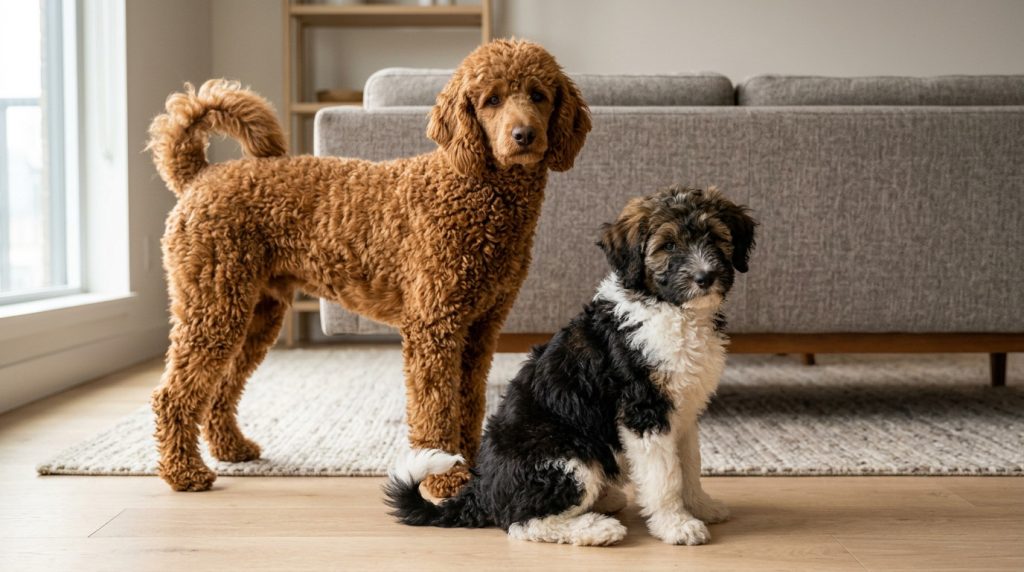
Living with an Akipoo means embracing a blend of curiosity and companionship. These dogs often exhibit a keen interest in their surroundings, making them attentive partners in everyday life. Their presence is typically characterised by a willingness to engage and a moderate energy that keeps things lively without overwhelming the household.
At a glance
Core care
- Size: Medium
- Energy: Moderate to high
- Grooming: Low
- Shedding: Moderate
Support style
- Sensitivity: Moderate
- Training style: Willing
Breed guide
Choose a section to explore. These notes describe common patterns, but individual dogs vary widely.
The Akipoo, a delightful mix of the Akita and Poodle, brings together a history of working versatility and companionship. The Akita’s origins as a hunting dog in Japan and the Poodle’s background as a water retriever in Germany and France contribute to the Akipoo’s adaptable nature today. This blend of heritage often results in a dog that is both alert and eager to participate in family activities, reflecting its diverse lineage.
Physically, the Akipoo is a medium-sized dog, often displaying a combination of the Akita’s robust build and the Poodle’s elegant stature. This mix can result in a dog that is both sturdy and agile, making them well-suited for a variety of activities. Owners might notice their Akipoo’s expressive eyes and a coat that can range from the Akita’s dense fur to the Poodle’s curly locks, requiring moderate grooming to keep them looking their best.
In terms of temperament, Akipoos are generally known for their willingness to engage with their families. They often enjoy being involved in household routines and can be quite social, though individual dogs may vary in their level of outgoingness. Their moderate sensitivity means they are usually attuned to their environment and the emotions of their human companions, which can make them both responsive and empathetic.
It’s important for potential owners to recognize that while breed tendencies provide a general guide, each Akipoo is unique. Factors such as genetics, upbringing, and daily interactions all play a role in shaping an individual dog’s personality. Thus, while many Akipoos may share common traits, they will each bring their own quirks and charms to their families.
Akipoos often display a social nature that makes them enjoyable companions in a variety of settings. Many owners find that these dogs are naturally curious and enjoy exploring their surroundings, whether that means a walk in the park or simply observing the daily goings-on at home. This curiosity is often paired with a moderate sensitivity, allowing them to be quite perceptive of their owner’s moods and needs.
The Akipoo’s social motivations can be seen in their eagerness to participate in family activities. They often thrive in environments where they feel included and valued, and this can manifest in their willingness to engage in play or simply relax alongside their human companions. Their trainability is generally high, as they tend to respond well to positive reinforcement and consistent training routines.
Owners frequently notice that Akipoos can be quite adaptable, adjusting well to different social situations. This adaptability, paired with their moderate energy levels, makes them suitable for a range of activities, from quiet evenings at home to more active outings. However, their sensitivity means they may require gentle handling, especially in new or overwhelming situations.
Overall, the Akipoo’s temperament is one of balance, combining social engagement with a perceptive nature. While they often exhibit a willingness to learn and please, individual dogs will vary in their specific behaviours and preferences. Understanding and nurturing their unique personalities can lead to a rewarding relationship that highlights the best of this mixed breed’s traits.
A typical day for an Akipoo often includes a mix of physical activity and mental stimulation. These dogs generally enjoy a couple of walks each day, which helps to satisfy their moderate to high energy levels. In addition to walks, many Akipoos appreciate playtime in a secure garden or park, where they can explore and engage with their environment.
Mental enrichment is equally important for this breed. Puzzle toys, training sessions, and interactive games can help keep an Akipoo’s mind sharp and engaged. Owners might find that these dogs enjoy learning new tricks or participating in activities that challenge them both physically and mentally. This combination of exercise and enrichment helps to prevent boredom and can contribute to a well-rounded, content dog.
As Akipoos age, their exercise needs may change. Younger dogs often require more frequent and intense activity, while older Akipoos might prefer gentler, more leisurely walks. It’s important for owners to adjust their routines to accommodate these changes, ensuring their dog remains comfortable and healthy throughout their life stages.
While Akipoos typically enjoy a variety of activities, it’s crucial to avoid over-exercising, especially in extreme weather conditions. Their moderate sensitivity means they can be affected by heat or cold, so providing appropriate exercise that considers the weather and their individual needs is essential. This balanced approach helps ensure that an Akipoo remains happy and healthy, with exercise routines that suit their unique personality and physical capabilities.
Training an Akipoo often feels like a rewarding experience due to their willingness to learn and engage. Many owners find that these dogs respond well to positive reinforcement techniques, such as treats, praise, and play. This approach helps to build a strong bond between the dog and owner, fostering a cooperative training environment.
Given their moderate sensitivity, Akipoos benefit from a gentle and consistent training approach. They tend to thrive when they understand what is expected of them, and clear, consistent commands can help achieve this. Owners may notice that their Akipoo is particularly responsive to training sessions that incorporate variety and fun, keeping the dog motivated and eager to participate.
Adolescence can bring its own set of challenges, as with many breeds. During this stage, Akipoos might test boundaries or exhibit increased independence. Patience and consistency are key during this time, as maintaining a steady training routine can help guide them through this developmental phase. Enrolling in a course like “Puppy Beginnings: Building a Calm Start” can provide valuable support and insights.
Ultimately, the relationship between an Akipoo and their owner is central to successful training. Building trust and understanding helps ensure that the dog feels secure and willing to learn. By focusing on positive interactions and reinforcing desired behaviours, owners can help their Akipoo develop into a well-mannered and confident companion.
The Akipoo tends to adapt well to a variety of living environments, thanks to their moderate size and energy levels. They are often well-suited to homes with access to outdoor space, where they can enjoy playtime and exploration. However, they can also thrive in apartments, provided they receive adequate exercise and mental stimulation.
Owners often find that the Akipoo’s social nature makes them a good fit for families. They typically enjoy being part of the household and can form strong bonds with family members, including children. While they generally get along well with kids, supervision is recommended to ensure positive interactions, particularly with younger children.
When it comes to other pets, Akipoos can be quite adaptable. Their social tendencies mean they often get along with other dogs, and with proper introductions, they can coexist peacefully with cats or other animals. As with any breed, early socialisation and positive experiences are key to fostering harmonious relationships.
Ultimately, the Akipoo’s suitability for a particular home depends on the lifestyle and preferences of the owner. They tend to do well in environments where they receive attention, exercise, and mental engagement. Understanding and accommodating their needs can lead to a fulfilling and rewarding companionship, making them a versatile addition to many households.
The health of an Akipoo is closely tied to their overall wellbeing and quality of life. As a mixed breed, they may benefit from hybrid vigour, but it’s important to be aware of potential health issues inherited from their parent breeds. Regular veterinary check-ups are crucial to monitor their health and catch any concerns early.
Common health considerations for Akipoos can include hip dysplasia, a condition that affects joint health and mobility. Maintaining a healthy weight and providing regular, appropriate exercise can help manage this risk. Additionally, eye conditions such as cataracts may occur, so regular eye checks are advisable.
Preventive care plays a significant role in keeping an Akipoo healthy. This includes routine vaccinations, parasite control, and dental care. Dental health is particularly important, as small breeds can be prone to dental issues. Regular brushing and dental chews can help maintain oral hygiene and prevent problems.
Owners should be observant of any changes in their Akipoo’s behaviour or physical condition, as these can be indicators of underlying health issues. If any concerns arise, seeking veterinary advice promptly is always recommended. By staying proactive and informed, owners can help ensure their Akipoo leads a healthy and happy life.
The Akipoo is a relatively recent hybrid, combining the traits of the Akita and the Poodle, two breeds with distinct histories. The Akita hails from Japan, where it was originally bred for hunting large game such as boar and bear. This background contributes to the Akita’s reputation for courage and loyalty, traits that can be seen in the Akipoo.
The Poodle, on the other hand, has its roots in Germany and France, where it was developed as a water retriever. Known for their intelligence and trainability, Poodles have long been valued for their versatility and adaptability. These characteristics often manifest in the Akipoo, making them eager learners and engaging companions.
The combination of these two breeds results in a dog that embodies a mix of qualities from both parents. The Akipoo often inherits the Akita’s protective instincts and the Poodle’s playful nature, creating a balanced and adaptable companion. This blend of traits makes them well-suited to a variety of roles, from family pet to active partner in outdoor activities.
Understanding the history and origins of the Akipoo helps explain many of their modern traits. Their diverse heritage contributes to their unique personality and behaviour, offering owners a dog that is both loyal and lively. This rich background adds depth to their character, making them a fascinating addition to any household.
What shapes individual dogs
- Early social experiences
- Training approach
- Environment & routine
- Genetics & breeding
- Health & pain
- Age / life stage
The Akipoo, a delightful mix of the Akita and Poodle, brings together a history of working versatility and companionship. The Akita’s origins as a hunting dog in Japan and the Poodle’s background as a water retriever in Germany and France contribute to the Akipoo’s adaptable nature today. This blend of heritage often results in a dog that is both alert and eager to participate in family activities, reflecting its diverse lineage.
Physically, the Akipoo is a medium-sized dog, often displaying a combination of the Akita’s robust build and the Poodle’s elegant stature. This mix can result in a dog that is both sturdy and agile, making them well-suited for a variety of activities. Owners might notice their Akipoo’s expressive eyes and a coat that can range from the Akita’s dense fur to the Poodle’s curly locks, requiring moderate grooming to keep them looking their best.
In terms of temperament, Akipoos are generally known for their willingness to engage with their families. They often enjoy being involved in household routines and can be quite social, though individual dogs may vary in their level of outgoingness. Their moderate sensitivity means they are usually attuned to their environment and the emotions of their human companions, which can make them both responsive and empathetic.
It’s important for potential owners to recognize that while breed tendencies provide a general guide, each Akipoo is unique. Factors such as genetics, upbringing, and daily interactions all play a role in shaping an individual dog’s personality. Thus, while many Akipoos may share common traits, they will each bring their own quirks and charms to their families.
Akipoos often display a social nature that makes them enjoyable companions in a variety of settings. Many owners find that these dogs are naturally curious and enjoy exploring their surroundings, whether that means a walk in the park or simply observing the daily goings-on at home. This curiosity is often paired with a moderate sensitivity, allowing them to be quite perceptive of their owner’s moods and needs.
The Akipoo’s social motivations can be seen in their eagerness to participate in family activities. They often thrive in environments where they feel included and valued, and this can manifest in their willingness to engage in play or simply relax alongside their human companions. Their trainability is generally high, as they tend to respond well to positive reinforcement and consistent training routines.
Owners frequently notice that Akipoos can be quite adaptable, adjusting well to different social situations. This adaptability, paired with their moderate energy levels, makes them suitable for a range of activities, from quiet evenings at home to more active outings. However, their sensitivity means they may require gentle handling, especially in new or overwhelming situations.
Overall, the Akipoo’s temperament is one of balance, combining social engagement with a perceptive nature. While they often exhibit a willingness to learn and please, individual dogs will vary in their specific behaviours and preferences. Understanding and nurturing their unique personalities can lead to a rewarding relationship that highlights the best of this mixed breed’s traits.
A typical day for an Akipoo often includes a mix of physical activity and mental stimulation. These dogs generally enjoy a couple of walks each day, which helps to satisfy their moderate to high energy levels. In addition to walks, many Akipoos appreciate playtime in a secure garden or park, where they can explore and engage with their environment.
Mental enrichment is equally important for this breed. Puzzle toys, training sessions, and interactive games can help keep an Akipoo’s mind sharp and engaged. Owners might find that these dogs enjoy learning new tricks or participating in activities that challenge them both physically and mentally. This combination of exercise and enrichment helps to prevent boredom and can contribute to a well-rounded, content dog.
As Akipoos age, their exercise needs may change. Younger dogs often require more frequent and intense activity, while older Akipoos might prefer gentler, more leisurely walks. It’s important for owners to adjust their routines to accommodate these changes, ensuring their dog remains comfortable and healthy throughout their life stages.
While Akipoos typically enjoy a variety of activities, it’s crucial to avoid over-exercising, especially in extreme weather conditions. Their moderate sensitivity means they can be affected by heat or cold, so providing appropriate exercise that considers the weather and their individual needs is essential. This balanced approach helps ensure that an Akipoo remains happy and healthy, with exercise routines that suit their unique personality and physical capabilities.
Training an Akipoo often feels like a rewarding experience due to their willingness to learn and engage. Many owners find that these dogs respond well to positive reinforcement techniques, such as treats, praise, and play. This approach helps to build a strong bond between the dog and owner, fostering a cooperative training environment.
Given their moderate sensitivity, Akipoos benefit from a gentle and consistent training approach. They tend to thrive when they understand what is expected of them, and clear, consistent commands can help achieve this. Owners may notice that their Akipoo is particularly responsive to training sessions that incorporate variety and fun, keeping the dog motivated and eager to participate.
Adolescence can bring its own set of challenges, as with many breeds. During this stage, Akipoos might test boundaries or exhibit increased independence. Patience and consistency are key during this time, as maintaining a steady training routine can help guide them through this developmental phase. Enrolling in a course like “Puppy Beginnings: Building a Calm Start” can provide valuable support and insights.
Ultimately, the relationship between an Akipoo and their owner is central to successful training. Building trust and understanding helps ensure that the dog feels secure and willing to learn. By focusing on positive interactions and reinforcing desired behaviours, owners can help their Akipoo develop into a well-mannered and confident companion.
The Akipoo tends to adapt well to a variety of living environments, thanks to their moderate size and energy levels. They are often well-suited to homes with access to outdoor space, where they can enjoy playtime and exploration. However, they can also thrive in apartments, provided they receive adequate exercise and mental stimulation.
Owners often find that the Akipoo’s social nature makes them a good fit for families. They typically enjoy being part of the household and can form strong bonds with family members, including children. While they generally get along well with kids, supervision is recommended to ensure positive interactions, particularly with younger children.
When it comes to other pets, Akipoos can be quite adaptable. Their social tendencies mean they often get along with other dogs, and with proper introductions, they can coexist peacefully with cats or other animals. As with any breed, early socialisation and positive experiences are key to fostering harmonious relationships.
Ultimately, the Akipoo’s suitability for a particular home depends on the lifestyle and preferences of the owner. They tend to do well in environments where they receive attention, exercise, and mental engagement. Understanding and accommodating their needs can lead to a fulfilling and rewarding companionship, making them a versatile addition to many households.
The health of an Akipoo is closely tied to their overall wellbeing and quality of life. As a mixed breed, they may benefit from hybrid vigour, but it’s important to be aware of potential health issues inherited from their parent breeds. Regular veterinary check-ups are crucial to monitor their health and catch any concerns early.
Common health considerations for Akipoos can include hip dysplasia, a condition that affects joint health and mobility. Maintaining a healthy weight and providing regular, appropriate exercise can help manage this risk. Additionally, eye conditions such as cataracts may occur, so regular eye checks are advisable.
Preventive care plays a significant role in keeping an Akipoo healthy. This includes routine vaccinations, parasite control, and dental care. Dental health is particularly important, as small breeds can be prone to dental issues. Regular brushing and dental chews can help maintain oral hygiene and prevent problems.
Owners should be observant of any changes in their Akipoo’s behaviour or physical condition, as these can be indicators of underlying health issues. If any concerns arise, seeking veterinary advice promptly is always recommended. By staying proactive and informed, owners can help ensure their Akipoo leads a healthy and happy life.
The Akipoo is a relatively recent hybrid, combining the traits of the Akita and the Poodle, two breeds with distinct histories. The Akita hails from Japan, where it was originally bred for hunting large game such as boar and bear. This background contributes to the Akita’s reputation for courage and loyalty, traits that can be seen in the Akipoo.
The Poodle, on the other hand, has its roots in Germany and France, where it was developed as a water retriever. Known for their intelligence and trainability, Poodles have long been valued for their versatility and adaptability. These characteristics often manifest in the Akipoo, making them eager learners and engaging companions.
The combination of these two breeds results in a dog that embodies a mix of qualities from both parents. The Akipoo often inherits the Akita’s protective instincts and the Poodle’s playful nature, creating a balanced and adaptable companion. This blend of traits makes them well-suited to a variety of roles, from family pet to active partner in outdoor activities.
Understanding the history and origins of the Akipoo helps explain many of their modern traits. Their diverse heritage contributes to their unique personality and behaviour, offering owners a dog that is both loyal and lively. This rich background adds depth to their character, making them a fascinating addition to any household.
What shapes individual dogs
- Early social experiences
- Training approach
- Environment & routine
- Genetics & breeding
- Health & pain
- Age / life stage
Want support with this?
This course is relevant for Akipoo owners to help navigate the unique challenges of adolescence and build a strong foundation.