
Aussiedoodle
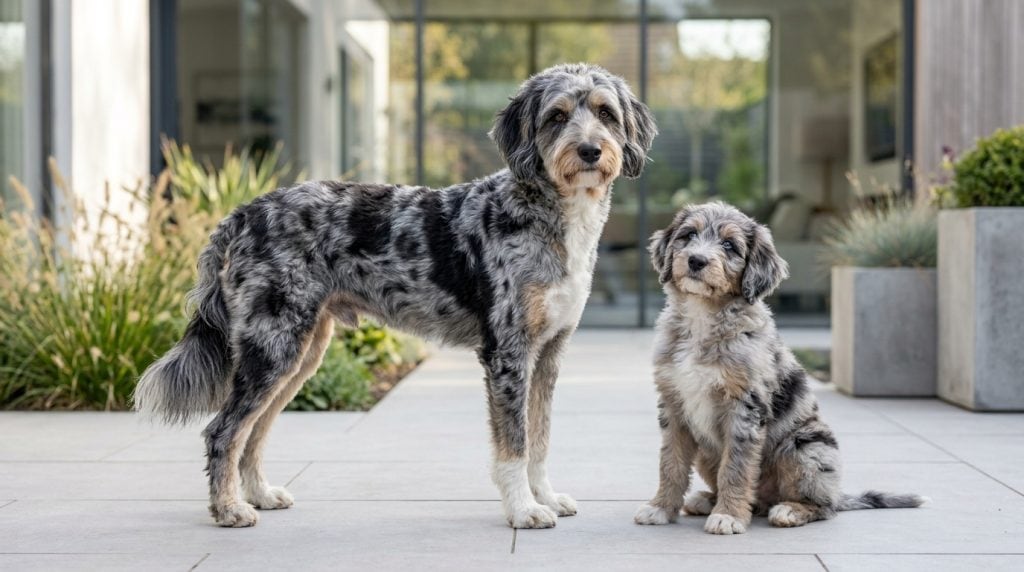
Living with an Aussiedoodle often means sharing your space with a dog that thrives on interaction and activity. They are known for their intelligence and eagerness to please, making them engaging companions who enjoy being part of family life. Their lively nature and affectionate demeanor often leave a lasting impression on those who meet them.
At a glance
Core care
- Size: Medium
- Energy: High
- Grooming: Low
- Shedding: Low
Support style
- Sensitivity: High
- Training style: Willing
Breed guide
Choose a section to explore. These notes describe common patterns, but individual dogs vary widely.
The Aussiedoodle, a delightful mix of the Australian Shepherd and Poodle, inherits a rich history of working intelligence and companionship. This blend of breeds results in a dog that is both bright and eager to engage with its family. Historically, Australian Shepherds were herding dogs, while Poodles were versatile working dogs, contributing to the Aussiedoodle’s keen mind and energetic nature. Today, these dogs often display a blend of these traits, resulting in a breed that is both active and family-oriented.
Physically, Aussiedoodles are medium-sized dogs, often possessing a blend of the Poodle’s curly coat and the Australian Shepherd’s striking colours. This combination can lead to a variety of appearances, but generally, they have a soft, low-shedding coat that requires regular grooming to keep it in good condition. Owners often find themselves brushing their Aussiedoodle several times a week to prevent matting and to keep their coat looking its best.
In terms of temperament, Aussiedoodles are known for their lively and social nature. They tend to form strong bonds with their families and often enjoy being involved in daily activities. Their intelligence and willingness to learn make them responsive to training, though they can sometimes be sensitive to harsh tones. Owners often notice their Aussiedoodle’s playful spirit and their tendency to seek out companionship and activity.
While the Aussiedoodle has many appealing traits, it’s important to remember that individual dogs can vary significantly. Factors such as genetics, early socialisation, and the environment all play a role in shaping a dog’s personality. Prospective owners should be prepared for an active and engaging companion that thrives on interaction and mental stimulation.
Aussiedoodles are often described as social butterflies, thriving in environments where they can interact with both people and other animals. This social nature is likely a result of their herding and companion dog lineage, which has instilled in them a desire to be part of a group. Many owners notice that their Aussiedoodle seeks out companionship and enjoys being involved in family activities.
Their sensitivity is another key aspect of their temperament. Aussiedoodles are often quite attuned to their owner’s emotions and can react to the mood of the household. This sensitivity means they respond well to positive reinforcement and gentle guidance during training. Owners often find that these dogs are quick to pick up on cues and eager to please, making them a joy to train.
The Aussiedoodle’s trainability is complemented by their intelligence, which can sometimes lead to mischievous behaviour if they become bored. They thrive on mental stimulation and enjoy tasks that challenge their minds. Puzzle toys, interactive games, and varied training exercises can help keep their minds engaged and prevent unwanted behaviours from developing.
While many Aussiedoodles share these traits, it’s important to remember that each dog is an individual. Some may be more reserved, while others are exceptionally outgoing. Understanding and nurturing their unique personality can help ensure a strong bond and a happy, well-adjusted dog. Owners should be prepared to invest time in socialisation and training to help their Aussiedoodle reach their full potential.
A typical day with an Aussiedoodle involves plenty of activity to satisfy their high energy levels. These dogs generally thrive on a mix of physical exercise and mental stimulation, which helps to keep them happy and healthy. Owners often find that regular walks, playtime in the garden, or a game of fetch are great ways to burn off energy and keep their Aussiedoodle engaged.
Beyond physical exercise, mental enrichment is crucial for this intelligent breed. Puzzle toys, training sessions, and interactive games can provide the mental challenge they need to prevent boredom. Many Aussiedoodles enjoy learning new tricks or participating in dog sports such as agility or obedience, which can be a fun way for both dog and owner to bond and stay active.
As Aussiedoodles age, their exercise needs may change. While puppies and young dogs often require more frequent and intense activity, older dogs might enjoy more leisurely walks and gentler play. It’s important for owners to adjust their dog’s routine as they grow to ensure they remain comfortable and healthy.
It’s worth noting that while Aussiedoodles are energetic, they can also be prone to overexertion if not monitored. Owners should be mindful of their dog’s limits, especially during hot weather or after intense play. Providing plenty of water and rest periods can help prevent exhaustion and keep their Aussiedoodle in top form.
Training an Aussiedoodle often feels like working with an eager and intelligent student. They generally respond well to positive reinforcement techniques, such as treats, praise, and play, which can make training sessions enjoyable for both dog and owner. Their willingness to learn and please their human companions often results in a rewarding training experience.
Consistency is key when training an Aussiedoodle. These dogs thrive on routine and clear expectations, which helps them understand what is expected of them. Establishing a consistent training schedule and using the same commands and cues can help reinforce learning and build a strong foundation of trust and communication.
During adolescence, some Aussiedoodles may test boundaries as they explore their independence. This phase can be challenging, but with patience and continued training, they often settle into well-mannered adults. Owners may find it helpful to enrol in training classes or seek guidance from a professional trainer to navigate this stage successfully.
Building a strong relationship with an Aussiedoodle is essential for successful training. These dogs often respond best to trainers who are patient, understanding, and willing to invest time in building a bond. The combination of their intelligence, sensitivity, and eagerness to please makes them a breed that can excel in various training activities with the right support and encouragement.
Aussiedoodles tend to fit well into active households where they can be part of daily activities and have plenty of opportunities for exercise and interaction. Their social nature makes them well-suited to families who enjoy spending time with their pets and can provide the mental and physical stimulation they need. Many owners find that their Aussiedoodle thrives in environments where they are included in family life.
These dogs often do well in homes with gardens or access to outdoor spaces where they can play and explore. However, they can also adapt to apartment living if their exercise needs are met through regular walks and outings. It’s important for owners to consider their lifestyle and ensure they can provide the necessary activity level for an Aussiedoodle.
Aussiedoodles can be good companions for children, often enjoying playtime and forming strong bonds with younger family members. However, as with any breed, interactions between dogs and children should be supervised to ensure safety and mutual respect. Their friendly nature can also extend to other pets, making them a potential fit for multi-pet households.
Ultimately, the key to a successful home fit is understanding the Aussiedoodle’s need for companionship and activity. Prospective owners should be prepared to invest time and energy into meeting these needs, ensuring a harmonious and fulfilling relationship with their dog.
Health is a key component of an Aussiedoodle’s overall wellbeing, and regular veterinary care is essential to maintaining their health. Like all breeds, Aussiedoodles can be prone to certain health issues, and being aware of these can help owners take proactive steps in their care. Regular check-ups with a vet can help catch any potential issues early on and keep their dog in good health.
Some health considerations for Aussiedoodles include hip dysplasia, eye conditions, and skin allergies. While not all dogs will experience these issues, understanding the signs and seeking veterinary advice when needed can help manage and treat any problems that arise. Preventive care, such as vaccinations and parasite control, is also crucial in maintaining their health.
The connection between health and behaviour is often noticeable in Aussiedoodles. A healthy dog is typically more active, engaged, and responsive to training. Conversely, health issues can sometimes manifest as changes in behaviour, such as lethargy or irritability. Owners should be attentive to any changes in their dog’s behaviour, as these may indicate underlying health concerns.
In addition to veterinary care, maintaining a healthy diet and regular exercise routine can contribute to an Aussiedoodle’s overall wellbeing. Providing a balanced diet and ensuring they receive adequate physical and mental stimulation can help support their health and happiness throughout their life.
The Aussiedoodle’s origins lie in the intentional crossbreeding of the Australian Shepherd and the Poodle, two breeds known for their intelligence and versatility. The Australian Shepherd, despite its name, was developed in the United States as a herding dog, prized for its ability to manage livestock with agility and precision. The Poodle, originally a water retriever, is renowned for its intelligence and hypoallergenic coat.
The combination of these two breeds aimed to create a dog that possessed the best qualities of both: the Aussiedoodle. This mix results in a dog that is not only intelligent and trainable but also has a coat that sheds minimally. The breed has gained popularity as a family companion, thanks to its friendly nature and adaptability.
The Aussiedoodle’s history of working and companionship roles is reflected in its modern-day characteristics. Many owners notice their dog’s eagerness to participate in activities and their ability to learn new tasks quickly. This blend of traits makes them suitable for a variety of roles, from family pets to therapy and assistance dogs.
Understanding the Aussiedoodle’s origins helps explain their energetic and social nature, as well as their need for mental and physical stimulation. Their history as working and companion dogs continues to influence their behaviour today, making them a breed that thrives on interaction and engagement with their human companions.
What shapes individual dogs
- Early social experiences
- Training approach
- Environment & routine
- Genetics & breeding
- Health & pain
- Age / life stage
The Aussiedoodle, a delightful mix of the Australian Shepherd and Poodle, inherits a rich history of working intelligence and companionship. This blend of breeds results in a dog that is both bright and eager to engage with its family. Historically, Australian Shepherds were herding dogs, while Poodles were versatile working dogs, contributing to the Aussiedoodle’s keen mind and energetic nature. Today, these dogs often display a blend of these traits, resulting in a breed that is both active and family-oriented.
Physically, Aussiedoodles are medium-sized dogs, often possessing a blend of the Poodle’s curly coat and the Australian Shepherd’s striking colours. This combination can lead to a variety of appearances, but generally, they have a soft, low-shedding coat that requires regular grooming to keep it in good condition. Owners often find themselves brushing their Aussiedoodle several times a week to prevent matting and to keep their coat looking its best.
In terms of temperament, Aussiedoodles are known for their lively and social nature. They tend to form strong bonds with their families and often enjoy being involved in daily activities. Their intelligence and willingness to learn make them responsive to training, though they can sometimes be sensitive to harsh tones. Owners often notice their Aussiedoodle’s playful spirit and their tendency to seek out companionship and activity.
While the Aussiedoodle has many appealing traits, it’s important to remember that individual dogs can vary significantly. Factors such as genetics, early socialisation, and the environment all play a role in shaping a dog’s personality. Prospective owners should be prepared for an active and engaging companion that thrives on interaction and mental stimulation.
Aussiedoodles are often described as social butterflies, thriving in environments where they can interact with both people and other animals. This social nature is likely a result of their herding and companion dog lineage, which has instilled in them a desire to be part of a group. Many owners notice that their Aussiedoodle seeks out companionship and enjoys being involved in family activities.
Their sensitivity is another key aspect of their temperament. Aussiedoodles are often quite attuned to their owner’s emotions and can react to the mood of the household. This sensitivity means they respond well to positive reinforcement and gentle guidance during training. Owners often find that these dogs are quick to pick up on cues and eager to please, making them a joy to train.
The Aussiedoodle’s trainability is complemented by their intelligence, which can sometimes lead to mischievous behaviour if they become bored. They thrive on mental stimulation and enjoy tasks that challenge their minds. Puzzle toys, interactive games, and varied training exercises can help keep their minds engaged and prevent unwanted behaviours from developing.
While many Aussiedoodles share these traits, it’s important to remember that each dog is an individual. Some may be more reserved, while others are exceptionally outgoing. Understanding and nurturing their unique personality can help ensure a strong bond and a happy, well-adjusted dog. Owners should be prepared to invest time in socialisation and training to help their Aussiedoodle reach their full potential.
A typical day with an Aussiedoodle involves plenty of activity to satisfy their high energy levels. These dogs generally thrive on a mix of physical exercise and mental stimulation, which helps to keep them happy and healthy. Owners often find that regular walks, playtime in the garden, or a game of fetch are great ways to burn off energy and keep their Aussiedoodle engaged.
Beyond physical exercise, mental enrichment is crucial for this intelligent breed. Puzzle toys, training sessions, and interactive games can provide the mental challenge they need to prevent boredom. Many Aussiedoodles enjoy learning new tricks or participating in dog sports such as agility or obedience, which can be a fun way for both dog and owner to bond and stay active.
As Aussiedoodles age, their exercise needs may change. While puppies and young dogs often require more frequent and intense activity, older dogs might enjoy more leisurely walks and gentler play. It’s important for owners to adjust their dog’s routine as they grow to ensure they remain comfortable and healthy.
It’s worth noting that while Aussiedoodles are energetic, they can also be prone to overexertion if not monitored. Owners should be mindful of their dog’s limits, especially during hot weather or after intense play. Providing plenty of water and rest periods can help prevent exhaustion and keep their Aussiedoodle in top form.
Training an Aussiedoodle often feels like working with an eager and intelligent student. They generally respond well to positive reinforcement techniques, such as treats, praise, and play, which can make training sessions enjoyable for both dog and owner. Their willingness to learn and please their human companions often results in a rewarding training experience.
Consistency is key when training an Aussiedoodle. These dogs thrive on routine and clear expectations, which helps them understand what is expected of them. Establishing a consistent training schedule and using the same commands and cues can help reinforce learning and build a strong foundation of trust and communication.
During adolescence, some Aussiedoodles may test boundaries as they explore their independence. This phase can be challenging, but with patience and continued training, they often settle into well-mannered adults. Owners may find it helpful to enrol in training classes or seek guidance from a professional trainer to navigate this stage successfully.
Building a strong relationship with an Aussiedoodle is essential for successful training. These dogs often respond best to trainers who are patient, understanding, and willing to invest time in building a bond. The combination of their intelligence, sensitivity, and eagerness to please makes them a breed that can excel in various training activities with the right support and encouragement.
Aussiedoodles tend to fit well into active households where they can be part of daily activities and have plenty of opportunities for exercise and interaction. Their social nature makes them well-suited to families who enjoy spending time with their pets and can provide the mental and physical stimulation they need. Many owners find that their Aussiedoodle thrives in environments where they are included in family life.
These dogs often do well in homes with gardens or access to outdoor spaces where they can play and explore. However, they can also adapt to apartment living if their exercise needs are met through regular walks and outings. It’s important for owners to consider their lifestyle and ensure they can provide the necessary activity level for an Aussiedoodle.
Aussiedoodles can be good companions for children, often enjoying playtime and forming strong bonds with younger family members. However, as with any breed, interactions between dogs and children should be supervised to ensure safety and mutual respect. Their friendly nature can also extend to other pets, making them a potential fit for multi-pet households.
Ultimately, the key to a successful home fit is understanding the Aussiedoodle’s need for companionship and activity. Prospective owners should be prepared to invest time and energy into meeting these needs, ensuring a harmonious and fulfilling relationship with their dog.
Health is a key component of an Aussiedoodle’s overall wellbeing, and regular veterinary care is essential to maintaining their health. Like all breeds, Aussiedoodles can be prone to certain health issues, and being aware of these can help owners take proactive steps in their care. Regular check-ups with a vet can help catch any potential issues early on and keep their dog in good health.
Some health considerations for Aussiedoodles include hip dysplasia, eye conditions, and skin allergies. While not all dogs will experience these issues, understanding the signs and seeking veterinary advice when needed can help manage and treat any problems that arise. Preventive care, such as vaccinations and parasite control, is also crucial in maintaining their health.
The connection between health and behaviour is often noticeable in Aussiedoodles. A healthy dog is typically more active, engaged, and responsive to training. Conversely, health issues can sometimes manifest as changes in behaviour, such as lethargy or irritability. Owners should be attentive to any changes in their dog’s behaviour, as these may indicate underlying health concerns.
In addition to veterinary care, maintaining a healthy diet and regular exercise routine can contribute to an Aussiedoodle’s overall wellbeing. Providing a balanced diet and ensuring they receive adequate physical and mental stimulation can help support their health and happiness throughout their life.
The Aussiedoodle’s origins lie in the intentional crossbreeding of the Australian Shepherd and the Poodle, two breeds known for their intelligence and versatility. The Australian Shepherd, despite its name, was developed in the United States as a herding dog, prized for its ability to manage livestock with agility and precision. The Poodle, originally a water retriever, is renowned for its intelligence and hypoallergenic coat.
The combination of these two breeds aimed to create a dog that possessed the best qualities of both: the Aussiedoodle. This mix results in a dog that is not only intelligent and trainable but also has a coat that sheds minimally. The breed has gained popularity as a family companion, thanks to its friendly nature and adaptability.
The Aussiedoodle’s history of working and companionship roles is reflected in its modern-day characteristics. Many owners notice their dog’s eagerness to participate in activities and their ability to learn new tasks quickly. This blend of traits makes them suitable for a variety of roles, from family pets to therapy and assistance dogs.
Understanding the Aussiedoodle’s origins helps explain their energetic and social nature, as well as their need for mental and physical stimulation. Their history as working and companion dogs continues to influence their behaviour today, making them a breed that thrives on interaction and engagement with their human companions.
What shapes individual dogs
- Early social experiences
- Training approach
- Environment & routine
- Genetics & breeding
- Health & pain
- Age / life stage
Want support with this?
This course is relevant for Aussiedoodle owners to better understand their dog's complex temperament and social nature.