
Great Dane
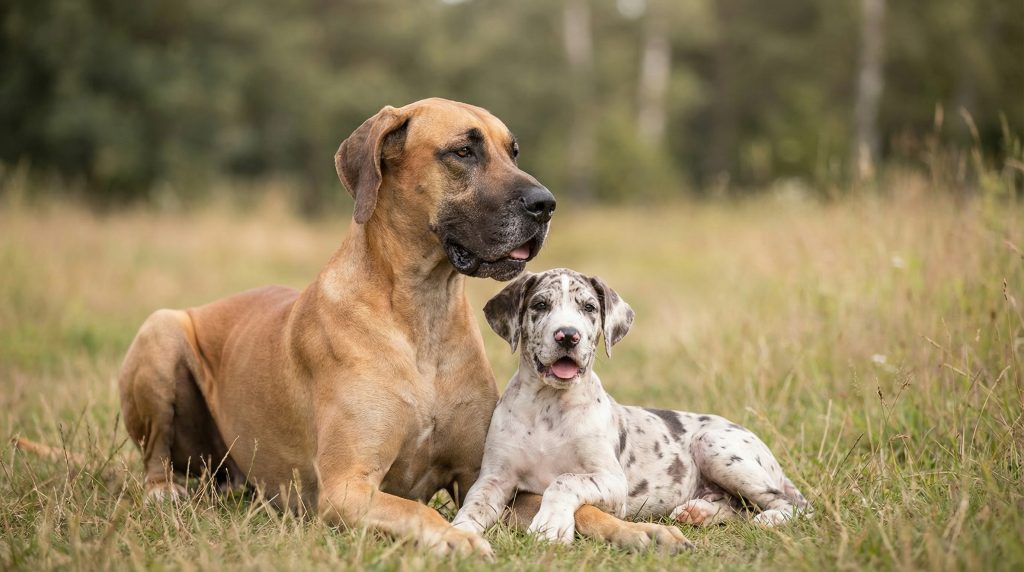
“Living with a Great Dane is like sharing your home with a gentle giant. Despite their imposing size, they often exhibit a calm and affectionate nature, making them surprisingly great companions. Many owners find that their Great Dane enjoys being close, often curling up on the sofa despite their size, or following family members from room to room with a quiet, watchful presence.”
At a glance
Core care
- Size: Giant
- Energy: Moderate
- Grooming: Low
- Shedding: Minimal
Support style
- Sensitivity: High
- Training style: Moderate
Breed guide
Choose a section to explore. These notes describe common patterns, but individual dogs vary widely.
Living with a Great Dane often surprises people who expect a dog of such size to be constantly energetic or imposing. In many homes, these giant dogs move through daily life with a calm and affectionate presence, often preferring to stay close to their people rather than seeking constant activity. Their size may be striking, but many owners quickly discover that their temperament tends to be gentle, watchful, and quietly devoted to the family around them.
Physically, Great Danes are unmistakably giant, with their towering height and muscular build. This size means they require space to move comfortably, but it also means they can be surprisingly gentle in their movements. Owners often note how their Great Dane navigates the home with a careful grace, mindful of their surroundings. Despite their size, they don’t require as much exercise as one might expect, making them adaptable to various living situations.
Temperamentally, Great Danes are known for their friendly and patient nature. They tend to form strong bonds with their families, often displaying a desire to be near their loved ones. Their high sensitivity means they can be quite attuned to the emotions of those around them, which is why they often make such empathetic companions. However, individual personalities can vary, with some being more reserved while others are outgoing and playful.
When considering a Great Dane, it’s important to remember that each dog is unique. While they generally share certain traits, factors like genetics, upbringing, and environment play significant roles in shaping their individual personalities. Prospective owners should be prepared for the commitment of caring for a large dog, understanding that with their size comes a need for thoughtful training and socialization.
Great Danes are often described as gentle giants, with a social nature that makes them well-suited to family life. Their size might be intimidating, but they tend to be friendly and patient, often enjoying the company of both adults and children. Many owners notice that their Great Dane is happiest when included in family activities, whether it’s lounging in the living room or joining in on a walk.
This breed’s high sensitivity means they are quite attuned to the emotions of those around them. They often respond to the mood of their household, which can make them seem almost intuitive at times. This sensitivity requires a gentle approach to training and handling, as harsh methods can easily upset them. Instead, positive reinforcement and patience tend to yield the best results.
In terms of trainability, Great Danes are moderately easy to train, but they do require consistency and a calm approach. They can be a bit stubborn at times, which is why it’s important for owners to establish a strong bond built on trust and respect. Training sessions should be kept short and engaging to maintain their interest, and it’s beneficial to start training early to manage their size effectively.
While Great Danes are generally sociable, individual dogs can vary. Some may be more reserved or cautious, especially around new people or environments. Socialization from a young age can help them become well-rounded adults. It’s important for owners to remember that while breed tendencies provide a general guide, each Great Dane will have its own unique personality shaped by its experiences and environment.
A typical day for a Great Dane involves a balance of moderate exercise and plenty of relaxation. Despite their size, they don’t require excessive physical activity, but they do benefit from daily walks and playtime. A couple of short walks each day, along with some interactive play, usually suffice to keep them healthy and happy.
Great Danes enjoy mental enrichment as much as physical exercise. Puzzle toys and games that challenge their minds can be particularly rewarding for them. These activities not only keep them entertained but also help prevent boredom, which can lead to unwanted behaviours. Owners often find that engaging their Great Dane in training exercises or new tricks can be a fun way to bond and provide mental stimulation.
It’s important to be mindful of the Great Dane’s growth stages, particularly during puppyhood when their joints are still developing. Over-exercising young Great Danes can lead to joint problems later in life, so it’s crucial to keep activities age-appropriate. As they mature, their exercise needs may change, and it’s important to adjust their routine to suit their age and health.
While Great Danes are generally laid-back, they do enjoy bursts of playfulness. Owners should be prepared to accommodate their size during playtime, ensuring there’s enough space for them to move safely. It’s also wise to avoid high-impact activities that could strain their joints. Overall, a balanced approach to exercise, considering both physical and mental needs, helps keep a Great Dane content and healthy.
Training a Great Dane often feels like working with a gentle but occasionally stubborn giant. Their size can be daunting, but their temperament is generally cooperative and eager to please. Owners often find that positive reinforcement methods work best, as these dogs respond well to praise and rewards.
Consistency is key when training Great Danes. Establishing a routine helps them understand expectations and reduces confusion. Given their moderate trainability, it’s important to start with basic commands and gradually introduce more complex tasks. Patience is essential, as they can sometimes be slow to respond, but with time, they often become well-mannered companions.
Adolescence can be a challenging time for Great Dane owners, as their size increases rapidly and their energy levels can spike. During this phase, maintaining a calm and consistent training approach is crucial. Owners should focus on impulse control exercises and reinforce good behaviour consistently. Socialization is also important during this stage to ensure they grow into confident adults.
Building a strong relationship based on trust and respect is fundamental in training a Great Dane. They thrive in environments where they feel secure and understood. By fostering a positive and supportive training atmosphere, owners can help their Great Dane develop into a well-adjusted and obedient family member. For those new to the breed, enrolling in a training class can provide valuable guidance and support.
Great Danes can adapt to various living environments, but their size means they do best in homes with enough space to accommodate them comfortably. While they can live in smaller homes or apartments, they need room to stretch out and move without knocking things over. Many owners find that a house with a garden or access to outdoor space suits them well, allowing for easy exercise and playtime.
In terms of family dynamics, Great Danes often fit well into households with children. Their gentle and patient nature makes them good companions for kids, though supervision is always recommended due to their size. They tend to be protective of their family, which can be reassuring for those with young children. However, teaching children how to interact respectfully with such a large dog is crucial.
When it comes to other pets, Great Danes can generally coexist peacefully, especially if they are socialized from a young age. Their friendly disposition often extends to other animals, though individual temperaments can vary. It’s important to introduce them to other pets slowly and under controlled conditions to ensure a harmonious relationship.
Ultimately, the key to a successful home fit for a Great Dane is understanding their needs and being prepared to accommodate their size and temperament. They thrive in environments where they feel like part of the family and have opportunities for both relaxation and activity. Owners should be ready to invest time in training and socialization to ensure their Great Dane becomes a well-adjusted member of the household.
Great Danes, like all breeds, have specific health considerations that owners should be aware of to ensure their wellbeing. Their large size can predispose them to certain health issues, such as joint problems and bloat, a serious condition that requires immediate veterinary attention. Regular check-ups with a vet can help catch potential issues early and keep them healthy.
Maintaining a healthy weight is crucial for Great Danes to reduce stress on their joints. A balanced diet tailored to their size and age helps support their overall health. Owners often find that feeding smaller, more frequent meals can help prevent bloat. It’s also important to monitor their activity levels, especially as they age, to avoid overexertion.
Preventive care is essential for Great Danes, including regular vaccinations, flea and tick prevention, and dental care. Their teeth should be checked regularly, and brushing is recommended to prevent dental disease. Keeping up with these routine care tasks contributes to their long-term health and comfort.
While Great Danes can be prone to certain health issues, many live healthy lives with proper care and attention. Owners should be vigilant for any changes in behaviour or physical condition and consult a vet if they have concerns. Understanding the breed’s health needs and being proactive about care can help ensure a happy and healthy life for a Great Dane.
The Great Dane’s history is as grand as its stature, with origins tracing back to ancient times. Originally bred in Germany, they were developed as hunting dogs, specifically for boar hunting, which required both strength and courage. Their role as estate guardians also contributed to their imposing size and protective instincts, traits that are still evident in the breed today.
Throughout history, Great Danes have been admired for their regal appearance and gentle nature. They were often associated with nobility and were kept as status symbols by the elite. This historical role as both a working and companion dog has shaped the breed’s temperament, making them both loyal protectors and affectionate family members.
As the breed evolved, Great Danes became more refined in appearance, with breeders focusing on their gentle nature and striking looks. This transition from a working dog to a companion animal has influenced their modern-day temperament, where they are known for their friendly and patient disposition. Despite their size, they are often described as gentle giants, a testament to their calm and loving nature.
Understanding the Great Dane’s history helps explain many of their traits today. Their protective instincts, combined with their affectionate nature, make them unique among giant breeds. Owners often appreciate their blend of strength and gentleness, which has been carefully cultivated over centuries. This rich history is part of what makes living with a Great Dane such a rewarding experience.
What shapes individual dogs
- Early social experiences
- Training approach
- Environment & routine
- Genetics & breeding
- Health & pain
- Age / life stage
Living with a Great Dane often surprises people who expect a dog of such size to be constantly energetic or imposing. In many homes, these giant dogs move through daily life with a calm and affectionate presence, often preferring to stay close to their people rather than seeking constant activity. Their size may be striking, but many owners quickly discover that their temperament tends to be gentle, watchful, and quietly devoted to the family around them.
Physically, Great Danes are unmistakably giant, with their towering height and muscular build. This size means they require space to move comfortably, but it also means they can be surprisingly gentle in their movements. Owners often note how their Great Dane navigates the home with a careful grace, mindful of their surroundings. Despite their size, they don’t require as much exercise as one might expect, making them adaptable to various living situations.
Temperamentally, Great Danes are known for their friendly and patient nature. They tend to form strong bonds with their families, often displaying a desire to be near their loved ones. Their high sensitivity means they can be quite attuned to the emotions of those around them, which is why they often make such empathetic companions. However, individual personalities can vary, with some being more reserved while others are outgoing and playful.
When considering a Great Dane, it’s important to remember that each dog is unique. While they generally share certain traits, factors like genetics, upbringing, and environment play significant roles in shaping their individual personalities. Prospective owners should be prepared for the commitment of caring for a large dog, understanding that with their size comes a need for thoughtful training and socialization.
Great Danes are often described as gentle giants, with a social nature that makes them well-suited to family life. Their size might be intimidating, but they tend to be friendly and patient, often enjoying the company of both adults and children. Many owners notice that their Great Dane is happiest when included in family activities, whether it’s lounging in the living room or joining in on a walk.
This breed’s high sensitivity means they are quite attuned to the emotions of those around them. They often respond to the mood of their household, which can make them seem almost intuitive at times. This sensitivity requires a gentle approach to training and handling, as harsh methods can easily upset them. Instead, positive reinforcement and patience tend to yield the best results.
In terms of trainability, Great Danes are moderately easy to train, but they do require consistency and a calm approach. They can be a bit stubborn at times, which is why it’s important for owners to establish a strong bond built on trust and respect. Training sessions should be kept short and engaging to maintain their interest, and it’s beneficial to start training early to manage their size effectively.
While Great Danes are generally sociable, individual dogs can vary. Some may be more reserved or cautious, especially around new people or environments. Socialization from a young age can help them become well-rounded adults. It’s important for owners to remember that while breed tendencies provide a general guide, each Great Dane will have its own unique personality shaped by its experiences and environment.
A typical day for a Great Dane involves a balance of moderate exercise and plenty of relaxation. Despite their size, they don’t require excessive physical activity, but they do benefit from daily walks and playtime. A couple of short walks each day, along with some interactive play, usually suffice to keep them healthy and happy.
Great Danes enjoy mental enrichment as much as physical exercise. Puzzle toys and games that challenge their minds can be particularly rewarding for them. These activities not only keep them entertained but also help prevent boredom, which can lead to unwanted behaviours. Owners often find that engaging their Great Dane in training exercises or new tricks can be a fun way to bond and provide mental stimulation.
It’s important to be mindful of the Great Dane’s growth stages, particularly during puppyhood when their joints are still developing. Over-exercising young Great Danes can lead to joint problems later in life, so it’s crucial to keep activities age-appropriate. As they mature, their exercise needs may change, and it’s important to adjust their routine to suit their age and health.
While Great Danes are generally laid-back, they do enjoy bursts of playfulness. Owners should be prepared to accommodate their size during playtime, ensuring there’s enough space for them to move safely. It’s also wise to avoid high-impact activities that could strain their joints. Overall, a balanced approach to exercise, considering both physical and mental needs, helps keep a Great Dane content and healthy.
Training a Great Dane often feels like working with a gentle but occasionally stubborn giant. Their size can be daunting, but their temperament is generally cooperative and eager to please. Owners often find that positive reinforcement methods work best, as these dogs respond well to praise and rewards.
Consistency is key when training Great Danes. Establishing a routine helps them understand expectations and reduces confusion. Given their moderate trainability, it’s important to start with basic commands and gradually introduce more complex tasks. Patience is essential, as they can sometimes be slow to respond, but with time, they often become well-mannered companions.
Adolescence can be a challenging time for Great Dane owners, as their size increases rapidly and their energy levels can spike. During this phase, maintaining a calm and consistent training approach is crucial. Owners should focus on impulse control exercises and reinforce good behaviour consistently. Socialization is also important during this stage to ensure they grow into confident adults.
Building a strong relationship based on trust and respect is fundamental in training a Great Dane. They thrive in environments where they feel secure and understood. By fostering a positive and supportive training atmosphere, owners can help their Great Dane develop into a well-adjusted and obedient family member. For those new to the breed, enrolling in a training class can provide valuable guidance and support.
Great Danes can adapt to various living environments, but their size means they do best in homes with enough space to accommodate them comfortably. While they can live in smaller homes or apartments, they need room to stretch out and move without knocking things over. Many owners find that a house with a garden or access to outdoor space suits them well, allowing for easy exercise and playtime.
In terms of family dynamics, Great Danes often fit well into households with children. Their gentle and patient nature makes them good companions for kids, though supervision is always recommended due to their size. They tend to be protective of their family, which can be reassuring for those with young children. However, teaching children how to interact respectfully with such a large dog is crucial.
When it comes to other pets, Great Danes can generally coexist peacefully, especially if they are socialized from a young age. Their friendly disposition often extends to other animals, though individual temperaments can vary. It’s important to introduce them to other pets slowly and under controlled conditions to ensure a harmonious relationship.
Ultimately, the key to a successful home fit for a Great Dane is understanding their needs and being prepared to accommodate their size and temperament. They thrive in environments where they feel like part of the family and have opportunities for both relaxation and activity. Owners should be ready to invest time in training and socialization to ensure their Great Dane becomes a well-adjusted member of the household.
Great Danes, like all breeds, have specific health considerations that owners should be aware of to ensure their wellbeing. Their large size can predispose them to certain health issues, such as joint problems and bloat, a serious condition that requires immediate veterinary attention. Regular check-ups with a vet can help catch potential issues early and keep them healthy.
Maintaining a healthy weight is crucial for Great Danes to reduce stress on their joints. A balanced diet tailored to their size and age helps support their overall health. Owners often find that feeding smaller, more frequent meals can help prevent bloat. It’s also important to monitor their activity levels, especially as they age, to avoid overexertion.
Preventive care is essential for Great Danes, including regular vaccinations, flea and tick prevention, and dental care. Their teeth should be checked regularly, and brushing is recommended to prevent dental disease. Keeping up with these routine care tasks contributes to their long-term health and comfort.
While Great Danes can be prone to certain health issues, many live healthy lives with proper care and attention. Owners should be vigilant for any changes in behaviour or physical condition and consult a vet if they have concerns. Understanding the breed’s health needs and being proactive about care can help ensure a happy and healthy life for a Great Dane.
The Great Dane’s history is as grand as its stature, with origins tracing back to ancient times. Originally bred in Germany, they were developed as hunting dogs, specifically for boar hunting, which required both strength and courage. Their role as estate guardians also contributed to their imposing size and protective instincts, traits that are still evident in the breed today.
Throughout history, Great Danes have been admired for their regal appearance and gentle nature. They were often associated with nobility and were kept as status symbols by the elite. This historical role as both a working and companion dog has shaped the breed’s temperament, making them both loyal protectors and affectionate family members.
As the breed evolved, Great Danes became more refined in appearance, with breeders focusing on their gentle nature and striking looks. This transition from a working dog to a companion animal has influenced their modern-day temperament, where they are known for their friendly and patient disposition. Despite their size, they are often described as gentle giants, a testament to their calm and loving nature.
Understanding the Great Dane’s history helps explain many of their traits today. Their protective instincts, combined with their affectionate nature, make them unique among giant breeds. Owners often appreciate their blend of strength and gentleness, which has been carefully cultivated over centuries. This rich history is part of what makes living with a Great Dane such a rewarding experience.
What shapes individual dogs
- Early social experiences
- Training approach
- Environment & routine
- Genetics & breeding
- Health & pain
- Age / life stage
Want support with this?
This course is relevant for Great Dane owners due to the breed's specific health considerations, helping you be prepared for any health-related situations.