
Irish Wolfhound
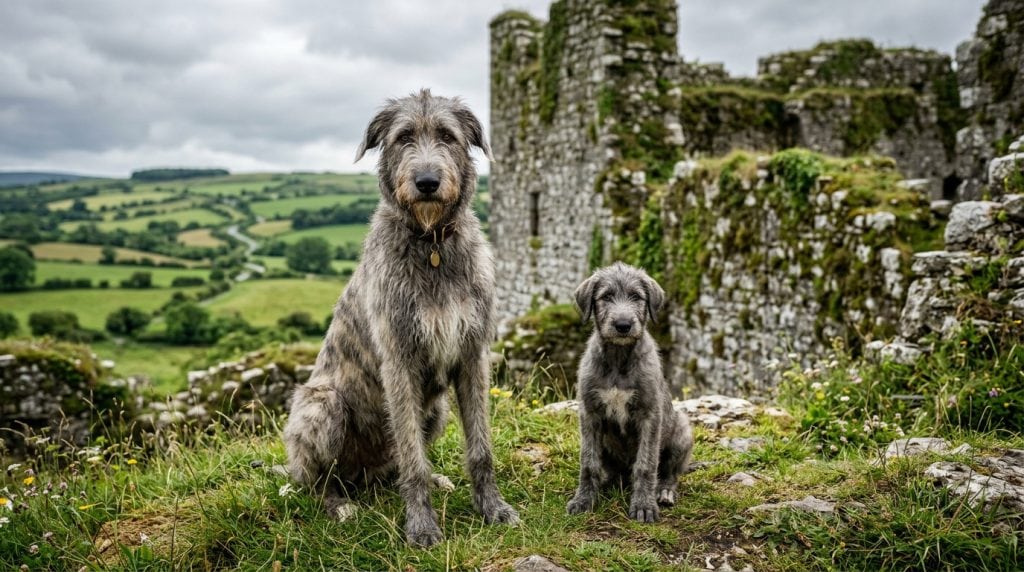
Living with an Irish Wolfhound is like sharing your space with a gentle giant. Their calm demeanor and affectionate nature often surprise those who expect a more aloof hound. Despite their size, they tend to be quite content lounging around the home, enjoying the company of their family.
At a glance
Core care
- Size: Giant
- Energy: Moderate
- Grooming: Low
- Shedding: Moderate
Support style
- Sensitivity: Moderate
- Training style: Willing
Breed guide
Choose a section to explore. These notes describe common patterns, but individual dogs vary widely.
The Irish Wolfhound has a storied past as a formidable hunting dog, originally bred to hunt wolves and other large game in the rugged landscapes of Ireland. This history of strength and endurance is still evident in their physical presence today, though their role has shifted from hunter to beloved companion. Modern Irish Wolfhounds often exhibit a calm and gentle nature, a far cry from their fierce ancestors, yet they retain an air of dignity and grace that speaks to their noble lineage.
Physically, the Irish Wolfhound is one of the largest dog breeds, with an impressive stature that can be both awe-inspiring and a bit intimidating. However, their imposing size is balanced by a surprisingly gentle disposition. Their thick, rough coat requires moderate grooming to keep it looking its best, and while they do shed, it is generally manageable with regular brushing. Owners often find that their Wolfhound’s size means they need ample space to stretch out and relax.
In terms of temperament, Irish Wolfhounds are known for their friendly and patient nature. They tend to form strong bonds with their families and are often quite good with children, displaying a protective yet gentle demeanor. Socially, they are generally amiable with other dogs and pets, though their hunting instincts can sometimes surface. Owners frequently notice their Wolfhounds’ sensitivity to their environment, which makes them attuned to the moods and needs of their human companions.
It’s important for potential owners to have realistic expectations about the individual variation within the breed. While many Irish Wolfhounds are calm and laid-back, some may exhibit more energy or a stronger prey drive. Each dog is unique, shaped by genetics, upbringing, and their daily environment. Prospective owners should be prepared for the commitment of living with such a large and gentle breed, ensuring they can provide the space and care these dogs require.
Irish Wolfhounds are often described as gentle giants, and their social nature reflects this affectionate moniker. Many owners find that their Wolfhound is happiest when surrounded by family, enjoying the simple pleasure of being part of the household. These dogs are typically not demanding of attention, but they do appreciate being included in family activities, whether that means lounging in the living room or joining in a leisurely walk.
Their sensitivity is a notable trait, as Irish Wolfhounds often pick up on the emotions and moods of their human companions. This sensitivity can make them particularly attuned to changes in their environment, and they may respond to stress or tension in the household by seeking comfort or offering companionship. Owners frequently observe that their Wolfhounds have a calming presence, which can be a comforting influence in the home.
Trainability is generally high with Irish Wolfhounds, as they tend to be willing learners who aim to please. However, their gentle nature means that harsh training methods are not suitable. Positive reinforcement and patience are key to successful training, and many owners find that their Wolfhounds respond well to a calm and consistent approach. Socialisation from a young age is important to help them grow into well-rounded adults.
While Irish Wolfhounds are generally friendly with other dogs and pets, their history as hunters means that some individuals may have a stronger prey drive. This can vary greatly from dog to dog, and it’s important for owners to be aware of their Wolfhound’s tendencies. Overall, the breed’s temperament is characterised by a combination of gentleness, loyalty, and a deep connection to their family, making them a cherished companion in many homes.
A typical day for an Irish Wolfhound involves a balance of moderate exercise and plenty of relaxation. Despite their size and historical role as hunters, these dogs are not as high-energy as one might expect. They do enjoy daily walks, which provide both physical exercise and mental stimulation as they explore their surroundings. A couple of leisurely walks each day, along with some playtime in a secure area, often suffice to meet their exercise needs.
Mental enrichment is also important for Irish Wolfhounds, as they enjoy activities that engage their minds. Puzzle toys, scent games, and gentle training exercises can provide the mental stimulation they need to stay happy and healthy. Owners often find that their Wolfhounds appreciate a variety of activities, and mixing up their routine can prevent boredom.
As they age, the exercise needs of an Irish Wolfhound may change. Puppies and young adults tend to have more energy and may require more frequent play sessions, while older dogs might prefer shorter, more leisurely walks. It’s important for owners to monitor their dog’s energy levels and adjust their exercise routine accordingly, ensuring that their Wolfhound remains comfortable and content throughout their life.
It’s crucial to avoid over-exercising young Irish Wolfhounds, as their growing joints can be sensitive to excessive strain. Owners should be mindful of their dog’s physical limits, especially during the first two years of life. By providing a balanced mix of physical activity and mental enrichment, owners can help their Irish Wolfhound thrive in their daily routine.
Training an Irish Wolfhound often feels like working with a gentle and willing student. Their natural inclination to please their owners makes them generally receptive to training, though their size and strength mean that early training is particularly important. Owners often find that starting with basic commands and gradually building up to more complex tasks works well with this breed.
Positive reinforcement is key when training an Irish Wolfhound. These dogs respond best to gentle guidance and rewards, whether in the form of treats, praise, or play. Consistency is crucial, as it helps them understand what is expected. Many owners notice that their Wolfhounds thrive in an environment where training is a positive and rewarding experience, rather than a chore.
Adolescence can bring challenges, as with any breed, but Irish Wolfhounds tend to navigate this stage with relatively few issues if they have been well-socialised and trained from a young age. Owners might observe a temporary increase in independence or testing of boundaries, but with patience and continued training, these tendencies usually settle down.
Building a strong relationship is fundamental to successful training with an Irish Wolfhound. They are sensitive to their owner’s mood and tone, so maintaining a calm and encouraging atmosphere can make a significant difference. Training sessions should be kept short and engaging, ensuring that the dog remains interested and motivated. With the right approach, training an Irish Wolfhound can be a rewarding experience for both dog and owner.
Irish Wolfhounds tend to fit well in homes where there is ample space for them to move and relax. Their large size means they are best suited to homes with spacious interiors and access to a secure outdoor area. Many owners find that their Wolfhound is happiest when they have a comfortable spot to stretch out and observe their surroundings.
While they are generally laid-back, Irish Wolfhounds do appreciate a home where they can be part of the family activities. They thrive in environments where they are included in daily life, whether that means joining in on family walks or simply being present during family gatherings. Their gentle nature often makes them good companions for children, though supervision is always recommended due to their size.
Living with other pets can be successful for Irish Wolfhounds, especially if they are introduced to other animals from a young age. Their generally amiable nature means they can coexist peacefully with other dogs and even cats, though individual temperament and early socialisation play significant roles in these interactions.
It’s important for potential owners to consider their lifestyle and whether they can accommodate the needs of such a large breed. Irish Wolfhounds are not particularly demanding, but they do require space, companionship, and a moderate amount of exercise. For those who can provide these essentials, the Irish Wolfhound can be a gentle and loyal addition to the family.
Health is a key consideration for Irish Wolfhound owners, as their wellbeing is closely linked to their overall quality of life. Like many giant breeds, they are prone to certain health issues, including joint problems and heart conditions. Regular veterinary check-ups are essential to monitor their health and catch any potential issues early.
One of the more common health concerns in Irish Wolfhounds is bloat, a serious condition that can affect deep-chested breeds. Owners should be aware of the signs and seek immediate veterinary attention if they suspect their dog is affected. Feeding smaller, more frequent meals and avoiding vigorous exercise around mealtimes can help reduce the risk.
Preventive care plays a significant role in maintaining an Irish Wolfhound’s health. This includes regular vaccinations, parasite control, and dental care. Many owners find that a balanced diet tailored to the needs of a giant breed supports their Wolfhound’s overall health, helping to maintain a healthy weight and providing the nutrients necessary for joint and heart health.
Understanding the breed’s health tendencies can help owners make informed decisions about their care. While Irish Wolfhounds can be prone to certain health issues, with the right care and attention, they can lead healthy and fulfilling lives. Owners should always consult with their veterinarian for advice tailored to their individual dog’s needs.
The Irish Wolfhound’s history is as grand as its stature, with roots tracing back to ancient Ireland. Originally bred for hunting wolves and large game, these dogs were prized for their strength, speed, and courage. Their role as hunters and guardians of estates made them invaluable in the harsh landscapes of medieval Ireland, where they were often seen as symbols of nobility and power.
Over time, the breed’s purpose evolved, but their impressive size and gentle nature remained constant. In the 19th century, efforts to revive the breed were spearheaded by Captain George Augustus Graham, who sought to preserve the Irish Wolfhound’s legacy. By carefully selecting breeding stock, including Scottish Deerhounds and Great Danes, he helped re-establish the breed’s presence and ensure its survival.
The modern Irish Wolfhound retains many of the traits that made it a formidable hunter, yet today it is more commonly found as a beloved companion. Their history as hunters explains their keen senses and strong prey drive, traits that can still be observed in their behaviour. Despite their past, they are known for their gentle and friendly nature, making them well-suited to family life.
Understanding the Irish Wolfhound’s history provides insight into their modern characteristics. Their noble past is reflected in their dignified presence and loyal companionship. For those who appreciate history and heritage, living with an Irish Wolfhound is like having a piece of living history, a reminder of the breed’s storied past and its enduring appeal.
What shapes individual dogs
- Early social experiences
- Training approach
- Environment & routine
- Genetics & breeding
- Health & pain
- Age / life stage
The Irish Wolfhound has a storied past as a formidable hunting dog, originally bred to hunt wolves and other large game in the rugged landscapes of Ireland. This history of strength and endurance is still evident in their physical presence today, though their role has shifted from hunter to beloved companion. Modern Irish Wolfhounds often exhibit a calm and gentle nature, a far cry from their fierce ancestors, yet they retain an air of dignity and grace that speaks to their noble lineage.
Physically, the Irish Wolfhound is one of the largest dog breeds, with an impressive stature that can be both awe-inspiring and a bit intimidating. However, their imposing size is balanced by a surprisingly gentle disposition. Their thick, rough coat requires moderate grooming to keep it looking its best, and while they do shed, it is generally manageable with regular brushing. Owners often find that their Wolfhound’s size means they need ample space to stretch out and relax.
In terms of temperament, Irish Wolfhounds are known for their friendly and patient nature. They tend to form strong bonds with their families and are often quite good with children, displaying a protective yet gentle demeanor. Socially, they are generally amiable with other dogs and pets, though their hunting instincts can sometimes surface. Owners frequently notice their Wolfhounds’ sensitivity to their environment, which makes them attuned to the moods and needs of their human companions.
It’s important for potential owners to have realistic expectations about the individual variation within the breed. While many Irish Wolfhounds are calm and laid-back, some may exhibit more energy or a stronger prey drive. Each dog is unique, shaped by genetics, upbringing, and their daily environment. Prospective owners should be prepared for the commitment of living with such a large and gentle breed, ensuring they can provide the space and care these dogs require.
Irish Wolfhounds are often described as gentle giants, and their social nature reflects this affectionate moniker. Many owners find that their Wolfhound is happiest when surrounded by family, enjoying the simple pleasure of being part of the household. These dogs are typically not demanding of attention, but they do appreciate being included in family activities, whether that means lounging in the living room or joining in a leisurely walk.
Their sensitivity is a notable trait, as Irish Wolfhounds often pick up on the emotions and moods of their human companions. This sensitivity can make them particularly attuned to changes in their environment, and they may respond to stress or tension in the household by seeking comfort or offering companionship. Owners frequently observe that their Wolfhounds have a calming presence, which can be a comforting influence in the home.
Trainability is generally high with Irish Wolfhounds, as they tend to be willing learners who aim to please. However, their gentle nature means that harsh training methods are not suitable. Positive reinforcement and patience are key to successful training, and many owners find that their Wolfhounds respond well to a calm and consistent approach. Socialisation from a young age is important to help them grow into well-rounded adults.
While Irish Wolfhounds are generally friendly with other dogs and pets, their history as hunters means that some individuals may have a stronger prey drive. This can vary greatly from dog to dog, and it’s important for owners to be aware of their Wolfhound’s tendencies. Overall, the breed’s temperament is characterised by a combination of gentleness, loyalty, and a deep connection to their family, making them a cherished companion in many homes.
A typical day for an Irish Wolfhound involves a balance of moderate exercise and plenty of relaxation. Despite their size and historical role as hunters, these dogs are not as high-energy as one might expect. They do enjoy daily walks, which provide both physical exercise and mental stimulation as they explore their surroundings. A couple of leisurely walks each day, along with some playtime in a secure area, often suffice to meet their exercise needs.
Mental enrichment is also important for Irish Wolfhounds, as they enjoy activities that engage their minds. Puzzle toys, scent games, and gentle training exercises can provide the mental stimulation they need to stay happy and healthy. Owners often find that their Wolfhounds appreciate a variety of activities, and mixing up their routine can prevent boredom.
As they age, the exercise needs of an Irish Wolfhound may change. Puppies and young adults tend to have more energy and may require more frequent play sessions, while older dogs might prefer shorter, more leisurely walks. It’s important for owners to monitor their dog’s energy levels and adjust their exercise routine accordingly, ensuring that their Wolfhound remains comfortable and content throughout their life.
It’s crucial to avoid over-exercising young Irish Wolfhounds, as their growing joints can be sensitive to excessive strain. Owners should be mindful of their dog’s physical limits, especially during the first two years of life. By providing a balanced mix of physical activity and mental enrichment, owners can help their Irish Wolfhound thrive in their daily routine.
Training an Irish Wolfhound often feels like working with a gentle and willing student. Their natural inclination to please their owners makes them generally receptive to training, though their size and strength mean that early training is particularly important. Owners often find that starting with basic commands and gradually building up to more complex tasks works well with this breed.
Positive reinforcement is key when training an Irish Wolfhound. These dogs respond best to gentle guidance and rewards, whether in the form of treats, praise, or play. Consistency is crucial, as it helps them understand what is expected. Many owners notice that their Wolfhounds thrive in an environment where training is a positive and rewarding experience, rather than a chore.
Adolescence can bring challenges, as with any breed, but Irish Wolfhounds tend to navigate this stage with relatively few issues if they have been well-socialised and trained from a young age. Owners might observe a temporary increase in independence or testing of boundaries, but with patience and continued training, these tendencies usually settle down.
Building a strong relationship is fundamental to successful training with an Irish Wolfhound. They are sensitive to their owner’s mood and tone, so maintaining a calm and encouraging atmosphere can make a significant difference. Training sessions should be kept short and engaging, ensuring that the dog remains interested and motivated. With the right approach, training an Irish Wolfhound can be a rewarding experience for both dog and owner.
Irish Wolfhounds tend to fit well in homes where there is ample space for them to move and relax. Their large size means they are best suited to homes with spacious interiors and access to a secure outdoor area. Many owners find that their Wolfhound is happiest when they have a comfortable spot to stretch out and observe their surroundings.
While they are generally laid-back, Irish Wolfhounds do appreciate a home where they can be part of the family activities. They thrive in environments where they are included in daily life, whether that means joining in on family walks or simply being present during family gatherings. Their gentle nature often makes them good companions for children, though supervision is always recommended due to their size.
Living with other pets can be successful for Irish Wolfhounds, especially if they are introduced to other animals from a young age. Their generally amiable nature means they can coexist peacefully with other dogs and even cats, though individual temperament and early socialisation play significant roles in these interactions.
It’s important for potential owners to consider their lifestyle and whether they can accommodate the needs of such a large breed. Irish Wolfhounds are not particularly demanding, but they do require space, companionship, and a moderate amount of exercise. For those who can provide these essentials, the Irish Wolfhound can be a gentle and loyal addition to the family.
Health is a key consideration for Irish Wolfhound owners, as their wellbeing is closely linked to their overall quality of life. Like many giant breeds, they are prone to certain health issues, including joint problems and heart conditions. Regular veterinary check-ups are essential to monitor their health and catch any potential issues early.
One of the more common health concerns in Irish Wolfhounds is bloat, a serious condition that can affect deep-chested breeds. Owners should be aware of the signs and seek immediate veterinary attention if they suspect their dog is affected. Feeding smaller, more frequent meals and avoiding vigorous exercise around mealtimes can help reduce the risk.
Preventive care plays a significant role in maintaining an Irish Wolfhound’s health. This includes regular vaccinations, parasite control, and dental care. Many owners find that a balanced diet tailored to the needs of a giant breed supports their Wolfhound’s overall health, helping to maintain a healthy weight and providing the nutrients necessary for joint and heart health.
Understanding the breed’s health tendencies can help owners make informed decisions about their care. While Irish Wolfhounds can be prone to certain health issues, with the right care and attention, they can lead healthy and fulfilling lives. Owners should always consult with their veterinarian for advice tailored to their individual dog’s needs.
The Irish Wolfhound’s history is as grand as its stature, with roots tracing back to ancient Ireland. Originally bred for hunting wolves and large game, these dogs were prized for their strength, speed, and courage. Their role as hunters and guardians of estates made them invaluable in the harsh landscapes of medieval Ireland, where they were often seen as symbols of nobility and power.
Over time, the breed’s purpose evolved, but their impressive size and gentle nature remained constant. In the 19th century, efforts to revive the breed were spearheaded by Captain George Augustus Graham, who sought to preserve the Irish Wolfhound’s legacy. By carefully selecting breeding stock, including Scottish Deerhounds and Great Danes, he helped re-establish the breed’s presence and ensure its survival.
The modern Irish Wolfhound retains many of the traits that made it a formidable hunter, yet today it is more commonly found as a beloved companion. Their history as hunters explains their keen senses and strong prey drive, traits that can still be observed in their behaviour. Despite their past, they are known for their gentle and friendly nature, making them well-suited to family life.
Understanding the Irish Wolfhound’s history provides insight into their modern characteristics. Their noble past is reflected in their dignified presence and loyal companionship. For those who appreciate history and heritage, living with an Irish Wolfhound is like having a piece of living history, a reminder of the breed’s storied past and its enduring appeal.
What shapes individual dogs
- Early social experiences
- Training approach
- Environment & routine
- Genetics & breeding
- Health & pain
- Age / life stage
Want support with this?
This course is relevant for Irish Wolfhound owners due to the breed's notable health considerations, helping you be prepared for any situation.