
Why Puppies Bite
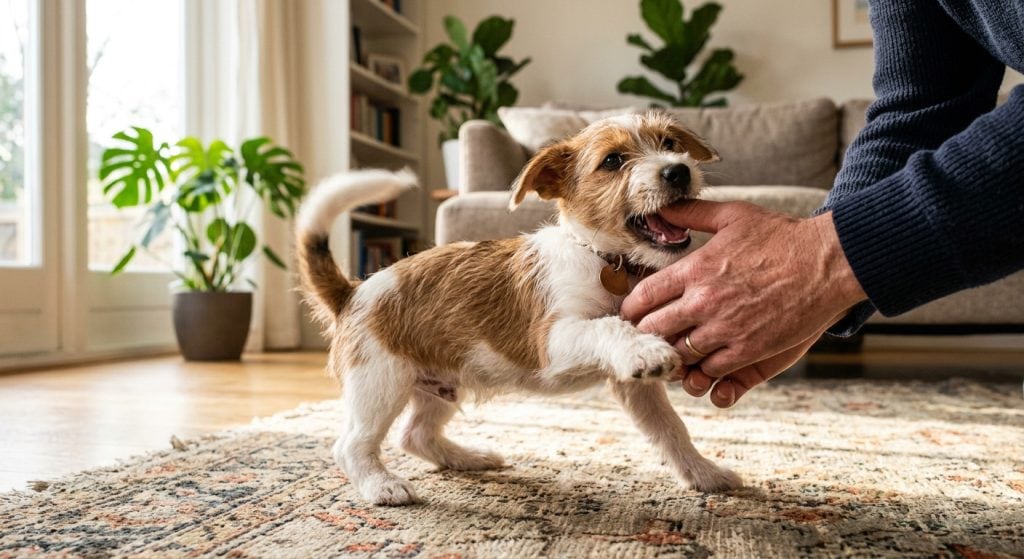
It often starts during play.
Your puppy is chasing a toy, wrestling with your hands, or bouncing around the room when suddenly those tiny teeth make contact with your fingers.
For new owners this can feel surprising, and sometimes even a little worrying. But in most cases, puppy biting is completely normal and part of how puppies learn about the world.
Just like human babies use their hands to explore, puppies use their mouths. Biting, chewing, and mouthing are all ways they investigate objects, interact with people, and practice important social skills.
The challenge for owners isn’t stopping the behaviour entirely — it’s helping puppies learn how to use their mouths gently.
Why Do Puppies Bite?
Puppies bite for several different reasons, especially during the early months of development.
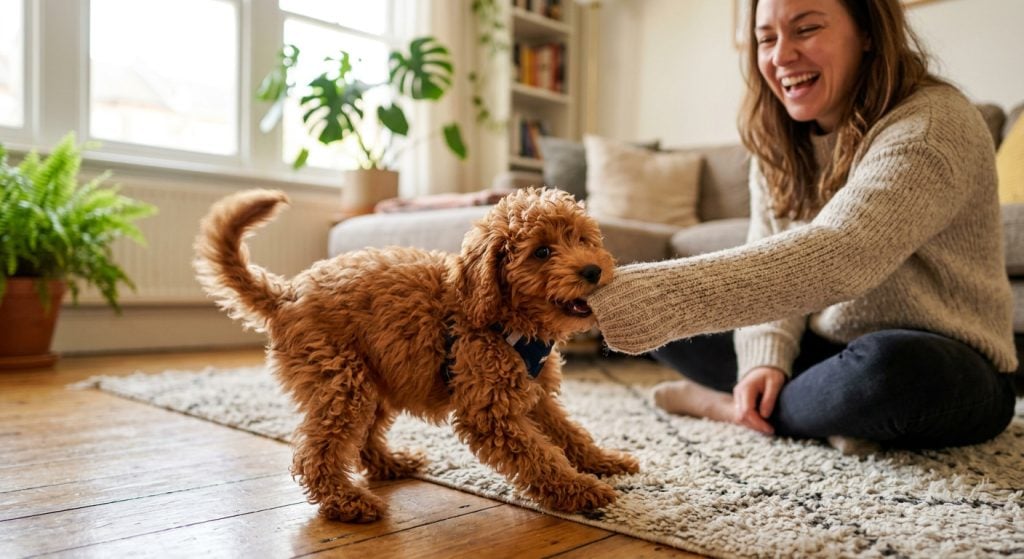
One of the biggest reasons is play. When puppies grow up with their littermates, they spend a lot of time wrestling, chasing, and mouthing each other. Through these playful interactions they begin learning an important skill called bite inhibition — how much pressure is acceptable when using their teeth.
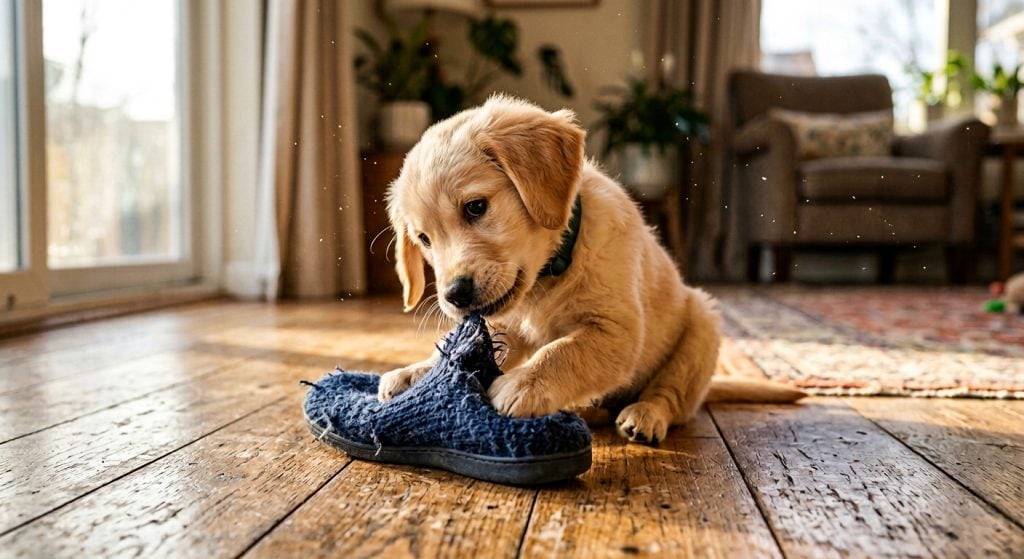
Puppies also bite because they’re curious. The world is full of new textures, smells, and objects, and their mouth is one of the main ways they explore it.
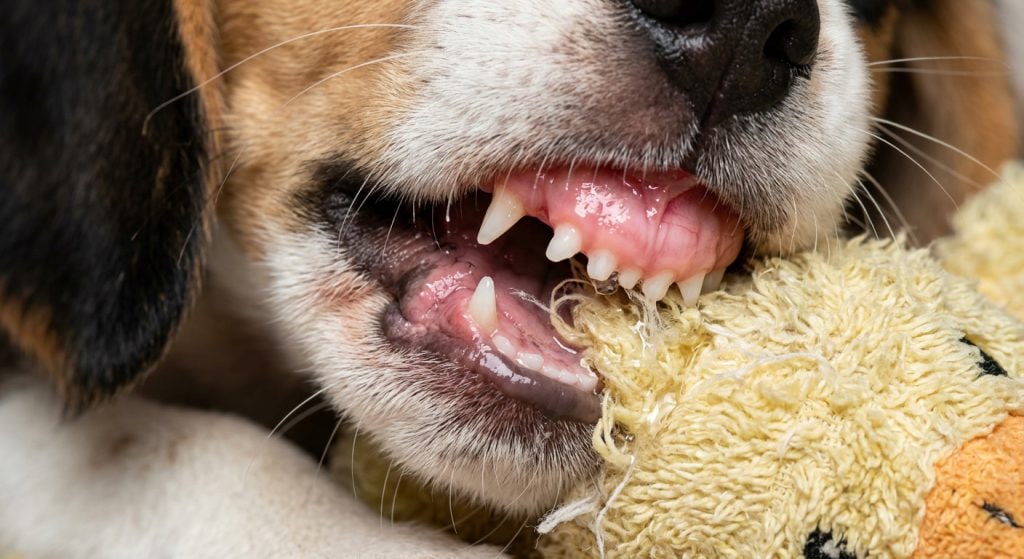
Sometimes biting is also linked to teething, which can make their gums feel uncomfortable. Chewing or mouthing objects can help relieve that pressure.
In other moments, biting simply happens because your puppy is excited, overtired, or trying to get your attention.
Understanding the reason behind the behaviour makes it much easier to respond calmly and guide your puppy toward better habits.

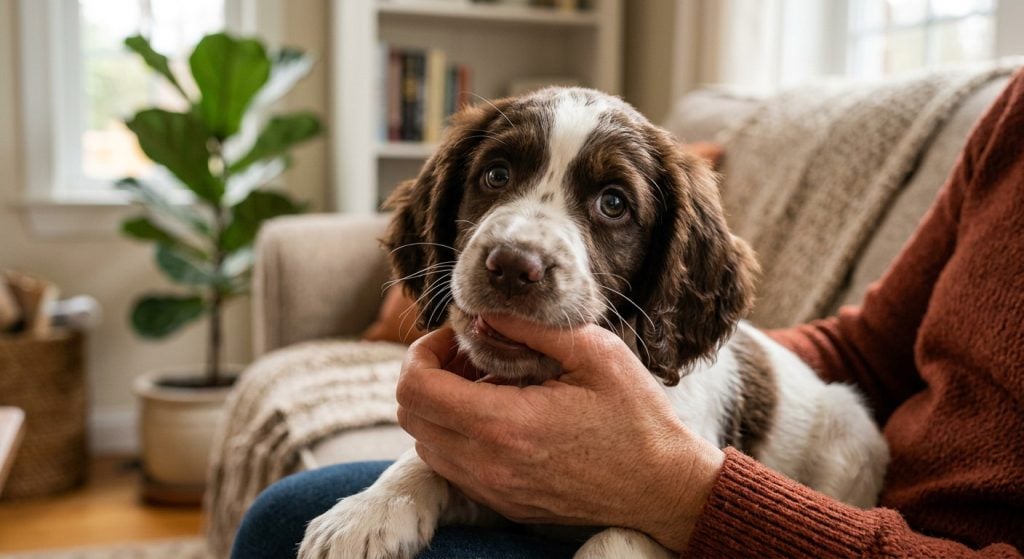
Common Reasons Puppies Bite
There isn’t usually just one reason behind puppy biting. Most of the time it’s a mix of normal behaviours happening at the same stage of development.
Some of the most common reasons include:
• Exploring the world with their mouth
• Playing and learning bite inhibition
• Teething discomfort
• Overstimulation or tiredness
• Seeking attention or interaction
When you look at biting through this lens, it becomes easier to see that your puppy isn’t being “naughty” — they’re simply learning how to interact with the world.
How to Respond to Puppy Biting
The goal when responding to puppy biting isn’t to punish the behaviour, but to guide your puppy toward more appropriate ways to interact.
When biting happens during play, the first step is to pause the interaction. Puppies quickly learn that biting too hard makes the fun stop, which helps them understand how much pressure is acceptable.
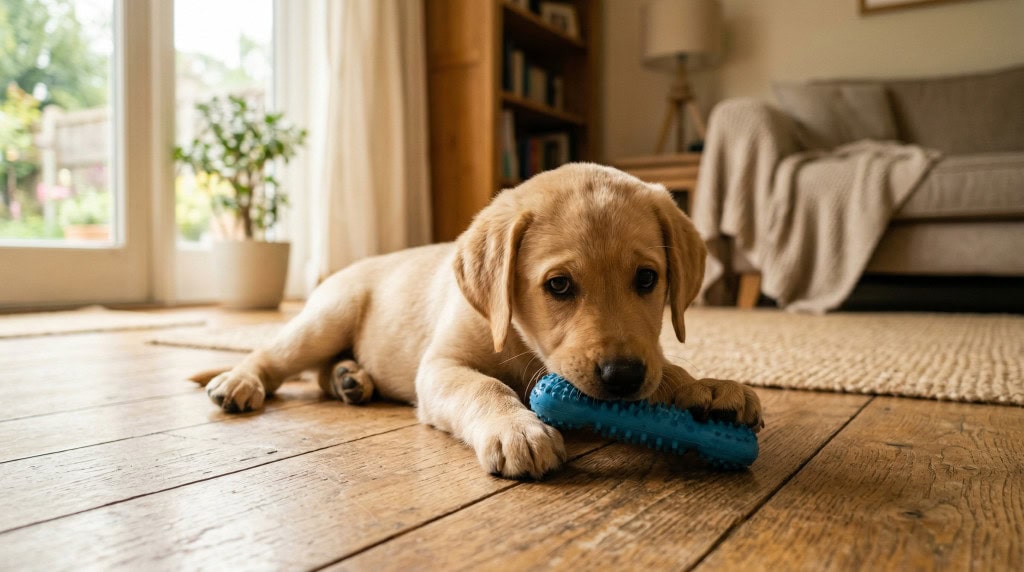
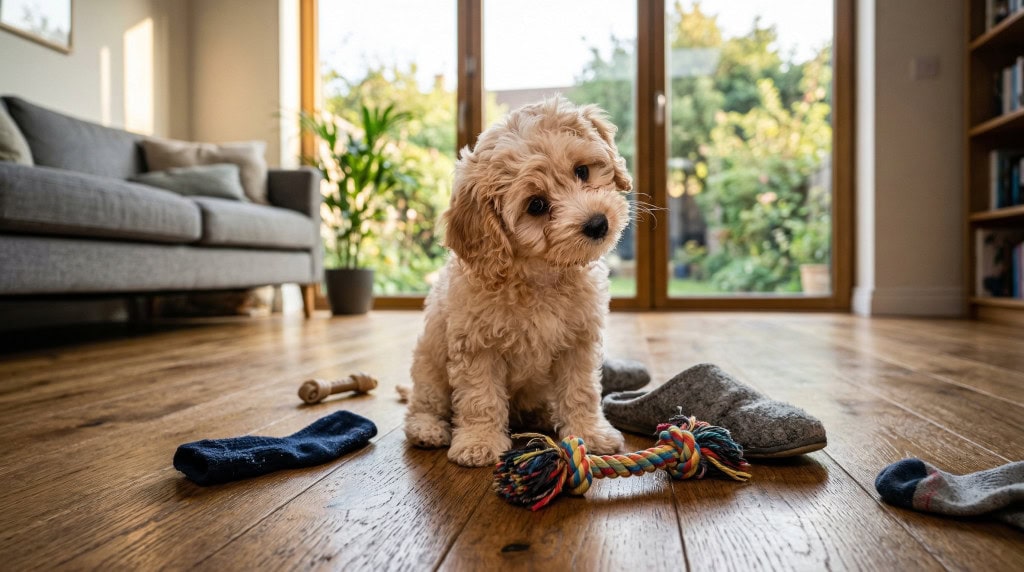
Redirecting your puppy toward toys is another helpful strategy. Providing suitable chew toys gives them an outlet for their natural urge to bite while protecting your hands and clothing.
It’s also important to remember that many puppies become extra bitey when they are overtired or overstimulated. Making sure your puppy gets enough rest throughout the day can reduce these bursts of nipping behaviour.
With calm and consistent responses, most puppies learn surprisingly quickly that gentle play keeps the interaction going.

Biting Is Part of Learning
For many owners, puppy biting can feel like a problem that needs to be fixed immediately.
In reality, it’s part of the learning process.
Your puppy is figuring out how to interact with people, how much pressure their teeth should use, and what kinds of play are acceptable.
With patience, guidance, and the right outlets for chewing and play, this stage gradually improves as your puppy matures.
Those sharp little teeth may feel dramatic in the moment, but they’re simply part of the journey of growing up.
Explore More Puppy Topics
This topic forms part of our Raising a Puppy guide, where we explore puppy sleep, socialisation, exercise, routines, and the behaviours that shape early development.
What to Explore Next
Biting is a normal part of puppy development, but it can feel overwhelming when you’re in the middle of it.
These guides can help you better understand what’s driving the behaviour and how to support your puppy more calmly and confidently.

Building a Calm Start for Your Puppy
If you’re raising a puppy and want to understand their behaviour more clearly, the Puppy Beginnings: Building a Calm Start course provides step-by-step guidance to help you build healthy routines, prevent common behaviour problems, and create a calm and confident foundation for your puppy.