
Ticks in Dogs: What Every Owner Should Know
A quiet moment that’s easy to miss
It often happens after something completely ordinary.
A walk through long grass. A slow wander along a woodland path. Maybe your dog pauses a little longer than usual, nose buried in a hedge, completely absorbed in the world of scent.
Later that evening, as they settle beside you, you run your hand over their coat and feel something small—firm, unfamiliar. Not quite a lump, not quite dirt.
Just… there.
And in that quiet moment, you realise it’s something you weren’t really thinking about during the walk at all.
A tick.
Ticks in dogs are surprisingly common, especially after walks through grass, woodland, or countryside paths.

What ticks in dogs actually are
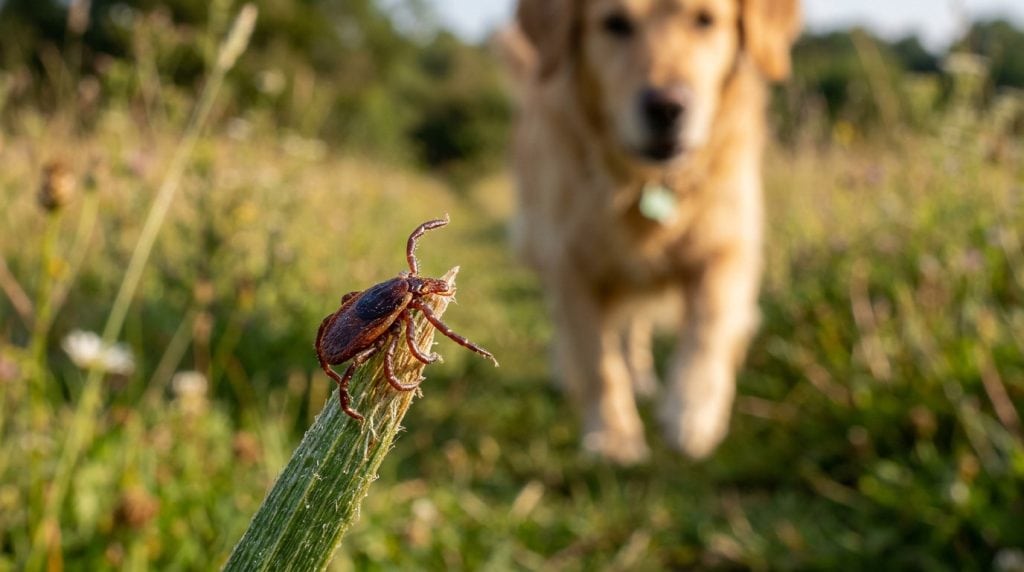
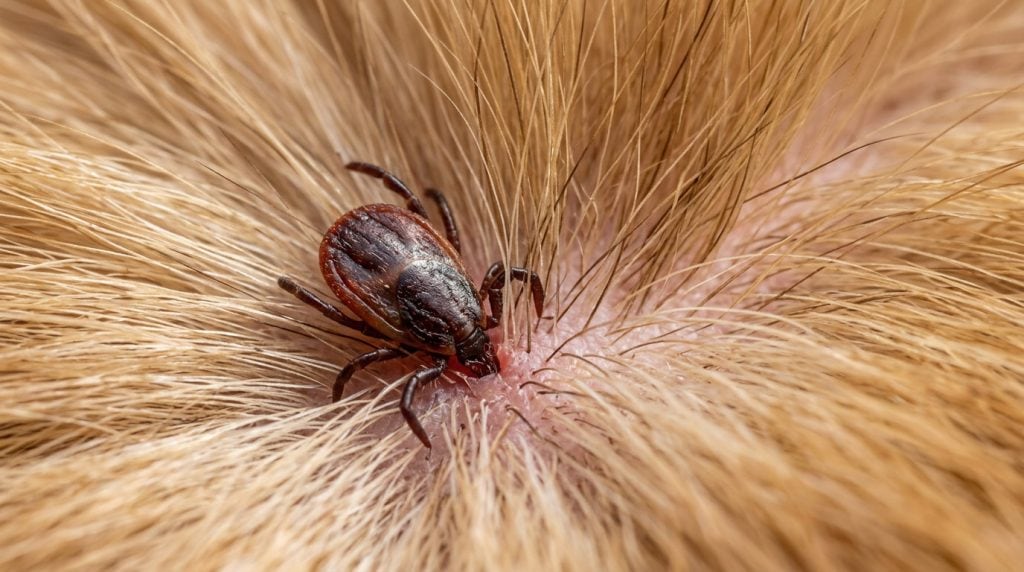
Ticks are small parasites that attach themselves to a dog’s skin to feed on blood. Unlike fleas, they don’t jump or move quickly. Instead, they wait—often on grass, shrubs, or low branches—until a passing animal brushes against them.
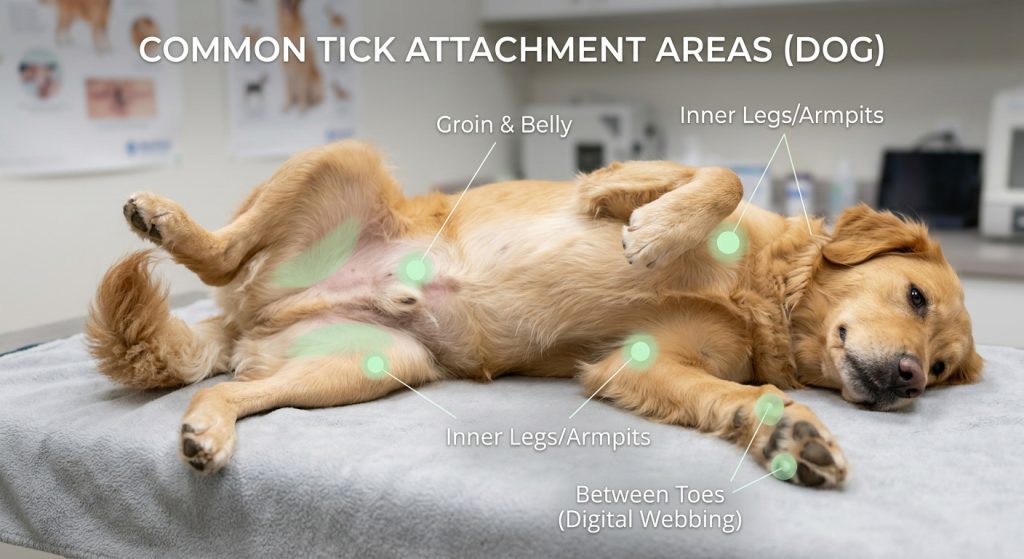
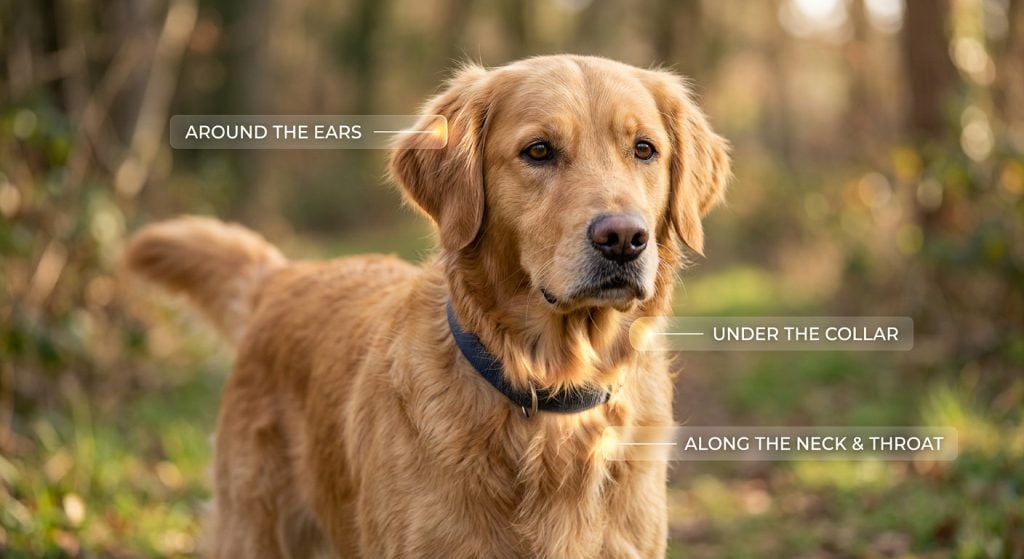
Once they’ve found their way onto a dog, they look for a place to settle. Areas with thinner skin tend to be preferred—around the ears, neck, under the collar, between the toes, or along the belly.
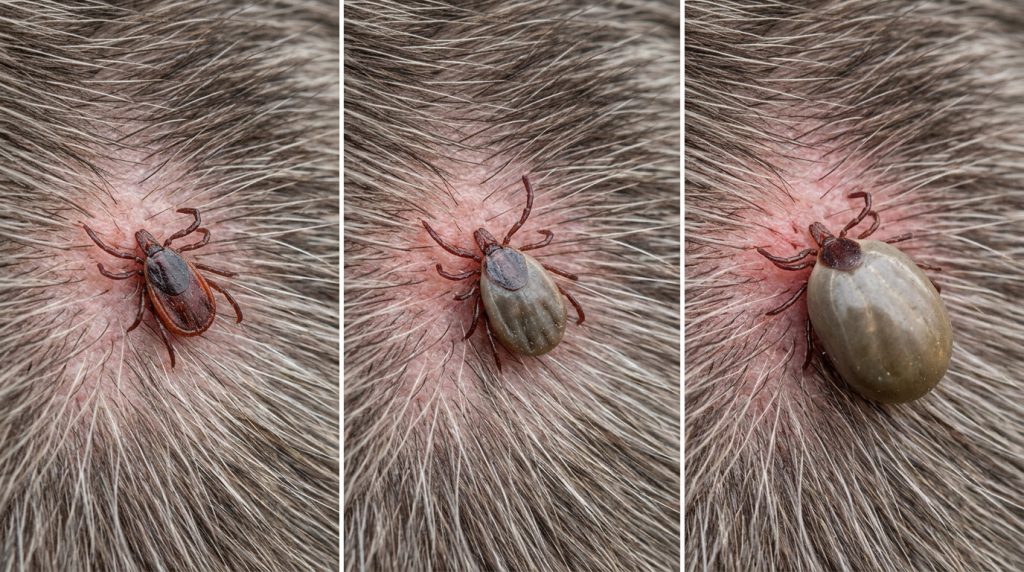
After attaching, they begin feeding slowly. Over time, they can become more noticeable as their bodies fill.
For many dogs, this process happens quietly, without obvious discomfort. That’s part of what makes ticks easy to miss.
How dogs pick up ticks
Ticks don’t come from other dogs in the way people often assume. They’re picked up from the environment.
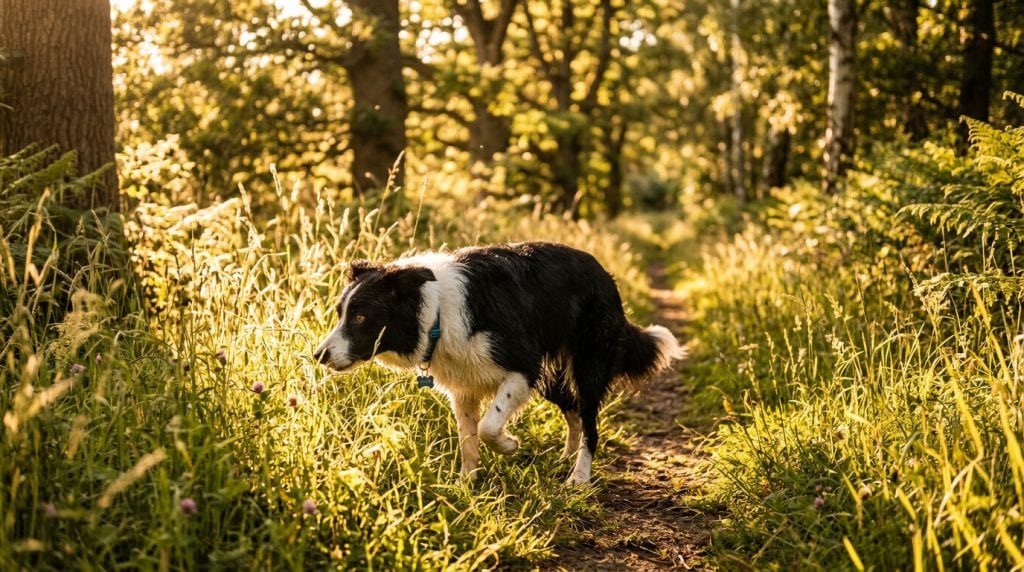
Places where ticks are more commonly found include long grass, woodland areas, leafy parks, and damp, shaded outdoor spaces.
It isn’t about avoiding these places altogether. These environments are often enriching and important for dogs.
It’s simply about understanding that ticks are part of that landscape—and knowing what to look for afterwards.
What’s happening when a tick attaches
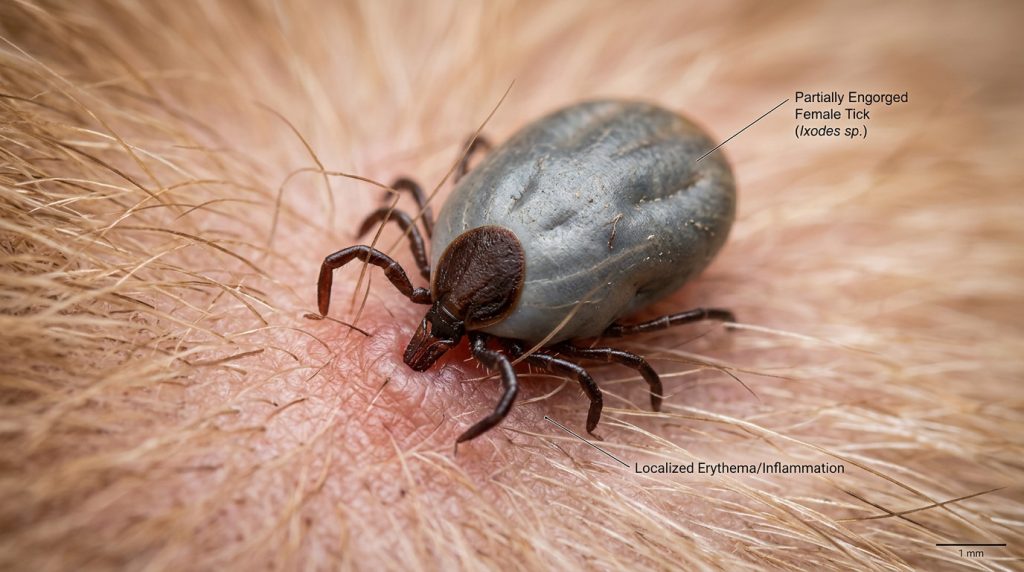
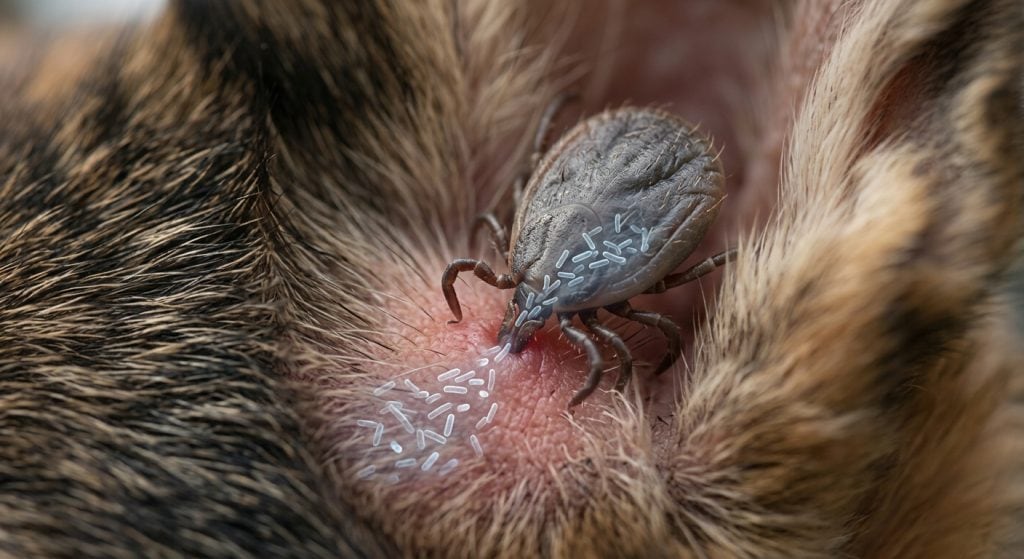
When a tick attaches to a dog, it uses specialised mouthparts to anchor itself into the skin. It then begins feeding gradually over several days.
During this time, the tick remains in place, often unnoticed unless you’re checking closely.
In most cases, a single tick doesn’t cause immediate harm. But because ticks feed on blood, and because they can carry certain diseases, their presence is something to be aware of rather than ignore.
The key thing to understand is that the risk isn’t about the moment you find the tick—it’s about how long it stays attached.
Why ticks need to be removed
One of the main reasons ticks are taken seriously is because they can carry infections, including Lyme disease, which is spread through the bite of infected ticks.
This doesn’t mean every tick is dangerous, and it doesn’t mean your dog will become unwell from a single bite. In many cases, nothing further happens at all.
What matters is time.
The longer a tick remains attached, the greater the chance of bacteria being passed from the tick into the dog’s bloodstream. This is why early removal is so important—it reduces that risk significantly.
So while ticks themselves are often small and quiet, the reason we pay attention to them is not just what they are, but what they can carry.
How to remove ticks in dogs safely
If you do find a tick, the most important thing is to remove it cleanly and without rushing.
Ticks attach quite firmly, so pulling them out with your fingers can sometimes leave small parts behind in the skin. This can cause irritation and make the area slower to settle.
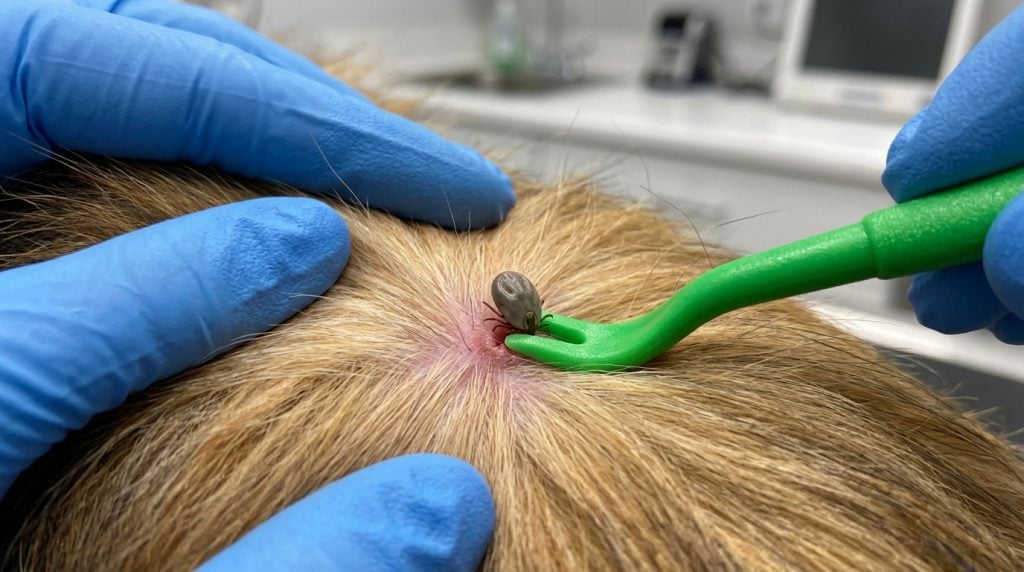
Using a proper tick removal tool makes the process much more straightforward. These tools are designed to slide gently under the tick and lift it away without squeezing the body.
The movement is slow and steady—more of a careful easing than a pull.
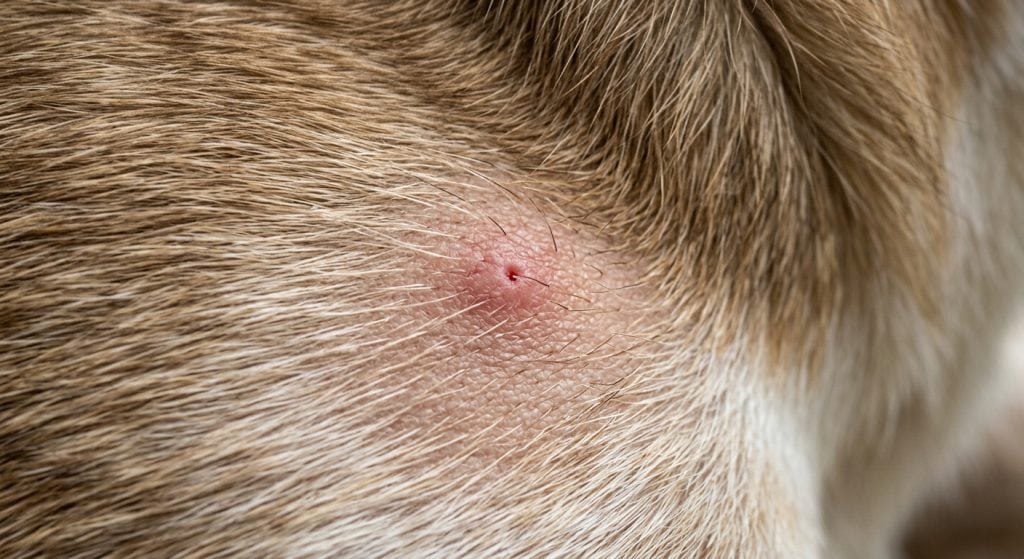
Once the tick is removed, the skin may look slightly red or raised for a short time. This usually settles on its own. Keeping the area clean and simply observing it over the next few days is often all that’s needed.
What matters most is that the tick is removed as soon as it’s noticed, and that it’s done in a way that avoids leaving anything behind.
Why ticks matter for dog owners
For many owners, the first instinct is worry.
But it helps to take a step back and look at the bigger picture.
Ticks are relatively common, especially during warmer months. Most dogs who spend time outdoors will encounter them at some point. Finding one doesn’t mean something has gone wrong.
What matters is awareness.
Removing ticks promptly reduces the chance of disease transmission. Regular checks make it easier to catch them early. And understanding where they’re likely to be found helps you stay one step ahead without needing to limit your dog’s normal activities.
This is less about prevention through restriction—and more about quiet, consistent observation.
Checking your dog for ticks after walks
Tick checks don’t need to be complicated or time-consuming.
They often become part of a natural routine—something you do as you settle back at home.
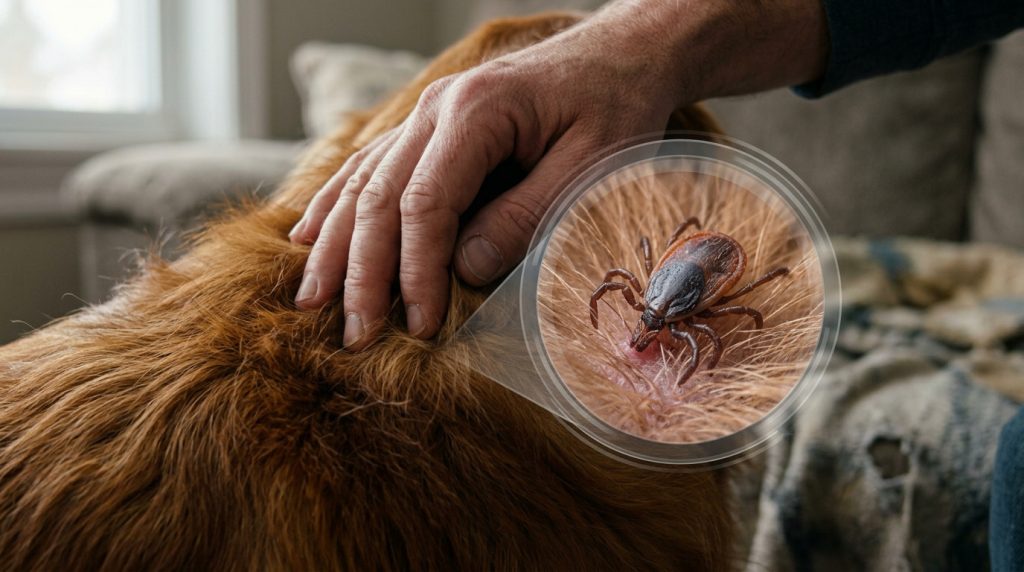
Running your hands slowly over your dog’s body is usually enough to detect anything unusual. You’re not just looking—you’re feeling for small bumps or changes in the coat.
Pay a little extra attention to areas like the ears, under the collar, between the toes, and along the belly.
Most ticks are found this way—simply through touch, rather than sight.
A simple part of caring for your dog
Ticks are one of those things that become much less worrying once they’re understood.
They’re part of the outdoor world your dog enjoys—something to be aware of, rather than something to fear.
With a gentle routine of checking, a calm approach to removal, and a basic understanding of what’s happening, they become just another small part of day-to-day care.
And like many aspects of dog ownership, confidence comes not from avoiding every risk—but from knowing how to respond when something unfamiliar appears.

Explore More Dog Health & Safety Topics
This topic forms part of our Dog Health & Safety guide, where we explore common risks, prevention, and practical ways owners can help keep their dogs safe and healthy.
Looking ahead
As we move further into dog health and safety, ticks are just one example of how small, everyday situations can feel bigger than they are.
Understanding them clearly helps remove that uncertainty.
As this section continues, we’ll begin exploring simple first aid knowledge for dog owners — the kind of practical understanding that helps you stay calm and respond confidently when something unexpected happens.