
Xoloitzcuintli
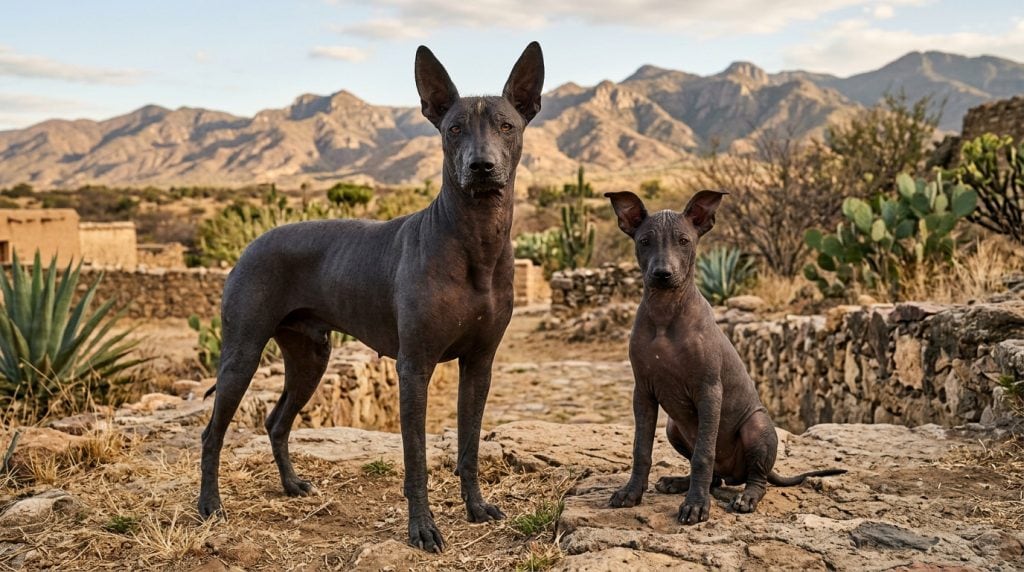
Living with a Xoloitzcuintli is a unique experience, often marked by their quiet presence and keen sensitivity to their surroundings. These dogs form deep bonds with their families, frequently seeking out companionship and showing a gentle curiosity about household activities. Their calm nature and minimal grooming needs make them a distinctive addition to any home, standing out not just for their appearance but for their thoughtful engagement with their environment.
At a glance
Core care
- Size: Medium
- Energy: Moderate
- Grooming: Low
- Shedding: Minimal
Support style
- Sensitivity: High
- Training style: Willing
Breed guide
Choose a section to explore. These notes describe common patterns, but individual dogs vary widely.
The Xoloitzcuintli, often referred to as the Mexican Hairless Dog, has a rich history that dates back over 3,000 years, rooted in ancient Aztec and Mayan civilizations. Originally bred for companionship and spiritual significance, these dogs were believed to guide souls to the afterlife. This deep historical connection to humans is evident today in their strong bond with their families and their intuitive understanding of human emotions.
Physically, the Xoloitzcuintli is known for its distinctive hairless appearance, though there is a coated variety as well. Their skin is smooth and warm to the touch, which many owners find quite comforting. This lack of fur means they require minimal grooming, but it also makes them sensitive to extreme temperatures, necessitating protection from harsh sun or cold weather. Their medium size makes them versatile for various living situations, from apartments to larger homes.
In terms of temperament, Xolos are known for their calm and attentive nature. They tend to be reserved with strangers, which can make them excellent watchdogs, yet they are not typically aggressive. Owners often notice their Xolo’s high sensitivity to their environment and emotions, which can make them exceptionally empathetic companions. However, this sensitivity also means they thrive best in stable, calm households where they can feel secure.
While the breed’s traits are generally consistent, individual Xolos can vary in their levels of energy and sociability. It’s important for potential owners to meet several dogs and speak with breeders to understand the full range of personalities within the breed. This ensures a good match between the dog’s temperament and the family’s lifestyle, leading to a rewarding companionship.
Xoloitzcuintlis are often described as observant and thoughtful, traits that stem from their ancient role as companions and guardians. Many owners find that their Xolo is deeply attuned to the household’s emotional climate, often responding to moods and changes in the environment with a quiet presence. This sensitivity can make them seem almost intuitive, knowing when to offer comfort or when to quietly retreat.
Their high sensitivity also means that Xolos can be quite selective about their social interactions. They tend to form strong bonds with their families, often showing a preference for familiar faces over strangers. This can manifest as a reserved nature around new people, though they are rarely aggressive. Instead, they may choose to observe from a distance until they feel comfortable.
Training a Xoloitzcuintli can be a rewarding experience due to their willingness to learn and their desire to please their owners. Their intelligence and sensitivity mean they respond well to positive reinforcement and gentle guidance. Owners often notice that their Xolo thrives on consistency and clear communication, which helps build a trusting relationship.
Despite their generally calm demeanor, Xolos can have moments of playfulness, especially when they feel secure and understood. It’s important for owners to recognize and respect their dog’s unique personality, providing a stable and loving environment that allows the Xolo to express its natural tendencies. By doing so, owners can enjoy a deeply rewarding bond with this ancient and thoughtful breed.
A typical day for a Xoloitzcuintli involves moderate exercise that balances physical activity with mental stimulation. While they enjoy daily walks and playtime, they don’t require the intense exercise regimens of more high-energy breeds. A couple of brisk walks combined with some interactive play sessions usually suffice to keep them happy and healthy.
Mental enrichment is just as important for this breed as physical exercise. Xolos are intelligent and appreciate activities that challenge their minds, such as puzzle toys or scent games. These activities not only keep them engaged but also help to prevent boredom, which can lead to unwanted behaviours. Owners often find that their Xolo enjoys learning new tricks or participating in agility courses, which can be a fun way to bond.
As they age, Xoloitzcuintlis may require adjustments to their exercise routine. Older dogs might prefer shorter, more frequent walks and less strenuous activities. It’s important to pay attention to their cues and adapt their routine to their changing needs, ensuring they remain comfortable and active throughout their life stages.
Owners should be mindful of the Xolo’s sensitivity to temperature extremes when planning outdoor activities. Their hairless skin makes them vulnerable to sunburn and cold, so protective clothing or sunscreen may be necessary during certain weather conditions. By taking these precautions, owners can ensure that their Xolo enjoys a fulfilling and active lifestyle without discomfort.
Training a Xoloitzcuintli often feels like a partnership rather than a task, thanks to their willingness to learn and their desire to connect with their owner. Many find that these dogs respond best to positive reinforcement techniques, where rewards and praise encourage desired behaviours. This approach aligns well with their sensitive nature, fostering a trusting and cooperative relationship.
Impulse control can sometimes be a challenge, particularly during adolescence when Xolos may test boundaries. Consistency and patience are key during this period, as is maintaining a calm and supportive training environment. Owners often find that setting clear expectations and sticking to them helps their Xolo understand what is required, reducing frustration on both sides.
The breed’s high sensitivity means that harsh training methods can be counterproductive, potentially leading to anxiety or withdrawal. Instead, gentle guidance and a focus on building confidence are more effective. Many owners notice that their Xolo thrives when training is framed as a series of small successes, each building on the last.
Building a strong relationship is crucial for successful training with this breed. Xolos are more likely to engage and cooperate when they feel connected to their owner, making training sessions an opportunity to strengthen this bond. By approaching training with empathy and consistency, owners can help their Xolo develop into a well-mannered and contented companion.
The Xoloitzcuintli tends to adapt well to various living environments, thanks to their moderate energy levels and versatile size. They can thrive in both apartments and larger homes, provided they receive sufficient exercise and mental stimulation. Their calm nature makes them well-suited to quieter households, where they can enjoy stable routines and close companionship.
Many owners find that Xolos do well in homes with older children who understand the importance of gentle handling and respect for the dog’s space. While they can be patient with younger children, their sensitivity means they may prefer a calmer environment. Supervised interactions are always recommended to ensure positive experiences for both the dog and the children.
When it comes to other pets, Xolos can coexist peacefully with other animals, especially if they are introduced at a young age. Their reserved nature means they may take some time to warm up to new companions, but with patience and proper introductions, they can form harmonious relationships. Owners often notice that their Xolo enjoys the company of other dogs, particularly those with similar temperaments.
Ultimately, the Xoloitzcuintli fits best in a home where their need for companionship and sensitivity is understood and respected. They thrive in environments where they can form strong bonds with their family members, enjoying both quiet moments and interactive play. By considering these factors, potential owners can determine if the Xolo is a good match for their lifestyle.
The health of a Xoloitzcuintli is closely tied to their overall wellbeing, as their physical condition can influence their behaviour and quality of life. While generally healthy, Xolos can be prone to certain breed-specific health issues, such as skin conditions and dental problems. Regular veterinary check-ups are essential to monitor their health and catch any potential issues early.
Owners should pay particular attention to their Xolo’s skin, as the hairless variety can be susceptible to sunburn and other skin irritations. Protective measures, such as sunscreen or clothing, can help mitigate these risks. Additionally, maintaining a healthy diet and regular grooming routine can support their skin health.
Dental care is another important aspect of Xolo health, as small breeds can be prone to dental issues. Regular brushing and professional cleanings can help prevent tartar build-up and gum disease. Owners often find that incorporating dental chews into their dog’s routine can also support oral health.
Preventive care, including vaccinations and parasite control, is crucial for maintaining a Xolo’s health. Owners should work closely with their veterinarian to develop a comprehensive health plan tailored to their dog’s needs. By staying proactive and attentive to their Xolo’s health, owners can ensure a long and happy life for their companion.
The Xoloitzcuintli has a storied history that stretches back over 3,000 years, with roots in ancient Mesoamerican civilizations such as the Aztecs and Mayans. These dogs were highly valued not only as companions but also for their spiritual significance, believed to guide souls to the afterlife. This deep cultural connection has shaped the breed’s characteristics, particularly their strong bond with humans.
Originally, Xolos were used for a variety of purposes, including as guardians and even as a food source. Their hairless nature was considered a gift from the gods, and they were often associated with healing and protection. This historical role as a guardian is reflected in their modern temperament, where they often exhibit a watchful and protective nature.
Over the centuries, the Xoloitzcuintli faced periods of decline, particularly during the Spanish colonization, when European breeds were introduced. However, dedicated enthusiasts and breeders have worked to preserve the breed, recognising its cultural and historical importance. This preservation effort has helped maintain the Xolo’s unique traits and ensured its survival into modern times.
Today, the Xoloitzcuintli is celebrated not only for its ancient heritage but also for its unique appearance and temperament. Owners often appreciate the breed’s calm and thoughtful nature, which can be traced back to its historical role as a companion and protector. Understanding this rich history helps owners appreciate the Xolo’s distinctive qualities and the deep connection they can form with their human families.
What shapes individual dogs
- Early social experiences
- Training approach
- Environment & routine
- Genetics & breeding
- Health & pain
- Age / life stage
The Xoloitzcuintli, often referred to as the Mexican Hairless Dog, has a rich history that dates back over 3,000 years, rooted in ancient Aztec and Mayan civilizations. Originally bred for companionship and spiritual significance, these dogs were believed to guide souls to the afterlife. This deep historical connection to humans is evident today in their strong bond with their families and their intuitive understanding of human emotions.
Physically, the Xoloitzcuintli is known for its distinctive hairless appearance, though there is a coated variety as well. Their skin is smooth and warm to the touch, which many owners find quite comforting. This lack of fur means they require minimal grooming, but it also makes them sensitive to extreme temperatures, necessitating protection from harsh sun or cold weather. Their medium size makes them versatile for various living situations, from apartments to larger homes.
In terms of temperament, Xolos are known for their calm and attentive nature. They tend to be reserved with strangers, which can make them excellent watchdogs, yet they are not typically aggressive. Owners often notice their Xolo’s high sensitivity to their environment and emotions, which can make them exceptionally empathetic companions. However, this sensitivity also means they thrive best in stable, calm households where they can feel secure.
While the breed’s traits are generally consistent, individual Xolos can vary in their levels of energy and sociability. It’s important for potential owners to meet several dogs and speak with breeders to understand the full range of personalities within the breed. This ensures a good match between the dog’s temperament and the family’s lifestyle, leading to a rewarding companionship.
Xoloitzcuintlis are often described as observant and thoughtful, traits that stem from their ancient role as companions and guardians. Many owners find that their Xolo is deeply attuned to the household’s emotional climate, often responding to moods and changes in the environment with a quiet presence. This sensitivity can make them seem almost intuitive, knowing when to offer comfort or when to quietly retreat.
Their high sensitivity also means that Xolos can be quite selective about their social interactions. They tend to form strong bonds with their families, often showing a preference for familiar faces over strangers. This can manifest as a reserved nature around new people, though they are rarely aggressive. Instead, they may choose to observe from a distance until they feel comfortable.
Training a Xoloitzcuintli can be a rewarding experience due to their willingness to learn and their desire to please their owners. Their intelligence and sensitivity mean they respond well to positive reinforcement and gentle guidance. Owners often notice that their Xolo thrives on consistency and clear communication, which helps build a trusting relationship.
Despite their generally calm demeanor, Xolos can have moments of playfulness, especially when they feel secure and understood. It’s important for owners to recognize and respect their dog’s unique personality, providing a stable and loving environment that allows the Xolo to express its natural tendencies. By doing so, owners can enjoy a deeply rewarding bond with this ancient and thoughtful breed.
A typical day for a Xoloitzcuintli involves moderate exercise that balances physical activity with mental stimulation. While they enjoy daily walks and playtime, they don’t require the intense exercise regimens of more high-energy breeds. A couple of brisk walks combined with some interactive play sessions usually suffice to keep them happy and healthy.
Mental enrichment is just as important for this breed as physical exercise. Xolos are intelligent and appreciate activities that challenge their minds, such as puzzle toys or scent games. These activities not only keep them engaged but also help to prevent boredom, which can lead to unwanted behaviours. Owners often find that their Xolo enjoys learning new tricks or participating in agility courses, which can be a fun way to bond.
As they age, Xoloitzcuintlis may require adjustments to their exercise routine. Older dogs might prefer shorter, more frequent walks and less strenuous activities. It’s important to pay attention to their cues and adapt their routine to their changing needs, ensuring they remain comfortable and active throughout their life stages.
Owners should be mindful of the Xolo’s sensitivity to temperature extremes when planning outdoor activities. Their hairless skin makes them vulnerable to sunburn and cold, so protective clothing or sunscreen may be necessary during certain weather conditions. By taking these precautions, owners can ensure that their Xolo enjoys a fulfilling and active lifestyle without discomfort.
Training a Xoloitzcuintli often feels like a partnership rather than a task, thanks to their willingness to learn and their desire to connect with their owner. Many find that these dogs respond best to positive reinforcement techniques, where rewards and praise encourage desired behaviours. This approach aligns well with their sensitive nature, fostering a trusting and cooperative relationship.
Impulse control can sometimes be a challenge, particularly during adolescence when Xolos may test boundaries. Consistency and patience are key during this period, as is maintaining a calm and supportive training environment. Owners often find that setting clear expectations and sticking to them helps their Xolo understand what is required, reducing frustration on both sides.
The breed’s high sensitivity means that harsh training methods can be counterproductive, potentially leading to anxiety or withdrawal. Instead, gentle guidance and a focus on building confidence are more effective. Many owners notice that their Xolo thrives when training is framed as a series of small successes, each building on the last.
Building a strong relationship is crucial for successful training with this breed. Xolos are more likely to engage and cooperate when they feel connected to their owner, making training sessions an opportunity to strengthen this bond. By approaching training with empathy and consistency, owners can help their Xolo develop into a well-mannered and contented companion.
The Xoloitzcuintli tends to adapt well to various living environments, thanks to their moderate energy levels and versatile size. They can thrive in both apartments and larger homes, provided they receive sufficient exercise and mental stimulation. Their calm nature makes them well-suited to quieter households, where they can enjoy stable routines and close companionship.
Many owners find that Xolos do well in homes with older children who understand the importance of gentle handling and respect for the dog’s space. While they can be patient with younger children, their sensitivity means they may prefer a calmer environment. Supervised interactions are always recommended to ensure positive experiences for both the dog and the children.
When it comes to other pets, Xolos can coexist peacefully with other animals, especially if they are introduced at a young age. Their reserved nature means they may take some time to warm up to new companions, but with patience and proper introductions, they can form harmonious relationships. Owners often notice that their Xolo enjoys the company of other dogs, particularly those with similar temperaments.
Ultimately, the Xoloitzcuintli fits best in a home where their need for companionship and sensitivity is understood and respected. They thrive in environments where they can form strong bonds with their family members, enjoying both quiet moments and interactive play. By considering these factors, potential owners can determine if the Xolo is a good match for their lifestyle.
The health of a Xoloitzcuintli is closely tied to their overall wellbeing, as their physical condition can influence their behaviour and quality of life. While generally healthy, Xolos can be prone to certain breed-specific health issues, such as skin conditions and dental problems. Regular veterinary check-ups are essential to monitor their health and catch any potential issues early.
Owners should pay particular attention to their Xolo’s skin, as the hairless variety can be susceptible to sunburn and other skin irritations. Protective measures, such as sunscreen or clothing, can help mitigate these risks. Additionally, maintaining a healthy diet and regular grooming routine can support their skin health.
Dental care is another important aspect of Xolo health, as small breeds can be prone to dental issues. Regular brushing and professional cleanings can help prevent tartar build-up and gum disease. Owners often find that incorporating dental chews into their dog’s routine can also support oral health.
Preventive care, including vaccinations and parasite control, is crucial for maintaining a Xolo’s health. Owners should work closely with their veterinarian to develop a comprehensive health plan tailored to their dog’s needs. By staying proactive and attentive to their Xolo’s health, owners can ensure a long and happy life for their companion.
The Xoloitzcuintli has a storied history that stretches back over 3,000 years, with roots in ancient Mesoamerican civilizations such as the Aztecs and Mayans. These dogs were highly valued not only as companions but also for their spiritual significance, believed to guide souls to the afterlife. This deep cultural connection has shaped the breed’s characteristics, particularly their strong bond with humans.
Originally, Xolos were used for a variety of purposes, including as guardians and even as a food source. Their hairless nature was considered a gift from the gods, and they were often associated with healing and protection. This historical role as a guardian is reflected in their modern temperament, where they often exhibit a watchful and protective nature.
Over the centuries, the Xoloitzcuintli faced periods of decline, particularly during the Spanish colonization, when European breeds were introduced. However, dedicated enthusiasts and breeders have worked to preserve the breed, recognising its cultural and historical importance. This preservation effort has helped maintain the Xolo’s unique traits and ensured its survival into modern times.
Today, the Xoloitzcuintli is celebrated not only for its ancient heritage but also for its unique appearance and temperament. Owners often appreciate the breed’s calm and thoughtful nature, which can be traced back to its historical role as a companion and protector. Understanding this rich history helps owners appreciate the Xolo’s distinctive qualities and the deep connection they can form with their human families.
What shapes individual dogs
- Early social experiences
- Training approach
- Environment & routine
- Genetics & breeding
- Health & pain
- Age / life stage
Want support with this?
This course is perfect for Xoloitzcuintli owners looking to deepen their understanding of their dog's sensitive and intuitive nature.