
Norwegian Buhund
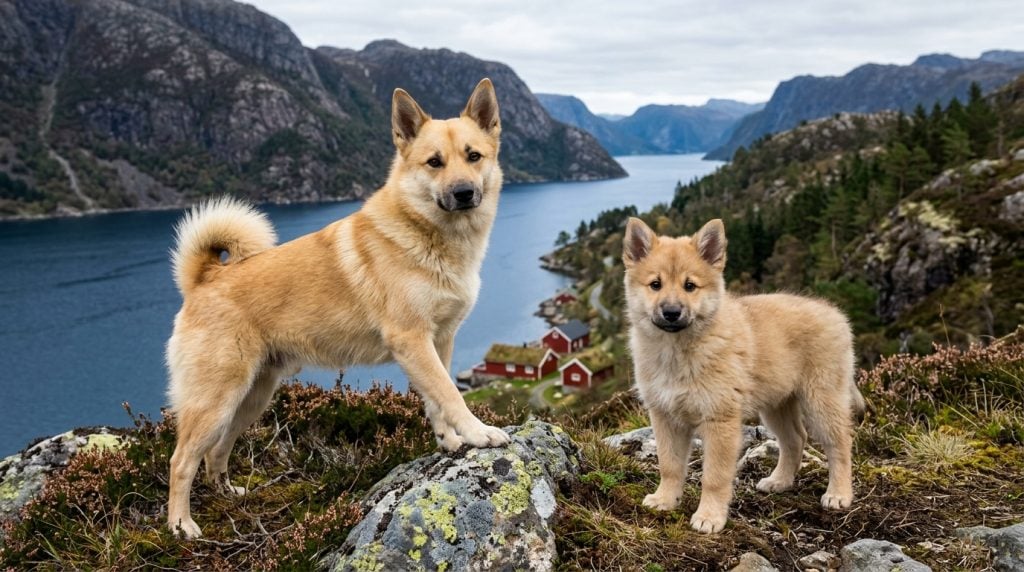
Norwegian Buhunds are energetic Nordic farm dogs known for their alert nature and enthusiasm for activity. Traditionally used for herding and general farm work in Norway, they tend to remain observant and eager to stay involved in family life. Many owners appreciate their cheerful personality and readiness to take part in everyday adventures.
At a glance
Core care
- Size: Medium
- Energy: High
- Grooming: Low
- Shedding: Moderate
Support style
- Sensitivity: Moderate
- Training style: Willing
Breed guide
Choose a section to explore. These notes describe common patterns, but individual dogs vary widely.
The Norwegian Buhund is a lively Nordic farm dog that developed in Norway, where it worked alongside farmers managing livestock and daily rural tasks. Traditionally used for herding sheep and cattle, the breed was also valued for its versatility, helping guard property and acting as a reliable companion around the farm. This history shaped the Buhund into an alert, energetic dog that tends to stay closely involved with the people and activity around it.
The breed belongs to the Nordic spitz family, sharing ancestry with other Scandinavian working dogs such as the Icelandic Sheepdog and Swedish Vallhund. Like many spitz-type breeds, the Buhund has a compact, athletic build, upright ears, and a curled tail carried over the back. Its dense double coat was developed to withstand Norway’s cold and variable climate, offering protection during long days working outdoors.
Temperamentally, Norwegian Buhunds are often described as cheerful, observant, and highly engaged with their surroundings. They typically form strong bonds with their families and enjoy being included in daily activities, whether that involves outdoor exercise, training sessions, or simply keeping watch over the household. Their intelligence and enthusiasm can make them responsive learners, particularly when training is consistent and encouraging.
While breed tendencies provide helpful guidance, individual personalities can vary. Some Buhunds are highly energetic and playful, while others are calmer observers of family life. Understanding the breed’s background as an active farm dog helps owners provide the structure, activity, and companionship that allow a Buhund to feel settled and fulfilled.
The Norwegian Buhund is often described as a social and engaging breed, with a natural inclination to be involved in family activities. This social nature is rooted in their history as herding dogs, where cooperation and communication were essential. Owners frequently observe that their Buhund enjoys being in the midst of household happenings, often following family members from room to room, eager to participate in whatever is going on.
This breed’s moderate sensitivity means that while they are generally robust, they can be attuned to the moods and emotions of their human companions. Many Buhunds respond well to positive reinforcement and gentle guidance, making them willing participants in training and socialisation. Their trainability is often highlighted by their eagerness to learn new tasks and tricks, which can be both a joy and a challenge for owners.
In daily life, Norwegian Buhunds are known for their lively and alert disposition. They often display a keen interest in their environment, which can sometimes manifest as a tendency to bark at unfamiliar sights or sounds. This alertness can make them effective watchdogs, although it also means that they require consistent training to manage their vocal tendencies appropriately.
While the Buhund is generally friendly and outgoing, individual dogs may vary in their approach to new situations and people. Some may be more reserved initially, while others are immediately sociable. Understanding these individual differences is key to fostering a positive relationship with a Buhund, as it allows owners to tailor their approach to training and socialisation, ensuring a well-rounded and happy companion.
A typical day for a Norwegian Buhund involves plenty of physical activity and mental stimulation. Given their high energy levels, these dogs benefit from regular, vigorous exercise, such as long walks, runs, or play sessions in a secure area. Owners often find that incorporating variety into their exercise routine helps keep their Buhund engaged and satisfied, preventing boredom and restlessness.
In addition to physical exercise, mental enrichment is crucial for the Buhund. Puzzle toys, interactive games, and training sessions that challenge their intelligence can be particularly rewarding. Many owners enjoy participating in dog sports such as agility or obedience trials, which provide an excellent outlet for the breed’s energy and intelligence.
As Buhunds age, their exercise needs may change, but they generally remain active well into their senior years. It’s important for owners to adjust the intensity and duration of activities to suit their dog’s age and physical condition, ensuring they remain healthy and happy throughout their life stages.
While the Norwegian Buhund thrives on activity, it’s essential to avoid over-exercising young puppies, whose growing bodies need time to develop properly. Gradually increasing exercise as they mature helps prevent injury and supports healthy growth. Balancing physical and mental activities ensures that a Buhund remains a well-rounded and content member of the family.
Training a Norwegian Buhund often feels like a rewarding partnership between dog and owner. These dogs are known for their willingness to learn and their eagerness to please, which makes training an enjoyable experience for many. Positive reinforcement methods, such as treats and praise, are particularly effective, as they tap into the Buhund’s desire to engage and succeed.
Consistency is key when training a Buhund, as their intelligent and sometimes independent nature means they can quickly pick up both good and bad habits. Establishing clear boundaries and maintaining a routine helps reinforce desired behaviours, while also providing the structure that many Buhunds thrive on.
Adolescence can present challenges, as with many breeds, when a Buhund may test boundaries or become more stubborn. During this phase, maintaining patience and continuing with consistent training is crucial. Many owners find that enrolling in training classes or seeking guidance from a professional can provide valuable support during this time.
Building a strong relationship based on trust and mutual respect is fundamental to successful training with a Buhund. Understanding their motivations and working with their natural tendencies helps create a harmonious dynamic, where both dog and owner feel confident and connected. This approach not only enhances training outcomes but also strengthens the bond between the Buhund and their family.
The Norwegian Buhund tends to thrive in environments where they can be active and engaged. Homes with access to a garden or nearby parks are often ideal, as they provide the space needed for physical exercise and exploration. However, with sufficient daily activity, Buhunds can adapt to apartment living, provided their exercise needs are met.
Families with children often find the Buhund to be a lively and affectionate companion. Their friendly nature and energy make them well-suited to active households, where they can participate in family activities. Supervision is recommended when they are around young children, as their exuberance can sometimes be overwhelming.
When it comes to other pets, the Buhund’s herding instincts may occasionally come into play. Early socialisation and training can help them coexist peacefully with other animals, although individual temperament will influence these interactions. Many Buhunds enjoy the company of other dogs, especially those that match their energy levels.
Ultimately, the Norwegian Buhund fits well into homes where their need for activity and companionship is understood and embraced. Prospective owners should consider their own lifestyle and ability to meet the breed’s needs, ensuring a harmonious and fulfilling relationship for both the dog and the family.
The Norwegian Buhund is generally regarded as a healthy and robust breed, reflecting its history as a hardy farm dog in Norway’s demanding climate. Like all breeds, however, Buhunds can be predisposed to certain inherited health conditions. Responsible breeding programmes typically include health screening to help reduce the likelihood of these issues appearing in future generations.
One condition occasionally seen in the breed is hip dysplasia, a developmental issue affecting the hip joints that can influence mobility over time. Some Buhunds may also experience hereditary eye conditions, including cataracts, which can affect vision as the dog ages. Regular veterinary check-ups and early screening help identify potential concerns and allow for appropriate care if needed.
Maintaining a healthy weight and providing regular exercise are important factors in supporting joint health and overall wellbeing. Because Buhunds are naturally active dogs, daily physical activity combined with a balanced diet can help keep them in good physical condition throughout their lives.
Owners are encouraged to monitor their dog’s behaviour, mobility, and overall condition, as changes in appetite, energy levels, or movement can sometimes signal underlying health concerns. Working closely with a veterinarian and maintaining routine preventive care can help support a Norwegian Buhund’s long-term health and quality of life.
The Norwegian Buhund has a rich history that dates back to the Viking era, where they were prized as versatile farm dogs. Their primary role was herding livestock, a task that required intelligence, agility, and a strong work ethic. These traits have been preserved over the centuries, contributing to the Buhund’s reputation as a capable and energetic companion.
Developed in the rugged landscapes of Norway, the Buhund was bred to withstand harsh weather conditions and demanding work environments. Their double coat and sturdy build are testaments to their origins, providing protection and resilience in challenging climates. This background has influenced their modern-day characteristics, making them well-suited to active and outdoor lifestyles.
As the breed evolved, the Buhund’s role expanded beyond herding to include guarding and companionship. Their alertness and loyalty made them valuable members of the household, trusted to protect and engage with their families. These qualities continue to be appreciated by modern owners, who find the Buhund to be a vigilant and affectionate companion.
Today, the Norwegian Buhund is recognised for its historical significance and enduring appeal. While they may no longer be required to herd livestock, their intelligence and energy make them well-suited to a variety of activities, from dog sports to family adventures. Understanding the breed’s history provides valuable insights into their behaviour and needs, helping owners appreciate the unique qualities that the Buhund brings to their lives.
What shapes individual dogs
- Early social experiences
- Training approach
- Environment & routine
- Genetics & breeding
- Health & pain
- Age / life stage
The Norwegian Buhund is a lively Nordic farm dog that developed in Norway, where it worked alongside farmers managing livestock and daily rural tasks. Traditionally used for herding sheep and cattle, the breed was also valued for its versatility, helping guard property and acting as a reliable companion around the farm. This history shaped the Buhund into an alert, energetic dog that tends to stay closely involved with the people and activity around it.
The breed belongs to the Nordic spitz family, sharing ancestry with other Scandinavian working dogs such as the Icelandic Sheepdog and Swedish Vallhund. Like many spitz-type breeds, the Buhund has a compact, athletic build, upright ears, and a curled tail carried over the back. Its dense double coat was developed to withstand Norway’s cold and variable climate, offering protection during long days working outdoors.
Temperamentally, Norwegian Buhunds are often described as cheerful, observant, and highly engaged with their surroundings. They typically form strong bonds with their families and enjoy being included in daily activities, whether that involves outdoor exercise, training sessions, or simply keeping watch over the household. Their intelligence and enthusiasm can make them responsive learners, particularly when training is consistent and encouraging.
While breed tendencies provide helpful guidance, individual personalities can vary. Some Buhunds are highly energetic and playful, while others are calmer observers of family life. Understanding the breed’s background as an active farm dog helps owners provide the structure, activity, and companionship that allow a Buhund to feel settled and fulfilled.
The Norwegian Buhund is often described as a social and engaging breed, with a natural inclination to be involved in family activities. This social nature is rooted in their history as herding dogs, where cooperation and communication were essential. Owners frequently observe that their Buhund enjoys being in the midst of household happenings, often following family members from room to room, eager to participate in whatever is going on.
This breed’s moderate sensitivity means that while they are generally robust, they can be attuned to the moods and emotions of their human companions. Many Buhunds respond well to positive reinforcement and gentle guidance, making them willing participants in training and socialisation. Their trainability is often highlighted by their eagerness to learn new tasks and tricks, which can be both a joy and a challenge for owners.
In daily life, Norwegian Buhunds are known for their lively and alert disposition. They often display a keen interest in their environment, which can sometimes manifest as a tendency to bark at unfamiliar sights or sounds. This alertness can make them effective watchdogs, although it also means that they require consistent training to manage their vocal tendencies appropriately.
While the Buhund is generally friendly and outgoing, individual dogs may vary in their approach to new situations and people. Some may be more reserved initially, while others are immediately sociable. Understanding these individual differences is key to fostering a positive relationship with a Buhund, as it allows owners to tailor their approach to training and socialisation, ensuring a well-rounded and happy companion.
A typical day for a Norwegian Buhund involves plenty of physical activity and mental stimulation. Given their high energy levels, these dogs benefit from regular, vigorous exercise, such as long walks, runs, or play sessions in a secure area. Owners often find that incorporating variety into their exercise routine helps keep their Buhund engaged and satisfied, preventing boredom and restlessness.
In addition to physical exercise, mental enrichment is crucial for the Buhund. Puzzle toys, interactive games, and training sessions that challenge their intelligence can be particularly rewarding. Many owners enjoy participating in dog sports such as agility or obedience trials, which provide an excellent outlet for the breed’s energy and intelligence.
As Buhunds age, their exercise needs may change, but they generally remain active well into their senior years. It’s important for owners to adjust the intensity and duration of activities to suit their dog’s age and physical condition, ensuring they remain healthy and happy throughout their life stages.
While the Norwegian Buhund thrives on activity, it’s essential to avoid over-exercising young puppies, whose growing bodies need time to develop properly. Gradually increasing exercise as they mature helps prevent injury and supports healthy growth. Balancing physical and mental activities ensures that a Buhund remains a well-rounded and content member of the family.
Training a Norwegian Buhund often feels like a rewarding partnership between dog and owner. These dogs are known for their willingness to learn and their eagerness to please, which makes training an enjoyable experience for many. Positive reinforcement methods, such as treats and praise, are particularly effective, as they tap into the Buhund’s desire to engage and succeed.
Consistency is key when training a Buhund, as their intelligent and sometimes independent nature means they can quickly pick up both good and bad habits. Establishing clear boundaries and maintaining a routine helps reinforce desired behaviours, while also providing the structure that many Buhunds thrive on.
Adolescence can present challenges, as with many breeds, when a Buhund may test boundaries or become more stubborn. During this phase, maintaining patience and continuing with consistent training is crucial. Many owners find that enrolling in training classes or seeking guidance from a professional can provide valuable support during this time.
Building a strong relationship based on trust and mutual respect is fundamental to successful training with a Buhund. Understanding their motivations and working with their natural tendencies helps create a harmonious dynamic, where both dog and owner feel confident and connected. This approach not only enhances training outcomes but also strengthens the bond between the Buhund and their family.
The Norwegian Buhund tends to thrive in environments where they can be active and engaged. Homes with access to a garden or nearby parks are often ideal, as they provide the space needed for physical exercise and exploration. However, with sufficient daily activity, Buhunds can adapt to apartment living, provided their exercise needs are met.
Families with children often find the Buhund to be a lively and affectionate companion. Their friendly nature and energy make them well-suited to active households, where they can participate in family activities. Supervision is recommended when they are around young children, as their exuberance can sometimes be overwhelming.
When it comes to other pets, the Buhund’s herding instincts may occasionally come into play. Early socialisation and training can help them coexist peacefully with other animals, although individual temperament will influence these interactions. Many Buhunds enjoy the company of other dogs, especially those that match their energy levels.
Ultimately, the Norwegian Buhund fits well into homes where their need for activity and companionship is understood and embraced. Prospective owners should consider their own lifestyle and ability to meet the breed’s needs, ensuring a harmonious and fulfilling relationship for both the dog and the family.
The Norwegian Buhund is generally regarded as a healthy and robust breed, reflecting its history as a hardy farm dog in Norway’s demanding climate. Like all breeds, however, Buhunds can be predisposed to certain inherited health conditions. Responsible breeding programmes typically include health screening to help reduce the likelihood of these issues appearing in future generations.
One condition occasionally seen in the breed is hip dysplasia, a developmental issue affecting the hip joints that can influence mobility over time. Some Buhunds may also experience hereditary eye conditions, including cataracts, which can affect vision as the dog ages. Regular veterinary check-ups and early screening help identify potential concerns and allow for appropriate care if needed.
Maintaining a healthy weight and providing regular exercise are important factors in supporting joint health and overall wellbeing. Because Buhunds are naturally active dogs, daily physical activity combined with a balanced diet can help keep them in good physical condition throughout their lives.
Owners are encouraged to monitor their dog’s behaviour, mobility, and overall condition, as changes in appetite, energy levels, or movement can sometimes signal underlying health concerns. Working closely with a veterinarian and maintaining routine preventive care can help support a Norwegian Buhund’s long-term health and quality of life.
The Norwegian Buhund has a rich history that dates back to the Viking era, where they were prized as versatile farm dogs. Their primary role was herding livestock, a task that required intelligence, agility, and a strong work ethic. These traits have been preserved over the centuries, contributing to the Buhund’s reputation as a capable and energetic companion.
Developed in the rugged landscapes of Norway, the Buhund was bred to withstand harsh weather conditions and demanding work environments. Their double coat and sturdy build are testaments to their origins, providing protection and resilience in challenging climates. This background has influenced their modern-day characteristics, making them well-suited to active and outdoor lifestyles.
As the breed evolved, the Buhund’s role expanded beyond herding to include guarding and companionship. Their alertness and loyalty made them valuable members of the household, trusted to protect and engage with their families. These qualities continue to be appreciated by modern owners, who find the Buhund to be a vigilant and affectionate companion.
Today, the Norwegian Buhund is recognised for its historical significance and enduring appeal. While they may no longer be required to herd livestock, their intelligence and energy make them well-suited to a variety of activities, from dog sports to family adventures. Understanding the breed’s history provides valuable insights into their behaviour and needs, helping owners appreciate the unique qualities that the Buhund brings to their lives.
What shapes individual dogs
- Early social experiences
- Training approach
- Environment & routine
- Genetics & breeding
- Health & pain
- Age / life stage
Want support with this?
This course is relevant for owners of the Norwegian Buhund, helping them navigate the energetic and intelligent nature of the breed from an early age.