
Neapolitan Mastiff
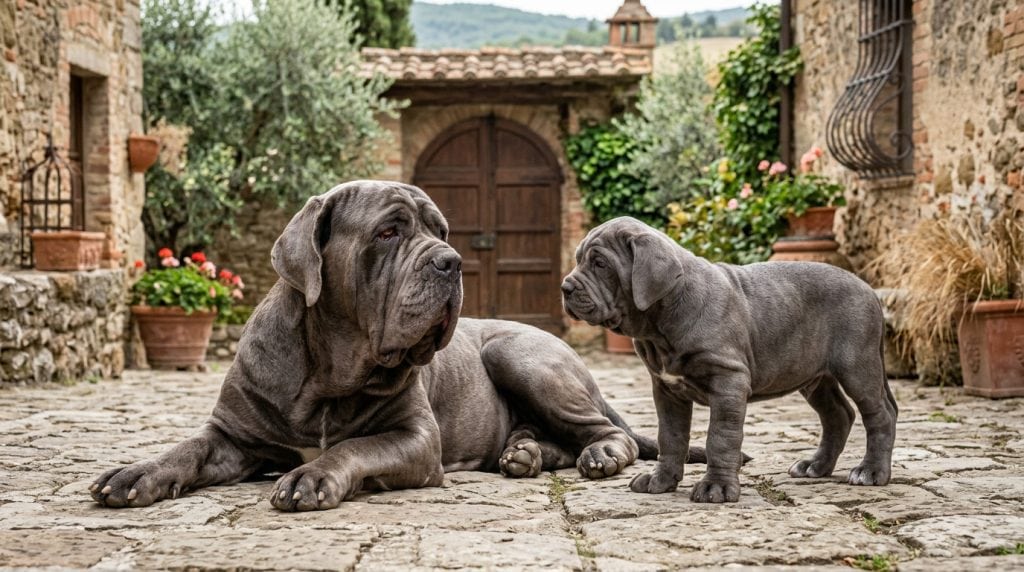
Neapolitan Mastiffs are imposing yet often calm companions known for their watchful presence and strong loyalty to their families. Originally developed as guardian dogs in Italy, they tend to observe their surroundings carefully while remaining relaxed at home. Many owners appreciate their steady temperament and the quiet sense of security they bring to the household.
At a glance
Core care
- Size: Giant
- Energy: Low
- Grooming: Low
- Shedding: Moderate
Support style
- Sensitivity: Moderate
- Training style: Independent
Breed guide
Choose a section to explore. These notes describe common patterns, but individual dogs vary widely.
The Neapolitan Mastiff has roots that reach back to the guardian dogs of ancient Rome. These powerful molosser-type dogs were valued for their strength, courage, and protective instincts, often serving as war dogs and estate guardians. Over centuries, these dogs developed into the mastiff types found across southern Italy, where they continued to be used to guard property, farms, and families. The legacy of these early working dogs still influences the modern Neapolitan Mastiff’s calm yet vigilant nature.
Physically, the Neapolitan Mastiff is unmistakable. Their massive frame, heavy bone structure, and loose, wrinkled skin give them a distinctive appearance unlike most other breeds. These physical traits were historically believed to provide protection during confrontations, while their size alone acted as a powerful deterrent to intruders. In everyday life, this means owners must consider the space and care requirements that come with such a large and powerful dog.
Despite their formidable appearance, many Neapolitan Mastiffs are known for their calm and steady temperament within the home. They tend to move at a deliberate pace and often prefer quiet observation over constant activity. While they maintain strong protective instincts, they typically reserve their affection for their families, forming close bonds with the people they live with.
As with all breeds, individual personalities can vary. Some Neapolitan Mastiffs may be more reserved and watchful, while others display a more relaxed and sociable nature. Factors such as genetics, upbringing, and environment all play a role in shaping their behaviour. Understanding their heritage as guardians helps owners provide the structure, leadership, and environment that allow this impressive breed to feel secure and settled.
Neapolitan Mastiffs are often described as having a calm and watchful presence. Their history as guard dogs means they tend to be naturally protective of their families, often positioning themselves in a way that allows them to keep an eye on their surroundings. This protective instinct is usually coupled with a deep loyalty to their family members, making them devoted companions who thrive on being part of the household.
Their social nature is often expressed through a preference for being close to their loved ones. Many owners notice that their Neapolitan Mastiff will follow them from room to room, content to lie nearby while the family goes about their daily activities. Despite their imposing size, they can be surprisingly gentle, especially with children, though their interactions should always be supervised due to their size and strength.
In terms of sensitivity, Neapolitan Mastiffs are moderately sensitive to their environment and the emotions of their owners. They can pick up on stress or tension within the household, which may influence their behaviour. This sensitivity, combined with their independent streak, means they may not always respond to commands as quickly as other breeds. Patience and understanding are key when working with them.
While they are generally independent, Neapolitan Mastiffs benefit from consistent training and clear boundaries. They are intelligent dogs, but their independent nature means they may not always be eager to please. Building a strong relationship based on mutual respect and understanding is essential for successful training. As with any breed, individual personalities can vary, so it’s important for owners to adapt their approach to suit their dog’s unique character.
A typical day for a Neapolitan Mastiff involves a balance of gentle exercise and plenty of relaxation. Given their low energy levels, they don’t require intense physical activity, but they do benefit from regular, moderate walks to keep them healthy and engaged. A couple of leisurely strolls each day, combined with some time in a secure garden, usually suffices to meet their exercise needs.
Mental enrichment is equally important for this breed. Despite their laid-back nature, Neapolitan Mastiffs are intelligent dogs that enjoy problem-solving activities. Interactive toys, puzzle feeders, and scent games can provide the mental stimulation they need. These activities not only engage their minds but also help to prevent boredom, which can sometimes lead to unwanted behaviours.
As Neapolitan Mastiffs age, their exercise needs may change. Puppies and young dogs often have bursts of energy and may require more frequent, shorter walks to accommodate their growing bodies. As they mature, their activity levels tend to decrease, and they may prefer longer periods of rest interspersed with gentle exercise. It’s important to adjust their routine to suit their life stage and individual energy levels.
Owners should be mindful of the breed’s susceptibility to joint issues, especially in older dogs. Avoiding high-impact activities and providing a soft, supportive bed can help protect their joints. Regular veterinary check-ups are also important to monitor their health and adjust their exercise routine as needed. Ultimately, understanding and adapting to their individual needs will ensure a happy and healthy life for a Neapolitan Mastiff.
Training a Neapolitan Mastiff often requires patience and understanding. Their independent nature means they may not always respond immediately to commands, but with consistency and positive reinforcement, they can learn effectively. Owners often find that building a strong bond based on trust and respect is key to successful training.
Positive reinforcement methods, such as treats and praise, tend to work well with this breed. Neapolitan Mastiffs respond best to training sessions that are short and engaging, as their attention span may not be as long as some other breeds. It’s important to keep training sessions positive and avoid harsh corrections, as these can damage the trust between dog and owner.
During adolescence, Neapolitan Mastiffs may test boundaries, as is common with many breeds. This phase requires patience and consistency from their owners. Reinforcing basic commands and maintaining a structured routine can help guide them through this challenging period. Socialisation is also crucial during this time to ensure they grow into well-rounded adults.
The relationship between owner and dog is paramount with Neapolitan Mastiffs. They thrive on a strong connection with their family, and training should be seen as an opportunity to strengthen this bond. By approaching training with empathy and understanding, owners can help their Neapolitan Mastiff develop into a well-mannered and loyal companion. Remember, each dog is unique, and adapting training methods to suit individual personalities is essential.
Neapolitan Mastiffs tend to thrive in homes where they have enough space to move comfortably. Their giant size means they aren’t ideally suited to small apartments, but they can adapt to various living situations as long as their needs are met. A secure garden provides them with a safe space to explore and relax, which many owners find beneficial.
This breed is known for its loyalty and protective nature, making them excellent companions for families. They often form strong bonds with children, though their interactions should always be supervised given their size and strength. With proper socialisation, they can also coexist peacefully with other pets, though introductions should be managed carefully.
Neapolitan Mastiffs are generally calm and content indoors, often preferring to lounge around the house. They enjoy being part of family activities and are happiest when included in daily life. Their low energy levels mean they don’t require extensive exercise, but they do benefit from mental stimulation and companionship.
While they can adapt to various environments, potential owners should consider the responsibilities that come with such a large breed. Their size and protective instincts require an owner who can provide consistent training and guidance. By understanding their needs and providing a suitable home environment, owners can enjoy the companionship of this unique and loyal breed.
The health and wellbeing of a Neapolitan Mastiff are closely connected to attentive daily care and regular veterinary monitoring. As a giant breed, they can be predisposed to certain inherited or size-related health conditions, which responsible breeders often screen for as part of their breeding programmes. Routine health checks help identify potential concerns early and allow appropriate care if needed.
Some Neapolitan Mastiffs may experience hip dysplasia, a developmental joint condition that can affect mobility over time. Heart conditions have also been noted in the breed, which is why regular veterinary assessments are important throughout their lives. Because of their large body mass, maintaining a healthy weight plays a particularly important role in supporting joint and cardiovascular health.
Like many deep-chested giant breeds, Neapolitan Mastiffs may also be at risk of gastric dilatation–volvulus (GDV), commonly known as bloat. Awareness of this condition and understanding the signs of digestive distress can help owners respond quickly if a problem arises.
The breed’s distinctive facial structure can also contribute to eyelid conditions such as entropion or ectropion, where the eyelids turn inward or outward. These issues may require veterinary attention if they affect comfort or eye health. In addition, the loose skin folds characteristic of the breed should be kept clean and dry to help prevent irritation or infection.
With thoughtful breeding practices, proper nutrition, and attentive daily care, many Neapolitan Mastiffs live comfortable and fulfilling lives. Owners who maintain regular veterinary care and remain attentive to changes in behaviour, mobility, or appetite can play an important role in supporting their dog’s long-term health.
The Neapolitan Mastiff’s history dates back to ancient Rome, where they were bred as war dogs and guardians. Their imposing size and protective nature made them ideal for guarding estates and families. This rich history of protection and loyalty continues to influence their behaviour today, as they remain vigilant and devoted to their families.
The breed’s development over the centuries was influenced by their role as guardians. They were bred for their strength, size, and protective instincts, traits that are still evident in the modern Neapolitan Mastiff. Their distinctive appearance, with loose skin and wrinkles, also has historical roots, providing protection in combat situations.
In the mid-20th century, the breed was revitalised in Italy, where enthusiasts worked to preserve their unique characteristics. This effort ensured that the Neapolitan Mastiff’s legacy as a loyal and protective companion continued. Today, they are cherished for their calm demeanour and unwavering loyalty to their families.
Understanding the breed’s history helps explain many of their modern traits. Their protective nature and loyalty are deeply ingrained, making them excellent companions for those who appreciate their unique qualities. While they may no longer serve as war dogs, their role as devoted family guardians remains unchanged.
What shapes individual dogs
- Early social experiences
- Training approach
- Environment & routine
- Genetics & breeding
- Health & pain
- Age / life stage
The Neapolitan Mastiff has roots that reach back to the guardian dogs of ancient Rome. These powerful molosser-type dogs were valued for their strength, courage, and protective instincts, often serving as war dogs and estate guardians. Over centuries, these dogs developed into the mastiff types found across southern Italy, where they continued to be used to guard property, farms, and families. The legacy of these early working dogs still influences the modern Neapolitan Mastiff’s calm yet vigilant nature.
Physically, the Neapolitan Mastiff is unmistakable. Their massive frame, heavy bone structure, and loose, wrinkled skin give them a distinctive appearance unlike most other breeds. These physical traits were historically believed to provide protection during confrontations, while their size alone acted as a powerful deterrent to intruders. In everyday life, this means owners must consider the space and care requirements that come with such a large and powerful dog.
Despite their formidable appearance, many Neapolitan Mastiffs are known for their calm and steady temperament within the home. They tend to move at a deliberate pace and often prefer quiet observation over constant activity. While they maintain strong protective instincts, they typically reserve their affection for their families, forming close bonds with the people they live with.
As with all breeds, individual personalities can vary. Some Neapolitan Mastiffs may be more reserved and watchful, while others display a more relaxed and sociable nature. Factors such as genetics, upbringing, and environment all play a role in shaping their behaviour. Understanding their heritage as guardians helps owners provide the structure, leadership, and environment that allow this impressive breed to feel secure and settled.
Neapolitan Mastiffs are often described as having a calm and watchful presence. Their history as guard dogs means they tend to be naturally protective of their families, often positioning themselves in a way that allows them to keep an eye on their surroundings. This protective instinct is usually coupled with a deep loyalty to their family members, making them devoted companions who thrive on being part of the household.
Their social nature is often expressed through a preference for being close to their loved ones. Many owners notice that their Neapolitan Mastiff will follow them from room to room, content to lie nearby while the family goes about their daily activities. Despite their imposing size, they can be surprisingly gentle, especially with children, though their interactions should always be supervised due to their size and strength.
In terms of sensitivity, Neapolitan Mastiffs are moderately sensitive to their environment and the emotions of their owners. They can pick up on stress or tension within the household, which may influence their behaviour. This sensitivity, combined with their independent streak, means they may not always respond to commands as quickly as other breeds. Patience and understanding are key when working with them.
While they are generally independent, Neapolitan Mastiffs benefit from consistent training and clear boundaries. They are intelligent dogs, but their independent nature means they may not always be eager to please. Building a strong relationship based on mutual respect and understanding is essential for successful training. As with any breed, individual personalities can vary, so it’s important for owners to adapt their approach to suit their dog’s unique character.
A typical day for a Neapolitan Mastiff involves a balance of gentle exercise and plenty of relaxation. Given their low energy levels, they don’t require intense physical activity, but they do benefit from regular, moderate walks to keep them healthy and engaged. A couple of leisurely strolls each day, combined with some time in a secure garden, usually suffices to meet their exercise needs.
Mental enrichment is equally important for this breed. Despite their laid-back nature, Neapolitan Mastiffs are intelligent dogs that enjoy problem-solving activities. Interactive toys, puzzle feeders, and scent games can provide the mental stimulation they need. These activities not only engage their minds but also help to prevent boredom, which can sometimes lead to unwanted behaviours.
As Neapolitan Mastiffs age, their exercise needs may change. Puppies and young dogs often have bursts of energy and may require more frequent, shorter walks to accommodate their growing bodies. As they mature, their activity levels tend to decrease, and they may prefer longer periods of rest interspersed with gentle exercise. It’s important to adjust their routine to suit their life stage and individual energy levels.
Owners should be mindful of the breed’s susceptibility to joint issues, especially in older dogs. Avoiding high-impact activities and providing a soft, supportive bed can help protect their joints. Regular veterinary check-ups are also important to monitor their health and adjust their exercise routine as needed. Ultimately, understanding and adapting to their individual needs will ensure a happy and healthy life for a Neapolitan Mastiff.
Training a Neapolitan Mastiff often requires patience and understanding. Their independent nature means they may not always respond immediately to commands, but with consistency and positive reinforcement, they can learn effectively. Owners often find that building a strong bond based on trust and respect is key to successful training.
Positive reinforcement methods, such as treats and praise, tend to work well with this breed. Neapolitan Mastiffs respond best to training sessions that are short and engaging, as their attention span may not be as long as some other breeds. It’s important to keep training sessions positive and avoid harsh corrections, as these can damage the trust between dog and owner.
During adolescence, Neapolitan Mastiffs may test boundaries, as is common with many breeds. This phase requires patience and consistency from their owners. Reinforcing basic commands and maintaining a structured routine can help guide them through this challenging period. Socialisation is also crucial during this time to ensure they grow into well-rounded adults.
The relationship between owner and dog is paramount with Neapolitan Mastiffs. They thrive on a strong connection with their family, and training should be seen as an opportunity to strengthen this bond. By approaching training with empathy and understanding, owners can help their Neapolitan Mastiff develop into a well-mannered and loyal companion. Remember, each dog is unique, and adapting training methods to suit individual personalities is essential.
Neapolitan Mastiffs tend to thrive in homes where they have enough space to move comfortably. Their giant size means they aren’t ideally suited to small apartments, but they can adapt to various living situations as long as their needs are met. A secure garden provides them with a safe space to explore and relax, which many owners find beneficial.
This breed is known for its loyalty and protective nature, making them excellent companions for families. They often form strong bonds with children, though their interactions should always be supervised given their size and strength. With proper socialisation, they can also coexist peacefully with other pets, though introductions should be managed carefully.
Neapolitan Mastiffs are generally calm and content indoors, often preferring to lounge around the house. They enjoy being part of family activities and are happiest when included in daily life. Their low energy levels mean they don’t require extensive exercise, but they do benefit from mental stimulation and companionship.
While they can adapt to various environments, potential owners should consider the responsibilities that come with such a large breed. Their size and protective instincts require an owner who can provide consistent training and guidance. By understanding their needs and providing a suitable home environment, owners can enjoy the companionship of this unique and loyal breed.
The health and wellbeing of a Neapolitan Mastiff are closely connected to attentive daily care and regular veterinary monitoring. As a giant breed, they can be predisposed to certain inherited or size-related health conditions, which responsible breeders often screen for as part of their breeding programmes. Routine health checks help identify potential concerns early and allow appropriate care if needed.
Some Neapolitan Mastiffs may experience hip dysplasia, a developmental joint condition that can affect mobility over time. Heart conditions have also been noted in the breed, which is why regular veterinary assessments are important throughout their lives. Because of their large body mass, maintaining a healthy weight plays a particularly important role in supporting joint and cardiovascular health.
Like many deep-chested giant breeds, Neapolitan Mastiffs may also be at risk of gastric dilatation–volvulus (GDV), commonly known as bloat. Awareness of this condition and understanding the signs of digestive distress can help owners respond quickly if a problem arises.
The breed’s distinctive facial structure can also contribute to eyelid conditions such as entropion or ectropion, where the eyelids turn inward or outward. These issues may require veterinary attention if they affect comfort or eye health. In addition, the loose skin folds characteristic of the breed should be kept clean and dry to help prevent irritation or infection.
With thoughtful breeding practices, proper nutrition, and attentive daily care, many Neapolitan Mastiffs live comfortable and fulfilling lives. Owners who maintain regular veterinary care and remain attentive to changes in behaviour, mobility, or appetite can play an important role in supporting their dog’s long-term health.
The Neapolitan Mastiff’s history dates back to ancient Rome, where they were bred as war dogs and guardians. Their imposing size and protective nature made them ideal for guarding estates and families. This rich history of protection and loyalty continues to influence their behaviour today, as they remain vigilant and devoted to their families.
The breed’s development over the centuries was influenced by their role as guardians. They were bred for their strength, size, and protective instincts, traits that are still evident in the modern Neapolitan Mastiff. Their distinctive appearance, with loose skin and wrinkles, also has historical roots, providing protection in combat situations.
In the mid-20th century, the breed was revitalised in Italy, where enthusiasts worked to preserve their unique characteristics. This effort ensured that the Neapolitan Mastiff’s legacy as a loyal and protective companion continued. Today, they are cherished for their calm demeanour and unwavering loyalty to their families.
Understanding the breed’s history helps explain many of their modern traits. Their protective nature and loyalty are deeply ingrained, making them excellent companions for those who appreciate their unique qualities. While they may no longer serve as war dogs, their role as devoted family guardians remains unchanged.
What shapes individual dogs
- Early social experiences
- Training approach
- Environment & routine
- Genetics & breeding
- Health & pain
- Age / life stage
Want support with this?
This course is relevant for Neapolitan Mastiff owners due to the breed's notable health considerations and size-related care needs.