
Kai Ken
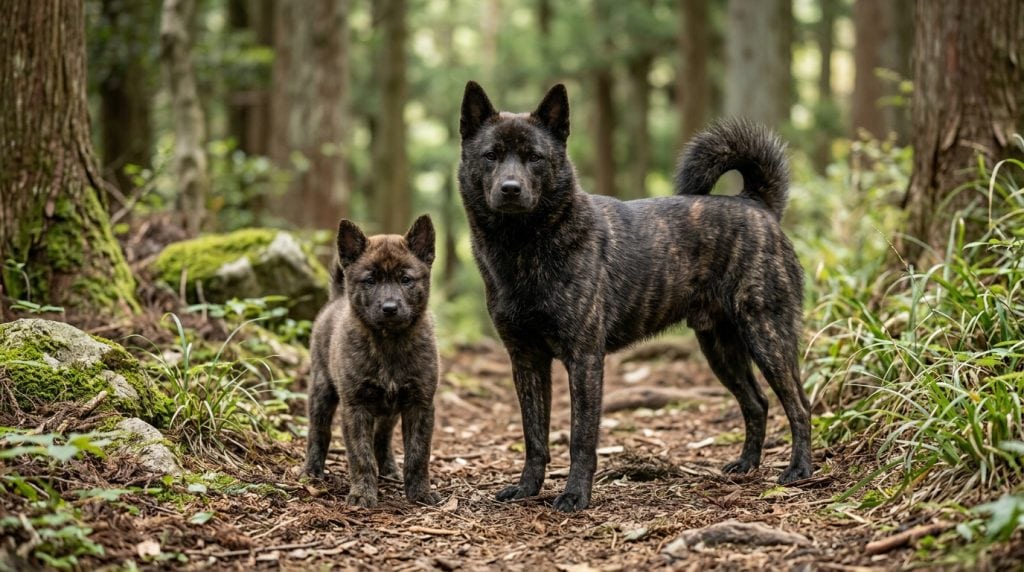
Kai Kens are alert and thoughtful companions known for their loyalty and distinctive brindle coats. Developed as hunting dogs in the mountainous regions of Japan, they tend to observe their surroundings carefully and respond quickly to unfamiliar changes. Many owners appreciate their quiet watchfulness and the strong bond they form with their families, often remaining attentive to the activity around them without constantly demanding attention.
At a glance
Core care
- Size: Medium
- Energy: Moderate to high
- Grooming: Low
- Shedding: Moderate
Support style
- Sensitivity: Moderate
- Training style: Independent
Breed guide
Choose a section to explore. These notes describe common patterns, but individual dogs vary widely.
The Kai Ken, sometimes referred to as the “Tiger Dog” because of its distinctive brindle coat, originates from the mountainous Kai region of Japan. These dogs were historically valued for their ability to hunt in steep and forested terrain, where they were used to track and pursue game such as deer and wild boar. Their ability to move confidently across rugged landscapes helped shape a breed that is both agile and resilient.
Physically, the Kai Ken is a medium-sized dog with an athletic build that reflects its working heritage. Their strong limbs and balanced proportions allow them to move easily over uneven ground, while their dense double coat provides protection against the elements. The brindle colouring that defines the breed develops as the dog matures and serves as natural camouflage in wooded environments.
Temperamentally, Kai Kens are often described as loyal and observant. They tend to form strong bonds with their families while maintaining a thoughtful and independent outlook. Their alert nature means they often pay close attention to changes in their environment, which many owners find reassuring in a household companion.
Because of their background as independent hunting dogs, Kai Kens may sometimes approach new situations with caution. Early socialisation and consistent training can help them become confident and well-adjusted companions. As with all breeds, individual personalities vary depending on genetics, early experiences, and the environment in which the dog is raised.
Kai Kens are often described as having a strong sense of loyalty towards their families. This loyalty is rooted in their history as hunting dogs, where they worked closely with their handlers. In a home setting, this can manifest as a dog that prefers to be near its family, keeping a watchful eye on the household activities. They are not typically the type to demand constant attention, but they do appreciate being included in family life.
Their independent nature can sometimes be misinterpreted as aloofness, but in reality, it’s a reflection of their working origins. Kai Kens were bred to make decisions on their own while hunting, and this trait still shows in their behaviour today. Owners often find that these dogs are quite capable of entertaining themselves, though they do enjoy interactive play and mental challenges.
Sensitivity in the Kai Ken is moderate, meaning they are generally in tune with their environment and the emotions of those around them. This can be beneficial in a family setting, as they often respond well to the mood of their household. However, this also means that they may require a gentle approach to training and socialisation, as harsh methods can lead to a withdrawn or anxious dog.
Trainability in the Kai Ken can be described as independent, which means that while they are intelligent, they may not always be eager to please in the way some other breeds are. Consistency and patience are key when training a Kai Ken. Many owners find success with positive reinforcement techniques, which help build a strong bond and encourage cooperation. Understanding these tendencies helps create a harmonious relationship with this unique breed.
A typical day for a Kai Ken involves a good balance of physical exercise and mental stimulation. These dogs thrive on activities that allow them to explore their environment, reflecting their historical role as hunting dogs in the mountainous regions of Japan. Daily walks are essential, and many owners find that their Kai Kens enjoy hikes or runs in more natural settings where they can engage their senses.
Given their moderate to high energy levels, Kai Kens benefit from regular opportunities to burn off energy. This can include play sessions in a secure garden or participating in dog sports like agility or tracking. These activities not only provide physical exercise but also tap into their natural instincts, offering mental enrichment that keeps them satisfied and well-behaved.
As with many breeds, the exercise needs of a Kai Ken can vary with age. Puppies and young dogs typically require more frequent, shorter bursts of activity to match their developmental stage, while adult dogs may enjoy longer, more sustained exercise sessions. Older Kai Kens might slow down a bit, but they still appreciate gentle walks and light play to maintain their health and happiness.
Owners should be mindful of not over-exercising their Kai Ken, especially in extreme weather conditions. It’s important to tailor activities to the individual dog’s energy levels and health status. Providing a mix of physical and mental challenges helps ensure a well-rounded routine that supports their overall wellbeing and keeps them engaged.
Training a Kai Ken can sometimes feel like working with a partner who has their own ideas about how things should be done. Their independent nature means they may not always be eager to follow commands simply for the sake of it. However, this doesn’t mean they are untrainable. Instead, it requires an approach that respects their intelligence and autonomy.
Positive reinforcement is often the most effective method for training a Kai Ken. By using rewards such as treats, praise, or play, owners can encourage desired behaviours while building a trusting relationship. It’s important to keep training sessions engaging and varied to maintain their interest and motivation. Consistency and patience are crucial, as these dogs may take a bit longer to grasp certain commands compared to more biddable breeds.
Adolescence can be a challenging time for Kai Ken owners, as these dogs may test boundaries and assert their independence. During this phase, maintaining a consistent routine and reinforcing training is essential. Many owners find that enrolling in a training class or working with a professional can provide valuable support and guidance during this period.
Building a strong bond with a Kai Ken is key to successful training. They respond well to a calm and confident handler who understands their unique traits. By focusing on relationship-building and using positive methods, owners can help their Kai Ken become a well-mannered and cooperative companion.
Kai Kens tend to thrive in environments where they have space to explore and opportunities for physical activity. Homes with secure gardens or access to nearby parks are ideal, as these dogs enjoy spending time outdoors. However, they can also adapt well to urban living, provided they receive adequate exercise and mental stimulation.
Many owners find that Kai Kens are well-suited to families, as they often form strong bonds with their human companions. They are generally good with children, especially if they are raised together, though supervision is always recommended to ensure positive interactions. Their protective nature can make them excellent watchdogs, alerting their families to any unusual activity.
When it comes to living with other pets, Kai Kens can be quite adaptable. Early socialisation is key to ensuring they coexist peacefully with other dogs and even cats. Their hunting background may influence their behaviour towards smaller animals, so introductions should be managed carefully.
It’s important for potential owners to consider their lifestyle and whether they can meet the needs of a Kai Ken. These dogs require time, attention, and a commitment to regular exercise. Understanding their independent nature and providing a balanced routine that includes both physical and mental activities will help ensure a happy and harmonious home life.
The overall health of a Kai Ken is closely connected to responsible breeding practices and attentive everyday care. Regular veterinary check-ups play an important role in monitoring their wellbeing and identifying potential concerns early. Preventive healthcare, including vaccinations, parasite control, and routine examinations, supports long-term health.
Kai Kens are often considered a relatively robust breed, partly due to their historical development in remote mountainous regions where natural selection played a role in shaping the population. Even so, like all breeds, they may be predisposed to certain inherited conditions that owners should be aware of.
Some health considerations occasionally associated with the breed include hip dysplasia, which can affect joint mobility in some dogs. Patellar luxation, a condition involving the kneecap, has also been reported in certain individuals. Responsible breeders often monitor for these issues and may incorporate health screening into breeding programmes.
Maintaining a healthy body weight, providing appropriate exercise, and ensuring regular veterinary care all contribute to the breed’s long-term wellbeing. Owners who remain attentive to changes in behaviour, mobility, appetite, or energy levels can help identify potential concerns early and seek veterinary guidance when needed.
With attentive care and responsible breeding practices, many Kai Kens live active and healthy lives as loyal companions.
The Kai Ken is a breed with a rich history that dates back to ancient Japan. Originating in the mountainous regions of the Kai province, these dogs were used primarily for hunting. Their ability to navigate difficult terrain and their keen sense of smell made them invaluable companions for hunters pursuing game such as deer and boar.
This breed’s development was shaped by the rugged environment of their homeland. The isolation of the Kai region helped preserve the breed’s unique characteristics, including their distinctive brindle coat, which provides excellent camouflage in the forest. Over time, the Kai Ken became known for their loyalty and independence, traits that were essential for their role as hunting dogs.
In the early 20th century, efforts were made to preserve and promote the Kai Ken as a national treasure of Japan. They were officially recognized as a natural monument in 1934, highlighting their cultural significance. This recognition helped ensure the breed’s survival and contributed to its continued development.
Today, the Kai Ken is still relatively rare outside of Japan, but they have gained a dedicated following among dog enthusiasts who appreciate their unique qualities. Their history as versatile and resilient hunters is reflected in their modern-day traits, making them both fascinating and rewarding companions for those who understand their heritage.
What shapes individual dogs
- Early social experiences
- Training approach
- Environment & routine
- Genetics & breeding
- Health & pain
- Age / life stage
The Kai Ken, sometimes referred to as the “Tiger Dog” because of its distinctive brindle coat, originates from the mountainous Kai region of Japan. These dogs were historically valued for their ability to hunt in steep and forested terrain, where they were used to track and pursue game such as deer and wild boar. Their ability to move confidently across rugged landscapes helped shape a breed that is both agile and resilient.
Physically, the Kai Ken is a medium-sized dog with an athletic build that reflects its working heritage. Their strong limbs and balanced proportions allow them to move easily over uneven ground, while their dense double coat provides protection against the elements. The brindle colouring that defines the breed develops as the dog matures and serves as natural camouflage in wooded environments.
Temperamentally, Kai Kens are often described as loyal and observant. They tend to form strong bonds with their families while maintaining a thoughtful and independent outlook. Their alert nature means they often pay close attention to changes in their environment, which many owners find reassuring in a household companion.
Because of their background as independent hunting dogs, Kai Kens may sometimes approach new situations with caution. Early socialisation and consistent training can help them become confident and well-adjusted companions. As with all breeds, individual personalities vary depending on genetics, early experiences, and the environment in which the dog is raised.
Kai Kens are often described as having a strong sense of loyalty towards their families. This loyalty is rooted in their history as hunting dogs, where they worked closely with their handlers. In a home setting, this can manifest as a dog that prefers to be near its family, keeping a watchful eye on the household activities. They are not typically the type to demand constant attention, but they do appreciate being included in family life.
Their independent nature can sometimes be misinterpreted as aloofness, but in reality, it’s a reflection of their working origins. Kai Kens were bred to make decisions on their own while hunting, and this trait still shows in their behaviour today. Owners often find that these dogs are quite capable of entertaining themselves, though they do enjoy interactive play and mental challenges.
Sensitivity in the Kai Ken is moderate, meaning they are generally in tune with their environment and the emotions of those around them. This can be beneficial in a family setting, as they often respond well to the mood of their household. However, this also means that they may require a gentle approach to training and socialisation, as harsh methods can lead to a withdrawn or anxious dog.
Trainability in the Kai Ken can be described as independent, which means that while they are intelligent, they may not always be eager to please in the way some other breeds are. Consistency and patience are key when training a Kai Ken. Many owners find success with positive reinforcement techniques, which help build a strong bond and encourage cooperation. Understanding these tendencies helps create a harmonious relationship with this unique breed.
A typical day for a Kai Ken involves a good balance of physical exercise and mental stimulation. These dogs thrive on activities that allow them to explore their environment, reflecting their historical role as hunting dogs in the mountainous regions of Japan. Daily walks are essential, and many owners find that their Kai Kens enjoy hikes or runs in more natural settings where they can engage their senses.
Given their moderate to high energy levels, Kai Kens benefit from regular opportunities to burn off energy. This can include play sessions in a secure garden or participating in dog sports like agility or tracking. These activities not only provide physical exercise but also tap into their natural instincts, offering mental enrichment that keeps them satisfied and well-behaved.
As with many breeds, the exercise needs of a Kai Ken can vary with age. Puppies and young dogs typically require more frequent, shorter bursts of activity to match their developmental stage, while adult dogs may enjoy longer, more sustained exercise sessions. Older Kai Kens might slow down a bit, but they still appreciate gentle walks and light play to maintain their health and happiness.
Owners should be mindful of not over-exercising their Kai Ken, especially in extreme weather conditions. It’s important to tailor activities to the individual dog’s energy levels and health status. Providing a mix of physical and mental challenges helps ensure a well-rounded routine that supports their overall wellbeing and keeps them engaged.
Training a Kai Ken can sometimes feel like working with a partner who has their own ideas about how things should be done. Their independent nature means they may not always be eager to follow commands simply for the sake of it. However, this doesn’t mean they are untrainable. Instead, it requires an approach that respects their intelligence and autonomy.
Positive reinforcement is often the most effective method for training a Kai Ken. By using rewards such as treats, praise, or play, owners can encourage desired behaviours while building a trusting relationship. It’s important to keep training sessions engaging and varied to maintain their interest and motivation. Consistency and patience are crucial, as these dogs may take a bit longer to grasp certain commands compared to more biddable breeds.
Adolescence can be a challenging time for Kai Ken owners, as these dogs may test boundaries and assert their independence. During this phase, maintaining a consistent routine and reinforcing training is essential. Many owners find that enrolling in a training class or working with a professional can provide valuable support and guidance during this period.
Building a strong bond with a Kai Ken is key to successful training. They respond well to a calm and confident handler who understands their unique traits. By focusing on relationship-building and using positive methods, owners can help their Kai Ken become a well-mannered and cooperative companion.
Kai Kens tend to thrive in environments where they have space to explore and opportunities for physical activity. Homes with secure gardens or access to nearby parks are ideal, as these dogs enjoy spending time outdoors. However, they can also adapt well to urban living, provided they receive adequate exercise and mental stimulation.
Many owners find that Kai Kens are well-suited to families, as they often form strong bonds with their human companions. They are generally good with children, especially if they are raised together, though supervision is always recommended to ensure positive interactions. Their protective nature can make them excellent watchdogs, alerting their families to any unusual activity.
When it comes to living with other pets, Kai Kens can be quite adaptable. Early socialisation is key to ensuring they coexist peacefully with other dogs and even cats. Their hunting background may influence their behaviour towards smaller animals, so introductions should be managed carefully.
It’s important for potential owners to consider their lifestyle and whether they can meet the needs of a Kai Ken. These dogs require time, attention, and a commitment to regular exercise. Understanding their independent nature and providing a balanced routine that includes both physical and mental activities will help ensure a happy and harmonious home life.
The overall health of a Kai Ken is closely connected to responsible breeding practices and attentive everyday care. Regular veterinary check-ups play an important role in monitoring their wellbeing and identifying potential concerns early. Preventive healthcare, including vaccinations, parasite control, and routine examinations, supports long-term health.
Kai Kens are often considered a relatively robust breed, partly due to their historical development in remote mountainous regions where natural selection played a role in shaping the population. Even so, like all breeds, they may be predisposed to certain inherited conditions that owners should be aware of.
Some health considerations occasionally associated with the breed include hip dysplasia, which can affect joint mobility in some dogs. Patellar luxation, a condition involving the kneecap, has also been reported in certain individuals. Responsible breeders often monitor for these issues and may incorporate health screening into breeding programmes.
Maintaining a healthy body weight, providing appropriate exercise, and ensuring regular veterinary care all contribute to the breed’s long-term wellbeing. Owners who remain attentive to changes in behaviour, mobility, appetite, or energy levels can help identify potential concerns early and seek veterinary guidance when needed.
With attentive care and responsible breeding practices, many Kai Kens live active and healthy lives as loyal companions.
The Kai Ken is a breed with a rich history that dates back to ancient Japan. Originating in the mountainous regions of the Kai province, these dogs were used primarily for hunting. Their ability to navigate difficult terrain and their keen sense of smell made them invaluable companions for hunters pursuing game such as deer and boar.
This breed’s development was shaped by the rugged environment of their homeland. The isolation of the Kai region helped preserve the breed’s unique characteristics, including their distinctive brindle coat, which provides excellent camouflage in the forest. Over time, the Kai Ken became known for their loyalty and independence, traits that were essential for their role as hunting dogs.
In the early 20th century, efforts were made to preserve and promote the Kai Ken as a national treasure of Japan. They were officially recognized as a natural monument in 1934, highlighting their cultural significance. This recognition helped ensure the breed’s survival and contributed to its continued development.
Today, the Kai Ken is still relatively rare outside of Japan, but they have gained a dedicated following among dog enthusiasts who appreciate their unique qualities. Their history as versatile and resilient hunters is reflected in their modern-day traits, making them both fascinating and rewarding companions for those who understand their heritage.
What shapes individual dogs
- Early social experiences
- Training approach
- Environment & routine
- Genetics & breeding
- Health & pain
- Age / life stage
Want support with this?
This course is helpful for Kai Ken owners to understand their dog's independent nature and how to work with it effectively.