
Harrier
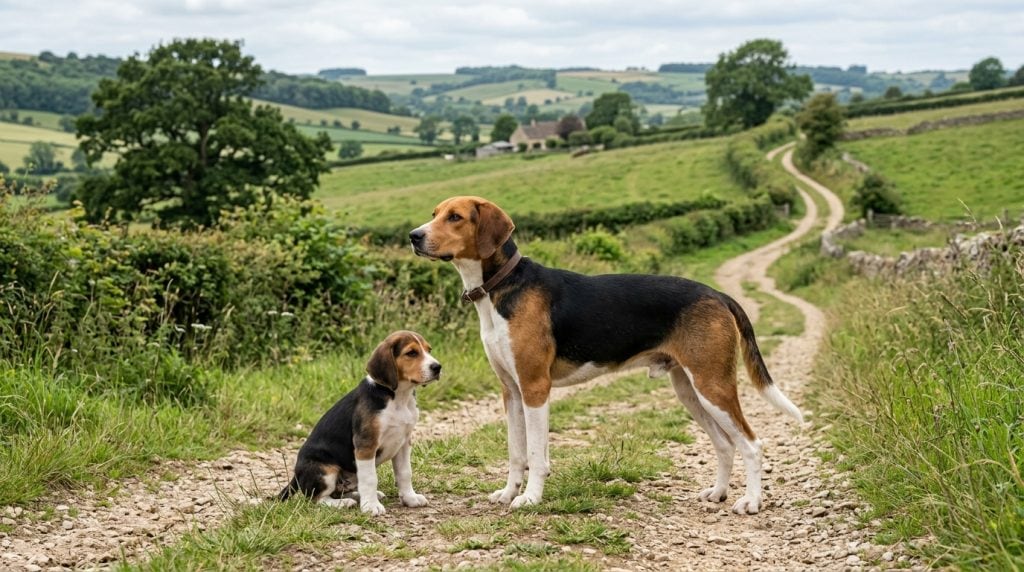
Harriers are energetic and adventurous companions known for their keen sense of smell and enthusiasm for exploration. Bred to track hares across open countryside, they often enjoy opportunities to follow scents and stay active outdoors. Many owners find that their Harrier thrives in an environment where curiosity and movement are part of daily life.
At a glance
Core care
- Size: Medium
- Energy: High
- Grooming: Low
- Shedding: Moderate
Support style
- Sensitivity: Moderate
- Training style: Willing
Breed guide
Choose a section to explore. These notes describe common patterns, but individual dogs vary widely.
The Harrier developed in England as a scent hound bred specifically for hunting hares. Traditionally used in packs, these dogs worked cooperatively with hunters to track and pursue game across open countryside. Their strong sense of smell and endurance allowed them to follow scent trails for long distances, a trait that remains evident in the breed today.
Physically, Harriers are sturdy, athletic dogs with a balanced build suited for endurance activities. Their medium size allows them to move efficiently across varied terrain while maintaining the stamina needed for extended hunts. Owners often notice their Harrier’s energetic movement and eagerness to explore outdoor environments.
Temperamentally, Harriers are often described as sociable, cheerful, and curious. Their pack-hunting background means they typically enjoy the company of both people and other dogs. At the same time, their strong scent drive can lead them to become highly focused when they encounter an interesting trail.
As with all breeds, individual personalities vary. Early socialisation, training experiences, and environment all contribute to shaping behaviour. Understanding the Harrier’s background as a scent hound can help owners provide the exercise, enrichment, and structure needed for a balanced companion.
Harriers are often described as having a cheerful and friendly disposition. Their social nature means they usually enjoy being around people and other dogs. This sociability is likely a remnant of their pack-hunting origins, where working closely with others was essential. Many owners find their Harrier to be a wonderful companion, eager to join in family activities.
Despite their friendly nature, Harriers can exhibit a certain level of independence. This is not to say they are aloof, but rather that they can be quite focused, especially when they catch an interesting scent. This independent streak can sometimes be mistaken for stubbornness, but it’s more about their strong instinctual drive. Understanding this can help owners manage their expectations and appreciate their Harrier’s unique character.
Their moderate sensitivity means Harriers typically respond well to positive reinforcement and gentle guidance. They are willing learners, especially when training is approached with patience and consistency. Owners often notice that their Harrier is eager to please but may require extra motivation to stay focused, particularly in environments rich with scents and distractions.
Overall, living with a Harrier involves balancing their social needs with their independent tendencies. They thrive in homes where they can interact with people and other animals, yet also have the opportunity to explore and satisfy their natural curiosity. As with any breed, individual Harriers will have their own personalities, shaped by their experiences and environment.
A typical day for a Harrier involves plenty of physical activity and mental stimulation. These energetic dogs benefit from at least an hour of exercise each day, which can include long walks, hikes, or even jogs. Their endurance and love for the outdoors make them excellent companions for active individuals or families who enjoy spending time outside.
In addition to physical exercise, Harriers also need mental enrichment to keep them satisfied. Activities that engage their keen sense of smell, such as scent trails or nose work games, can be particularly rewarding. Many owners find that providing a variety of toys and puzzles helps keep their Harrier mentally stimulated and prevents boredom.
It’s important to note that while Harriers are high-energy dogs, their exercise needs can change as they age. Puppies and young adults may require more frequent and intense activity, whereas older Harriers might prefer gentler, shorter walks. Being attentive to their changing needs ensures they remain healthy and happy throughout their lives.
Owners should be cautious not to over-exercise young Harriers, as their growing joints can be susceptible to injury. It’s also wise to avoid repetitive high-impact activities that could strain their bodies. By providing a balanced mix of physical and mental activities, owners can help their Harrier thrive and maintain their zest for life.
Training a Harrier can be a rewarding experience for those who appreciate a challenge. These dogs are generally willing to learn, but their independent nature means they may not always follow commands immediately. Many owners find that training requires patience and a good sense of humour, as Harriers can be both clever and mischievous.
Positive reinforcement techniques work well with this breed, as they respond better to encouragement and rewards than to harsh corrections. Consistency is key, as is making training sessions enjoyable and engaging. Owners often discover that incorporating games and scent-based activities into training can capture their Harrier’s attention and make learning more effective.
Adolescence can be a particularly challenging time for Harriers, as their curiosity and energy levels peak. During this stage, impulse control can be an issue, and it’s important to maintain a structured routine and continue training. Many owners find that enrolling in training classes or working with a professional trainer can provide valuable support during this period.
Building a strong relationship based on trust and mutual respect is crucial for successful training. Harriers are more likely to respond positively when they feel connected to their owners. By fostering this bond, owners can navigate the challenges of training and enjoy a harmonious life with their Harrier.
Harriers tend to thrive in homes where they have plenty of space to move and explore. They are well-suited to active households that can provide them with the exercise and stimulation they need. A home with a secure garden is ideal, as it gives them a safe area to run and play.
While Harriers can adapt to various living situations, they may not be the best fit for apartment living unless their exercise needs are met consistently. Their energetic nature and love for the outdoors mean they are happiest when they have regular opportunities to burn off energy and satisfy their curiosity.
Harriers generally get along well with children and other pets, thanks to their friendly and social disposition. However, their playful nature means supervision is necessary to ensure interactions are safe and enjoyable for everyone involved. Many owners find that their Harrier becomes a beloved member of the family, forming strong bonds with both humans and other animals.
Ultimately, the key to a successful relationship with a Harrier is understanding their needs and being willing to accommodate their active lifestyle. Prospective owners should be prepared for a dog that requires time, attention, and a commitment to regular exercise. In return, they will gain a loyal and spirited companion.
The health and wellbeing of a Harrier are closely connected to responsible breeding practices and attentive everyday care. Regular veterinary check-ups help monitor overall health and identify potential concerns early. Preventive healthcare, including vaccinations, parasite control, and routine examinations, supports long-term wellbeing.
Some health considerations occasionally associated with the breed include hip dysplasia, which can affect joint mobility in some dogs. Hypothyroidism, a condition affecting the thyroid gland, has also been reported in certain lines. Responsible breeders may screen breeding dogs and monitor health histories to reduce the likelihood of inherited conditions.
Because Harriers have long, floppy ears, they may occasionally experience ear infections, particularly if moisture or debris becomes trapped in the ear canal. Regular ear checks and cleaning can help maintain ear health.
Overall, the Harrier is generally considered a hardy and robust breed. Maintaining a healthy weight, providing regular exercise, and ensuring consistent veterinary care all contribute to long-term wellbeing.
The Harrier’s history is believed to date back several centuries in England, where the breed was developed as a scent hound for hunting hares. Their name reflects this purpose, derived from the term “hare hunter.” Harriers were traditionally used in packs, working cooperatively to track and pursue game across open countryside.
Many historians believe the breed developed from early English hounds related to the Foxhound, bred specifically to hunt hares rather than foxes. Unlike fox hunting, which often took place on horseback, hare hunting frequently involved hunters following the pack on foot, requiring dogs with stamina and persistence.
Over time, the Harrier became known for its balanced build, endurance, and strong scenting ability. These traits allowed the breed to work effectively across varied terrain while maintaining a steady pace during long hunts.
Today, while the Harrier is less commonly used for traditional hunting, it remains appreciated for its energetic nature and sociable temperament. Understanding the breed’s history as a pack hound helps explain its love of activity, scent-driven curiosity, and strong social instincts.
What shapes individual dogs
- Early social experiences
- Training approach
- Environment & routine
- Genetics & breeding
- Health & pain
- Age / life stage
The Harrier developed in England as a scent hound bred specifically for hunting hares. Traditionally used in packs, these dogs worked cooperatively with hunters to track and pursue game across open countryside. Their strong sense of smell and endurance allowed them to follow scent trails for long distances, a trait that remains evident in the breed today.
Physically, Harriers are sturdy, athletic dogs with a balanced build suited for endurance activities. Their medium size allows them to move efficiently across varied terrain while maintaining the stamina needed for extended hunts. Owners often notice their Harrier’s energetic movement and eagerness to explore outdoor environments.
Temperamentally, Harriers are often described as sociable, cheerful, and curious. Their pack-hunting background means they typically enjoy the company of both people and other dogs. At the same time, their strong scent drive can lead them to become highly focused when they encounter an interesting trail.
As with all breeds, individual personalities vary. Early socialisation, training experiences, and environment all contribute to shaping behaviour. Understanding the Harrier’s background as a scent hound can help owners provide the exercise, enrichment, and structure needed for a balanced companion.
Harriers are often described as having a cheerful and friendly disposition. Their social nature means they usually enjoy being around people and other dogs. This sociability is likely a remnant of their pack-hunting origins, where working closely with others was essential. Many owners find their Harrier to be a wonderful companion, eager to join in family activities.
Despite their friendly nature, Harriers can exhibit a certain level of independence. This is not to say they are aloof, but rather that they can be quite focused, especially when they catch an interesting scent. This independent streak can sometimes be mistaken for stubbornness, but it’s more about their strong instinctual drive. Understanding this can help owners manage their expectations and appreciate their Harrier’s unique character.
Their moderate sensitivity means Harriers typically respond well to positive reinforcement and gentle guidance. They are willing learners, especially when training is approached with patience and consistency. Owners often notice that their Harrier is eager to please but may require extra motivation to stay focused, particularly in environments rich with scents and distractions.
Overall, living with a Harrier involves balancing their social needs with their independent tendencies. They thrive in homes where they can interact with people and other animals, yet also have the opportunity to explore and satisfy their natural curiosity. As with any breed, individual Harriers will have their own personalities, shaped by their experiences and environment.
A typical day for a Harrier involves plenty of physical activity and mental stimulation. These energetic dogs benefit from at least an hour of exercise each day, which can include long walks, hikes, or even jogs. Their endurance and love for the outdoors make them excellent companions for active individuals or families who enjoy spending time outside.
In addition to physical exercise, Harriers also need mental enrichment to keep them satisfied. Activities that engage their keen sense of smell, such as scent trails or nose work games, can be particularly rewarding. Many owners find that providing a variety of toys and puzzles helps keep their Harrier mentally stimulated and prevents boredom.
It’s important to note that while Harriers are high-energy dogs, their exercise needs can change as they age. Puppies and young adults may require more frequent and intense activity, whereas older Harriers might prefer gentler, shorter walks. Being attentive to their changing needs ensures they remain healthy and happy throughout their lives.
Owners should be cautious not to over-exercise young Harriers, as their growing joints can be susceptible to injury. It’s also wise to avoid repetitive high-impact activities that could strain their bodies. By providing a balanced mix of physical and mental activities, owners can help their Harrier thrive and maintain their zest for life.
Training a Harrier can be a rewarding experience for those who appreciate a challenge. These dogs are generally willing to learn, but their independent nature means they may not always follow commands immediately. Many owners find that training requires patience and a good sense of humour, as Harriers can be both clever and mischievous.
Positive reinforcement techniques work well with this breed, as they respond better to encouragement and rewards than to harsh corrections. Consistency is key, as is making training sessions enjoyable and engaging. Owners often discover that incorporating games and scent-based activities into training can capture their Harrier’s attention and make learning more effective.
Adolescence can be a particularly challenging time for Harriers, as their curiosity and energy levels peak. During this stage, impulse control can be an issue, and it’s important to maintain a structured routine and continue training. Many owners find that enrolling in training classes or working with a professional trainer can provide valuable support during this period.
Building a strong relationship based on trust and mutual respect is crucial for successful training. Harriers are more likely to respond positively when they feel connected to their owners. By fostering this bond, owners can navigate the challenges of training and enjoy a harmonious life with their Harrier.
Harriers tend to thrive in homes where they have plenty of space to move and explore. They are well-suited to active households that can provide them with the exercise and stimulation they need. A home with a secure garden is ideal, as it gives them a safe area to run and play.
While Harriers can adapt to various living situations, they may not be the best fit for apartment living unless their exercise needs are met consistently. Their energetic nature and love for the outdoors mean they are happiest when they have regular opportunities to burn off energy and satisfy their curiosity.
Harriers generally get along well with children and other pets, thanks to their friendly and social disposition. However, their playful nature means supervision is necessary to ensure interactions are safe and enjoyable for everyone involved. Many owners find that their Harrier becomes a beloved member of the family, forming strong bonds with both humans and other animals.
Ultimately, the key to a successful relationship with a Harrier is understanding their needs and being willing to accommodate their active lifestyle. Prospective owners should be prepared for a dog that requires time, attention, and a commitment to regular exercise. In return, they will gain a loyal and spirited companion.
The health and wellbeing of a Harrier are closely connected to responsible breeding practices and attentive everyday care. Regular veterinary check-ups help monitor overall health and identify potential concerns early. Preventive healthcare, including vaccinations, parasite control, and routine examinations, supports long-term wellbeing.
Some health considerations occasionally associated with the breed include hip dysplasia, which can affect joint mobility in some dogs. Hypothyroidism, a condition affecting the thyroid gland, has also been reported in certain lines. Responsible breeders may screen breeding dogs and monitor health histories to reduce the likelihood of inherited conditions.
Because Harriers have long, floppy ears, they may occasionally experience ear infections, particularly if moisture or debris becomes trapped in the ear canal. Regular ear checks and cleaning can help maintain ear health.
Overall, the Harrier is generally considered a hardy and robust breed. Maintaining a healthy weight, providing regular exercise, and ensuring consistent veterinary care all contribute to long-term wellbeing.
The Harrier’s history is believed to date back several centuries in England, where the breed was developed as a scent hound for hunting hares. Their name reflects this purpose, derived from the term “hare hunter.” Harriers were traditionally used in packs, working cooperatively to track and pursue game across open countryside.
Many historians believe the breed developed from early English hounds related to the Foxhound, bred specifically to hunt hares rather than foxes. Unlike fox hunting, which often took place on horseback, hare hunting frequently involved hunters following the pack on foot, requiring dogs with stamina and persistence.
Over time, the Harrier became known for its balanced build, endurance, and strong scenting ability. These traits allowed the breed to work effectively across varied terrain while maintaining a steady pace during long hunts.
Today, while the Harrier is less commonly used for traditional hunting, it remains appreciated for its energetic nature and sociable temperament. Understanding the breed’s history as a pack hound helps explain its love of activity, scent-driven curiosity, and strong social instincts.
What shapes individual dogs
- Early social experiences
- Training approach
- Environment & routine
- Genetics & breeding
- Health & pain
- Age / life stage
Want support with this?
This course is relevant for Harrier owners to better understand their dog's unique temperament and independent nature.