
Grand Basset Griffon VendéEn
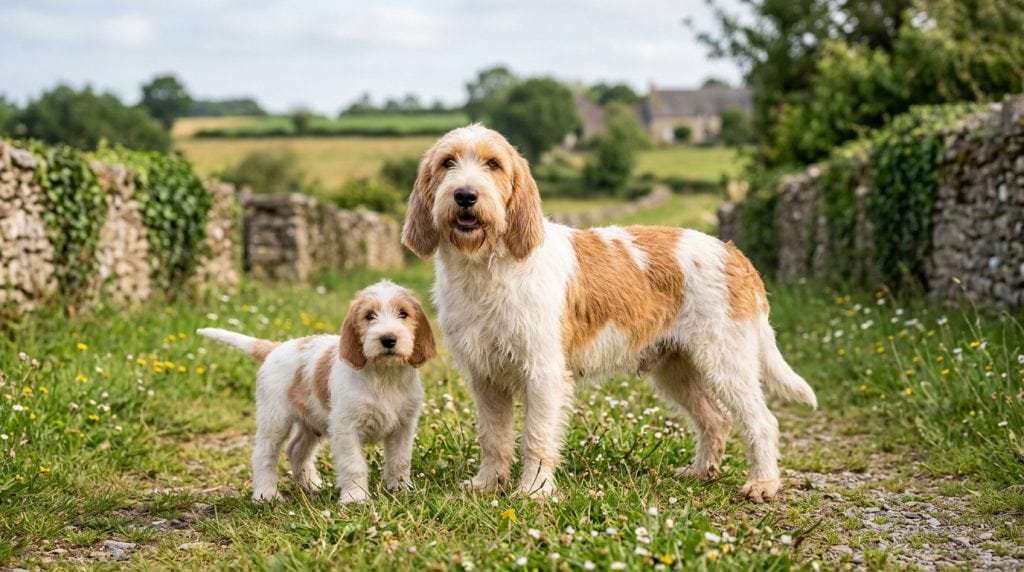
Grand Basset Griffon Vendéens are cheerful and curious companions known for their expressive personalities and love of exploration. Bred to trail scents across the countryside of western France, they often enjoy opportunities to follow interesting smells and investigate their surroundings. Many owners appreciate the breed’s lively character combined with a relaxed and sociable presence at home.
At a glance
Core care
- Size: Medium
- Energy: Moderate to high
- Grooming: Low
- Shedding: Moderate
Support style
- Sensitivity: Moderate
- Training style: Independent
Breed guide
Choose a section to explore. These notes describe common patterns, but individual dogs vary widely.
The Grand Basset Griffon Vendéen originates from the Vendée region of western France, where it was developed as a scent hound for hunting small game such as rabbits and hares. Hunters needed dogs capable of working across dense underbrush and uneven countryside, and the breed’s sturdy build and rough coat helped it move efficiently through this challenging terrain.
Physically, the Grand Basset Griffon Vendéen is a medium-sized hound with a distinctive rough coat, long ears, and an elongated body. These features were shaped by the breed’s working purpose, allowing the dog to follow scent trails for extended periods while navigating thick vegetation. Their expressive appearance and lively movement often reflect the energy and curiosity typical of scent hounds.
Temperamentally, this breed is often described as friendly, curious, and independent. Their pack-hunting heritage means they typically enjoy the company of people and other dogs, though their strong scent drive can sometimes lead them to focus intensely on interesting smells. Many owners find their Grand Basset Griffon Vendéen both entertaining and affectionate, bringing enthusiasm and personality to daily life.
As with all breeds, individual dogs vary. Early socialisation, training experiences, and environment all contribute to shaping behaviour. Understanding the breed’s hunting background can help owners provide the activity, enrichment, and companionship needed for a balanced companion.
The Grand Basset Griffon Vendéen is often described as having a sociable and engaging nature, which can make them a joy to be around. Their history as pack dogs contributes to their generally friendly disposition, as they are accustomed to working and living alongside other dogs. This social inclination often extends to humans, with many owners noting their dog’s tendency to greet visitors with enthusiasm and curiosity.
Despite their social nature, Grand Basset Griffon Vendéens can also exhibit a degree of independence. This independence is rooted in their history of working autonomously on the hunt, and it can manifest as a streak of stubbornness during training sessions. Owners may find that while these dogs are eager to engage, they also appreciate having the freedom to explore and make their own decisions.
Sensitivity in the Grand Basset Griffon Vendéen tends to be moderate, meaning they are generally adaptable to different environments and situations. They can handle a variety of social settings, though they may require some time to adjust to new experiences. Owners often observe that their dogs are perceptive and responsive to the emotions of those around them, which can be both endearing and helpful in building a strong bond.
Trainability in this breed is often described as independent, which can be both a challenge and a delight. While they may not always be eager to follow commands, they are intelligent and capable learners when motivated. Owners who approach training with patience and consistency, using positive reinforcement techniques, often find success in helping their Grand Basset Griffon Vendéen develop good manners and a willingness to cooperate.
A typical day for a Grand Basset Griffon Vendéen involves a healthy mix of physical activity and mental stimulation. These dogs have moderate to high energy levels, and they thrive on opportunities to explore and engage with their environment. Daily walks are a staple, allowing them to satisfy their natural curiosity and exercise their keen sense of smell.
While physical exercise is important, mental enrichment is equally vital for this breed. Activities that challenge their problem-solving skills, such as scent games or puzzle toys, can be particularly rewarding. Owners often find that these activities help keep their Grand Basset Griffon Vendéen mentally sharp and prevent boredom, which can lead to unwanted behaviours.
As they age, the exercise needs of a Grand Basset Griffon Vendéen may change. Younger dogs typically require more vigorous activity to burn off their energy, while older dogs might appreciate gentler walks and more relaxed play sessions. Regardless of age, these dogs benefit from a routine that includes both physical and mental engagement.
It’s important for owners to avoid over-exercising young puppies, as their growing bodies are still developing. Gradually increasing activity levels as the dog matures ensures they remain healthy and happy. By paying attention to their individual needs and adjusting activities accordingly, owners can provide a fulfilling lifestyle for their Grand Basset Griffon Vendéen.
Training a Grand Basset Griffon Vendéen often feels like a journey of mutual understanding between dog and owner. These dogs are known for their independent nature, which can sometimes make training a test of patience and creativity. However, with the right approach, training can be a rewarding experience for both parties.
Positive reinforcement techniques tend to work well with this breed, as they respond best to encouragement and rewards rather than harsh corrections. Building a relationship based on trust and respect is crucial, as it helps the dog feel secure and willing to learn. Consistency in commands and routines also plays a key role in successful training.
Adolescence can be a challenging time for Grand Basset Griffon Vendéens, as their independent streak may become more pronounced. During this period, maintaining a consistent training routine and reinforcing positive behaviours is essential. Owners often find that patience and a sense of humour go a long way in navigating this stage.
Ultimately, training a Grand Basset Griffon Vendéen is about understanding their unique personality and adapting techniques to suit their individual needs. By focusing on building a strong bond and providing clear guidance, owners can help their dog develop into a well-mannered and cooperative companion.
The Grand Basset Griffon Vendéen tends to fit well into homes that appreciate a balance of activity and relaxation. Their moderate to high energy levels mean they enjoy having space to move around, making them well-suited to homes with access to a garden or nearby parks. However, they can also adapt to apartment living if their exercise needs are met.
Owners often find that this breed thrives in environments where they can be part of the family’s daily activities. They enjoy being involved and can be quite sociable, making them a good match for households that appreciate a dog with personality and presence. Their independent nature means they can entertain themselves, but they also value companionship and interaction.
When it comes to living with children and other pets, the Grand Basset Griffon Vendéen generally does well, provided they are properly socialised from a young age. Their friendly disposition often makes them good playmates for children, though supervision is always recommended to ensure positive interactions. With other pets, their pack history can help them integrate smoothly, but introductions should be managed carefully.
Ultimately, the Grand Basset Griffon Vendéen is a versatile breed that can adapt to various living situations. Prospective owners should consider their lifestyle and ensure they can provide the attention, exercise, and companionship this breed enjoys.
The health and wellbeing of a Grand Basset Griffon Vendéen are closely connected to responsible breeding practices and attentive everyday care. Regular veterinary check-ups help monitor overall health and identify potential concerns early. Preventive healthcare, including vaccinations, parasite control, and routine examinations, supports long-term wellbeing.
Some health considerations occasionally associated with the breed include hip dysplasia, which can affect joint mobility in some dogs. Patellar luxation, a condition involving the kneecap, has also been reported in certain individuals. Responsible breeders often monitor these conditions and may incorporate health screening into breeding programmes.
Because the breed has long, floppy ears, ear infections may occasionally occur if moisture or debris becomes trapped in the ear canal. Regular ear checks and cleaning can help maintain ear health.
Overall, the Grand Basset Griffon Vendéen is generally considered a relatively healthy breed. Maintaining a healthy weight, providing regular exercise, and ensuring consistent veterinary care all contribute to long-term wellbeing.
The Grand Basset Griffon Vendéen developed in the Vendée region of France as a scent hound used for hunting small game such as rabbits and hares. Hunters required dogs capable of working across dense vegetation and rough terrain, and the breed’s elongated body, sturdy structure, and rough coat allowed it to move effectively through these environments.
Historically, the breed belonged to a broader group of Basset Griffon hounds. Over time, selective breeding helped establish distinct varieties, including the Grand Basset Griffon Vendéen and the smaller Petit Basset Griffon Vendéen. These breeds were formally differentiated and standardised during the twentieth century.
As pack hounds, Grand Basset Griffon Vendéens worked cooperatively while following scent trails over long distances. Their independence and determination were valuable traits for hunting, allowing them to pursue game with persistence while remaining responsive to their handlers.
Today, the breed is appreciated both as a hunting companion and as an engaging family dog. Understanding the Grand Basset Griffon Vendéen’s history helps explain its curiosity, sociable temperament, and strong instinct to follow scents.
What shapes individual dogs
- Early social experiences
- Training approach
- Environment & routine
- Genetics & breeding
- Health & pain
- Age / life stage
The Grand Basset Griffon Vendéen originates from the Vendée region of western France, where it was developed as a scent hound for hunting small game such as rabbits and hares. Hunters needed dogs capable of working across dense underbrush and uneven countryside, and the breed’s sturdy build and rough coat helped it move efficiently through this challenging terrain.
Physically, the Grand Basset Griffon Vendéen is a medium-sized hound with a distinctive rough coat, long ears, and an elongated body. These features were shaped by the breed’s working purpose, allowing the dog to follow scent trails for extended periods while navigating thick vegetation. Their expressive appearance and lively movement often reflect the energy and curiosity typical of scent hounds.
Temperamentally, this breed is often described as friendly, curious, and independent. Their pack-hunting heritage means they typically enjoy the company of people and other dogs, though their strong scent drive can sometimes lead them to focus intensely on interesting smells. Many owners find their Grand Basset Griffon Vendéen both entertaining and affectionate, bringing enthusiasm and personality to daily life.
As with all breeds, individual dogs vary. Early socialisation, training experiences, and environment all contribute to shaping behaviour. Understanding the breed’s hunting background can help owners provide the activity, enrichment, and companionship needed for a balanced companion.
The Grand Basset Griffon Vendéen is often described as having a sociable and engaging nature, which can make them a joy to be around. Their history as pack dogs contributes to their generally friendly disposition, as they are accustomed to working and living alongside other dogs. This social inclination often extends to humans, with many owners noting their dog’s tendency to greet visitors with enthusiasm and curiosity.
Despite their social nature, Grand Basset Griffon Vendéens can also exhibit a degree of independence. This independence is rooted in their history of working autonomously on the hunt, and it can manifest as a streak of stubbornness during training sessions. Owners may find that while these dogs are eager to engage, they also appreciate having the freedom to explore and make their own decisions.
Sensitivity in the Grand Basset Griffon Vendéen tends to be moderate, meaning they are generally adaptable to different environments and situations. They can handle a variety of social settings, though they may require some time to adjust to new experiences. Owners often observe that their dogs are perceptive and responsive to the emotions of those around them, which can be both endearing and helpful in building a strong bond.
Trainability in this breed is often described as independent, which can be both a challenge and a delight. While they may not always be eager to follow commands, they are intelligent and capable learners when motivated. Owners who approach training with patience and consistency, using positive reinforcement techniques, often find success in helping their Grand Basset Griffon Vendéen develop good manners and a willingness to cooperate.
A typical day for a Grand Basset Griffon Vendéen involves a healthy mix of physical activity and mental stimulation. These dogs have moderate to high energy levels, and they thrive on opportunities to explore and engage with their environment. Daily walks are a staple, allowing them to satisfy their natural curiosity and exercise their keen sense of smell.
While physical exercise is important, mental enrichment is equally vital for this breed. Activities that challenge their problem-solving skills, such as scent games or puzzle toys, can be particularly rewarding. Owners often find that these activities help keep their Grand Basset Griffon Vendéen mentally sharp and prevent boredom, which can lead to unwanted behaviours.
As they age, the exercise needs of a Grand Basset Griffon Vendéen may change. Younger dogs typically require more vigorous activity to burn off their energy, while older dogs might appreciate gentler walks and more relaxed play sessions. Regardless of age, these dogs benefit from a routine that includes both physical and mental engagement.
It’s important for owners to avoid over-exercising young puppies, as their growing bodies are still developing. Gradually increasing activity levels as the dog matures ensures they remain healthy and happy. By paying attention to their individual needs and adjusting activities accordingly, owners can provide a fulfilling lifestyle for their Grand Basset Griffon Vendéen.
Training a Grand Basset Griffon Vendéen often feels like a journey of mutual understanding between dog and owner. These dogs are known for their independent nature, which can sometimes make training a test of patience and creativity. However, with the right approach, training can be a rewarding experience for both parties.
Positive reinforcement techniques tend to work well with this breed, as they respond best to encouragement and rewards rather than harsh corrections. Building a relationship based on trust and respect is crucial, as it helps the dog feel secure and willing to learn. Consistency in commands and routines also plays a key role in successful training.
Adolescence can be a challenging time for Grand Basset Griffon Vendéens, as their independent streak may become more pronounced. During this period, maintaining a consistent training routine and reinforcing positive behaviours is essential. Owners often find that patience and a sense of humour go a long way in navigating this stage.
Ultimately, training a Grand Basset Griffon Vendéen is about understanding their unique personality and adapting techniques to suit their individual needs. By focusing on building a strong bond and providing clear guidance, owners can help their dog develop into a well-mannered and cooperative companion.
The Grand Basset Griffon Vendéen tends to fit well into homes that appreciate a balance of activity and relaxation. Their moderate to high energy levels mean they enjoy having space to move around, making them well-suited to homes with access to a garden or nearby parks. However, they can also adapt to apartment living if their exercise needs are met.
Owners often find that this breed thrives in environments where they can be part of the family’s daily activities. They enjoy being involved and can be quite sociable, making them a good match for households that appreciate a dog with personality and presence. Their independent nature means they can entertain themselves, but they also value companionship and interaction.
When it comes to living with children and other pets, the Grand Basset Griffon Vendéen generally does well, provided they are properly socialised from a young age. Their friendly disposition often makes them good playmates for children, though supervision is always recommended to ensure positive interactions. With other pets, their pack history can help them integrate smoothly, but introductions should be managed carefully.
Ultimately, the Grand Basset Griffon Vendéen is a versatile breed that can adapt to various living situations. Prospective owners should consider their lifestyle and ensure they can provide the attention, exercise, and companionship this breed enjoys.
The health and wellbeing of a Grand Basset Griffon Vendéen are closely connected to responsible breeding practices and attentive everyday care. Regular veterinary check-ups help monitor overall health and identify potential concerns early. Preventive healthcare, including vaccinations, parasite control, and routine examinations, supports long-term wellbeing.
Some health considerations occasionally associated with the breed include hip dysplasia, which can affect joint mobility in some dogs. Patellar luxation, a condition involving the kneecap, has also been reported in certain individuals. Responsible breeders often monitor these conditions and may incorporate health screening into breeding programmes.
Because the breed has long, floppy ears, ear infections may occasionally occur if moisture or debris becomes trapped in the ear canal. Regular ear checks and cleaning can help maintain ear health.
Overall, the Grand Basset Griffon Vendéen is generally considered a relatively healthy breed. Maintaining a healthy weight, providing regular exercise, and ensuring consistent veterinary care all contribute to long-term wellbeing.
The Grand Basset Griffon Vendéen developed in the Vendée region of France as a scent hound used for hunting small game such as rabbits and hares. Hunters required dogs capable of working across dense vegetation and rough terrain, and the breed’s elongated body, sturdy structure, and rough coat allowed it to move effectively through these environments.
Historically, the breed belonged to a broader group of Basset Griffon hounds. Over time, selective breeding helped establish distinct varieties, including the Grand Basset Griffon Vendéen and the smaller Petit Basset Griffon Vendéen. These breeds were formally differentiated and standardised during the twentieth century.
As pack hounds, Grand Basset Griffon Vendéens worked cooperatively while following scent trails over long distances. Their independence and determination were valuable traits for hunting, allowing them to pursue game with persistence while remaining responsive to their handlers.
Today, the breed is appreciated both as a hunting companion and as an engaging family dog. Understanding the Grand Basset Griffon Vendéen’s history helps explain its curiosity, sociable temperament, and strong instinct to follow scents.
What shapes individual dogs
- Early social experiences
- Training approach
- Environment & routine
- Genetics & breeding
- Health & pain
- Age / life stage
Want support with this?
This course is relevant for owners looking to understand the independent and social nature of the Grand Basset Griffon Vendéen.