
Bernese Mountain Dog
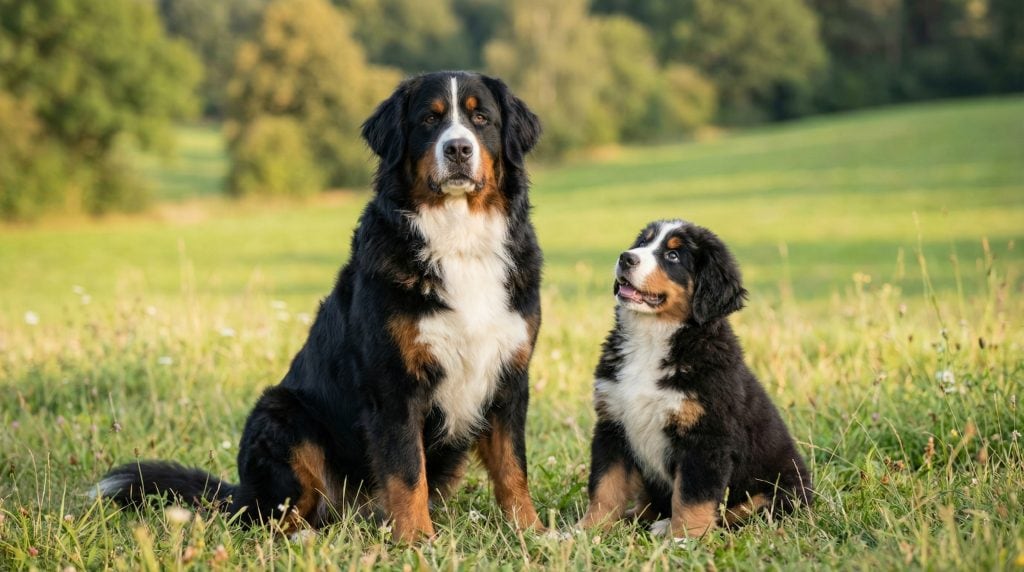
Living with a Bernese Mountain Dog often feels like having a gentle giant by your side. They are known for their calm presence and affectionate nature, making them a comforting companion in many households. Owners frequently notice their dog's desire to be close to family, whether lounging indoors or exploring the garden.
At a glance
Core care
- Size: Large
- Energy: Moderate
- Grooming: Low
- Shedding: High
Support style
- Sensitivity: Moderate
- Training style: Willing
Breed guide
Choose a section to explore. These notes describe common patterns, but individual dogs vary widely.
Living with a Bernese Mountain Dog often means sharing your home with a large companion who prefers to stay close to their family. Many owners notice how these dogs enjoy being involved in everyday life, whether resting nearby indoors or accompanying their people outdoors. Their calm presence and cooperative nature reflect generations of working alongside humans in farm environments.
Physically, the Bernese Mountain Dog is large and sturdy, with a striking tri-coloured coat that is both beautiful and functional. This thick coat, while visually appealing, requires regular grooming to manage shedding. Owners often find themselves brushing their Bernese to keep their coat in good condition and to minimise loose hair around the home.
Temperamentally, Bernese Mountain Dogs are known for their gentle and affectionate nature. They are generally good-natured and can be quite sensitive to their surroundings, often picking up on the emotions of their human companions. While they are typically friendly, individual dogs may vary in their social preferences, with some being more reserved around strangers.
It’s important for potential owners to understand that while Bernese Mountain Dogs have many endearing qualities, they are not without their challenges. Their size and coat require specific care, and their social nature means they thrive best in environments where they can be included in daily life. Each dog is unique, and factors such as genetics and upbringing play a significant role in shaping their personality.
Bernese Mountain Dogs are often described as sociable and affectionate, traits that make them popular among families. Their working background has instilled a strong desire to be part of a group, which translates to a dog that enjoys being involved in family activities. This social nature means they often seek out companionship, whether it’s following you from room to room or settling at your feet.
Their sensitivity is another notable trait, as Bernese Mountain Dogs tend to be attuned to the moods and emotions of their owners. This sensitivity can be both a strength and a challenge; while it allows them to form deep bonds, it also means they may be more affected by changes in the household or negative experiences. Owners often notice that their Bernese responds well to positive reinforcement and gentle guidance.
Trainability in Bernese Mountain Dogs is generally high, as they are eager to please and willing to learn. Many owners find that their dogs respond well to consistent training methods that focus on building trust and understanding. However, their large size and strength mean that early training and socialisation are crucial to ensure they grow into well-mannered adults.
While Bernese Mountain Dogs are generally friendly, individual personalities can vary. Some may be more outgoing and playful, while others might be more reserved. It’s important for owners to recognise these differences and tailor their approach to their dog’s unique temperament, ensuring a harmonious relationship that respects the dog’s natural tendencies.
A typical day for a Bernese Mountain Dog involves a balance of moderate exercise and relaxation. Due to their working heritage, they benefit from regular walks and opportunities to explore their environment. Owners often find that a couple of daily walks, combined with some playtime in the garden, meets their exercise needs.
While they enjoy physical activity, Bernese Mountain Dogs are not as high-energy as some other working breeds. This makes them well-suited to families who enjoy a more laid-back lifestyle, though they still appreciate mental stimulation. Puzzle toys and interactive games can be great ways to keep their minds engaged and prevent boredom.
As they age, the exercise needs of a Bernese Mountain Dog may change. Puppies and young adults tend to be more active and playful, requiring more frequent opportunities to burn off energy. In contrast, older dogs may prefer shorter, more leisurely walks and more time spent resting.
It’s important to avoid over-exercising young Bernese Mountain Dogs, as their joints are still developing. Owners should aim for a balanced routine that includes both physical and mental enrichment, tailored to their dog’s age and health. This approach helps ensure they remain healthy and happy throughout their life.
Training a Bernese Mountain Dog often feels like working with a willing and eager partner. Their natural desire to please and cooperative nature make them receptive to training, especially when approached with patience and positivity. Owners frequently find success with reward-based methods that encourage desired behaviours through treats and praise.
Impulse control can be an area where Bernese Mountain Dogs may need extra guidance. Their size and strength mean that teaching them to walk calmly on a lead and to greet people politely is important. Consistent training from a young age helps them develop good manners and ensures they are manageable in various situations.
Adolescence can bring its own set of challenges, as Bernese Mountain Dogs may test boundaries during this phase. Maintaining a consistent training routine and reinforcing positive behaviours is key to navigating this period successfully. Many owners find that their dog’s trainability and willingness to learn make this stage more manageable than with some other breeds.
The relationship between a Bernese Mountain Dog and its owner is central to successful training. Building trust and understanding through regular interaction and shared activities strengthens this bond, making training a rewarding experience for both parties. For those new to dog training, enrolling in a course like “Puppy Beginnings: Building a Calm Start” can provide valuable guidance and support.
Bernese Mountain Dogs tend to thrive in homes where they can be part of the family. Their social nature means they enjoy environments where they are included in daily activities and have opportunities for interaction. While they are adaptable to various living situations, they often do best in homes with access to a garden or outdoor space.
Many owners find that Bernese Mountain Dogs are well-suited to families with children, as their gentle and patient nature makes them good companions for kids. However, due to their size, supervision is recommended to ensure safe interactions, particularly with younger children who may not understand a dog’s boundaries.
When it comes to living with other pets, Bernese Mountain Dogs can be quite accommodating. Their generally friendly disposition means they can get along well with other dogs and animals, though early socialisation is key to fostering these positive relationships. Each dog’s individual personality will influence how they interact with other pets.
Realistically, potential owners should consider the time and resources required to care for a Bernese Mountain Dog. Their grooming needs, exercise requirements, and desire for companionship mean they are best suited to homes where they can receive the attention and care they need. Understanding these aspects helps ensure a good match between the dog and their living environment.
The health of a Bernese Mountain Dog is closely tied to their overall wellbeing and quality of life. Owners often notice that a healthy diet, regular exercise, and preventive care contribute significantly to their dog’s happiness and longevity. Regular veterinary check-ups are essential to monitor their health and catch any potential issues early.
Certain health considerations are more common in Bernese Mountain Dogs, such as hip and elbow dysplasia, which can affect their mobility. Regular exercise and maintaining a healthy weight can help manage these conditions, but it’s important to work with a vet to develop a suitable care plan.
Cancer is another concern within the breed, and while it cannot be entirely prevented, being aware of the signs and maintaining regular health screenings can aid in early detection. Owners should also be mindful of bloat, a serious condition that requires immediate veterinary attention.
Overall, preventive care and awareness are key to managing the health of a Bernese Mountain Dog. Understanding their specific health needs and working closely with a vet ensures that owners can provide the best care possible, helping their dog lead a healthy and fulfilling life.
The Bernese Mountain Dog originated in the Swiss Alps, where it was developed as a versatile working dog. Bred to assist with farm work, these dogs were used for tasks such as herding cattle, pulling carts, and guarding property. Their strength and reliability made them invaluable to farmers in the region.
The breed’s development was influenced by the need for a dog that could withstand harsh weather conditions and rugged terrain. This led to the creation of a dog with a thick, weather-resistant coat and a sturdy build, traits that remain evident in today’s Bernese Mountain Dogs.
Over time, the breed’s role expanded beyond farm work, and they became cherished companions. Their gentle temperament and loyalty endeared them to families, and they began to be recognised for their suitability as family pets. Despite their working origins, they adapted well to life as a companion animal.
Understanding the history of the Bernese Mountain Dog provides insight into their modern traits. Their working background explains their strength, endurance, and cooperative nature, while their evolution into a family companion highlights their social and affectionate disposition. This rich history continues to shape the breed today, making them a beloved choice for many dog lovers.
What shapes individual dogs
- Early social experiences
- Training approach
- Environment & routine
- Genetics & breeding
- Health & pain
- Age / life stage
Living with a Bernese Mountain Dog often means sharing your home with a large companion who prefers to stay close to their family. Many owners notice how these dogs enjoy being involved in everyday life, whether resting nearby indoors or accompanying their people outdoors. Their calm presence and cooperative nature reflect generations of working alongside humans in farm environments.
Physically, the Bernese Mountain Dog is large and sturdy, with a striking tri-coloured coat that is both beautiful and functional. This thick coat, while visually appealing, requires regular grooming to manage shedding. Owners often find themselves brushing their Bernese to keep their coat in good condition and to minimise loose hair around the home.
Temperamentally, Bernese Mountain Dogs are known for their gentle and affectionate nature. They are generally good-natured and can be quite sensitive to their surroundings, often picking up on the emotions of their human companions. While they are typically friendly, individual dogs may vary in their social preferences, with some being more reserved around strangers.
It’s important for potential owners to understand that while Bernese Mountain Dogs have many endearing qualities, they are not without their challenges. Their size and coat require specific care, and their social nature means they thrive best in environments where they can be included in daily life. Each dog is unique, and factors such as genetics and upbringing play a significant role in shaping their personality.
Bernese Mountain Dogs are often described as sociable and affectionate, traits that make them popular among families. Their working background has instilled a strong desire to be part of a group, which translates to a dog that enjoys being involved in family activities. This social nature means they often seek out companionship, whether it’s following you from room to room or settling at your feet.
Their sensitivity is another notable trait, as Bernese Mountain Dogs tend to be attuned to the moods and emotions of their owners. This sensitivity can be both a strength and a challenge; while it allows them to form deep bonds, it also means they may be more affected by changes in the household or negative experiences. Owners often notice that their Bernese responds well to positive reinforcement and gentle guidance.
Trainability in Bernese Mountain Dogs is generally high, as they are eager to please and willing to learn. Many owners find that their dogs respond well to consistent training methods that focus on building trust and understanding. However, their large size and strength mean that early training and socialisation are crucial to ensure they grow into well-mannered adults.
While Bernese Mountain Dogs are generally friendly, individual personalities can vary. Some may be more outgoing and playful, while others might be more reserved. It’s important for owners to recognise these differences and tailor their approach to their dog’s unique temperament, ensuring a harmonious relationship that respects the dog’s natural tendencies.
A typical day for a Bernese Mountain Dog involves a balance of moderate exercise and relaxation. Due to their working heritage, they benefit from regular walks and opportunities to explore their environment. Owners often find that a couple of daily walks, combined with some playtime in the garden, meets their exercise needs.
While they enjoy physical activity, Bernese Mountain Dogs are not as high-energy as some other working breeds. This makes them well-suited to families who enjoy a more laid-back lifestyle, though they still appreciate mental stimulation. Puzzle toys and interactive games can be great ways to keep their minds engaged and prevent boredom.
As they age, the exercise needs of a Bernese Mountain Dog may change. Puppies and young adults tend to be more active and playful, requiring more frequent opportunities to burn off energy. In contrast, older dogs may prefer shorter, more leisurely walks and more time spent resting.
It’s important to avoid over-exercising young Bernese Mountain Dogs, as their joints are still developing. Owners should aim for a balanced routine that includes both physical and mental enrichment, tailored to their dog’s age and health. This approach helps ensure they remain healthy and happy throughout their life.
Training a Bernese Mountain Dog often feels like working with a willing and eager partner. Their natural desire to please and cooperative nature make them receptive to training, especially when approached with patience and positivity. Owners frequently find success with reward-based methods that encourage desired behaviours through treats and praise.
Impulse control can be an area where Bernese Mountain Dogs may need extra guidance. Their size and strength mean that teaching them to walk calmly on a lead and to greet people politely is important. Consistent training from a young age helps them develop good manners and ensures they are manageable in various situations.
Adolescence can bring its own set of challenges, as Bernese Mountain Dogs may test boundaries during this phase. Maintaining a consistent training routine and reinforcing positive behaviours is key to navigating this period successfully. Many owners find that their dog’s trainability and willingness to learn make this stage more manageable than with some other breeds.
The relationship between a Bernese Mountain Dog and its owner is central to successful training. Building trust and understanding through regular interaction and shared activities strengthens this bond, making training a rewarding experience for both parties. For those new to dog training, enrolling in a course like “Puppy Beginnings: Building a Calm Start” can provide valuable guidance and support.
Bernese Mountain Dogs tend to thrive in homes where they can be part of the family. Their social nature means they enjoy environments where they are included in daily activities and have opportunities for interaction. While they are adaptable to various living situations, they often do best in homes with access to a garden or outdoor space.
Many owners find that Bernese Mountain Dogs are well-suited to families with children, as their gentle and patient nature makes them good companions for kids. However, due to their size, supervision is recommended to ensure safe interactions, particularly with younger children who may not understand a dog’s boundaries.
When it comes to living with other pets, Bernese Mountain Dogs can be quite accommodating. Their generally friendly disposition means they can get along well with other dogs and animals, though early socialisation is key to fostering these positive relationships. Each dog’s individual personality will influence how they interact with other pets.
Realistically, potential owners should consider the time and resources required to care for a Bernese Mountain Dog. Their grooming needs, exercise requirements, and desire for companionship mean they are best suited to homes where they can receive the attention and care they need. Understanding these aspects helps ensure a good match between the dog and their living environment.
The health of a Bernese Mountain Dog is closely tied to their overall wellbeing and quality of life. Owners often notice that a healthy diet, regular exercise, and preventive care contribute significantly to their dog’s happiness and longevity. Regular veterinary check-ups are essential to monitor their health and catch any potential issues early.
Certain health considerations are more common in Bernese Mountain Dogs, such as hip and elbow dysplasia, which can affect their mobility. Regular exercise and maintaining a healthy weight can help manage these conditions, but it’s important to work with a vet to develop a suitable care plan.
Cancer is another concern within the breed, and while it cannot be entirely prevented, being aware of the signs and maintaining regular health screenings can aid in early detection. Owners should also be mindful of bloat, a serious condition that requires immediate veterinary attention.
Overall, preventive care and awareness are key to managing the health of a Bernese Mountain Dog. Understanding their specific health needs and working closely with a vet ensures that owners can provide the best care possible, helping their dog lead a healthy and fulfilling life.
The Bernese Mountain Dog originated in the Swiss Alps, where it was developed as a versatile working dog. Bred to assist with farm work, these dogs were used for tasks such as herding cattle, pulling carts, and guarding property. Their strength and reliability made them invaluable to farmers in the region.
The breed’s development was influenced by the need for a dog that could withstand harsh weather conditions and rugged terrain. This led to the creation of a dog with a thick, weather-resistant coat and a sturdy build, traits that remain evident in today’s Bernese Mountain Dogs.
Over time, the breed’s role expanded beyond farm work, and they became cherished companions. Their gentle temperament and loyalty endeared them to families, and they began to be recognised for their suitability as family pets. Despite their working origins, they adapted well to life as a companion animal.
Understanding the history of the Bernese Mountain Dog provides insight into their modern traits. Their working background explains their strength, endurance, and cooperative nature, while their evolution into a family companion highlights their social and affectionate disposition. This rich history continues to shape the breed today, making them a beloved choice for many dog lovers.
What shapes individual dogs
- Early social experiences
- Training approach
- Environment & routine
- Genetics & breeding
- Health & pain
- Age / life stage
Want support with this?
This course offers valuable insights for new owners, helping them establish a calm and positive foundation with their Bernese Mountain Dog.