
American Foxhound
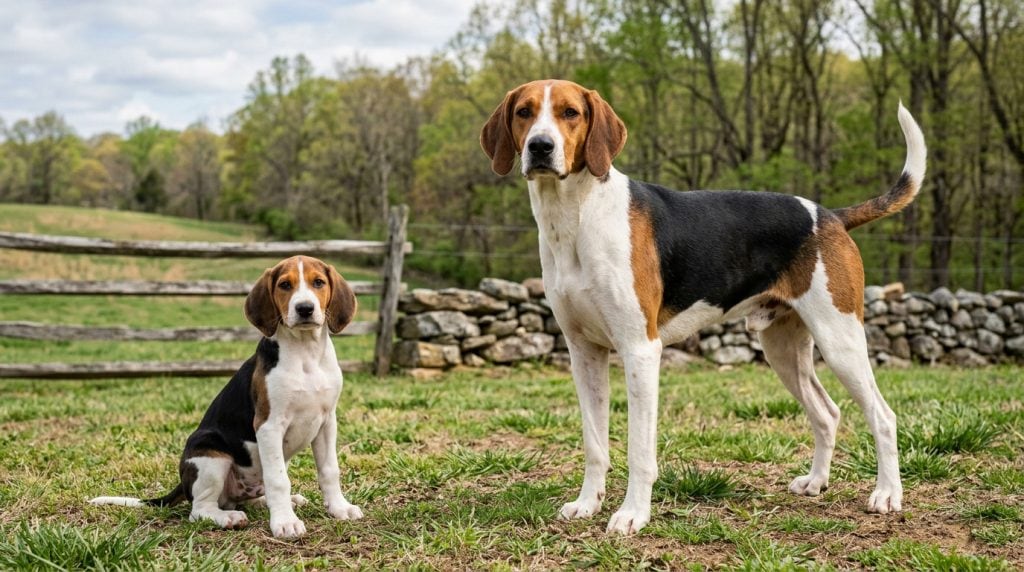
Living with an American Foxhound often means embracing a blend of energy and independence. These dogs have a strong sense of purpose, likely stemming from their history as hunting companions. Many owners find that their Foxhound is happiest when given space to explore and a task to focus on, yet they also appreciate the comfort of a familiar home environment.
At a glance
Core care
- Size: Large
- Energy: High
- Grooming: Low
- Shedding: Moderate
Support style
- Sensitivity: Moderate
- Training style: Independent
Breed guide
Choose a section to explore. These notes describe common patterns, but individual dogs vary widely.
The American Foxhound’s roots are deeply embedded in the hunting traditions of early America. Bred primarily for their speed and endurance, these dogs were essential for tracking and hunting foxes. This working background has left a mark on the modern Foxhound, who often exhibits a strong drive to follow scents and cover ground. Their history as pack animals also contributes to their social nature, making them generally amiable companions.
Physically, American Foxhounds are built for the chase. Their long legs and lean bodies allow them to move with a graceful, efficient stride. This athleticism is not just for show; it translates into a need for regular, vigorous exercise. Owners often notice their Foxhound’s love for running and exploring, which can be a joy to watch but also requires a secure environment to prevent them from wandering off after an intriguing scent.
In terms of temperament, American Foxhounds are known for their gentle and friendly disposition. They tend to be good-natured with people and other dogs, a trait likely developed from their history of working in packs. However, their independent streak can sometimes make them seem aloof. This independence is not a sign of disinterest but rather a reflection of their self-reliant nature, which can be a charming aspect of their personality.
Prospective owners should be prepared for a dog that is both energetic and independent. While many Foxhounds thrive in active households where they can engage in regular physical activities, each dog is unique. Some may be more laid-back, while others might have a stronger drive to explore. Understanding these individual differences is key to a harmonious relationship with an American Foxhound.
American Foxhounds are known for their sociable nature, often enjoying the company of both humans and other dogs. This sociability is a reflection of their origins as pack animals, where cooperation and camaraderie were essential. Owners often observe that their Foxhound is happiest when surrounded by family, whether that means joining in on a walk or simply lounging nearby.
Despite their friendly demeanor, American Foxhounds can exhibit a degree of independence that might surprise some owners. This trait is a nod to their working heritage, where they needed to make decisions on the hunt. As a result, they might not always be immediately responsive to commands, preferring instead to assess situations on their own terms. This independence is not a lack of affection but rather a part of their unique character.
Their moderate sensitivity means that while they are generally adaptable, they can be attuned to the emotions of their human companions. Owners might notice their Foxhound responding to changes in mood or environment with subtle shifts in behaviour. This sensitivity can be a wonderful aspect of their temperament, fostering a deep bond between dog and owner.
Training an American Foxhound requires patience and understanding. Their independent nature means they may not always be eager to please in the traditional sense, but with consistent and positive reinforcement, they can learn effectively. Each Foxhound is an individual, and while some may take to training with enthusiasm, others might require a bit more encouragement. Embracing these variations is part of the rewarding journey of living with an American Foxhound.
A typical day for an American Foxhound involves plenty of physical activity. These dogs thrive on exercise, and a long, brisk walk or a run in a secure area is often just the beginning. Their high energy levels mean that they benefit from activities that allow them to stretch their legs and use their natural athleticism. Owners frequently find that their Foxhound is more content and relaxed after a good session of physical exertion.
Beyond physical exercise, mental enrichment is crucial for this intelligent breed. Scent games and puzzle toys can engage their minds and satisfy their natural instincts to track and explore. Activities that challenge their problem-solving abilities can be particularly rewarding. Owners might notice their Foxhound’s enthusiasm for tasks that mimic their historical role as hunters, such as scent trails or hide-and-seek games.
It’s important to remember that while American Foxhounds are energetic, their exercise needs can vary with age. Younger dogs may require more intense activities, while older Foxhounds might prefer gentler, more leisurely walks. Adjusting the routine to suit their life stage helps keep them healthy and happy.
Owners should also be mindful of providing a safe environment for exercise. Given their strong hunting instincts, Foxhounds can be prone to wandering if they catch an interesting scent. Secure gardens or on-lead walks are advisable to prevent any unexpected adventures. With the right balance of physical and mental stimulation, American Foxhounds can be wonderful, engaging companions.
Training an American Foxhound often feels like a dance between guidance and independence. Owners quickly learn that these dogs have a mind of their own, a trait that harks back to their days as independent hunters. While they are intelligent and capable of learning, they may not always be eager to follow commands without question.
Positive reinforcement is typically the most effective approach with this breed. Reward-based training that focuses on treats, praise, and play can motivate a Foxhound to engage in the learning process. Consistency is key, as these dogs benefit from clear expectations and a routine that reinforces desired behaviours. Owners often find that patience and a calm, encouraging tone work wonders.
Adolescence can be a particularly challenging time for Foxhound owners. During this period, their independent streak might become more pronounced, and they may test boundaries more frequently. It’s important to remain consistent and patient, reinforcing training with kindness and understanding. Building a strong relationship based on trust and mutual respect can help navigate these adolescent challenges.
Ultimately, training an American Foxhound is about finding the balance between their natural instincts and the behaviours desired in a home setting. While some may take to training with enthusiasm, others might require more time and encouragement. Embracing their individuality and working with their unique characteristics can lead to a fulfilling and rewarding experience for both dog and owner.
American Foxhounds tend to thrive in environments where they have space to move and explore. Homes with large gardens or access to open spaces are often well-suited to their energetic nature. However, it’s crucial that these areas are secure, as their strong hunting instincts can lead them to wander if they catch an intriguing scent.
In family settings, Foxhounds are generally good-natured and can get along well with children and other pets. Their friendly disposition makes them amiable companions, though supervision is always wise when introducing them to new members of the household. Owners often find that their Foxhound’s social nature means they enjoy being part of family activities.
While they can adapt to various living situations, Foxhounds do best in homes where they are not left alone for extended periods. They appreciate companionship and can become lonely if isolated. Many owners notice that their Foxhound is happiest when they have regular interaction and engagement with their human family.
Ultimately, living with an American Foxhound is about finding a balance that meets their needs for exercise, companionship, and mental stimulation. Each dog is unique, and what works for one may not suit another. Understanding these nuances helps ensure a harmonious and fulfilling relationship with this spirited breed.
Health is a crucial aspect of an American Foxhound’s overall wellbeing, influencing their behaviour and quality of life. Regular veterinary check-ups are important to monitor their health and catch any potential issues early. Preventive care, including vaccinations and parasite control, helps maintain their health and longevity.
American Foxhounds are generally healthy, but like all breeds, they can be prone to certain health conditions. Hip dysplasia and ear infections are among the concerns that owners might encounter. Keeping an eye on their mobility and ear health can help in managing these issues effectively.
Nutrition plays a significant role in their health. A balanced diet that meets their energy needs supports their active lifestyle and overall wellbeing. Owners often find that feeding high-quality food tailored to their age and activity level helps keep their Foxhound in optimal condition.
Being attentive to changes in behaviour or physical condition is important. If an American Foxhound shows signs of discomfort or unusual behaviour, seeking veterinary advice is always recommended. With the right care and attention, these dogs can lead healthy, active lives, bringing joy and companionship to their families.
The American Foxhound’s history is a tale of adaptation and purpose. Originating in the United States, these dogs were developed from English Foxhounds brought over by European settlers. Their primary role was to assist in hunting foxes, a popular pastime among the colonial gentry. This purpose shaped the breed into the agile, determined hunters we know today.
The breed’s development was influenced by the need for a dog that could cover vast distances with speed and endurance. Over time, breeders refined these traits, resulting in a dog that excelled in the hunt. This history explains the modern Foxhound’s love for running and their remarkable stamina, traits that owners often see in their daily lives.
American Foxhounds were not just valued for their hunting prowess but also for their ability to work harmoniously in packs. This need for cooperation and social interaction is reflected in their friendly and sociable nature. Many owners notice how their Foxhound enjoys the company of other dogs and people, a trait that can be traced back to their pack-working origins.
Today, while not as commonly used for hunting, American Foxhounds retain the characteristics that made them successful in their original roles. Their history as hunters and companions continues to inform their behaviour, making them unique and engaging pets. Understanding their origins helps owners appreciate the blend of independence and sociability that defines this breed.
What shapes individual dogs
- Early social experiences
- Training approach
- Environment & routine
- Genetics & breeding
- Health & pain
- Age / life stage
The American Foxhound’s roots are deeply embedded in the hunting traditions of early America. Bred primarily for their speed and endurance, these dogs were essential for tracking and hunting foxes. This working background has left a mark on the modern Foxhound, who often exhibits a strong drive to follow scents and cover ground. Their history as pack animals also contributes to their social nature, making them generally amiable companions.
Physically, American Foxhounds are built for the chase. Their long legs and lean bodies allow them to move with a graceful, efficient stride. This athleticism is not just for show; it translates into a need for regular, vigorous exercise. Owners often notice their Foxhound’s love for running and exploring, which can be a joy to watch but also requires a secure environment to prevent them from wandering off after an intriguing scent.
In terms of temperament, American Foxhounds are known for their gentle and friendly disposition. They tend to be good-natured with people and other dogs, a trait likely developed from their history of working in packs. However, their independent streak can sometimes make them seem aloof. This independence is not a sign of disinterest but rather a reflection of their self-reliant nature, which can be a charming aspect of their personality.
Prospective owners should be prepared for a dog that is both energetic and independent. While many Foxhounds thrive in active households where they can engage in regular physical activities, each dog is unique. Some may be more laid-back, while others might have a stronger drive to explore. Understanding these individual differences is key to a harmonious relationship with an American Foxhound.
American Foxhounds are known for their sociable nature, often enjoying the company of both humans and other dogs. This sociability is a reflection of their origins as pack animals, where cooperation and camaraderie were essential. Owners often observe that their Foxhound is happiest when surrounded by family, whether that means joining in on a walk or simply lounging nearby.
Despite their friendly demeanor, American Foxhounds can exhibit a degree of independence that might surprise some owners. This trait is a nod to their working heritage, where they needed to make decisions on the hunt. As a result, they might not always be immediately responsive to commands, preferring instead to assess situations on their own terms. This independence is not a lack of affection but rather a part of their unique character.
Their moderate sensitivity means that while they are generally adaptable, they can be attuned to the emotions of their human companions. Owners might notice their Foxhound responding to changes in mood or environment with subtle shifts in behaviour. This sensitivity can be a wonderful aspect of their temperament, fostering a deep bond between dog and owner.
Training an American Foxhound requires patience and understanding. Their independent nature means they may not always be eager to please in the traditional sense, but with consistent and positive reinforcement, they can learn effectively. Each Foxhound is an individual, and while some may take to training with enthusiasm, others might require a bit more encouragement. Embracing these variations is part of the rewarding journey of living with an American Foxhound.
A typical day for an American Foxhound involves plenty of physical activity. These dogs thrive on exercise, and a long, brisk walk or a run in a secure area is often just the beginning. Their high energy levels mean that they benefit from activities that allow them to stretch their legs and use their natural athleticism. Owners frequently find that their Foxhound is more content and relaxed after a good session of physical exertion.
Beyond physical exercise, mental enrichment is crucial for this intelligent breed. Scent games and puzzle toys can engage their minds and satisfy their natural instincts to track and explore. Activities that challenge their problem-solving abilities can be particularly rewarding. Owners might notice their Foxhound’s enthusiasm for tasks that mimic their historical role as hunters, such as scent trails or hide-and-seek games.
It’s important to remember that while American Foxhounds are energetic, their exercise needs can vary with age. Younger dogs may require more intense activities, while older Foxhounds might prefer gentler, more leisurely walks. Adjusting the routine to suit their life stage helps keep them healthy and happy.
Owners should also be mindful of providing a safe environment for exercise. Given their strong hunting instincts, Foxhounds can be prone to wandering if they catch an interesting scent. Secure gardens or on-lead walks are advisable to prevent any unexpected adventures. With the right balance of physical and mental stimulation, American Foxhounds can be wonderful, engaging companions.
Training an American Foxhound often feels like a dance between guidance and independence. Owners quickly learn that these dogs have a mind of their own, a trait that harks back to their days as independent hunters. While they are intelligent and capable of learning, they may not always be eager to follow commands without question.
Positive reinforcement is typically the most effective approach with this breed. Reward-based training that focuses on treats, praise, and play can motivate a Foxhound to engage in the learning process. Consistency is key, as these dogs benefit from clear expectations and a routine that reinforces desired behaviours. Owners often find that patience and a calm, encouraging tone work wonders.
Adolescence can be a particularly challenging time for Foxhound owners. During this period, their independent streak might become more pronounced, and they may test boundaries more frequently. It’s important to remain consistent and patient, reinforcing training with kindness and understanding. Building a strong relationship based on trust and mutual respect can help navigate these adolescent challenges.
Ultimately, training an American Foxhound is about finding the balance between their natural instincts and the behaviours desired in a home setting. While some may take to training with enthusiasm, others might require more time and encouragement. Embracing their individuality and working with their unique characteristics can lead to a fulfilling and rewarding experience for both dog and owner.
American Foxhounds tend to thrive in environments where they have space to move and explore. Homes with large gardens or access to open spaces are often well-suited to their energetic nature. However, it’s crucial that these areas are secure, as their strong hunting instincts can lead them to wander if they catch an intriguing scent.
In family settings, Foxhounds are generally good-natured and can get along well with children and other pets. Their friendly disposition makes them amiable companions, though supervision is always wise when introducing them to new members of the household. Owners often find that their Foxhound’s social nature means they enjoy being part of family activities.
While they can adapt to various living situations, Foxhounds do best in homes where they are not left alone for extended periods. They appreciate companionship and can become lonely if isolated. Many owners notice that their Foxhound is happiest when they have regular interaction and engagement with their human family.
Ultimately, living with an American Foxhound is about finding a balance that meets their needs for exercise, companionship, and mental stimulation. Each dog is unique, and what works for one may not suit another. Understanding these nuances helps ensure a harmonious and fulfilling relationship with this spirited breed.
Health is a crucial aspect of an American Foxhound’s overall wellbeing, influencing their behaviour and quality of life. Regular veterinary check-ups are important to monitor their health and catch any potential issues early. Preventive care, including vaccinations and parasite control, helps maintain their health and longevity.
American Foxhounds are generally healthy, but like all breeds, they can be prone to certain health conditions. Hip dysplasia and ear infections are among the concerns that owners might encounter. Keeping an eye on their mobility and ear health can help in managing these issues effectively.
Nutrition plays a significant role in their health. A balanced diet that meets their energy needs supports their active lifestyle and overall wellbeing. Owners often find that feeding high-quality food tailored to their age and activity level helps keep their Foxhound in optimal condition.
Being attentive to changes in behaviour or physical condition is important. If an American Foxhound shows signs of discomfort or unusual behaviour, seeking veterinary advice is always recommended. With the right care and attention, these dogs can lead healthy, active lives, bringing joy and companionship to their families.
The American Foxhound’s history is a tale of adaptation and purpose. Originating in the United States, these dogs were developed from English Foxhounds brought over by European settlers. Their primary role was to assist in hunting foxes, a popular pastime among the colonial gentry. This purpose shaped the breed into the agile, determined hunters we know today.
The breed’s development was influenced by the need for a dog that could cover vast distances with speed and endurance. Over time, breeders refined these traits, resulting in a dog that excelled in the hunt. This history explains the modern Foxhound’s love for running and their remarkable stamina, traits that owners often see in their daily lives.
American Foxhounds were not just valued for their hunting prowess but also for their ability to work harmoniously in packs. This need for cooperation and social interaction is reflected in their friendly and sociable nature. Many owners notice how their Foxhound enjoys the company of other dogs and people, a trait that can be traced back to their pack-working origins.
Today, while not as commonly used for hunting, American Foxhounds retain the characteristics that made them successful in their original roles. Their history as hunters and companions continues to inform their behaviour, making them unique and engaging pets. Understanding their origins helps owners appreciate the blend of independence and sociability that defines this breed.
What shapes individual dogs
- Early social experiences
- Training approach
- Environment & routine
- Genetics & breeding
- Health & pain
- Age / life stage
Want support with this?
This course is relevant for understanding the independent and social nature of the American Foxhound, helping owners build a strong relationship.