
Puli
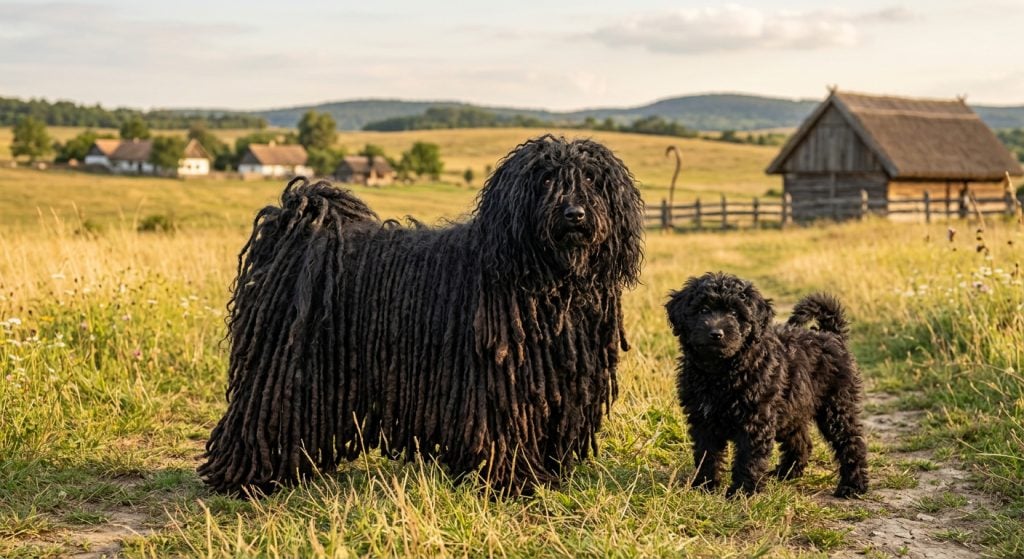
Pulis are lively Hungarian herding dogs known for their distinctive corded coats and alert personalities. Bred to manage livestock across open pastures, they tend to combine quick reactions with a strong bond to their families. Many owners appreciate their playful energy and their watchful awareness of everything happening around them.
At a glance
Core care
- Size: Medium
- Energy: High
- Grooming: Low
- Shedding: Minimal
Support style
- Sensitivity: Moderate
- Training style: Independent
Breed guide
Choose a section to explore. These notes describe common patterns, but individual dogs vary widely.
The Puli’s roots lie in the rugged terrains of Hungary, where they were bred as herding dogs, adept at managing livestock with agility and intelligence. This history is evident today in their energetic and alert nature, as they often exhibit a keen awareness of their surroundings. Their herding instincts translate into a dog that is both watchful and eager to engage in activities that challenge their mind and body.
Physically, the Puli is most notable for its unique corded coat, which serves as a natural protection against harsh weather conditions. This coat requires significant grooming effort, but it also means minimal shedding, which some owners find beneficial. The Puli’s medium size makes them adaptable to various living spaces, though they do require ample room to expend their high energy levels.
Temperamentally, Pulik are known for their independence and intelligence. They often exhibit a strong-willed nature, which can be both a challenge and a delight for owners. While they are generally friendly and sociable, their moderate sensitivity means they may need time to adjust to new situations or people. Owners often notice their Puli’s playful side, as they enjoy games and activities that stimulate their minds.
It’s important for potential Puli owners to understand that while breed traits provide a general guide, individual dogs can vary significantly. Factors such as early socialization, training, and the dog’s unique personality all play a role in shaping their behaviour. Understanding these nuances helps in setting realistic expectations and fostering a harmonious relationship with this spirited breed.
Pulik are often described as spirited and lively, with a social nature that makes them engaging companions. They tend to form strong bonds with their families, often displaying a desire to be involved in household activities. This social inclination means they thrive in environments where they receive plenty of interaction and mental stimulation.
Their herding background contributes to their independent streak, which can sometimes be mistaken for stubbornness. However, this independence is often a sign of their intelligence and problem-solving abilities. Owners frequently observe their Puli’s ability to assess situations and act accordingly, which can be both impressive and occasionally challenging when it comes to training.
Sensitivity in Pulik is moderate, meaning they can be quite perceptive to the emotions and moods of their human companions. This sensitivity can be beneficial in forming deep connections, but it also means they might require gentle handling and patience, especially during training sessions. Many owners find that positive reinforcement techniques work well, as Pulik respond better to encouragement rather than harsh corrections.
Overall, living with a Puli involves appreciating their unique blend of independence and sociability. While they can be headstrong, their loyalty and affection make them rewarding companions. Understanding their temperament tendencies helps in creating a balanced environment where they can flourish, keeping in mind that each Puli is an individual with its own quirks and charms.
A typical day with a Puli involves plenty of activity, as their high energy levels require regular exercise and mental engagement. Owners often find that a combination of walks, playtime, and training sessions helps to keep their Puli content and well-behaved. These dogs enjoy activities that challenge both their physical and mental abilities, making agility courses or interactive games a great choice.
Given their herding background, Pulik benefit from tasks that mimic their original working roles. This could include games that involve fetching or herding-like activities, which tap into their natural instincts. Mental enrichment is equally important, and puzzle toys or scent games can help keep their minds sharp and engaged.
It’s important to tailor exercise routines to the Puli’s age and health. While puppies and young adults may require more vigorous activities, older Pulik might benefit from gentler, yet still engaging, forms of exercise. Owners should be mindful of their dog’s limits and adjust activities as needed to prevent overexertion.
Avoiding monotony is key, as Pulik can become bored with repetitive routines. Mixing up activities and introducing new challenges can help maintain their interest and prevent behavioural issues that might arise from boredom. By understanding their need for varied and stimulating activities, owners can ensure their Puli remains a happy and well-adjusted member of the family.
Training a Puli often feels like a dance of cooperation and independence. Their intelligence and problem-solving skills can make them quick learners, but their independent nature means they might not always follow commands blindly. Owners often find success with training methods that incorporate positive reinforcement and patience.
Consistency is crucial when training a Puli. They respond well to routines and clear expectations, which help them understand what is required of them. Building a strong relationship based on trust and respect is essential, as Pulik are more likely to cooperate when they feel connected to their handler.
Adolescence can bring its own set of challenges, as Pulik may test boundaries and assert their independence more strongly. During this time, maintaining a calm and consistent approach is vital. Reinforcing training with positive experiences and avoiding confrontational methods can help navigate this phase smoothly.
Overall, training a Puli is a rewarding experience that requires understanding and adaptability. By focusing on building a positive relationship and using methods that respect their intelligence and independence, owners can guide their Puli to become well-mannered and cooperative companions. For those new to this breed, courses like “Understand Your Dog: Dog Psychology for Beginners” can provide valuable insights into effective training strategies.
Pulik tend to thrive in homes where they can be active participants in family life. Their energetic nature means they do well in environments that offer ample opportunities for exercise and mental stimulation. While they can adapt to various living spaces, access to a secure outdoor area where they can play and explore is often beneficial.
Families with children often find that Pulik make playful and engaging companions. Their spirited nature can match well with active children, though supervision is recommended to ensure interactions remain positive. Pulik can also coexist with other pets, particularly if they are introduced and socialized properly from a young age.
The Puli’s moderate sensitivity means they do best in homes where their emotional needs are understood and respected. They appreciate environments that offer routine and stability, which helps them feel secure and content. Owners who enjoy an active lifestyle often find that a Puli is a great match, as they can join in on various activities and adventures.
Ultimately, the Puli’s suitability for a home depends on the owner’s ability to meet their physical and mental needs. By providing an environment that caters to their energetic and social nature, owners can enjoy a fulfilling relationship with this unique and lively breed.
Maintaining a Puli’s health is integral to their overall wellbeing and happiness. Like all breeds, they have specific health considerations that owners should be aware of. Regular veterinary check-ups are important to monitor their health and catch any potential issues early.
Some Pulik may be prone to hip dysplasia or eye conditions, which are common concerns in the breed. Keeping an eye on their mobility and vision can help identify any changes that might require veterinary attention. Preventive care, such as maintaining a healthy weight and providing a balanced diet, supports their long-term health.
Behavioural changes can sometimes indicate underlying health issues. Owners should be observant of any shifts in their Puli’s behaviour, such as changes in energy levels or appetite, as these can be early signs of discomfort or illness. Consulting a veterinarian when such changes occur is always a prudent step.
Overall, staying informed about the Puli’s specific health needs and maintaining a proactive approach to their care can help ensure they lead a healthy and happy life. Understanding the connection between health and behaviour is key to providing the best care for this spirited breed.
The Puli’s history is deeply rooted in the pastoral landscapes of Hungary, where they were bred as herding dogs. The breed’s ancestors are believed to have arrived in the Carpathian Basin with Magyar tribes over a thousand years ago. This long history as a working dog is evident in their agile and alert nature, traits that were essential for managing livestock.
Originally, Pulik were prized for their ability to herd sheep and cattle, using their intelligence and agility to manage flocks efficiently. Their distinctive corded coat provided protection against harsh weather and predators, making them well-suited to the demanding conditions of herding work. This coat remains a defining characteristic of the breed today, symbolizing their enduring connection to their working past.
Throughout history, the Puli has maintained its reputation as a versatile and capable herding dog. Their skills were not only valued in Hungary but also recognized internationally, leading to their spread to other parts of the world. Despite changes in their roles over the years, the Puli’s herding instincts and energetic nature continue to be a hallmark of the breed.
Understanding the Puli’s history helps explain many of their modern traits, from their intelligence and independence to their need for mental and physical stimulation. This rich heritage provides insight into what makes the Puli such a unique and engaging companion for those who appreciate their spirited and loyal nature.
What shapes individual dogs
- Early social experiences
- Training approach
- Environment & routine
- Genetics & breeding
- Health & pain
- Age / life stage
The Puli’s roots lie in the rugged terrains of Hungary, where they were bred as herding dogs, adept at managing livestock with agility and intelligence. This history is evident today in their energetic and alert nature, as they often exhibit a keen awareness of their surroundings. Their herding instincts translate into a dog that is both watchful and eager to engage in activities that challenge their mind and body.
Physically, the Puli is most notable for its unique corded coat, which serves as a natural protection against harsh weather conditions. This coat requires significant grooming effort, but it also means minimal shedding, which some owners find beneficial. The Puli’s medium size makes them adaptable to various living spaces, though they do require ample room to expend their high energy levels.
Temperamentally, Pulik are known for their independence and intelligence. They often exhibit a strong-willed nature, which can be both a challenge and a delight for owners. While they are generally friendly and sociable, their moderate sensitivity means they may need time to adjust to new situations or people. Owners often notice their Puli’s playful side, as they enjoy games and activities that stimulate their minds.
It’s important for potential Puli owners to understand that while breed traits provide a general guide, individual dogs can vary significantly. Factors such as early socialization, training, and the dog’s unique personality all play a role in shaping their behaviour. Understanding these nuances helps in setting realistic expectations and fostering a harmonious relationship with this spirited breed.
Pulik are often described as spirited and lively, with a social nature that makes them engaging companions. They tend to form strong bonds with their families, often displaying a desire to be involved in household activities. This social inclination means they thrive in environments where they receive plenty of interaction and mental stimulation.
Their herding background contributes to their independent streak, which can sometimes be mistaken for stubbornness. However, this independence is often a sign of their intelligence and problem-solving abilities. Owners frequently observe their Puli’s ability to assess situations and act accordingly, which can be both impressive and occasionally challenging when it comes to training.
Sensitivity in Pulik is moderate, meaning they can be quite perceptive to the emotions and moods of their human companions. This sensitivity can be beneficial in forming deep connections, but it also means they might require gentle handling and patience, especially during training sessions. Many owners find that positive reinforcement techniques work well, as Pulik respond better to encouragement rather than harsh corrections.
Overall, living with a Puli involves appreciating their unique blend of independence and sociability. While they can be headstrong, their loyalty and affection make them rewarding companions. Understanding their temperament tendencies helps in creating a balanced environment where they can flourish, keeping in mind that each Puli is an individual with its own quirks and charms.
A typical day with a Puli involves plenty of activity, as their high energy levels require regular exercise and mental engagement. Owners often find that a combination of walks, playtime, and training sessions helps to keep their Puli content and well-behaved. These dogs enjoy activities that challenge both their physical and mental abilities, making agility courses or interactive games a great choice.
Given their herding background, Pulik benefit from tasks that mimic their original working roles. This could include games that involve fetching or herding-like activities, which tap into their natural instincts. Mental enrichment is equally important, and puzzle toys or scent games can help keep their minds sharp and engaged.
It’s important to tailor exercise routines to the Puli’s age and health. While puppies and young adults may require more vigorous activities, older Pulik might benefit from gentler, yet still engaging, forms of exercise. Owners should be mindful of their dog’s limits and adjust activities as needed to prevent overexertion.
Avoiding monotony is key, as Pulik can become bored with repetitive routines. Mixing up activities and introducing new challenges can help maintain their interest and prevent behavioural issues that might arise from boredom. By understanding their need for varied and stimulating activities, owners can ensure their Puli remains a happy and well-adjusted member of the family.
Training a Puli often feels like a dance of cooperation and independence. Their intelligence and problem-solving skills can make them quick learners, but their independent nature means they might not always follow commands blindly. Owners often find success with training methods that incorporate positive reinforcement and patience.
Consistency is crucial when training a Puli. They respond well to routines and clear expectations, which help them understand what is required of them. Building a strong relationship based on trust and respect is essential, as Pulik are more likely to cooperate when they feel connected to their handler.
Adolescence can bring its own set of challenges, as Pulik may test boundaries and assert their independence more strongly. During this time, maintaining a calm and consistent approach is vital. Reinforcing training with positive experiences and avoiding confrontational methods can help navigate this phase smoothly.
Overall, training a Puli is a rewarding experience that requires understanding and adaptability. By focusing on building a positive relationship and using methods that respect their intelligence and independence, owners can guide their Puli to become well-mannered and cooperative companions. For those new to this breed, courses like “Understand Your Dog: Dog Psychology for Beginners” can provide valuable insights into effective training strategies.
Pulik tend to thrive in homes where they can be active participants in family life. Their energetic nature means they do well in environments that offer ample opportunities for exercise and mental stimulation. While they can adapt to various living spaces, access to a secure outdoor area where they can play and explore is often beneficial.
Families with children often find that Pulik make playful and engaging companions. Their spirited nature can match well with active children, though supervision is recommended to ensure interactions remain positive. Pulik can also coexist with other pets, particularly if they are introduced and socialized properly from a young age.
The Puli’s moderate sensitivity means they do best in homes where their emotional needs are understood and respected. They appreciate environments that offer routine and stability, which helps them feel secure and content. Owners who enjoy an active lifestyle often find that a Puli is a great match, as they can join in on various activities and adventures.
Ultimately, the Puli’s suitability for a home depends on the owner’s ability to meet their physical and mental needs. By providing an environment that caters to their energetic and social nature, owners can enjoy a fulfilling relationship with this unique and lively breed.
Maintaining a Puli’s health is integral to their overall wellbeing and happiness. Like all breeds, they have specific health considerations that owners should be aware of. Regular veterinary check-ups are important to monitor their health and catch any potential issues early.
Some Pulik may be prone to hip dysplasia or eye conditions, which are common concerns in the breed. Keeping an eye on their mobility and vision can help identify any changes that might require veterinary attention. Preventive care, such as maintaining a healthy weight and providing a balanced diet, supports their long-term health.
Behavioural changes can sometimes indicate underlying health issues. Owners should be observant of any shifts in their Puli’s behaviour, such as changes in energy levels or appetite, as these can be early signs of discomfort or illness. Consulting a veterinarian when such changes occur is always a prudent step.
Overall, staying informed about the Puli’s specific health needs and maintaining a proactive approach to their care can help ensure they lead a healthy and happy life. Understanding the connection between health and behaviour is key to providing the best care for this spirited breed.
The Puli’s history is deeply rooted in the pastoral landscapes of Hungary, where they were bred as herding dogs. The breed’s ancestors are believed to have arrived in the Carpathian Basin with Magyar tribes over a thousand years ago. This long history as a working dog is evident in their agile and alert nature, traits that were essential for managing livestock.
Originally, Pulik were prized for their ability to herd sheep and cattle, using their intelligence and agility to manage flocks efficiently. Their distinctive corded coat provided protection against harsh weather and predators, making them well-suited to the demanding conditions of herding work. This coat remains a defining characteristic of the breed today, symbolizing their enduring connection to their working past.
Throughout history, the Puli has maintained its reputation as a versatile and capable herding dog. Their skills were not only valued in Hungary but also recognized internationally, leading to their spread to other parts of the world. Despite changes in their roles over the years, the Puli’s herding instincts and energetic nature continue to be a hallmark of the breed.
Understanding the Puli’s history helps explain many of their modern traits, from their intelligence and independence to their need for mental and physical stimulation. This rich heritage provides insight into what makes the Puli such a unique and engaging companion for those who appreciate their spirited and loyal nature.
What shapes individual dogs
- Early social experiences
- Training approach
- Environment & routine
- Genetics & breeding
- Health & pain
- Age / life stage
Want support with this?
This course provides valuable insights into effective training strategies for understanding and working with the Puli's unique temperament.