Greater Swiss Mountain Dog
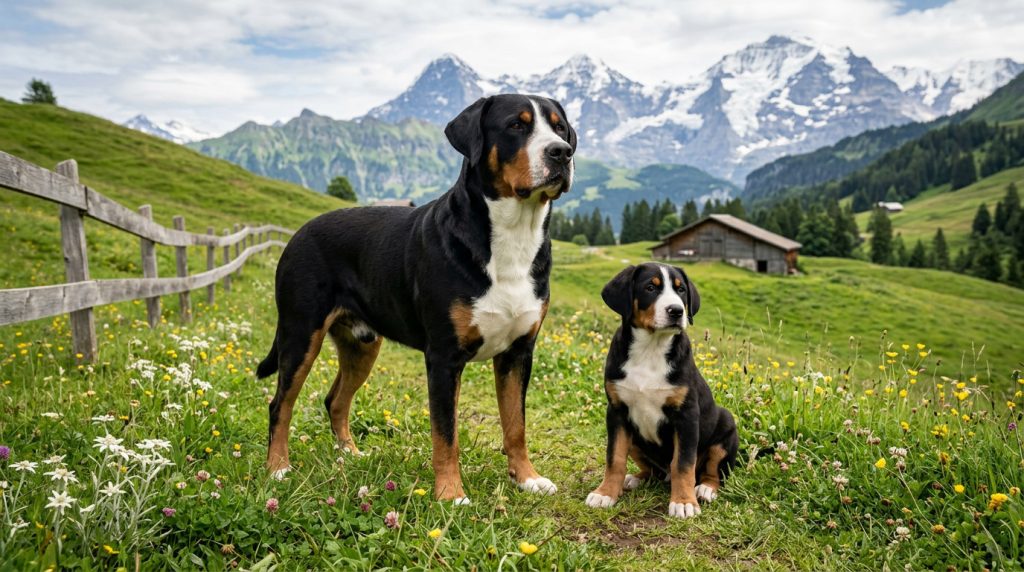
Greater Swiss Mountain Dogs are calm, powerful companions known for their steady temperament and loyal nature. Bred as versatile farm dogs in the Swiss Alps, they often combine a relaxed presence at home with a willingness to join family activities outdoors. Many owners appreciate their dependable character and the quiet confidence they bring to family life.
At a glance
Core care
- Size: Giant
- Energy: Moderate
- Grooming: Low
- Shedding: High
Support style
- Sensitivity: Moderate
- Training style: Moderate
Breed guide
Choose a section to explore. These notes describe common patterns, but individual dogs vary widely.
The Greater Swiss Mountain Dog has its roots in the Swiss Alps, where it developed as a versatile farm dog capable of handling a wide range of tasks. Farmers relied on these dogs to herd cattle, guard property, and pull heavy carts loaded with dairy products such as milk and cheese. This history of practical farm work shaped the breed’s dependable temperament and strong physical build.
Physically, the Greater Swiss Mountain Dog is a large and powerful breed with a balanced, muscular structure suited to endurance and strength. Their striking tricolour coat—black with white and rust markings—is one of the breed’s defining features. Although their coat provides some protection against harsh weather, it is relatively easy to maintain compared with many other large breeds.
Temperamentally, Swissies are often described as calm, loyal, and affectionate with their families. They tend to enjoy companionship and often prefer to remain close to the people they trust. While they are typically friendly, they may show a natural watchfulness around unfamiliar visitors, reflecting their historical role as farm guardians.
As with all breeds, individual personalities vary. Genetics, early socialisation, and life experiences all contribute to shaping behaviour. Understanding the Greater Swiss Mountain Dog’s working heritage can help owners provide the structure, exercise, and companionship that allow the breed to thrive.
Greater Swiss Mountain Dogs are often described as having a balanced social nature. They tend to be friendly and approachable, especially with those they know well. This social disposition is likely a reflection of their history as farm dogs, where they were accustomed to interacting with both humans and livestock. Owners frequently notice that their Swissy enjoys being part of the family activities, whether it’s a walk in the park or a lazy afternoon at home.
Their moderate sensitivity means that Swissies are generally adaptable to various social situations, but they can be slightly reserved around new people. This trait can be traced back to their role as watchdogs, where a level of caution was beneficial. In everyday life, this might mean that a Swissy will take a few moments to warm up to visitors but will eventually welcome them with a wagging tail and gentle curiosity.
Trainability in Greater Swiss Mountain Dogs is often described as moderate. They are intelligent and capable of learning a variety of commands, but they may not always be as eager to please as some other breeds. Consistent and positive training methods tend to work best, as Swissies respond well to encouragement and rewards. Owners often find that patience and understanding go a long way in helping their Swissy learn new behaviours.
While Swissies are generally good-natured, individual dogs can vary in their social preferences and trainability. Some may be more outgoing and eager to engage with new experiences, while others might prefer the comfort of familiar routines. Understanding these nuances helps owners build a strong relationship with their Swissy, ensuring that their unique personality is nurtured and respected.
A typical day for a Greater Swiss Mountain Dog involves a balance of moderate exercise and plenty of relaxation. While they are not as high-energy as some other working breeds, they do appreciate regular walks and opportunities to stretch their legs. A couple of daily walks, combined with some playtime in the garden, usually suffice to keep a Swissy content.
Mental enrichment is equally important for these intelligent dogs. Engaging them with puzzle toys or teaching them new tricks can be a great way to keep their minds active. Swissies often enjoy activities that mimic their historical roles, such as cart pulling or even basic agility exercises. These activities not only provide physical exercise but also tap into their natural instincts.
As Swissies age, their exercise needs may change. Puppies and young adults tend to be more energetic and may require more frequent play sessions to burn off energy. In contrast, older Swissies might prefer leisurely strolls and more time spent lounging. Owners should be attentive to their dog’s changing needs and adjust their routines accordingly.
It’s important to avoid over-exercising young Swissies, as their joints are still developing. Activities should be tailored to their age and physical condition, ensuring that they remain healthy and happy throughout their lives. By understanding and meeting their exercise and enrichment needs, owners can help their Swissy thrive in both body and mind.
Training a Greater Swiss Mountain Dog often feels like a journey of patience and mutual understanding. These dogs are intelligent and capable, but they can sometimes exhibit a stubborn streak. Owners often find that building a strong relationship based on trust and respect is key to successful training.
Positive reinforcement methods tend to work well with Swissies. They respond to praise, treats, and play, which can be used to encourage desired behaviours. Consistency is crucial, as Swissies benefit from knowing what is expected of them. Regular training sessions that are short and engaging can help maintain their interest and prevent boredom.
Adolescence can be a challenging time for Swissy owners, as these dogs may test boundaries and exhibit more independent behaviour. During this period, maintaining a consistent training routine is essential. Owners often find that patience and a calm approach help navigate this phase, ensuring that their Swissy continues to learn and grow.
The importance of a strong bond cannot be overstated. Swissies thrive on companionship and often do best when they feel connected to their family. By investing time in training and understanding their unique personality, owners can foster a rewarding relationship with their Swissy, one that is built on mutual respect and affection.
Greater Swiss Mountain Dogs tend to thrive in homes where they have space to move around. Their large size makes them better suited to houses with gardens rather than small apartments. Owners often find that a home with a secure outdoor area allows their Swissy to enjoy some freedom and fresh air, which is beneficial for their overall wellbeing.
Swissies are generally good with children, often displaying a gentle and patient nature. However, due to their size, supervision is recommended around small children to prevent accidental knocks. Many families appreciate the Swissy’s protective instincts, which can provide a sense of security.
When it comes to other pets, Swissies can coexist peacefully, especially if they are introduced to them from a young age. Their sociable nature means they often enjoy the company of other dogs, although individual personalities can vary. Early socialisation is key to ensuring harmonious relationships with other animals.
Prospective owners should consider their lifestyle and whether they can meet the needs of a Swissy. These dogs benefit from regular interaction and do best in homes where they are not left alone for long periods. Understanding these needs helps ensure that a Swissy fits well into the family dynamic, providing companionship and loyalty in return.
The health and wellbeing of a Greater Swiss Mountain Dog are closely connected to responsible breeding practices and attentive everyday care. Regular veterinary check-ups play an important role in monitoring overall health and identifying potential concerns early. Preventive healthcare, including vaccinations, parasite control, and routine examinations, supports long-term wellbeing.
Some health considerations occasionally associated with the breed include hip dysplasia and elbow dysplasia, which can affect joint mobility in larger dogs. Another condition sometimes noted in the breed is osteochondritis dissecans (OCD), a developmental joint condition that may occur during growth.
Greater Swiss Mountain Dogs may also be at risk of gastric dilatation-volvulus (bloat), a serious condition affecting deep-chested breeds. Feeding appropriate meal portions, avoiding intense exercise immediately after meals, and monitoring for unusual symptoms can help owners manage this risk.
Maintaining a healthy weight, providing appropriate exercise, and ensuring consistent veterinary care all contribute to long-term wellbeing. With attentive care and responsible breeding practices, many Greater Swiss Mountain Dogs live healthy and fulfilling lives as devoted companions.
The Greater Swiss Mountain Dog originated in the Swiss Alps, where it served as a dependable farm dog for rural communities. Farmers relied on these dogs to herd livestock, guard property, and pull heavy carts carrying goods such as milk, cheese, and agricultural supplies. Their strength, endurance, and steady temperament made them well suited to life in mountainous farming regions.
By the late nineteenth century, the breed’s numbers had declined as mechanised farming reduced the need for traditional draft dogs. However, Swiss naturalist Dr. Albert Heim recognised the historical importance of Switzerland’s mountain dog breeds and played a key role in identifying and preserving the Greater Swiss Mountain Dog during the early twentieth century.
Through dedicated breeding efforts, the population gradually stabilised, and the breed gained recognition as one of the four traditional Swiss mountain dogs. Today, the Greater Swiss Mountain Dog is appreciated both for its historic working heritage and its role as a loyal family companion.
Understanding this history helps explain the breed’s combination of strength, calmness, and loyalty that continues to define the Swissy today.
What shapes individual dogs
- Early social experiences
- Training approach
- Environment & routine
- Genetics & breeding
- Health & pain
- Age / life stage
The Greater Swiss Mountain Dog has its roots in the Swiss Alps, where it developed as a versatile farm dog capable of handling a wide range of tasks. Farmers relied on these dogs to herd cattle, guard property, and pull heavy carts loaded with dairy products such as milk and cheese. This history of practical farm work shaped the breed’s dependable temperament and strong physical build.
Physically, the Greater Swiss Mountain Dog is a large and powerful breed with a balanced, muscular structure suited to endurance and strength. Their striking tricolour coat—black with white and rust markings—is one of the breed’s defining features. Although their coat provides some protection against harsh weather, it is relatively easy to maintain compared with many other large breeds.
Temperamentally, Swissies are often described as calm, loyal, and affectionate with their families. They tend to enjoy companionship and often prefer to remain close to the people they trust. While they are typically friendly, they may show a natural watchfulness around unfamiliar visitors, reflecting their historical role as farm guardians.
As with all breeds, individual personalities vary. Genetics, early socialisation, and life experiences all contribute to shaping behaviour. Understanding the Greater Swiss Mountain Dog’s working heritage can help owners provide the structure, exercise, and companionship that allow the breed to thrive.
Greater Swiss Mountain Dogs are often described as having a balanced social nature. They tend to be friendly and approachable, especially with those they know well. This social disposition is likely a reflection of their history as farm dogs, where they were accustomed to interacting with both humans and livestock. Owners frequently notice that their Swissy enjoys being part of the family activities, whether it’s a walk in the park or a lazy afternoon at home.
Their moderate sensitivity means that Swissies are generally adaptable to various social situations, but they can be slightly reserved around new people. This trait can be traced back to their role as watchdogs, where a level of caution was beneficial. In everyday life, this might mean that a Swissy will take a few moments to warm up to visitors but will eventually welcome them with a wagging tail and gentle curiosity.
Trainability in Greater Swiss Mountain Dogs is often described as moderate. They are intelligent and capable of learning a variety of commands, but they may not always be as eager to please as some other breeds. Consistent and positive training methods tend to work best, as Swissies respond well to encouragement and rewards. Owners often find that patience and understanding go a long way in helping their Swissy learn new behaviours.
While Swissies are generally good-natured, individual dogs can vary in their social preferences and trainability. Some may be more outgoing and eager to engage with new experiences, while others might prefer the comfort of familiar routines. Understanding these nuances helps owners build a strong relationship with their Swissy, ensuring that their unique personality is nurtured and respected.
A typical day for a Greater Swiss Mountain Dog involves a balance of moderate exercise and plenty of relaxation. While they are not as high-energy as some other working breeds, they do appreciate regular walks and opportunities to stretch their legs. A couple of daily walks, combined with some playtime in the garden, usually suffice to keep a Swissy content.
Mental enrichment is equally important for these intelligent dogs. Engaging them with puzzle toys or teaching them new tricks can be a great way to keep their minds active. Swissies often enjoy activities that mimic their historical roles, such as cart pulling or even basic agility exercises. These activities not only provide physical exercise but also tap into their natural instincts.
As Swissies age, their exercise needs may change. Puppies and young adults tend to be more energetic and may require more frequent play sessions to burn off energy. In contrast, older Swissies might prefer leisurely strolls and more time spent lounging. Owners should be attentive to their dog’s changing needs and adjust their routines accordingly.
It’s important to avoid over-exercising young Swissies, as their joints are still developing. Activities should be tailored to their age and physical condition, ensuring that they remain healthy and happy throughout their lives. By understanding and meeting their exercise and enrichment needs, owners can help their Swissy thrive in both body and mind.
Training a Greater Swiss Mountain Dog often feels like a journey of patience and mutual understanding. These dogs are intelligent and capable, but they can sometimes exhibit a stubborn streak. Owners often find that building a strong relationship based on trust and respect is key to successful training.
Positive reinforcement methods tend to work well with Swissies. They respond to praise, treats, and play, which can be used to encourage desired behaviours. Consistency is crucial, as Swissies benefit from knowing what is expected of them. Regular training sessions that are short and engaging can help maintain their interest and prevent boredom.
Adolescence can be a challenging time for Swissy owners, as these dogs may test boundaries and exhibit more independent behaviour. During this period, maintaining a consistent training routine is essential. Owners often find that patience and a calm approach help navigate this phase, ensuring that their Swissy continues to learn and grow.
The importance of a strong bond cannot be overstated. Swissies thrive on companionship and often do best when they feel connected to their family. By investing time in training and understanding their unique personality, owners can foster a rewarding relationship with their Swissy, one that is built on mutual respect and affection.
Greater Swiss Mountain Dogs tend to thrive in homes where they have space to move around. Their large size makes them better suited to houses with gardens rather than small apartments. Owners often find that a home with a secure outdoor area allows their Swissy to enjoy some freedom and fresh air, which is beneficial for their overall wellbeing.
Swissies are generally good with children, often displaying a gentle and patient nature. However, due to their size, supervision is recommended around small children to prevent accidental knocks. Many families appreciate the Swissy’s protective instincts, which can provide a sense of security.
When it comes to other pets, Swissies can coexist peacefully, especially if they are introduced to them from a young age. Their sociable nature means they often enjoy the company of other dogs, although individual personalities can vary. Early socialisation is key to ensuring harmonious relationships with other animals.
Prospective owners should consider their lifestyle and whether they can meet the needs of a Swissy. These dogs benefit from regular interaction and do best in homes where they are not left alone for long periods. Understanding these needs helps ensure that a Swissy fits well into the family dynamic, providing companionship and loyalty in return.
The health and wellbeing of a Greater Swiss Mountain Dog are closely connected to responsible breeding practices and attentive everyday care. Regular veterinary check-ups play an important role in monitoring overall health and identifying potential concerns early. Preventive healthcare, including vaccinations, parasite control, and routine examinations, supports long-term wellbeing.
Some health considerations occasionally associated with the breed include hip dysplasia and elbow dysplasia, which can affect joint mobility in larger dogs. Another condition sometimes noted in the breed is osteochondritis dissecans (OCD), a developmental joint condition that may occur during growth.
Greater Swiss Mountain Dogs may also be at risk of gastric dilatation-volvulus (bloat), a serious condition affecting deep-chested breeds. Feeding appropriate meal portions, avoiding intense exercise immediately after meals, and monitoring for unusual symptoms can help owners manage this risk.
Maintaining a healthy weight, providing appropriate exercise, and ensuring consistent veterinary care all contribute to long-term wellbeing. With attentive care and responsible breeding practices, many Greater Swiss Mountain Dogs live healthy and fulfilling lives as devoted companions.
The Greater Swiss Mountain Dog originated in the Swiss Alps, where it served as a dependable farm dog for rural communities. Farmers relied on these dogs to herd livestock, guard property, and pull heavy carts carrying goods such as milk, cheese, and agricultural supplies. Their strength, endurance, and steady temperament made them well suited to life in mountainous farming regions.
By the late nineteenth century, the breed’s numbers had declined as mechanised farming reduced the need for traditional draft dogs. However, Swiss naturalist Dr. Albert Heim recognised the historical importance of Switzerland’s mountain dog breeds and played a key role in identifying and preserving the Greater Swiss Mountain Dog during the early twentieth century.
Through dedicated breeding efforts, the population gradually stabilised, and the breed gained recognition as one of the four traditional Swiss mountain dogs. Today, the Greater Swiss Mountain Dog is appreciated both for its historic working heritage and its role as a loyal family companion.
Understanding this history helps explain the breed’s combination of strength, calmness, and loyalty that continues to define the Swissy today.
What shapes individual dogs
- Early social experiences
- Training approach
- Environment & routine
- Genetics & breeding
- Health & pain
- Age / life stage
Want support with this?
This course is relevant for Greater Swiss Mountain Dog owners due to the breed's notable health considerations, helping you stay prepared.