
Anatolian Shepherd Dog
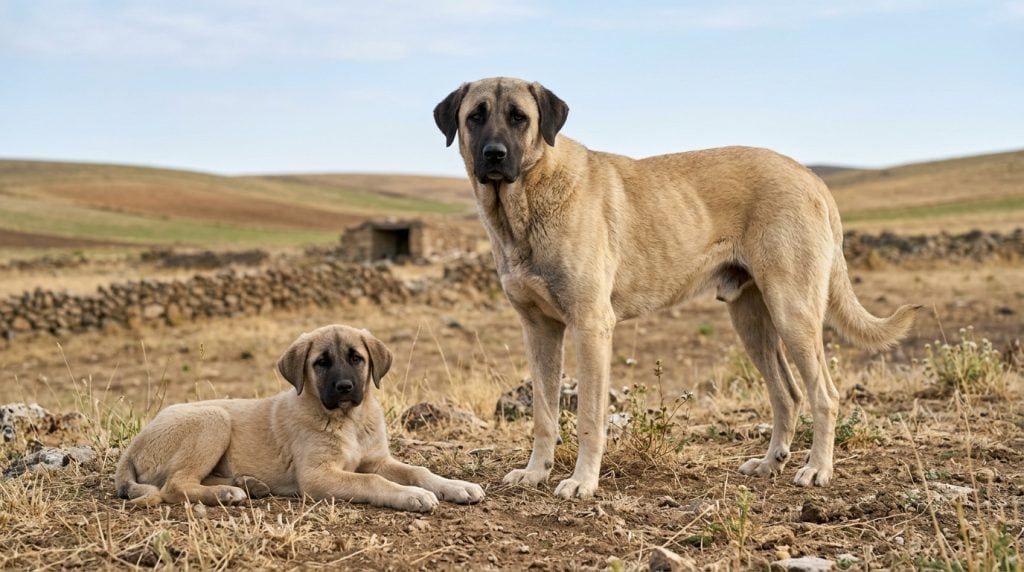
Living with an Anatolian Shepherd Dog often feels like sharing your space with a vigilant guardian. They are known for their independence and protective nature, which can be both reassuring and challenging. Owners frequently note their dog's calm presence, yet readiness to spring into action if they perceive a threat.
At a glance
Core care
- Size: Giant
- Energy: Moderate
- Grooming: Low
- Shedding: Moderate
Support style
- Sensitivity: Moderate
- Training style: Independent
Breed guide
Choose a section to explore. These notes describe common patterns, but individual dogs vary widely.
The Anatolian Shepherd Dog has a rich history as a livestock guardian, a role that has shaped its modern-day personality. Originating from the rugged terrains of Turkey, these dogs were bred to protect flocks from predators, a task demanding both independence and a strong protective instinct. This background explains their watchful nature and self-reliance, traits that are still evident in the breed today.
Physically, the Anatolian Shepherd is a giant breed, with a robust and muscular build that speaks to its working heritage. While their size can be imposing, it also means they require ample space to move comfortably. Owners often find that their Anatolian’s presence is felt throughout the home, not just because of their size, but due to their steady, observant demeanor.
Temperamentally, these dogs are known for their independence and protective instincts. Many owners notice that their Anatolian Shepherd is reserved with strangers but deeply loyal to family members. They tend to form strong bonds with those they trust, often displaying a calm and steady nature. However, individual personalities can vary, with some dogs being more aloof while others are more sociable.
Living with an Anatolian Shepherd requires understanding and respect for their unique traits. While they are not the most trainable breed due to their independent streak, they are intelligent and capable of learning. It’s important for potential owners to recognize that each dog is an individual, influenced by genetics, upbringing, and environment, which means there can be significant variation in behaviour and temperament.
Anatolian Shepherds are often described as independent and protective, traits that stem from their history as livestock guardians. Owners frequently observe their dog’s natural inclination to watch over their home and family, often choosing a vantage point from which they can monitor their surroundings. This behaviour is not just instinctual but a testament to their deep-seated role as protectors.
The breed’s social nature tends to be reserved, especially with strangers. While they may not be the most outwardly affectionate dogs, their loyalty to their family is unwavering. Many owners find that their Anatolian Shepherd is happiest when they have a clear role or job, even if that’s simply keeping an eye on the household. This sense of duty can sometimes be mistaken for aloofness, but it is more about their focus and dedication.
Sensitivity in Anatolian Shepherds is moderate, meaning they are generally stable but can be affected by changes in their environment or routine. Owners often notice that these dogs respond best to consistency and clear communication. While they may not be as eager to please as some breeds, they do appreciate a respectful and understanding approach.
Training an Anatolian Shepherd requires patience and an understanding of their independent nature. They may not respond well to traditional obedience training, preferring instead to think for themselves. This doesn’t mean they are untrainable, but rather that they thrive with a relationship-based approach that respects their intelligence and autonomy. Each dog will have its own personality, and understanding this can help in building a strong bond.
A typical day for an Anatolian Shepherd involves moderate exercise, balanced with plenty of downtime. These dogs are not high-energy, but they do need regular activity to keep them healthy and content. A couple of walks each day, combined with some time to roam in a secure area, usually suffices for their physical needs.
Mental enrichment is equally important for this breed. Given their history as working dogs, Anatolian Shepherds benefit from activities that engage their minds. Puzzle toys, scent games, or even basic obedience tasks can provide the mental stimulation they need. Owners often find that these activities help to channel their dog’s natural instincts in a positive way.
While exercise is important, it’s equally crucial to avoid overexertion, especially in young dogs whose joints are still developing. As they age, their exercise needs may change, with older dogs often preferring shorter, more frequent outings. Understanding these changes can help owners provide the best care throughout their dog’s life.
It’s important to note that while Anatolian Shepherds enjoy their exercise, they also value their rest. They are not the type to demand constant activity, often preferring to relax and watch over their domain. This balance of activity and rest is essential to their wellbeing, and owners should be prepared to accommodate both.
Training an Anatolian Shepherd often feels like a partnership rather than a command-and-obey relationship. These dogs are intelligent and independent, which means they require a training approach that respects their autonomy while still providing clear guidance. Owners often find that positive reinforcement, combined with patience, yields the best results.
Given their independent nature, Anatolian Shepherds may not always respond immediately to commands. It’s important for owners to remain consistent and patient, understanding that these dogs often need to see the value in what they are being asked to do. Building a strong relationship based on trust and respect is key to successful training.
Adolescence can be a challenging time for this breed, as their natural instincts and independence become more pronounced. Owners may notice an increase in stubbornness or selective hearing during this phase. Consistent training and reinforcement of boundaries are crucial during this period to help guide them into well-adjusted adults.
Ultimately, training an Anatolian Shepherd is about understanding their unique traits and working with them rather than against them. Owners who embrace this approach often find that their dog is not only capable of learning but also enjoys the process. The bond that develops through this mutual understanding can be incredibly rewarding.
Anatolian Shepherds tend to thrive in environments where they have space to move and a job to do. They are well-suited to homes with large, secure gardens or rural settings where they can express their natural guarding instincts. Owners often find that these dogs are happiest when they have a clear role, even if it’s simply watching over the household.
While they can adapt to family life, Anatolian Shepherds are not typically known for being overly playful or affectionate with children. However, they can coexist peacefully with kids if properly socialised and introduced. It’s important for families to teach children how to interact respectfully with these dogs, recognising their need for space and independence.
When it comes to other pets, Anatolian Shepherds may exhibit their protective instincts, which can sometimes lead to challenges. Early socialisation and careful introductions are key to fostering harmonious relationships with other animals. Each dog is different, and while some may live peacefully with other pets, others may prefer to be the sole animal in the household.
Ultimately, living with an Anatolian Shepherd requires an understanding of their unique needs and traits. They are not the type of dog to thrive in a small apartment or with owners who are away for long periods. Instead, they do best in homes that can accommodate their size, independence, and guarding nature.
The health of an Anatolian Shepherd is closely linked to their overall wellbeing and quality of life. Like all breeds, they have specific health considerations that owners should be aware of. Regular veterinary check-ups and preventive care are essential to keep them healthy and happy.
Common health issues in Anatolian Shepherds include hip dysplasia and elbow dysplasia, conditions that can affect their mobility and comfort. Owners often find that maintaining a healthy weight and providing appropriate exercise can help manage these conditions. Regular check-ups with a vet can also catch early signs of joint issues.
Another consideration is their susceptibility to certain skin conditions, which can be managed with proper grooming and diet. Owners should be vigilant for any signs of irritation or infection, particularly if their dog spends a lot of time outdoors. Regular grooming not only keeps their coat healthy but also provides an opportunity to check for any skin issues.
In terms of behaviour, health can impact an Anatolian Shepherd’s temperament. Pain or discomfort can lead to changes in behaviour, so it’s important for owners to be observant and proactive in addressing any health concerns. A practical approach to health care, combined with a good relationship with a veterinarian, can help ensure a long and healthy life for these dogs.
The Anatolian Shepherd Dog has a storied history that dates back thousands of years, originating in the rugged landscapes of Turkey. These dogs were bred to guard livestock against predators, a role that required them to be independent, strong, and vigilant. This ancient purpose has left a lasting imprint on the breed, shaping their modern-day characteristics.
Historically, Anatolian Shepherds were valued for their ability to work autonomously, making decisions without human intervention. This independence was crucial for their role as guardians, as they often had to protect flocks over large areas. Their ability to think and act on their own is a trait that continues to define the breed today.
The breed’s development was influenced by the harsh conditions of their native environment, which required them to be hardy and resilient. They were bred to withstand extreme temperatures and to be capable of working long hours, traits that are still evident in their robust physical build and endurance.
Understanding the Anatolian Shepherd’s history helps explain many of their modern traits, such as their protective nature and independence. These dogs are not just pets but partners, with a deep-rooted instinct to guard and protect. This historical context is essential for owners to appreciate the breed’s unique characteristics and to provide the environment and respect they need to thrive.
What shapes individual dogs
- Early social experiences
- Training approach
- Environment & routine
- Genetics & breeding
- Health & pain
- Age / life stage
The Anatolian Shepherd Dog has a rich history as a livestock guardian, a role that has shaped its modern-day personality. Originating from the rugged terrains of Turkey, these dogs were bred to protect flocks from predators, a task demanding both independence and a strong protective instinct. This background explains their watchful nature and self-reliance, traits that are still evident in the breed today.
Physically, the Anatolian Shepherd is a giant breed, with a robust and muscular build that speaks to its working heritage. While their size can be imposing, it also means they require ample space to move comfortably. Owners often find that their Anatolian’s presence is felt throughout the home, not just because of their size, but due to their steady, observant demeanor.
Temperamentally, these dogs are known for their independence and protective instincts. Many owners notice that their Anatolian Shepherd is reserved with strangers but deeply loyal to family members. They tend to form strong bonds with those they trust, often displaying a calm and steady nature. However, individual personalities can vary, with some dogs being more aloof while others are more sociable.
Living with an Anatolian Shepherd requires understanding and respect for their unique traits. While they are not the most trainable breed due to their independent streak, they are intelligent and capable of learning. It’s important for potential owners to recognize that each dog is an individual, influenced by genetics, upbringing, and environment, which means there can be significant variation in behaviour and temperament.
Anatolian Shepherds are often described as independent and protective, traits that stem from their history as livestock guardians. Owners frequently observe their dog’s natural inclination to watch over their home and family, often choosing a vantage point from which they can monitor their surroundings. This behaviour is not just instinctual but a testament to their deep-seated role as protectors.
The breed’s social nature tends to be reserved, especially with strangers. While they may not be the most outwardly affectionate dogs, their loyalty to their family is unwavering. Many owners find that their Anatolian Shepherd is happiest when they have a clear role or job, even if that’s simply keeping an eye on the household. This sense of duty can sometimes be mistaken for aloofness, but it is more about their focus and dedication.
Sensitivity in Anatolian Shepherds is moderate, meaning they are generally stable but can be affected by changes in their environment or routine. Owners often notice that these dogs respond best to consistency and clear communication. While they may not be as eager to please as some breeds, they do appreciate a respectful and understanding approach.
Training an Anatolian Shepherd requires patience and an understanding of their independent nature. They may not respond well to traditional obedience training, preferring instead to think for themselves. This doesn’t mean they are untrainable, but rather that they thrive with a relationship-based approach that respects their intelligence and autonomy. Each dog will have its own personality, and understanding this can help in building a strong bond.
A typical day for an Anatolian Shepherd involves moderate exercise, balanced with plenty of downtime. These dogs are not high-energy, but they do need regular activity to keep them healthy and content. A couple of walks each day, combined with some time to roam in a secure area, usually suffices for their physical needs.
Mental enrichment is equally important for this breed. Given their history as working dogs, Anatolian Shepherds benefit from activities that engage their minds. Puzzle toys, scent games, or even basic obedience tasks can provide the mental stimulation they need. Owners often find that these activities help to channel their dog’s natural instincts in a positive way.
While exercise is important, it’s equally crucial to avoid overexertion, especially in young dogs whose joints are still developing. As they age, their exercise needs may change, with older dogs often preferring shorter, more frequent outings. Understanding these changes can help owners provide the best care throughout their dog’s life.
It’s important to note that while Anatolian Shepherds enjoy their exercise, they also value their rest. They are not the type to demand constant activity, often preferring to relax and watch over their domain. This balance of activity and rest is essential to their wellbeing, and owners should be prepared to accommodate both.
Training an Anatolian Shepherd often feels like a partnership rather than a command-and-obey relationship. These dogs are intelligent and independent, which means they require a training approach that respects their autonomy while still providing clear guidance. Owners often find that positive reinforcement, combined with patience, yields the best results.
Given their independent nature, Anatolian Shepherds may not always respond immediately to commands. It’s important for owners to remain consistent and patient, understanding that these dogs often need to see the value in what they are being asked to do. Building a strong relationship based on trust and respect is key to successful training.
Adolescence can be a challenging time for this breed, as their natural instincts and independence become more pronounced. Owners may notice an increase in stubbornness or selective hearing during this phase. Consistent training and reinforcement of boundaries are crucial during this period to help guide them into well-adjusted adults.
Ultimately, training an Anatolian Shepherd is about understanding their unique traits and working with them rather than against them. Owners who embrace this approach often find that their dog is not only capable of learning but also enjoys the process. The bond that develops through this mutual understanding can be incredibly rewarding.
Anatolian Shepherds tend to thrive in environments where they have space to move and a job to do. They are well-suited to homes with large, secure gardens or rural settings where they can express their natural guarding instincts. Owners often find that these dogs are happiest when they have a clear role, even if it’s simply watching over the household.
While they can adapt to family life, Anatolian Shepherds are not typically known for being overly playful or affectionate with children. However, they can coexist peacefully with kids if properly socialised and introduced. It’s important for families to teach children how to interact respectfully with these dogs, recognising their need for space and independence.
When it comes to other pets, Anatolian Shepherds may exhibit their protective instincts, which can sometimes lead to challenges. Early socialisation and careful introductions are key to fostering harmonious relationships with other animals. Each dog is different, and while some may live peacefully with other pets, others may prefer to be the sole animal in the household.
Ultimately, living with an Anatolian Shepherd requires an understanding of their unique needs and traits. They are not the type of dog to thrive in a small apartment or with owners who are away for long periods. Instead, they do best in homes that can accommodate their size, independence, and guarding nature.
The health of an Anatolian Shepherd is closely linked to their overall wellbeing and quality of life. Like all breeds, they have specific health considerations that owners should be aware of. Regular veterinary check-ups and preventive care are essential to keep them healthy and happy.
Common health issues in Anatolian Shepherds include hip dysplasia and elbow dysplasia, conditions that can affect their mobility and comfort. Owners often find that maintaining a healthy weight and providing appropriate exercise can help manage these conditions. Regular check-ups with a vet can also catch early signs of joint issues.
Another consideration is their susceptibility to certain skin conditions, which can be managed with proper grooming and diet. Owners should be vigilant for any signs of irritation or infection, particularly if their dog spends a lot of time outdoors. Regular grooming not only keeps their coat healthy but also provides an opportunity to check for any skin issues.
In terms of behaviour, health can impact an Anatolian Shepherd’s temperament. Pain or discomfort can lead to changes in behaviour, so it’s important for owners to be observant and proactive in addressing any health concerns. A practical approach to health care, combined with a good relationship with a veterinarian, can help ensure a long and healthy life for these dogs.
The Anatolian Shepherd Dog has a storied history that dates back thousands of years, originating in the rugged landscapes of Turkey. These dogs were bred to guard livestock against predators, a role that required them to be independent, strong, and vigilant. This ancient purpose has left a lasting imprint on the breed, shaping their modern-day characteristics.
Historically, Anatolian Shepherds were valued for their ability to work autonomously, making decisions without human intervention. This independence was crucial for their role as guardians, as they often had to protect flocks over large areas. Their ability to think and act on their own is a trait that continues to define the breed today.
The breed’s development was influenced by the harsh conditions of their native environment, which required them to be hardy and resilient. They were bred to withstand extreme temperatures and to be capable of working long hours, traits that are still evident in their robust physical build and endurance.
Understanding the Anatolian Shepherd’s history helps explain many of their modern traits, such as their protective nature and independence. These dogs are not just pets but partners, with a deep-rooted instinct to guard and protect. This historical context is essential for owners to appreciate the breed’s unique characteristics and to provide the environment and respect they need to thrive.
What shapes individual dogs
- Early social experiences
- Training approach
- Environment & routine
- Genetics & breeding
- Health & pain
- Age / life stage
Want support with this?
This course is ideal for owners looking to deepen their understanding of the Anatolian Shepherd's independent and protective nature.