
Wirehaired Pointing Griffon
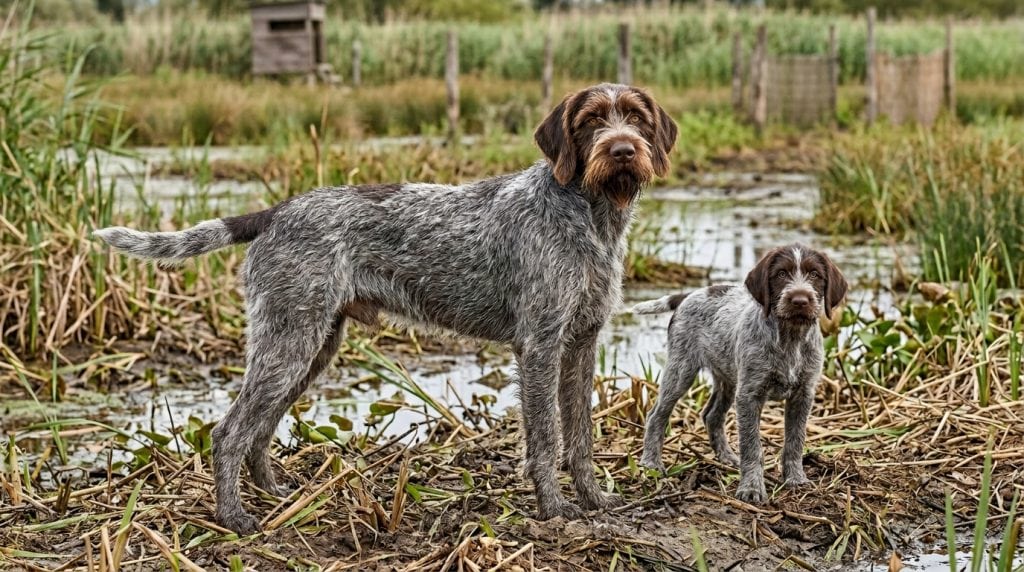
Living with a Wirehaired Pointing Griffon often means sharing your space with a dog that thrives on activity and companionship. Their keen intelligence and lively spirit make them engaging companions, always ready for the next adventure. These dogs often form strong bonds with their families, showing a blend of loyalty and enthusiasm that is both endearing and energising.
At a glance
Core care
- Size: Medium
- Energy: High
- Grooming: Low
- Shedding: Low
Support style
- Sensitivity: Moderate
- Training style: Willing
Breed guide
Choose a section to explore. These notes describe common patterns, but individual dogs vary widely.
The Wirehaired Pointing Griffon has roots deeply embedded in the world of hunting, specifically bred for pointing and retrieving game. This background contributes to their keen sense of smell and strong work ethic, traits that are still evident in their behaviour today. Owners often find that their Griffon displays a natural curiosity and a desire to be active, reflecting their heritage as versatile gundogs.
Physically, the Wirehaired Pointing Griffon is a medium-sized dog with a distinctive rough coat that serves as protection against the elements. This coat, combined with their athletic build, makes them well-suited for outdoor activities. In everyday life, this means they can handle a variety of weather conditions and terrains, making them excellent companions for those who enjoy hiking or long walks in nature.
Temperamentally, these dogs are known for their friendly and outgoing nature. They tend to be sociable with both people and other animals, though individual personalities can vary. Some may be more reserved, while others are exuberantly friendly. Owners often notice their Griffon’s eagerness to please and their responsive nature, which can make training a rewarding experience.
While the breed has many consistent traits, it’s important to remember that individual dogs can differ greatly. Factors such as genetics, upbringing, and environment all play a role in shaping a dog’s personality and behaviour. Prospective owners should consider these elements and be prepared for the unique quirks and characteristics their Griffon may display.
Wirehaired Pointing Griffons are often described as having a social and engaging nature. This breed tends to enjoy being around people and can form strong bonds with their families. Their social motivations are rooted in their history as hunting companions, where cooperation and communication were essential. In a home setting, this often translates to a dog that enjoys participating in family activities and being included in daily routines.
Owners typically notice that their Griffon is eager to interact and can be quite playful. Their moderate sensitivity means they are generally attuned to their owner’s moods and can be quite responsive to gentle guidance. This sensitivity, combined with their willingness to learn, often makes them receptive to training and eager to please, though they may occasionally require patience and consistency.
The breed’s trainability is enhanced by their natural curiosity and intelligence. Many owners find that their Griffon enjoys problem-solving games and activities that challenge their mind. This cognitive engagement is just as important as physical exercise, as it helps keep the dog mentally stimulated and content.
Despite their generally friendly disposition, individual Griffons can vary in their social preferences. Some may be more reserved around strangers or new situations, while others are more outgoing. Understanding and respecting these individual differences is key to fostering a positive relationship with your Griffon, ensuring they feel secure and confident in their environment.
A typical day for a Wirehaired Pointing Griffon involves plenty of physical activity and mental stimulation. These dogs have high energy levels and thrive on regular exercise, which might include long walks, runs, or play sessions in a secure area. Owners often find that incorporating variety into their exercise routine helps keep their Griffon engaged and satisfied.
In addition to physical exercise, mental enrichment is crucial for this intelligent breed. Activities such as scent work, puzzle toys, and training sessions can provide the mental challenges they need. These activities tap into their natural instincts and help prevent boredom, which can lead to unwanted behaviours.
As Griffons age, their exercise needs may change. While young dogs might require more vigorous activities, older Griffons might appreciate gentler walks and more relaxed play. It’s important for owners to adjust their routines to accommodate their dog’s changing needs, ensuring they remain healthy and happy throughout their life.
Owners should be mindful of not over-exercising young puppies, as their developing joints can be sensitive to excessive strain. Gradually increasing the intensity and duration of exercise as the dog matures is a good approach. By understanding and adapting to their Griffon’s exercise needs, owners can help ensure their dog remains fit and content.
Training a Wirehaired Pointing Griffon often feels like a collaborative effort, as these dogs are typically eager to learn and please. Their willingness to engage makes them responsive to positive reinforcement techniques, where rewards and praise are used to encourage desired behaviours. Many owners find that consistency and patience are key to successful training sessions.
Impulse control can sometimes be a challenge, especially for young Griffons who are naturally curious and enthusiastic. Teaching basic commands like ‘sit’, ‘stay’, and ‘leave it’ can help manage their impulses and improve their focus. Regular training sessions, even if brief, can reinforce these skills and help the dog develop good habits.
Adolescence can be a particularly challenging time, as Griffons may test boundaries and exhibit more independent behaviour. During this phase, maintaining a consistent routine and continuing with training can help guide them through this developmental stage. Building a strong relationship based on trust and mutual respect is crucial during this time.
Overall, training a Griffon is often a rewarding experience, as their intelligence and eagerness to please make them quick learners. By fostering a positive and supportive training environment, owners can help their Griffon develop into a well-behaved and confident companion.
The Wirehaired Pointing Griffon tends to thrive in environments where they can be active and involved in family life. Homes with access to outdoor spaces, such as gardens or nearby parks, are often well-suited to their energetic nature. These dogs enjoy being part of the action and can adapt to various living situations, provided their exercise and social needs are met.
Owners often find that their Griffon fits well into family life, as they tend to be good with children and other pets. Their friendly disposition and playful nature can make them great companions for kids, though supervision is always recommended to ensure positive interactions. With other pets, early socialisation can help foster harmonious relationships.
While they are adaptable, Griffons do best in homes where they are not left alone for extended periods. Their social nature means they appreciate company and can become bored or anxious if left to their own devices for too long. Owners who work from home or have flexible schedules often find this breed a good match.
Ultimately, the key to a successful home fit is understanding and meeting the Griffon’s needs for companionship, exercise, and mental stimulation. By doing so, owners can enjoy a fulfilling relationship with their dog, enriched by the unique personality and charm that this breed brings.
Maintaining the health of a Wirehaired Pointing Griffon is crucial for their overall wellbeing and happiness. Regular veterinary check-ups and preventive care can help catch potential issues early and ensure the dog remains healthy. This breed is generally robust, but like all dogs, they can be prone to certain health conditions.
Common health considerations for Griffons include hip dysplasia and eye conditions. Regular screenings and a healthy diet can help manage these risks. Owners should also be aware of signs of discomfort or changes in behaviour, which can indicate underlying health issues.
Preventive care, such as vaccinations and parasite control, is essential for keeping the Griffon healthy. Regular dental care is also important, as dental issues can affect overall health. Providing a balanced diet and regular exercise supports their physical health and contributes to a longer, healthier life.
If owners notice any unusual symptoms or behavioural changes, seeking veterinary advice is always recommended. Early intervention can often prevent minor issues from becoming more serious. By staying informed and proactive about their dog’s health, owners can help ensure their Griffon leads a happy and active life.
The Wirehaired Pointing Griffon has a rich history that dates back to the late 19th century, when a Dutchman named Eduard Karel Korthals set out to create the ideal hunting dog. His goal was to develop a versatile gundog that could work across various terrains and conditions, combining the skills of pointing and retrieving. This ambition led to the creation of the Griffon, a breed that quickly gained popularity among hunters for its adaptability and keen senses.
Korthals meticulously selected breeds such as the German Griffon, Spaniels, and Setters to achieve the desired traits. The result was a dog with a distinctive rough coat, designed to protect against harsh weather, and a strong, athletic build suited for endurance. This history of careful breeding is reflected in the modern Griffon’s ability to excel in various activities, from field trials to companionship.
Throughout its development, the Wirehaired Pointing Griffon maintained its reputation as a reliable and versatile hunting partner. Its ability to work closely with humans and its trainable nature made it a favourite among hunters across Europe and eventually in North America. This legacy of cooperation and versatility continues to influence the breed’s behaviour today.
Understanding the Griffon’s history helps explain many of its modern traits, such as its energetic nature and strong desire to be part of a team. These dogs are not just remnants of their past but active participants in family life, bringing with them a blend of historical purpose and contemporary companionship.
What shapes individual dogs
- Early social experiences
- Training approach
- Environment & routine
- Genetics & breeding
- Health & pain
- Age / life stage
The Wirehaired Pointing Griffon has roots deeply embedded in the world of hunting, specifically bred for pointing and retrieving game. This background contributes to their keen sense of smell and strong work ethic, traits that are still evident in their behaviour today. Owners often find that their Griffon displays a natural curiosity and a desire to be active, reflecting their heritage as versatile gundogs.
Physically, the Wirehaired Pointing Griffon is a medium-sized dog with a distinctive rough coat that serves as protection against the elements. This coat, combined with their athletic build, makes them well-suited for outdoor activities. In everyday life, this means they can handle a variety of weather conditions and terrains, making them excellent companions for those who enjoy hiking or long walks in nature.
Temperamentally, these dogs are known for their friendly and outgoing nature. They tend to be sociable with both people and other animals, though individual personalities can vary. Some may be more reserved, while others are exuberantly friendly. Owners often notice their Griffon’s eagerness to please and their responsive nature, which can make training a rewarding experience.
While the breed has many consistent traits, it’s important to remember that individual dogs can differ greatly. Factors such as genetics, upbringing, and environment all play a role in shaping a dog’s personality and behaviour. Prospective owners should consider these elements and be prepared for the unique quirks and characteristics their Griffon may display.
Wirehaired Pointing Griffons are often described as having a social and engaging nature. This breed tends to enjoy being around people and can form strong bonds with their families. Their social motivations are rooted in their history as hunting companions, where cooperation and communication were essential. In a home setting, this often translates to a dog that enjoys participating in family activities and being included in daily routines.
Owners typically notice that their Griffon is eager to interact and can be quite playful. Their moderate sensitivity means they are generally attuned to their owner’s moods and can be quite responsive to gentle guidance. This sensitivity, combined with their willingness to learn, often makes them receptive to training and eager to please, though they may occasionally require patience and consistency.
The breed’s trainability is enhanced by their natural curiosity and intelligence. Many owners find that their Griffon enjoys problem-solving games and activities that challenge their mind. This cognitive engagement is just as important as physical exercise, as it helps keep the dog mentally stimulated and content.
Despite their generally friendly disposition, individual Griffons can vary in their social preferences. Some may be more reserved around strangers or new situations, while others are more outgoing. Understanding and respecting these individual differences is key to fostering a positive relationship with your Griffon, ensuring they feel secure and confident in their environment.
A typical day for a Wirehaired Pointing Griffon involves plenty of physical activity and mental stimulation. These dogs have high energy levels and thrive on regular exercise, which might include long walks, runs, or play sessions in a secure area. Owners often find that incorporating variety into their exercise routine helps keep their Griffon engaged and satisfied.
In addition to physical exercise, mental enrichment is crucial for this intelligent breed. Activities such as scent work, puzzle toys, and training sessions can provide the mental challenges they need. These activities tap into their natural instincts and help prevent boredom, which can lead to unwanted behaviours.
As Griffons age, their exercise needs may change. While young dogs might require more vigorous activities, older Griffons might appreciate gentler walks and more relaxed play. It’s important for owners to adjust their routines to accommodate their dog’s changing needs, ensuring they remain healthy and happy throughout their life.
Owners should be mindful of not over-exercising young puppies, as their developing joints can be sensitive to excessive strain. Gradually increasing the intensity and duration of exercise as the dog matures is a good approach. By understanding and adapting to their Griffon’s exercise needs, owners can help ensure their dog remains fit and content.
Training a Wirehaired Pointing Griffon often feels like a collaborative effort, as these dogs are typically eager to learn and please. Their willingness to engage makes them responsive to positive reinforcement techniques, where rewards and praise are used to encourage desired behaviours. Many owners find that consistency and patience are key to successful training sessions.
Impulse control can sometimes be a challenge, especially for young Griffons who are naturally curious and enthusiastic. Teaching basic commands like ‘sit’, ‘stay’, and ‘leave it’ can help manage their impulses and improve their focus. Regular training sessions, even if brief, can reinforce these skills and help the dog develop good habits.
Adolescence can be a particularly challenging time, as Griffons may test boundaries and exhibit more independent behaviour. During this phase, maintaining a consistent routine and continuing with training can help guide them through this developmental stage. Building a strong relationship based on trust and mutual respect is crucial during this time.
Overall, training a Griffon is often a rewarding experience, as their intelligence and eagerness to please make them quick learners. By fostering a positive and supportive training environment, owners can help their Griffon develop into a well-behaved and confident companion.
The Wirehaired Pointing Griffon tends to thrive in environments where they can be active and involved in family life. Homes with access to outdoor spaces, such as gardens or nearby parks, are often well-suited to their energetic nature. These dogs enjoy being part of the action and can adapt to various living situations, provided their exercise and social needs are met.
Owners often find that their Griffon fits well into family life, as they tend to be good with children and other pets. Their friendly disposition and playful nature can make them great companions for kids, though supervision is always recommended to ensure positive interactions. With other pets, early socialisation can help foster harmonious relationships.
While they are adaptable, Griffons do best in homes where they are not left alone for extended periods. Their social nature means they appreciate company and can become bored or anxious if left to their own devices for too long. Owners who work from home or have flexible schedules often find this breed a good match.
Ultimately, the key to a successful home fit is understanding and meeting the Griffon’s needs for companionship, exercise, and mental stimulation. By doing so, owners can enjoy a fulfilling relationship with their dog, enriched by the unique personality and charm that this breed brings.
Maintaining the health of a Wirehaired Pointing Griffon is crucial for their overall wellbeing and happiness. Regular veterinary check-ups and preventive care can help catch potential issues early and ensure the dog remains healthy. This breed is generally robust, but like all dogs, they can be prone to certain health conditions.
Common health considerations for Griffons include hip dysplasia and eye conditions. Regular screenings and a healthy diet can help manage these risks. Owners should also be aware of signs of discomfort or changes in behaviour, which can indicate underlying health issues.
Preventive care, such as vaccinations and parasite control, is essential for keeping the Griffon healthy. Regular dental care is also important, as dental issues can affect overall health. Providing a balanced diet and regular exercise supports their physical health and contributes to a longer, healthier life.
If owners notice any unusual symptoms or behavioural changes, seeking veterinary advice is always recommended. Early intervention can often prevent minor issues from becoming more serious. By staying informed and proactive about their dog’s health, owners can help ensure their Griffon leads a happy and active life.
The Wirehaired Pointing Griffon has a rich history that dates back to the late 19th century, when a Dutchman named Eduard Karel Korthals set out to create the ideal hunting dog. His goal was to develop a versatile gundog that could work across various terrains and conditions, combining the skills of pointing and retrieving. This ambition led to the creation of the Griffon, a breed that quickly gained popularity among hunters for its adaptability and keen senses.
Korthals meticulously selected breeds such as the German Griffon, Spaniels, and Setters to achieve the desired traits. The result was a dog with a distinctive rough coat, designed to protect against harsh weather, and a strong, athletic build suited for endurance. This history of careful breeding is reflected in the modern Griffon’s ability to excel in various activities, from field trials to companionship.
Throughout its development, the Wirehaired Pointing Griffon maintained its reputation as a reliable and versatile hunting partner. Its ability to work closely with humans and its trainable nature made it a favourite among hunters across Europe and eventually in North America. This legacy of cooperation and versatility continues to influence the breed’s behaviour today.
Understanding the Griffon’s history helps explain many of its modern traits, such as its energetic nature and strong desire to be part of a team. These dogs are not just remnants of their past but active participants in family life, bringing with them a blend of historical purpose and contemporary companionship.
What shapes individual dogs
- Early social experiences
- Training approach
- Environment & routine
- Genetics & breeding
- Health & pain
- Age / life stage
Want support with this?
This course is helpful for understanding the nuanced behaviour and social nature of the Wirehaired Pointing Griffon.