
Komondor
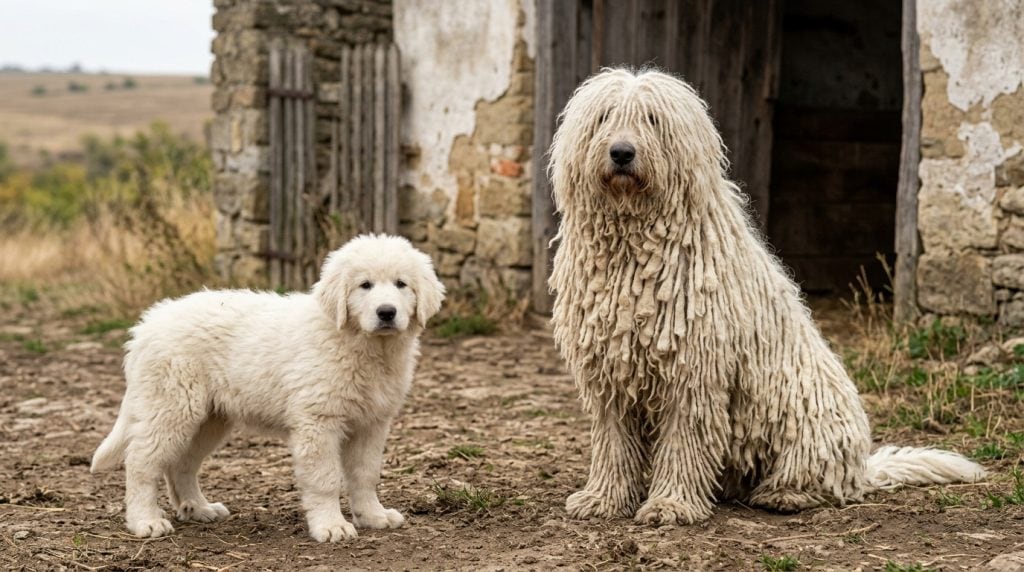
Living with a Komondor is like having a steadfast guardian with a unique appearance. Their distinctive corded coat often draws attention, but it's their calm, watchful nature that truly stands out. Many owners find that these dogs are both independent and deeply loyal, often keeping a close eye on their surroundings while maintaining a reserved demeanour.
At a glance
Core care
- Size: Large
- Energy: Moderate
- Grooming: Low
- Shedding: Low
Support style
- Sensitivity: Moderate
- Training style: Independent
Breed guide
Choose a section to explore. These notes describe common patterns, but individual dogs vary widely.
The Komondor’s history as a livestock guardian in Hungary is deeply embedded in its character today. Originally bred to protect flocks from predators, this breed developed a strong sense of independence and vigilance. These traits remain evident in modern Komondors, who often take on the role of family protector, watching over their human ‘flock’ with a calm, steady presence.
Physically, the Komondor is unmistakable, thanks to its long, corded coat that resembles a mop. This coat isn’t just for show; it served a practical purpose in its native Hungary, providing protection from harsh weather and predators. In everyday life, this means owners need to be prepared for regular grooming to maintain those cords, which can be time-consuming but is essential for the dog’s comfort and health.
Temperamentally, Komondors are known for their loyalty and protective instincts. They may be reserved with strangers, which is a reflection of their guardian heritage, but they are typically affectionate with their family. Owners often notice that their Komondor prefers to observe rather than engage in boisterous play, though they can be playful and gentle with those they trust. This breed’s moderate sensitivity means they respond best to calm, consistent interactions.
While the Komondor’s traits are rooted in its history, individual dogs can vary significantly. Some may be more outgoing, while others might be particularly reserved. It’s important for potential owners to understand that while breed tendencies provide a general framework, each Komondor will have its own unique personality shaped by genetics, upbringing, and environment.
Komondors are often described as independent yet deeply loyal, a combination that reflects their heritage as livestock guardians. This independent streak can sometimes be mistaken for aloofness, but many owners find that their Komondor is simply selective about where they direct their attention and affection. They tend to form strong bonds with their family and can be quite protective, making them vigilant watchdogs.
Their protective nature often means they are reserved around strangers, preferring to observe before engaging. This behaviour is rooted in their historical role of assessing potential threats to their flock. In a home setting, this might translate to a Komondor who is watchful and alert when visitors arrive, often taking their time to warm up to new people.
Despite their independent nature, Komondors can be sensitive to their environment and the emotions of their family members. Owners often notice that these dogs are attuned to changes in mood or routine, which can influence their behaviour. This sensitivity, combined with their strong-willed nature, means that training should be approached with patience and consistency.
Training a Komondor requires understanding their unique temperament. While they are intelligent, their independent mindset can make them appear stubborn at times. Positive reinforcement and clear, consistent boundaries help in managing their behaviour. It’s important to remember that each Komondor is an individual, and while they share common breed traits, their personalities can vary widely.
A typical day for a Komondor involves moderate exercise, as they are not as high-energy as some other herding breeds. Daily walks and some playtime in a secure area usually suffice to keep them physically satisfied. Despite their size, they are not overly demanding in terms of physical activity, but they do appreciate having a job or purpose, even if it’s just accompanying their owner around the house or garden.
Mental enrichment is equally important for Komondors. Puzzle toys, scent games, and interactive play can help keep their minds engaged. Given their history as working dogs, they enjoy activities that challenge their problem-solving skills. Owners might find that their Komondor enjoys tasks that mimic their guardian instincts, such as watching over a yard or participating in training exercises that require focus and decision-making.
As Komondors age, their exercise needs may decrease, but mental stimulation remains crucial. Older dogs might enjoy gentler activities, such as leisurely walks or simple scent games. It’s important to adjust their routine to match their energy levels and physical capabilities while still offering opportunities for mental engagement.
Owners should be mindful of avoiding overly strenuous activities, especially in hot weather, as the Komondor’s thick coat can make them susceptible to overheating. Regular, moderate exercise combined with mental challenges helps keep a Komondor healthy and content throughout their life stages.
Training a Komondor can sometimes feel like negotiating with a wise old soul. Their independent nature means they often like to think for themselves, which can be both a challenge and a delight. Owners often find that these dogs respond best to training methods that respect their intelligence and independence, using positive reinforcement to encourage desired behaviours.
Consistency is key when training a Komondor. They benefit from clear boundaries and routine, which help them understand what is expected. While they might not always be eager to please in the same way as some breeds, they are capable learners who can excel when training is approached with patience and understanding.
Adolescence can be a particularly challenging time for Komondors, as their independent streak may become more pronounced. During this stage, maintaining a strong, positive relationship is crucial. Building trust through consistent, fair training helps them navigate this period and emerge as well-adjusted adults.
For those new to the breed, or even experienced dog owners, understanding the Komondor’s unique training needs can be greatly aided by courses like “Understand Your Dog: Dog Psychology for Beginners.” This course can provide insights into how to effectively communicate with and train a Komondor, fostering a harmonious relationship built on mutual respect.
The Komondor can adapt to various living environments, but they tend to thrive in homes where they have space to roam and a job to do. A secure, spacious garden can provide them with the opportunity to patrol and watch over their territory, which aligns with their guardian instincts. They are generally not suited to apartment living due to their size and need for space.
Families with children often find that Komondors can be gentle and protective companions. Their calm nature means they are not typically boisterous, but they do require supervision around young children to ensure interactions are positive. Their protective instincts can extend to children, making them watchful over their young family members.
When it comes to other pets, early socialisation is key. Komondors can coexist peacefully with other animals if introduced properly and given time to adjust. Their natural guarding instincts might mean they are initially wary, but with patience and positive reinforcement, they often learn to accept other pets as part of their ‘flock.’
Prospective owners should consider their lifestyle and whether they can meet the Komondor’s needs for space, grooming, and companionship. While they are independent, they do enjoy being part of family activities and will thrive in a home where they feel included and valued.
A Komondor’s health is closely tied to their overall wellbeing, and maintaining good health is essential for their quality of life. Regular veterinary check-ups are important to monitor for any breed-specific health concerns and to ensure they remain in good condition. Common health issues in Komondors can include hip dysplasia and certain eye conditions, so early detection and management are crucial.
Owners often notice that a healthy Komondor is more active and engaged, reflecting their wellbeing through their behaviour. Preventive care, such as regular exercise, a balanced diet, and maintaining a healthy weight, contributes significantly to their overall health. It’s also important to keep their coat clean and well-maintained to prevent skin issues.
Understanding their health needs helps owners provide the best care possible. For instance, being aware of signs of discomfort or changes in behaviour can prompt timely veterinary advice. Regular dental care is also important, as dental health can impact their overall wellbeing.
Courses like “Canine First Aid: A Practical Guide” can be beneficial for Komondor owners, equipping them with the knowledge to handle minor health issues and emergencies. This proactive approach to health care ensures that Komondors remain happy and healthy companions throughout their lives.
The Komondor’s origins trace back to Hungary, where they were bred as livestock guardians. Their primary role was to protect sheep and cattle from predators, a task they performed with remarkable independence and vigilance. This history is reflected in their modern-day temperament, where their protective instincts remain strong.
The breed’s development was influenced by the need for a dog that could work autonomously, making decisions in the field without direct human guidance. This led to the Komondor’s characteristic independence and intelligence, traits that are still evident today. Their distinctive corded coat also developed as a form of protection, both from the elements and from potential threats.
Throughout history, the Komondor has been valued for its ability to blend in with the flock, thanks to its coat, which provided camouflage. This ability to remain unnoticed until needed is a trait that modern owners might recognise in their Komondor’s watchful, observant nature.
Understanding the Komondor’s history helps explain their unique characteristics and why they behave the way they do. Their past as guardians informs their modern role as loyal family protectors, making them a breed that is both fascinating and rewarding to live with.
What shapes individual dogs
- Early social experiences
- Training approach
- Environment & routine
- Genetics & breeding
- Health & pain
- Age / life stage
The Komondor’s history as a livestock guardian in Hungary is deeply embedded in its character today. Originally bred to protect flocks from predators, this breed developed a strong sense of independence and vigilance. These traits remain evident in modern Komondors, who often take on the role of family protector, watching over their human ‘flock’ with a calm, steady presence.
Physically, the Komondor is unmistakable, thanks to its long, corded coat that resembles a mop. This coat isn’t just for show; it served a practical purpose in its native Hungary, providing protection from harsh weather and predators. In everyday life, this means owners need to be prepared for regular grooming to maintain those cords, which can be time-consuming but is essential for the dog’s comfort and health.
Temperamentally, Komondors are known for their loyalty and protective instincts. They may be reserved with strangers, which is a reflection of their guardian heritage, but they are typically affectionate with their family. Owners often notice that their Komondor prefers to observe rather than engage in boisterous play, though they can be playful and gentle with those they trust. This breed’s moderate sensitivity means they respond best to calm, consistent interactions.
While the Komondor’s traits are rooted in its history, individual dogs can vary significantly. Some may be more outgoing, while others might be particularly reserved. It’s important for potential owners to understand that while breed tendencies provide a general framework, each Komondor will have its own unique personality shaped by genetics, upbringing, and environment.
Komondors are often described as independent yet deeply loyal, a combination that reflects their heritage as livestock guardians. This independent streak can sometimes be mistaken for aloofness, but many owners find that their Komondor is simply selective about where they direct their attention and affection. They tend to form strong bonds with their family and can be quite protective, making them vigilant watchdogs.
Their protective nature often means they are reserved around strangers, preferring to observe before engaging. This behaviour is rooted in their historical role of assessing potential threats to their flock. In a home setting, this might translate to a Komondor who is watchful and alert when visitors arrive, often taking their time to warm up to new people.
Despite their independent nature, Komondors can be sensitive to their environment and the emotions of their family members. Owners often notice that these dogs are attuned to changes in mood or routine, which can influence their behaviour. This sensitivity, combined with their strong-willed nature, means that training should be approached with patience and consistency.
Training a Komondor requires understanding their unique temperament. While they are intelligent, their independent mindset can make them appear stubborn at times. Positive reinforcement and clear, consistent boundaries help in managing their behaviour. It’s important to remember that each Komondor is an individual, and while they share common breed traits, their personalities can vary widely.
A typical day for a Komondor involves moderate exercise, as they are not as high-energy as some other herding breeds. Daily walks and some playtime in a secure area usually suffice to keep them physically satisfied. Despite their size, they are not overly demanding in terms of physical activity, but they do appreciate having a job or purpose, even if it’s just accompanying their owner around the house or garden.
Mental enrichment is equally important for Komondors. Puzzle toys, scent games, and interactive play can help keep their minds engaged. Given their history as working dogs, they enjoy activities that challenge their problem-solving skills. Owners might find that their Komondor enjoys tasks that mimic their guardian instincts, such as watching over a yard or participating in training exercises that require focus and decision-making.
As Komondors age, their exercise needs may decrease, but mental stimulation remains crucial. Older dogs might enjoy gentler activities, such as leisurely walks or simple scent games. It’s important to adjust their routine to match their energy levels and physical capabilities while still offering opportunities for mental engagement.
Owners should be mindful of avoiding overly strenuous activities, especially in hot weather, as the Komondor’s thick coat can make them susceptible to overheating. Regular, moderate exercise combined with mental challenges helps keep a Komondor healthy and content throughout their life stages.
Training a Komondor can sometimes feel like negotiating with a wise old soul. Their independent nature means they often like to think for themselves, which can be both a challenge and a delight. Owners often find that these dogs respond best to training methods that respect their intelligence and independence, using positive reinforcement to encourage desired behaviours.
Consistency is key when training a Komondor. They benefit from clear boundaries and routine, which help them understand what is expected. While they might not always be eager to please in the same way as some breeds, they are capable learners who can excel when training is approached with patience and understanding.
Adolescence can be a particularly challenging time for Komondors, as their independent streak may become more pronounced. During this stage, maintaining a strong, positive relationship is crucial. Building trust through consistent, fair training helps them navigate this period and emerge as well-adjusted adults.
For those new to the breed, or even experienced dog owners, understanding the Komondor’s unique training needs can be greatly aided by courses like “Understand Your Dog: Dog Psychology for Beginners.” This course can provide insights into how to effectively communicate with and train a Komondor, fostering a harmonious relationship built on mutual respect.
The Komondor can adapt to various living environments, but they tend to thrive in homes where they have space to roam and a job to do. A secure, spacious garden can provide them with the opportunity to patrol and watch over their territory, which aligns with their guardian instincts. They are generally not suited to apartment living due to their size and need for space.
Families with children often find that Komondors can be gentle and protective companions. Their calm nature means they are not typically boisterous, but they do require supervision around young children to ensure interactions are positive. Their protective instincts can extend to children, making them watchful over their young family members.
When it comes to other pets, early socialisation is key. Komondors can coexist peacefully with other animals if introduced properly and given time to adjust. Their natural guarding instincts might mean they are initially wary, but with patience and positive reinforcement, they often learn to accept other pets as part of their ‘flock.’
Prospective owners should consider their lifestyle and whether they can meet the Komondor’s needs for space, grooming, and companionship. While they are independent, they do enjoy being part of family activities and will thrive in a home where they feel included and valued.
A Komondor’s health is closely tied to their overall wellbeing, and maintaining good health is essential for their quality of life. Regular veterinary check-ups are important to monitor for any breed-specific health concerns and to ensure they remain in good condition. Common health issues in Komondors can include hip dysplasia and certain eye conditions, so early detection and management are crucial.
Owners often notice that a healthy Komondor is more active and engaged, reflecting their wellbeing through their behaviour. Preventive care, such as regular exercise, a balanced diet, and maintaining a healthy weight, contributes significantly to their overall health. It’s also important to keep their coat clean and well-maintained to prevent skin issues.
Understanding their health needs helps owners provide the best care possible. For instance, being aware of signs of discomfort or changes in behaviour can prompt timely veterinary advice. Regular dental care is also important, as dental health can impact their overall wellbeing.
Courses like “Canine First Aid: A Practical Guide” can be beneficial for Komondor owners, equipping them with the knowledge to handle minor health issues and emergencies. This proactive approach to health care ensures that Komondors remain happy and healthy companions throughout their lives.
The Komondor’s origins trace back to Hungary, where they were bred as livestock guardians. Their primary role was to protect sheep and cattle from predators, a task they performed with remarkable independence and vigilance. This history is reflected in their modern-day temperament, where their protective instincts remain strong.
The breed’s development was influenced by the need for a dog that could work autonomously, making decisions in the field without direct human guidance. This led to the Komondor’s characteristic independence and intelligence, traits that are still evident today. Their distinctive corded coat also developed as a form of protection, both from the elements and from potential threats.
Throughout history, the Komondor has been valued for its ability to blend in with the flock, thanks to its coat, which provided camouflage. This ability to remain unnoticed until needed is a trait that modern owners might recognise in their Komondor’s watchful, observant nature.
Understanding the Komondor’s history helps explain their unique characteristics and why they behave the way they do. Their past as guardians informs their modern role as loyal family protectors, making them a breed that is both fascinating and rewarding to live with.
What shapes individual dogs
- Early social experiences
- Training approach
- Environment & routine
- Genetics & breeding
- Health & pain
- Age / life stage
Want support with this?
This course is relevant for Komondor owners as it offers insights into understanding and effectively communicating with this independent and intelligent breed.