
Pom-A-Pug
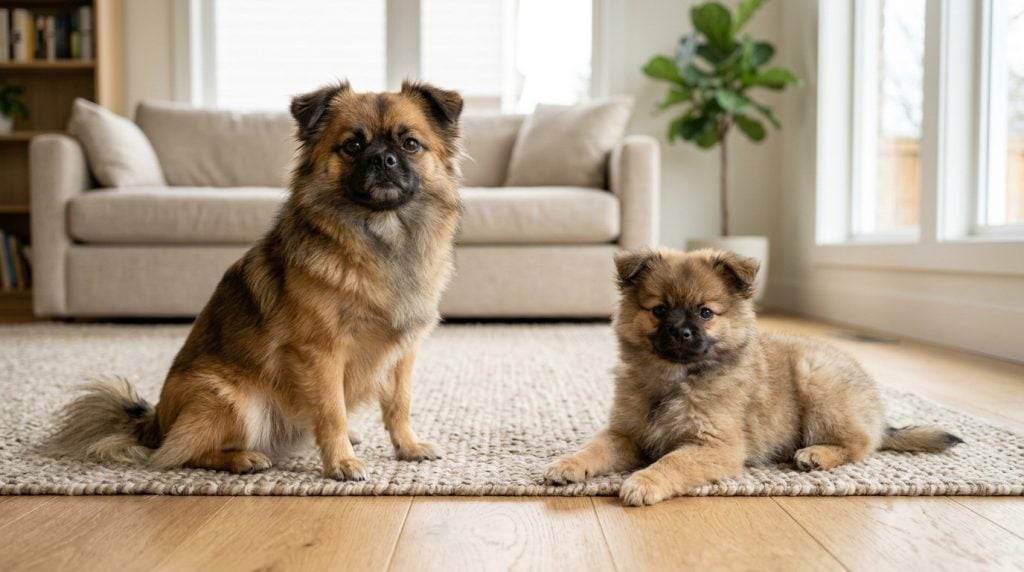
Living with a Pom-A-Pug often means having a lively yet affectionate companion by your side. These dogs tend to be quite engaging, with a spirited personality that brings a unique blend of playfulness and loyalty. Their presence is often felt as they happily follow their owners around, eager to be part of the family activities.
At a glance
Core care
- Size: Medium
- Energy: Moderate to high
- Grooming: Low
- Shedding: Moderate
Support style
- Sensitivity: High
- Training style: Willing
Breed guide
Choose a section to explore. These notes describe common patterns, but individual dogs vary widely.
The Pom-A-Pug is a delightful mixed breed that brings together the best of the Pomeranian and Pug worlds. This blend results in a dog that is both lively and affectionate, often displaying a combination of the Pomeranian’s spirited nature and the Pug’s loving disposition. Historically, Pomeranians were bred as companion dogs, while Pugs have a long history as lapdogs for Chinese royalty. This ancestry contributes to the Pom-A-Pug’s strong desire for companionship and its tendency to form close bonds with its human family.
Physically, the Pom-A-Pug is a medium-sized dog, often sporting a compact and sturdy build. Their coat can vary, sometimes taking on the fluffiness of a Pomeranian or the smoother texture of a Pug. This variability in coat type can affect grooming needs, but generally, they require moderate grooming to keep their coat healthy and free of tangles. Owners often notice that these dogs have expressive faces, a trait inherited from the Pug, which adds to their charm and ability to communicate their feelings.
In terms of temperament, Pom-A-Pugs are known for their high sensitivity and willingness to engage with their environment. They are social creatures who thrive on interaction and can be quite alert, often acting as little watchdogs. Their sensitivity means they respond well to gentle, positive reinforcement during training, and they can be quite eager to please their owners. However, like all dogs, individual personalities can vary, and some Pom-A-Pugs may be more independent or reserved.
When considering a Pom-A-Pug, it’s important to remember that while breed traits provide a general guide, each dog is an individual. Factors such as genetics, early socialisation, and the environment all play crucial roles in shaping a dog’s behaviour and personality. Prospective owners should be prepared for the unique quirks and charms that their specific Pom-A-Pug may bring.
Pom-A-Pugs are often described as social butterflies, eager to be involved in family life. Their mixed heritage gives them a unique blend of traits, making them both playful and affectionate. They tend to form strong bonds with their families and often seek out attention and companionship. This social nature means they usually do well in homes where they can interact regularly with their human companions.
Their high sensitivity is a notable trait, which means they can be quite attuned to their owner’s emotions and moods. This sensitivity can be a double-edged sword; while it makes them empathetic companions, it also means they can be sensitive to changes in their environment or routine. Owners often notice that their Pom-A-Pug may react strongly to stress or tension in the home, so a calm and stable environment is beneficial.
Trainability is another area where Pom-A-Pugs shine. They are generally willing learners, especially when training is approached with patience and positive reinforcement. Their eagerness to please can make training sessions enjoyable, though it’s important to keep them engaging to maintain their interest. Owners often find that their Pom-A-Pug responds well to treats and praise, making these effective tools in teaching new commands or tricks.
Despite their social and trainable nature, Pom-A-Pugs can vary in their individual temperaments. Some may be more reserved or independent, while others might be more outgoing and adventurous. It’s important for owners to spend time getting to know their dog’s unique personality and to tailor their approach to training and socialisation accordingly. Understanding and embracing these individual differences will help in building a strong and trusting relationship.
A typical day for a Pom-A-Pug involves a balance of activity and relaxation. These dogs generally have moderate to high energy levels, which means they enjoy a good play session or a walk around the neighbourhood. Owners often find that a couple of short walks each day, combined with interactive play, helps to keep their Pom-A-Pug happy and healthy.
In addition to physical exercise, mental enrichment is crucial for this intelligent breed. Puzzle toys, training games, and scent work can be excellent ways to engage their minds. These activities not only provide mental stimulation but also help to strengthen the bond between dog and owner. Many Pom-A-Pug owners enjoy teaching their dogs new tricks, which can be a fun and rewarding experience for both parties.
As with any breed, the exercise needs of a Pom-A-Pug can vary depending on their age and health. Puppies and young adults often require more activity to burn off their youthful energy, while older dogs may prefer gentler walks and more rest. It’s important to adjust the level of exercise to suit the individual dog’s needs, ensuring they remain active without becoming overwhelmed.
Owners should be mindful of not over-exercising their Pom-A-Pug, especially in hot weather, as their Pug ancestry can make them prone to overheating. Providing plenty of water and taking breaks in the shade can help prevent heat-related issues. By paying attention to their dog’s signals and adjusting activities accordingly, owners can ensure their Pom-A-Pug stays fit and content throughout their life stages.
Training a Pom-A-Pug can be a rewarding experience, often characterised by their eagerness to learn and please. Owners typically find that these dogs respond well to positive reinforcement methods, such as treats and praise. This approach not only helps in teaching new commands but also strengthens the bond between the dog and owner.
Impulse control can be an area where Pom-A-Pugs need some guidance. Their lively nature means they can sometimes be a bit excitable, especially when meeting new people or animals. Consistent training and socialisation from a young age can help manage these tendencies, teaching them to greet others calmly and politely. Patience and persistence are key, as some Pom-A-Pugs may take a little longer to master impulse control.
Adolescence can be a challenging time for Pom-A-Pug owners, as these dogs may test boundaries and exhibit more independent behaviour. During this stage, maintaining a consistent training routine is crucial. Reinforcing basic commands and continuing socialisation will help guide them through this period. Owners often find that keeping training sessions short and fun helps to maintain their dog’s interest and cooperation.
Building a strong relationship based on trust and understanding is essential for successful training. Pom-A-Pugs thrive in environments where they feel secure and supported, and where their efforts are met with encouragement. By focusing on positive interactions and celebrating small victories, owners can help their Pom-A-Pug develop into a well-mannered and confident companion.
The Pom-A-Pug tends to adapt well to various living environments, making them a versatile choice for many homes. Whether in a bustling city flat or a quieter suburban house, they often thrive as long as they receive enough attention and exercise. Their moderate size and adaptable nature mean they can be quite comfortable in smaller spaces, provided they have opportunities for daily walks and play.
Owners often find that Pom-A-Pugs do well in homes where they are part of the family activities. They enjoy being involved and can become quite attached to their human companions. This breed’s social nature means they usually do well with children, although supervision is always recommended to ensure interactions are positive and safe for both the dog and the child.
When it comes to other pets, Pom-A-Pugs can be quite sociable, especially if they are introduced to other animals early in life. Their playful and friendly disposition often means they enjoy the company of other dogs, and they can coexist peacefully with cats if properly socialised. However, individual temperament can vary, so gradual introductions and monitoring are important.
Ultimately, the Pom-A-Pug is a breed that thrives on companionship and involvement. They are best suited to homes where they are not left alone for long periods, as they can become anxious or bored without sufficient interaction. Prospective owners should consider their lifestyle and ensure they can provide the time and attention this affectionate breed needs to flourish.
Health plays a significant role in the everyday wellbeing of a Pom-A-Pug. This mixed breed may inherit health issues common to both Pomeranians and Pugs, so regular veterinary check-ups are important. Common concerns can include respiratory issues, particularly if they have a flatter face like a Pug, as well as joint problems and eye conditions.
Owners often notice that their Pom-A-Pug’s health can influence their behaviour and energy levels. For instance, a dog experiencing discomfort from joint pain may be less active or more irritable. Being attentive to changes in behaviour can provide early clues to potential health issues, allowing for timely intervention and care.
Preventive care is crucial for maintaining a Pom-A-Pug’s health. This includes a balanced diet, regular exercise, and maintaining a healthy weight to reduce the risk of obesity-related issues. Dental care is also important, as small breeds can be prone to dental problems. Regular brushing and dental check-ups can help prevent issues and keep their teeth healthy.
If any health concerns arise, seeking veterinary advice promptly is essential. Early diagnosis and treatment can make a significant difference in managing health conditions and ensuring a good quality of life. By staying informed and proactive about their Pom-A-Pug’s health, owners can help their furry friend lead a happy and active life.
The Pom-A-Pug is a relatively modern mixed breed, combining the traits of the Pomeranian and the Pug. The Pomeranian, originally from the Pomerania region in Europe, was bred down from larger sled-pulling dogs to become the small, spirited companion we know today. Their history as companion animals is reflected in their lively and engaging personality.
Pugs, on the other hand, have a rich history dating back to ancient China, where they were treasured as lapdogs by royalty. Their distinctive appearance and charming nature made them popular across the world, eventually leading to their introduction to Europe. This background contributes to the Pom-A-Pug’s affectionate and sociable disposition.
The combination of these two breeds results in a dog that often embodies the best of both worlds. The Pom-A-Pug typically inherits the Pomeranian’s playful and energetic nature, along with the Pug’s loving and loyal temperament. This blend makes them well-suited to being a family companion, eager to participate in daily activities and form strong bonds with their owners.
Understanding the history of the Pom-A-Pug helps explain some of their modern traits. Their desire for companionship and involvement in family life can be traced back to their ancestors’ roles as cherished companions. This historical context provides insight into why Pom-A-Pugs tend to be such devoted and engaging pets, often bringing joy and laughter to their homes.
What shapes individual dogs
- Early social experiences
- Training approach
- Environment & routine
- Genetics & breeding
- Health & pain
- Age / life stage
The Pom-A-Pug is a delightful mixed breed that brings together the best of the Pomeranian and Pug worlds. This blend results in a dog that is both lively and affectionate, often displaying a combination of the Pomeranian’s spirited nature and the Pug’s loving disposition. Historically, Pomeranians were bred as companion dogs, while Pugs have a long history as lapdogs for Chinese royalty. This ancestry contributes to the Pom-A-Pug’s strong desire for companionship and its tendency to form close bonds with its human family.
Physically, the Pom-A-Pug is a medium-sized dog, often sporting a compact and sturdy build. Their coat can vary, sometimes taking on the fluffiness of a Pomeranian or the smoother texture of a Pug. This variability in coat type can affect grooming needs, but generally, they require moderate grooming to keep their coat healthy and free of tangles. Owners often notice that these dogs have expressive faces, a trait inherited from the Pug, which adds to their charm and ability to communicate their feelings.
In terms of temperament, Pom-A-Pugs are known for their high sensitivity and willingness to engage with their environment. They are social creatures who thrive on interaction and can be quite alert, often acting as little watchdogs. Their sensitivity means they respond well to gentle, positive reinforcement during training, and they can be quite eager to please their owners. However, like all dogs, individual personalities can vary, and some Pom-A-Pugs may be more independent or reserved.
When considering a Pom-A-Pug, it’s important to remember that while breed traits provide a general guide, each dog is an individual. Factors such as genetics, early socialisation, and the environment all play crucial roles in shaping a dog’s behaviour and personality. Prospective owners should be prepared for the unique quirks and charms that their specific Pom-A-Pug may bring.
Pom-A-Pugs are often described as social butterflies, eager to be involved in family life. Their mixed heritage gives them a unique blend of traits, making them both playful and affectionate. They tend to form strong bonds with their families and often seek out attention and companionship. This social nature means they usually do well in homes where they can interact regularly with their human companions.
Their high sensitivity is a notable trait, which means they can be quite attuned to their owner’s emotions and moods. This sensitivity can be a double-edged sword; while it makes them empathetic companions, it also means they can be sensitive to changes in their environment or routine. Owners often notice that their Pom-A-Pug may react strongly to stress or tension in the home, so a calm and stable environment is beneficial.
Trainability is another area where Pom-A-Pugs shine. They are generally willing learners, especially when training is approached with patience and positive reinforcement. Their eagerness to please can make training sessions enjoyable, though it’s important to keep them engaging to maintain their interest. Owners often find that their Pom-A-Pug responds well to treats and praise, making these effective tools in teaching new commands or tricks.
Despite their social and trainable nature, Pom-A-Pugs can vary in their individual temperaments. Some may be more reserved or independent, while others might be more outgoing and adventurous. It’s important for owners to spend time getting to know their dog’s unique personality and to tailor their approach to training and socialisation accordingly. Understanding and embracing these individual differences will help in building a strong and trusting relationship.
A typical day for a Pom-A-Pug involves a balance of activity and relaxation. These dogs generally have moderate to high energy levels, which means they enjoy a good play session or a walk around the neighbourhood. Owners often find that a couple of short walks each day, combined with interactive play, helps to keep their Pom-A-Pug happy and healthy.
In addition to physical exercise, mental enrichment is crucial for this intelligent breed. Puzzle toys, training games, and scent work can be excellent ways to engage their minds. These activities not only provide mental stimulation but also help to strengthen the bond between dog and owner. Many Pom-A-Pug owners enjoy teaching their dogs new tricks, which can be a fun and rewarding experience for both parties.
As with any breed, the exercise needs of a Pom-A-Pug can vary depending on their age and health. Puppies and young adults often require more activity to burn off their youthful energy, while older dogs may prefer gentler walks and more rest. It’s important to adjust the level of exercise to suit the individual dog’s needs, ensuring they remain active without becoming overwhelmed.
Owners should be mindful of not over-exercising their Pom-A-Pug, especially in hot weather, as their Pug ancestry can make them prone to overheating. Providing plenty of water and taking breaks in the shade can help prevent heat-related issues. By paying attention to their dog’s signals and adjusting activities accordingly, owners can ensure their Pom-A-Pug stays fit and content throughout their life stages.
Training a Pom-A-Pug can be a rewarding experience, often characterised by their eagerness to learn and please. Owners typically find that these dogs respond well to positive reinforcement methods, such as treats and praise. This approach not only helps in teaching new commands but also strengthens the bond between the dog and owner.
Impulse control can be an area where Pom-A-Pugs need some guidance. Their lively nature means they can sometimes be a bit excitable, especially when meeting new people or animals. Consistent training and socialisation from a young age can help manage these tendencies, teaching them to greet others calmly and politely. Patience and persistence are key, as some Pom-A-Pugs may take a little longer to master impulse control.
Adolescence can be a challenging time for Pom-A-Pug owners, as these dogs may test boundaries and exhibit more independent behaviour. During this stage, maintaining a consistent training routine is crucial. Reinforcing basic commands and continuing socialisation will help guide them through this period. Owners often find that keeping training sessions short and fun helps to maintain their dog’s interest and cooperation.
Building a strong relationship based on trust and understanding is essential for successful training. Pom-A-Pugs thrive in environments where they feel secure and supported, and where their efforts are met with encouragement. By focusing on positive interactions and celebrating small victories, owners can help their Pom-A-Pug develop into a well-mannered and confident companion.
The Pom-A-Pug tends to adapt well to various living environments, making them a versatile choice for many homes. Whether in a bustling city flat or a quieter suburban house, they often thrive as long as they receive enough attention and exercise. Their moderate size and adaptable nature mean they can be quite comfortable in smaller spaces, provided they have opportunities for daily walks and play.
Owners often find that Pom-A-Pugs do well in homes where they are part of the family activities. They enjoy being involved and can become quite attached to their human companions. This breed’s social nature means they usually do well with children, although supervision is always recommended to ensure interactions are positive and safe for both the dog and the child.
When it comes to other pets, Pom-A-Pugs can be quite sociable, especially if they are introduced to other animals early in life. Their playful and friendly disposition often means they enjoy the company of other dogs, and they can coexist peacefully with cats if properly socialised. However, individual temperament can vary, so gradual introductions and monitoring are important.
Ultimately, the Pom-A-Pug is a breed that thrives on companionship and involvement. They are best suited to homes where they are not left alone for long periods, as they can become anxious or bored without sufficient interaction. Prospective owners should consider their lifestyle and ensure they can provide the time and attention this affectionate breed needs to flourish.
Health plays a significant role in the everyday wellbeing of a Pom-A-Pug. This mixed breed may inherit health issues common to both Pomeranians and Pugs, so regular veterinary check-ups are important. Common concerns can include respiratory issues, particularly if they have a flatter face like a Pug, as well as joint problems and eye conditions.
Owners often notice that their Pom-A-Pug’s health can influence their behaviour and energy levels. For instance, a dog experiencing discomfort from joint pain may be less active or more irritable. Being attentive to changes in behaviour can provide early clues to potential health issues, allowing for timely intervention and care.
Preventive care is crucial for maintaining a Pom-A-Pug’s health. This includes a balanced diet, regular exercise, and maintaining a healthy weight to reduce the risk of obesity-related issues. Dental care is also important, as small breeds can be prone to dental problems. Regular brushing and dental check-ups can help prevent issues and keep their teeth healthy.
If any health concerns arise, seeking veterinary advice promptly is essential. Early diagnosis and treatment can make a significant difference in managing health conditions and ensuring a good quality of life. By staying informed and proactive about their Pom-A-Pug’s health, owners can help their furry friend lead a happy and active life.
The Pom-A-Pug is a relatively modern mixed breed, combining the traits of the Pomeranian and the Pug. The Pomeranian, originally from the Pomerania region in Europe, was bred down from larger sled-pulling dogs to become the small, spirited companion we know today. Their history as companion animals is reflected in their lively and engaging personality.
Pugs, on the other hand, have a rich history dating back to ancient China, where they were treasured as lapdogs by royalty. Their distinctive appearance and charming nature made them popular across the world, eventually leading to their introduction to Europe. This background contributes to the Pom-A-Pug’s affectionate and sociable disposition.
The combination of these two breeds results in a dog that often embodies the best of both worlds. The Pom-A-Pug typically inherits the Pomeranian’s playful and energetic nature, along with the Pug’s loving and loyal temperament. This blend makes them well-suited to being a family companion, eager to participate in daily activities and form strong bonds with their owners.
Understanding the history of the Pom-A-Pug helps explain some of their modern traits. Their desire for companionship and involvement in family life can be traced back to their ancestors’ roles as cherished companions. This historical context provides insight into why Pom-A-Pugs tend to be such devoted and engaging pets, often bringing joy and laughter to their homes.
What shapes individual dogs
- Early social experiences
- Training approach
- Environment & routine
- Genetics & breeding
- Health & pain
- Age / life stage
Want support with this?
This course is relevant for Pom-A-Pug owners due to their complex temperament and high sensitivity, offering insights into their unique behaviour.