
Frenchton
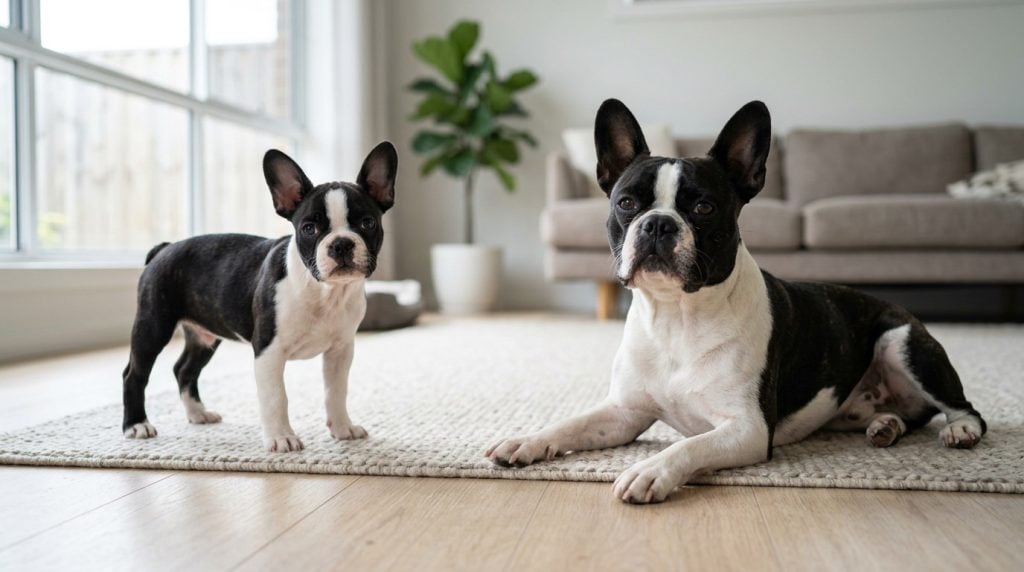
Living with a Frenchton often feels like having a lively companion who thrives on human interaction. Their playful nature and affectionate disposition make them endearing to many families. Despite their small size, they have a big personality that fills the home with joy and occasional mischief.
At a glance
Core care
- Size: Small
- Energy: Moderate
- Grooming: Low
- Shedding: Low
Support style
- Sensitivity: High
- Training style: Moderate
Breed guide
Choose a section to explore. These notes describe common patterns, but individual dogs vary widely.
The Frenchton, a charming blend of the French Bulldog and Boston Terrier, brings together the best of both breeds into a delightful companion. Originally bred to combine the playful, easygoing nature of the French Bulldog with the athletic, spirited energy of the Boston Terrier, the Frenchton has become a popular choice for those seeking a small yet engaging family pet. This mixed breed’s history of companionship and adaptability is evident in its modern-day behaviour, where it thrives in various living situations, from bustling city apartments to quieter suburban homes.
Physically, the Frenchton is a small dog with a compact, muscular build that hints at its active heritage. Their short, smooth coat is low-maintenance, making them an appealing choice for those who prefer minimal grooming. The Frenchton’s expressive face, often featuring the signature bat-like ears of the French Bulldog, adds to their charm and makes them instantly recognisable. Their size makes them well-suited for smaller living spaces, yet they possess a robust energy that requires regular outlets.
Temperamentally, Frenchtons are known for their friendly and affectionate nature. Many owners find them to be excellent companions, as they often form strong bonds with their families. They are typically sociable dogs, enjoying the company of both people and other pets. However, their sensitivity means they can be quite attuned to their owner’s emotions, which can be a double-edged sword if not managed with care. While generally adaptable, individual Frenchtons may vary in their energy levels and social preferences.
Prospective Frenchton owners should be prepared for a dog that is both lively and loving. While they generally adapt well to different environments, it’s important to remember that each dog is unique, with its own personality and needs. Understanding and accommodating these individual differences is key to a harmonious relationship with a Frenchton.
Frenchtons are often described as social butterflies, thriving on interaction and attention from their human companions. This social nature stems from their ancestry, as both the French Bulldog and Boston Terrier were bred to be companion animals. Owners frequently notice that their Frenchtons love to be involved in whatever is happening around the home, whether it’s joining in on family activities or simply lounging nearby.
The breed’s high sensitivity means they are particularly attuned to their owner’s moods and emotions. This can make them excellent companions for those who appreciate a dog that seems to understand them on a deeper level. However, this sensitivity can also mean that Frenchtons may become anxious if left alone for extended periods. Many owners find that their Frenchton does best in a home where someone is around for most of the day.
Frenchtons are moderately trainable, often responding well to positive reinforcement techniques. Their eagerness to please, combined with their intelligence, can make training sessions enjoyable and rewarding. However, their playful nature sometimes leads to a short attention span, so keeping training sessions brief and engaging is often most effective. Patience and consistency are key, as each Frenchton will have its own pace of learning.
Overall, living with a Frenchton means embracing their lively and affectionate personality. While they generally get along well with children and other pets, individual temperaments can vary. Some may be more outgoing and playful, while others might be more reserved or sensitive. Understanding these nuances helps in fostering a happy and balanced relationship with this delightful mixed breed.
A typical day with a Frenchton involves a balanced mix of moderate exercise and mental enrichment. While they are not as high-energy as some other breeds, they do benefit from regular walks and play sessions to keep them fit and content. A couple of short walks each day, combined with some interactive playtime, usually suffices to meet their exercise needs.
Frenchtons enjoy activities that engage both their minds and bodies. Puzzle toys, treat-dispensing games, and basic obedience training can provide the mental stimulation they crave. These activities not only keep them entertained but also help to strengthen the bond between the dog and their owner. It’s important to remember that Frenchtons can be prone to overheating, so exercise should be moderated during warmer weather.
As they age, a Frenchton’s exercise needs may change. Puppies and young adults tend to be more energetic and may require more frequent play sessions to burn off their youthful exuberance. In contrast, older Frenchtons might prefer more leisurely walks and gentler activities. Adjusting their routine to suit their life stage helps maintain their health and happiness.
Owners should be mindful of over-exercising their Frenchton, particularly given their brachycephalic (short-nosed) nature, which can affect their breathing. Observing their dog’s behaviour and energy levels will guide them in providing the right amount of activity. By tailoring exercise and enrichment to their individual needs, Frenchtons can enjoy a fulfilling and active lifestyle.
Training a Frenchton often feels like a journey of mutual discovery, as these dogs are both intelligent and eager to please. Many owners find that positive reinforcement techniques, such as using treats and praise, work particularly well. This approach helps to harness their natural curiosity and willingness to learn, making training sessions a positive experience for both dog and owner.
Impulse control can be a challenge with Frenchtons, especially during their adolescent phase. They might become easily distracted or show a stubborn streak, which is not uncommon for this breed. Consistency and patience are essential, as is maintaining a calm and encouraging environment. Short, focused training sessions tend to be more effective than longer, repetitive ones.
Building a strong relationship through training is crucial for Frenchtons, given their sensitive nature. They respond best to a gentle approach that respects their individuality. Establishing a routine and setting clear boundaries helps them understand what is expected, reducing the likelihood of behavioural issues arising from confusion or anxiety.
For those new to dog ownership, or for those experiencing challenges with their Frenchton, enrolling in a course like ‘Puppy Beginnings: Building a Calm Start’ can provide valuable insights and techniques. This foundation helps ensure that both the dog and owner have a positive and enriching training journey together.
Frenchtons tend to adapt well to a variety of living environments, making them a versatile choice for many families. They are well-suited to apartment living due to their small size and moderate exercise needs, but they also enjoy the space and freedom of a house with a garden. Their adaptable nature means they can thrive in both urban and suburban settings, provided they receive adequate attention and companionship.
Many owners find that Frenchtons integrate well into family life, often forming strong bonds with children and other pets. Their playful and affectionate nature makes them a hit with kids, although supervision is always recommended to ensure positive interactions. With other pets, Frenchtons generally get along well, especially if they are socialised from a young age.
While they are adaptable, Frenchtons do best in homes where they are not left alone for long periods. Their social nature means they thrive on human interaction, and prolonged isolation can lead to anxiety or behavioural issues. A household where someone is usually present suits them well, allowing them to enjoy the companionship they crave.
Ultimately, living with a Frenchton means embracing their lively personality and ensuring they feel included in family activities. Understanding their need for companionship and moderate exercise helps create a harmonious home environment where a Frenchton can truly flourish.
The health of a Frenchton is closely tied to their overall wellbeing and quality of life. As a mixed breed, they can inherit health traits from both the French Bulldog and Boston Terrier, so it’s important for owners to be aware of potential health considerations. Regular veterinary check-ups are crucial in monitoring their health and catching any issues early.
Frenchtons may be prone to brachycephalic airway syndrome due to their short noses, which can affect their breathing, particularly in hot or humid weather. Owners should be mindful of their dog’s breathing during exercise and avoid strenuous activities during peak heat. Providing a cool, comfortable environment helps mitigate these risks.
Skin and allergy issues are also common in Frenchtons, so regular grooming and monitoring for signs of irritation are essential. A balanced diet, tailored to their specific needs, can help manage these conditions and support their overall health. Preventive care, such as vaccinations and parasite control, is equally important in maintaining their wellbeing.
In general, being proactive about a Frenchton’s health by providing regular care and seeking veterinary advice when needed ensures they lead a happy and healthy life. Understanding their specific health needs and how they relate to their behaviour helps owners provide the best possible care for their furry companions.
The Frenchton is a relatively modern mixed breed, combining the French Bulldog and Boston Terrier to create a dog that embodies the best traits of both. The French Bulldog, with its origins in France as a companion animal for lace workers, brings a laid-back and affectionate nature to the mix. Meanwhile, the Boston Terrier, often referred to as the ‘American Gentleman’ due to its tuxedo-like markings, contributes its playful and spirited personality.
The development of the Frenchton aimed to create a healthier and more versatile companion dog. By blending these two breeds, breeders hoped to reduce some of the health issues associated with purebred French Bulldogs, such as breathing difficulties, while maintaining their charming personality. The Boston Terrier’s influence adds a touch of athleticism and vitality, resulting in a dog that is both lively and loving.
Today, Frenchtons are cherished for their adaptability and affectionate nature. Their history as companion animals is evident in their behaviour, as they thrive on human interaction and enjoy being part of the family. This blend of traits makes them well-suited to a variety of living situations, from bustling city apartments to quieter suburban homes.
Understanding the Frenchton’s origins helps explain their unique combination of traits that owners find so endearing. Their history as a companion breed is reflected in their desire for social interaction and their ability to adapt to different environments. This background provides insight into their behaviour and helps owners appreciate the qualities that make Frenchtons such beloved pets.
What shapes individual dogs
- Early social experiences
- Training approach
- Environment & routine
- Genetics & breeding
- Health & pain
- Age / life stage
The Frenchton, a charming blend of the French Bulldog and Boston Terrier, brings together the best of both breeds into a delightful companion. Originally bred to combine the playful, easygoing nature of the French Bulldog with the athletic, spirited energy of the Boston Terrier, the Frenchton has become a popular choice for those seeking a small yet engaging family pet. This mixed breed’s history of companionship and adaptability is evident in its modern-day behaviour, where it thrives in various living situations, from bustling city apartments to quieter suburban homes.
Physically, the Frenchton is a small dog with a compact, muscular build that hints at its active heritage. Their short, smooth coat is low-maintenance, making them an appealing choice for those who prefer minimal grooming. The Frenchton’s expressive face, often featuring the signature bat-like ears of the French Bulldog, adds to their charm and makes them instantly recognisable. Their size makes them well-suited for smaller living spaces, yet they possess a robust energy that requires regular outlets.
Temperamentally, Frenchtons are known for their friendly and affectionate nature. Many owners find them to be excellent companions, as they often form strong bonds with their families. They are typically sociable dogs, enjoying the company of both people and other pets. However, their sensitivity means they can be quite attuned to their owner’s emotions, which can be a double-edged sword if not managed with care. While generally adaptable, individual Frenchtons may vary in their energy levels and social preferences.
Prospective Frenchton owners should be prepared for a dog that is both lively and loving. While they generally adapt well to different environments, it’s important to remember that each dog is unique, with its own personality and needs. Understanding and accommodating these individual differences is key to a harmonious relationship with a Frenchton.
Frenchtons are often described as social butterflies, thriving on interaction and attention from their human companions. This social nature stems from their ancestry, as both the French Bulldog and Boston Terrier were bred to be companion animals. Owners frequently notice that their Frenchtons love to be involved in whatever is happening around the home, whether it’s joining in on family activities or simply lounging nearby.
The breed’s high sensitivity means they are particularly attuned to their owner’s moods and emotions. This can make them excellent companions for those who appreciate a dog that seems to understand them on a deeper level. However, this sensitivity can also mean that Frenchtons may become anxious if left alone for extended periods. Many owners find that their Frenchton does best in a home where someone is around for most of the day.
Frenchtons are moderately trainable, often responding well to positive reinforcement techniques. Their eagerness to please, combined with their intelligence, can make training sessions enjoyable and rewarding. However, their playful nature sometimes leads to a short attention span, so keeping training sessions brief and engaging is often most effective. Patience and consistency are key, as each Frenchton will have its own pace of learning.
Overall, living with a Frenchton means embracing their lively and affectionate personality. While they generally get along well with children and other pets, individual temperaments can vary. Some may be more outgoing and playful, while others might be more reserved or sensitive. Understanding these nuances helps in fostering a happy and balanced relationship with this delightful mixed breed.
A typical day with a Frenchton involves a balanced mix of moderate exercise and mental enrichment. While they are not as high-energy as some other breeds, they do benefit from regular walks and play sessions to keep them fit and content. A couple of short walks each day, combined with some interactive playtime, usually suffices to meet their exercise needs.
Frenchtons enjoy activities that engage both their minds and bodies. Puzzle toys, treat-dispensing games, and basic obedience training can provide the mental stimulation they crave. These activities not only keep them entertained but also help to strengthen the bond between the dog and their owner. It’s important to remember that Frenchtons can be prone to overheating, so exercise should be moderated during warmer weather.
As they age, a Frenchton’s exercise needs may change. Puppies and young adults tend to be more energetic and may require more frequent play sessions to burn off their youthful exuberance. In contrast, older Frenchtons might prefer more leisurely walks and gentler activities. Adjusting their routine to suit their life stage helps maintain their health and happiness.
Owners should be mindful of over-exercising their Frenchton, particularly given their brachycephalic (short-nosed) nature, which can affect their breathing. Observing their dog’s behaviour and energy levels will guide them in providing the right amount of activity. By tailoring exercise and enrichment to their individual needs, Frenchtons can enjoy a fulfilling and active lifestyle.
Training a Frenchton often feels like a journey of mutual discovery, as these dogs are both intelligent and eager to please. Many owners find that positive reinforcement techniques, such as using treats and praise, work particularly well. This approach helps to harness their natural curiosity and willingness to learn, making training sessions a positive experience for both dog and owner.
Impulse control can be a challenge with Frenchtons, especially during their adolescent phase. They might become easily distracted or show a stubborn streak, which is not uncommon for this breed. Consistency and patience are essential, as is maintaining a calm and encouraging environment. Short, focused training sessions tend to be more effective than longer, repetitive ones.
Building a strong relationship through training is crucial for Frenchtons, given their sensitive nature. They respond best to a gentle approach that respects their individuality. Establishing a routine and setting clear boundaries helps them understand what is expected, reducing the likelihood of behavioural issues arising from confusion or anxiety.
For those new to dog ownership, or for those experiencing challenges with their Frenchton, enrolling in a course like ‘Puppy Beginnings: Building a Calm Start’ can provide valuable insights and techniques. This foundation helps ensure that both the dog and owner have a positive and enriching training journey together.
Frenchtons tend to adapt well to a variety of living environments, making them a versatile choice for many families. They are well-suited to apartment living due to their small size and moderate exercise needs, but they also enjoy the space and freedom of a house with a garden. Their adaptable nature means they can thrive in both urban and suburban settings, provided they receive adequate attention and companionship.
Many owners find that Frenchtons integrate well into family life, often forming strong bonds with children and other pets. Their playful and affectionate nature makes them a hit with kids, although supervision is always recommended to ensure positive interactions. With other pets, Frenchtons generally get along well, especially if they are socialised from a young age.
While they are adaptable, Frenchtons do best in homes where they are not left alone for long periods. Their social nature means they thrive on human interaction, and prolonged isolation can lead to anxiety or behavioural issues. A household where someone is usually present suits them well, allowing them to enjoy the companionship they crave.
Ultimately, living with a Frenchton means embracing their lively personality and ensuring they feel included in family activities. Understanding their need for companionship and moderate exercise helps create a harmonious home environment where a Frenchton can truly flourish.
The health of a Frenchton is closely tied to their overall wellbeing and quality of life. As a mixed breed, they can inherit health traits from both the French Bulldog and Boston Terrier, so it’s important for owners to be aware of potential health considerations. Regular veterinary check-ups are crucial in monitoring their health and catching any issues early.
Frenchtons may be prone to brachycephalic airway syndrome due to their short noses, which can affect their breathing, particularly in hot or humid weather. Owners should be mindful of their dog’s breathing during exercise and avoid strenuous activities during peak heat. Providing a cool, comfortable environment helps mitigate these risks.
Skin and allergy issues are also common in Frenchtons, so regular grooming and monitoring for signs of irritation are essential. A balanced diet, tailored to their specific needs, can help manage these conditions and support their overall health. Preventive care, such as vaccinations and parasite control, is equally important in maintaining their wellbeing.
In general, being proactive about a Frenchton’s health by providing regular care and seeking veterinary advice when needed ensures they lead a happy and healthy life. Understanding their specific health needs and how they relate to their behaviour helps owners provide the best possible care for their furry companions.
The Frenchton is a relatively modern mixed breed, combining the French Bulldog and Boston Terrier to create a dog that embodies the best traits of both. The French Bulldog, with its origins in France as a companion animal for lace workers, brings a laid-back and affectionate nature to the mix. Meanwhile, the Boston Terrier, often referred to as the ‘American Gentleman’ due to its tuxedo-like markings, contributes its playful and spirited personality.
The development of the Frenchton aimed to create a healthier and more versatile companion dog. By blending these two breeds, breeders hoped to reduce some of the health issues associated with purebred French Bulldogs, such as breathing difficulties, while maintaining their charming personality. The Boston Terrier’s influence adds a touch of athleticism and vitality, resulting in a dog that is both lively and loving.
Today, Frenchtons are cherished for their adaptability and affectionate nature. Their history as companion animals is evident in their behaviour, as they thrive on human interaction and enjoy being part of the family. This blend of traits makes them well-suited to a variety of living situations, from bustling city apartments to quieter suburban homes.
Understanding the Frenchton’s origins helps explain their unique combination of traits that owners find so endearing. Their history as a companion breed is reflected in their desire for social interaction and their ability to adapt to different environments. This background provides insight into their behaviour and helps owners appreciate the qualities that make Frenchtons such beloved pets.
What shapes individual dogs
- Early social experiences
- Training approach
- Environment & routine
- Genetics & breeding
- Health & pain
- Age / life stage
Want support with this?
This course is ideal for Frenchton owners looking to establish a calm and positive foundation during their dog's early development.