
Staffordshire Bull Terrier
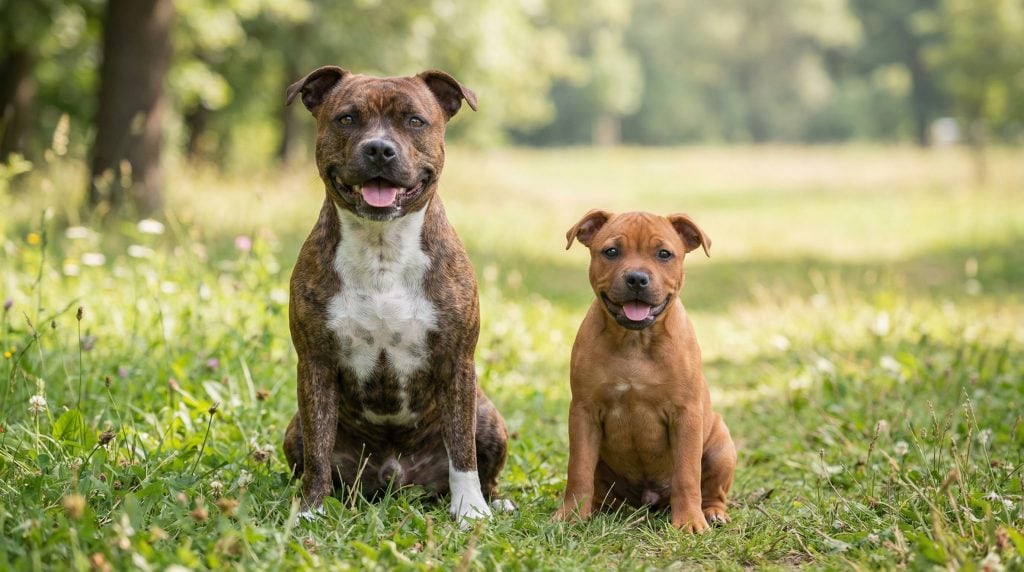
Living with a Staffordshire Bull Terrier often means having a loyal, energetic companion who thrives on human interaction. Their expressive eyes and muscular build hint at both their affectionate nature and their readiness for play. Many owners find that these dogs are happiest when included in family activities, whether that's a walk in the park or a quiet evening at home.
At a glance
Core care
- Size: Medium
- Energy: High
- Grooming: Low
- Shedding: Low
Support style
- Sensitivity: Moderate
- Training style: Willing
Breed guide
Choose a section to explore. These notes describe common patterns, but individual dogs vary widely.
The Staffordshire Bull Terrier has its roots in 19th-century England, where it was developed for bull-baiting and later as a companion dog. This history of strength and resilience is evident in the breed today, manifesting as a dog that is both physically robust and emotionally connected to its family. While their origins may suggest a tough exterior, many owners quickly discover the breed’s softer side, characterised by a deep affection for their human companions.
Physically, the Staffordshire Bull Terrier is a medium-sized dog with a muscular build that reflects its athletic heritage. Their short coat is smooth and low-maintenance, which is a relief for those who prefer minimal grooming. Despite their sturdy appearance, these dogs are often described as gentle and playful, particularly with those they know well. Their expressive faces and alert posture often communicate a readiness for the next adventure.
Temperamentally, Staffordshire Bull Terriers are known for their loving nature and eagerness to engage with people. Many owners note their dog’s enthusiasm for play and their willingness to be involved in family life. However, like any breed, individual personalities can vary. Some may exhibit a more laid-back demeanor, while others are constantly on the move, seeking the next game or challenge.
It’s important for potential owners to understand that while breed traits provide a general guide, each Staffordshire Bull Terrier is an individual. Factors such as genetics, upbringing, and environment all play a role in shaping their behaviour and personality. Prospective owners should be prepared for a dog that is both a loyal companion and a spirited playmate, with a need for regular interaction and mental stimulation.
Staffordshire Bull Terriers are often described as people-oriented dogs, thriving on human companionship and social interaction. This social nature is a hallmark of the breed, with many owners observing how their dogs seem to genuinely enjoy being part of the family dynamic. Their desire to be close to their people often translates into a dog that follows you from room to room, eager to be involved in whatever is happening.
The breed’s moderate sensitivity means they are generally responsive to their owner’s emotions and environment. This can be both a blessing and a challenge, as they may pick up on household tensions or changes in routine. Their willingness to please, combined with their sensitivity, often makes them quite trainable, though they do best with positive reinforcement and consistency.
In everyday life, Staffordshire Bull Terriers are known for their playful and affectionate nature. They often form strong bonds with their families and can be quite protective, though not usually aggressive. Their protective instincts are more about loyalty and love than any inherent tendency towards aggression. Owners often find that their Staffie is happiest when they feel secure and included in family activities.
While they are generally good-natured, it’s important to remember that individual dogs can vary widely. Some Staffordshire Bull Terriers may be more independent or reserved, while others are outgoing and exuberant. Understanding and respecting these individual differences is key to a harmonious relationship, making it important for owners to spend time getting to know their dog’s unique personality.
A typical day for a Staffordshire Bull Terrier involves a good mix of physical exercise and mental stimulation. These dogs have high energy levels and thrive on activities that challenge both their bodies and minds. A daily routine might include a brisk walk or run, followed by some interactive playtime, such as fetch or tug-of-war. Many owners find that their Staffie is happiest when they’ve had the chance to burn off energy through vigorous play.
In addition to physical exercise, mental enrichment is crucial for this intelligent breed. Puzzle toys, training sessions, and games that require problem-solving can help keep their minds sharp and engaged. Without adequate mental stimulation, they may resort to finding their own entertainment, which might not always align with their owner’s preferences.
As Staffordshire Bull Terriers age, their exercise needs may change. While puppies and young adults require more frequent and intense activity, older dogs might appreciate shorter, more leisurely walks. It’s important to tailor exercise routines to the individual dog’s age, health, and energy levels to ensure they remain happy and healthy throughout their lives.
Owners should be mindful of not over-exercising their Staffordshire Bull Terrier, especially in extreme weather conditions. These dogs can be prone to overheating, so it’s best to schedule vigorous activities during cooler parts of the day. By balancing physical and mental exercise, owners can help their Staffie lead a fulfilled and contented life.
Training a Staffordshire Bull Terrier often feels like working with a willing and eager partner. Their desire to please and their intelligence make them responsive to training, especially when positive reinforcement methods are used. Many owners find that their Staffie responds well to treats, praise, and play as rewards for good behaviour.
Impulse control can be a challenge, particularly during adolescence when their energy levels are high and their curiosity is boundless. Consistent training and setting clear boundaries are crucial during this stage to help them learn self-control and appropriate behaviour. Patience and understanding go a long way in guiding them through these formative months.
Building a strong relationship based on trust and mutual respect is key to successful training. Staffordshire Bull Terriers thrive on positive interactions and can become frustrated if training is too harsh or inconsistent. Regular training sessions that are fun and engaging help reinforce good behaviour and strengthen the bond between dog and owner.
For those new to the breed or dog training, enrolling in a class like “Puppy Beginnings: Building a Calm Start” can provide valuable support and guidance. This course can help owners understand the nuances of training a Staffordshire Bull Terrier and set the foundation for a well-behaved and happy dog.
Staffordshire Bull Terriers tend to fit well in a variety of home environments, provided they receive enough exercise and attention. They are adaptable dogs that can thrive in both urban and rural settings, as long as they have opportunities for physical activity and mental engagement. Many owners find that their Staffie is content in a home where they are considered part of the family.
These dogs are known for their affectionate nature and often do well with children, making them a popular choice for families. However, supervision is always recommended, especially with younger children, to ensure interactions are positive for both the dog and the child. Their playful and energetic nature can sometimes be overwhelming for very small children, so teaching both the dog and the child how to interact appropriately is key.
When it comes to living with other pets, early socialisation is important. Staffordshire Bull Terriers can get along with other dogs and animals, but individual temperament and past experiences play a significant role. Introducing them to other pets gradually and under controlled conditions can help foster harmonious relationships.
Ultimately, the best home for a Staffordshire Bull Terrier is one where they are loved and included in daily activities. They thrive on companionship and do best in environments where they are not left alone for long periods. Prospective owners should be prepared to invest time and energy into ensuring their Staffie is a well-adjusted and happy member of the household.
Health is a crucial aspect of a Staffordshire Bull Terrier’s overall wellbeing, and understanding potential health issues can help owners provide the best care. Like many breeds, they can be prone to certain genetic conditions, such as hip dysplasia and cataracts, which can affect their quality of life if not managed properly.
Regular veterinary check-ups are essential to monitor their health and catch any issues early. Preventive care, including vaccinations, flea and tick prevention, and dental care, plays a significant role in keeping them healthy. Many owners find that maintaining a balanced diet and regular exercise helps prevent obesity, which can exacerbate joint problems.
Behavioural changes can sometimes indicate underlying health issues, so it’s important for owners to be observant. A normally active and playful dog that becomes lethargic or withdrawn may be experiencing discomfort or illness. Seeking veterinary advice when changes in behaviour or physical condition are noticed can help address potential problems before they become serious.
Overall, while Staffordshire Bull Terriers may have some health considerations, many live long, healthy lives with the right care. Being proactive about their health and understanding the signs of potential issues can help ensure they remain happy and healthy companions.
The Staffordshire Bull Terrier’s history is rooted in 19th-century England, where they were initially bred for bull-baiting, a popular sport of the time. These early dogs were valued for their strength, courage, and tenacity. However, as the sport was outlawed, their role evolved, and they became cherished companions, known for their loyalty and affectionate nature.
The breed was developed by crossing Bulldogs with various terriers, resulting in a dog that combined the Bulldog’s strength with the terrier’s agility and tenacity. This combination led to a versatile dog that was not only a formidable competitor in the ring but also a reliable and loving family pet. Their reputation as a ‘nanny dog’ emerged from their gentle and protective nature around children.
As the breed gained popularity, the Staffordshire Bull Terrier was officially recognised by the Kennel Club in the UK in 1935. This recognition helped to cement their status as a beloved companion dog, and their popularity spread beyond England. Today, they are known for their affectionate nature and strong bond with their families, traits that are deeply rooted in their history.
Understanding the Staffordshire Bull Terrier’s origins helps explain many of their modern traits. Their courage and resilience are remnants of their working past, while their affectionate and loyal nature reflects their long-standing role as a family companion. This rich history continues to shape the breed, making them a unique and cherished member of many households.
What shapes individual dogs
- Early social experiences
- Training approach
- Environment & routine
- Genetics & breeding
- Health & pain
- Age / life stage
The Staffordshire Bull Terrier has its roots in 19th-century England, where it was developed for bull-baiting and later as a companion dog. This history of strength and resilience is evident in the breed today, manifesting as a dog that is both physically robust and emotionally connected to its family. While their origins may suggest a tough exterior, many owners quickly discover the breed’s softer side, characterised by a deep affection for their human companions.
Physically, the Staffordshire Bull Terrier is a medium-sized dog with a muscular build that reflects its athletic heritage. Their short coat is smooth and low-maintenance, which is a relief for those who prefer minimal grooming. Despite their sturdy appearance, these dogs are often described as gentle and playful, particularly with those they know well. Their expressive faces and alert posture often communicate a readiness for the next adventure.
Temperamentally, Staffordshire Bull Terriers are known for their loving nature and eagerness to engage with people. Many owners note their dog’s enthusiasm for play and their willingness to be involved in family life. However, like any breed, individual personalities can vary. Some may exhibit a more laid-back demeanor, while others are constantly on the move, seeking the next game or challenge.
It’s important for potential owners to understand that while breed traits provide a general guide, each Staffordshire Bull Terrier is an individual. Factors such as genetics, upbringing, and environment all play a role in shaping their behaviour and personality. Prospective owners should be prepared for a dog that is both a loyal companion and a spirited playmate, with a need for regular interaction and mental stimulation.
Staffordshire Bull Terriers are often described as people-oriented dogs, thriving on human companionship and social interaction. This social nature is a hallmark of the breed, with many owners observing how their dogs seem to genuinely enjoy being part of the family dynamic. Their desire to be close to their people often translates into a dog that follows you from room to room, eager to be involved in whatever is happening.
The breed’s moderate sensitivity means they are generally responsive to their owner’s emotions and environment. This can be both a blessing and a challenge, as they may pick up on household tensions or changes in routine. Their willingness to please, combined with their sensitivity, often makes them quite trainable, though they do best with positive reinforcement and consistency.
In everyday life, Staffordshire Bull Terriers are known for their playful and affectionate nature. They often form strong bonds with their families and can be quite protective, though not usually aggressive. Their protective instincts are more about loyalty and love than any inherent tendency towards aggression. Owners often find that their Staffie is happiest when they feel secure and included in family activities.
While they are generally good-natured, it’s important to remember that individual dogs can vary widely. Some Staffordshire Bull Terriers may be more independent or reserved, while others are outgoing and exuberant. Understanding and respecting these individual differences is key to a harmonious relationship, making it important for owners to spend time getting to know their dog’s unique personality.
A typical day for a Staffordshire Bull Terrier involves a good mix of physical exercise and mental stimulation. These dogs have high energy levels and thrive on activities that challenge both their bodies and minds. A daily routine might include a brisk walk or run, followed by some interactive playtime, such as fetch or tug-of-war. Many owners find that their Staffie is happiest when they’ve had the chance to burn off energy through vigorous play.
In addition to physical exercise, mental enrichment is crucial for this intelligent breed. Puzzle toys, training sessions, and games that require problem-solving can help keep their minds sharp and engaged. Without adequate mental stimulation, they may resort to finding their own entertainment, which might not always align with their owner’s preferences.
As Staffordshire Bull Terriers age, their exercise needs may change. While puppies and young adults require more frequent and intense activity, older dogs might appreciate shorter, more leisurely walks. It’s important to tailor exercise routines to the individual dog’s age, health, and energy levels to ensure they remain happy and healthy throughout their lives.
Owners should be mindful of not over-exercising their Staffordshire Bull Terrier, especially in extreme weather conditions. These dogs can be prone to overheating, so it’s best to schedule vigorous activities during cooler parts of the day. By balancing physical and mental exercise, owners can help their Staffie lead a fulfilled and contented life.
Training a Staffordshire Bull Terrier often feels like working with a willing and eager partner. Their desire to please and their intelligence make them responsive to training, especially when positive reinforcement methods are used. Many owners find that their Staffie responds well to treats, praise, and play as rewards for good behaviour.
Impulse control can be a challenge, particularly during adolescence when their energy levels are high and their curiosity is boundless. Consistent training and setting clear boundaries are crucial during this stage to help them learn self-control and appropriate behaviour. Patience and understanding go a long way in guiding them through these formative months.
Building a strong relationship based on trust and mutual respect is key to successful training. Staffordshire Bull Terriers thrive on positive interactions and can become frustrated if training is too harsh or inconsistent. Regular training sessions that are fun and engaging help reinforce good behaviour and strengthen the bond between dog and owner.
For those new to the breed or dog training, enrolling in a class like “Puppy Beginnings: Building a Calm Start” can provide valuable support and guidance. This course can help owners understand the nuances of training a Staffordshire Bull Terrier and set the foundation for a well-behaved and happy dog.
Staffordshire Bull Terriers tend to fit well in a variety of home environments, provided they receive enough exercise and attention. They are adaptable dogs that can thrive in both urban and rural settings, as long as they have opportunities for physical activity and mental engagement. Many owners find that their Staffie is content in a home where they are considered part of the family.
These dogs are known for their affectionate nature and often do well with children, making them a popular choice for families. However, supervision is always recommended, especially with younger children, to ensure interactions are positive for both the dog and the child. Their playful and energetic nature can sometimes be overwhelming for very small children, so teaching both the dog and the child how to interact appropriately is key.
When it comes to living with other pets, early socialisation is important. Staffordshire Bull Terriers can get along with other dogs and animals, but individual temperament and past experiences play a significant role. Introducing them to other pets gradually and under controlled conditions can help foster harmonious relationships.
Ultimately, the best home for a Staffordshire Bull Terrier is one where they are loved and included in daily activities. They thrive on companionship and do best in environments where they are not left alone for long periods. Prospective owners should be prepared to invest time and energy into ensuring their Staffie is a well-adjusted and happy member of the household.
Health is a crucial aspect of a Staffordshire Bull Terrier’s overall wellbeing, and understanding potential health issues can help owners provide the best care. Like many breeds, they can be prone to certain genetic conditions, such as hip dysplasia and cataracts, which can affect their quality of life if not managed properly.
Regular veterinary check-ups are essential to monitor their health and catch any issues early. Preventive care, including vaccinations, flea and tick prevention, and dental care, plays a significant role in keeping them healthy. Many owners find that maintaining a balanced diet and regular exercise helps prevent obesity, which can exacerbate joint problems.
Behavioural changes can sometimes indicate underlying health issues, so it’s important for owners to be observant. A normally active and playful dog that becomes lethargic or withdrawn may be experiencing discomfort or illness. Seeking veterinary advice when changes in behaviour or physical condition are noticed can help address potential problems before they become serious.
Overall, while Staffordshire Bull Terriers may have some health considerations, many live long, healthy lives with the right care. Being proactive about their health and understanding the signs of potential issues can help ensure they remain happy and healthy companions.
The Staffordshire Bull Terrier’s history is rooted in 19th-century England, where they were initially bred for bull-baiting, a popular sport of the time. These early dogs were valued for their strength, courage, and tenacity. However, as the sport was outlawed, their role evolved, and they became cherished companions, known for their loyalty and affectionate nature.
The breed was developed by crossing Bulldogs with various terriers, resulting in a dog that combined the Bulldog’s strength with the terrier’s agility and tenacity. This combination led to a versatile dog that was not only a formidable competitor in the ring but also a reliable and loving family pet. Their reputation as a ‘nanny dog’ emerged from their gentle and protective nature around children.
As the breed gained popularity, the Staffordshire Bull Terrier was officially recognised by the Kennel Club in the UK in 1935. This recognition helped to cement their status as a beloved companion dog, and their popularity spread beyond England. Today, they are known for their affectionate nature and strong bond with their families, traits that are deeply rooted in their history.
Understanding the Staffordshire Bull Terrier’s origins helps explain many of their modern traits. Their courage and resilience are remnants of their working past, while their affectionate and loyal nature reflects their long-standing role as a family companion. This rich history continues to shape the breed, making them a unique and cherished member of many households.
What shapes individual dogs
- Early social experiences
- Training approach
- Environment & routine
- Genetics & breeding
- Health & pain
- Age / life stage
Want support with this?
This course is ideal for Staffordshire Bull Terrier owners to help establish a strong foundation during the early stages of their dog's life.