
Bloodhound
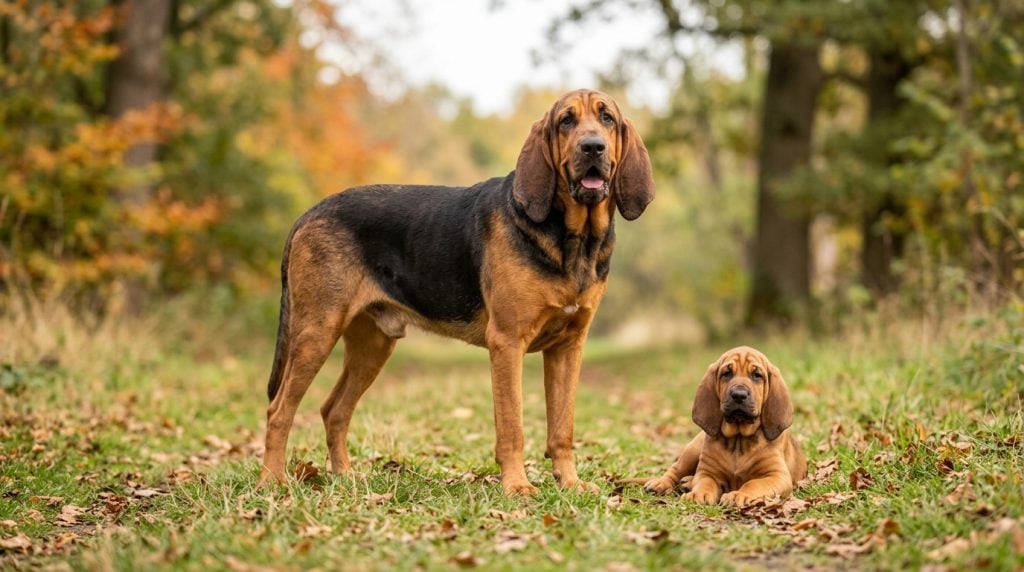
Living with a Bloodhound means sharing your space with a dog that has an extraordinary sense of smell and a gentle, inquisitive nature. They often appear deeply focused when following a scent, yet at home, they can be surprisingly laid-back and affectionate. Their independent streak is balanced by a sensitive side, making them unique companions.
At a glance
Core care
- Size: Large
- Energy: Moderate
- Grooming: Low
- Shedding: Moderate
Support style
- Sensitivity: High
- Training style: Independent
Breed guide
Choose a section to explore. These notes describe common patterns, but individual dogs vary widely.
The Bloodhound’s origins as a scent-tracking hound are deeply ingrained in its behaviour today. Historically, these dogs were bred for their unparalleled ability to follow a scent over long distances, a trait that still defines them. This history of diligent tracking explains why Bloodhounds often seem to have their noses to the ground, following trails with intense concentration. In modern times, this makes them both fascinating and challenging companions, as their natural instincts can lead them on unexpected adventures.
Physically, Bloodhounds are large and imposing, with their distinctive loose skin and long ears that help funnel scents towards their nose. This unique appearance is not just for show; it serves a practical purpose in their scent-trailing work. In everyday life, owners often notice how their Bloodhound’s droopy eyes and jowls give them a perpetually thoughtful expression, adding to their charm. However, their size and strength mean they require space and a secure environment to roam safely.
Temperamentally, Bloodhounds are known for their gentle and affectionate nature. They tend to form strong bonds with their families and can be incredibly patient with children, though their size and exuberance might be overwhelming for very young kids. Their independent streak, a remnant of their working past, means they may not always be eager to please, but they are rarely aggressive. Many owners find their Bloodhound’s sensitivity both endearing and challenging, as these dogs often pick up on the emotions of those around them.
While Bloodhounds have common traits, individual dogs can vary greatly. Some may be more driven by scent than others, and their level of independence can differ. Prospective owners should be prepared for a dog that may not always conform to expectations, requiring patience and understanding to truly appreciate this breed’s unique qualities.
Bloodhounds are known for their gentle and affectionate nature, often forming strong attachments to their human companions. Many owners observe that their Bloodhound enjoys being part of family activities, whether it’s lounging around the house or joining in on outdoor adventures. Despite their independent working background, they often seek out companionship and can be quite sensitive to the moods of those around them.
This sensitivity is a double-edged sword. On one hand, it means Bloodhounds can be incredibly empathetic and in tune with their owner’s emotions. On the other, it can make them more prone to anxiety if they sense stress or tension in their environment. Owners often find that maintaining a calm and consistent household helps their Bloodhound feel secure and content.
The independent streak of a Bloodhound is something many owners come to appreciate, though it can be challenging at times. This breed is known for its strong will, often driven by their incredible sense of smell. When a Bloodhound catches an intriguing scent, their focus can be unwavering, making recall challenging. It’s not that they are ignoring their owner; rather, they are simply following their instincts, which can be a marvel to witness.
Training a Bloodhound requires patience and understanding. While they may not respond as quickly as some other breeds, they are capable of learning and can be quite obedient with the right motivation. Positive reinforcement and consistency are key, as harsh methods can damage their sensitive nature. Each Bloodhound is an individual, and understanding their unique personality is part of the joy of owning this breed.
A typical day for a Bloodhound involves a balance of physical exercise and mental stimulation. While they are not the most high-energy breed, they do require regular activity to keep them healthy and happy. Long walks where they can explore and sniff to their heart’s content are ideal, as this satisfies their natural instincts and provides the mental enrichment they crave.
Bloodhounds benefit from activities that engage their sense of smell, such as scent trails or tracking games. These activities not only tire them out physically but also provide the mental challenge they thrive on. Owners often find that incorporating scent work into their routine helps keep their Bloodhound engaged and fulfilled, reducing the likelihood of boredom-related behaviours.
It’s important to adjust exercise routines as a Bloodhound ages. Puppies and young dogs have bursts of energy and may require more frequent, shorter play sessions. As they mature, they often settle into a more relaxed pace, though they still enjoy their daily walks and sniffing adventures. Older Bloodhounds may need gentler exercise to accommodate any age-related health issues.
While Bloodhounds enjoy their exercise, it’s crucial to avoid over-exertion, especially in hot weather, as their large size can make them prone to overheating. Providing plenty of water and breaks during activities is essential. Understanding your Bloodhound’s individual needs and adjusting their routine accordingly ensures they remain healthy and content throughout their life.
Training a Bloodhound can feel like a unique journey, as their independent nature and incredible sense of smell often lead them to follow their own nose. Many owners find that traditional obedience training requires a bit of creativity and patience. Bloodhounds respond best to positive reinforcement methods, where rewards like treats and praise are used to motivate them.
Impulse control is an area where Bloodhounds may need extra support. Their strong scent drive can make them impulsive, especially when they catch an interesting scent. Teaching commands like ‘leave it’ and ‘come’ can be particularly challenging but are crucial for their safety. Consistent practice in a variety of environments helps reinforce these commands.
Adolescence can be a testing time for Bloodhound owners, as their independent streak may become more pronounced. This is a period where patience and consistency are key. Building a strong relationship based on trust and understanding can help navigate these challenging phases. Engaging them in scent-based activities can also help channel their energy positively.
Ultimately, training a Bloodhound is about understanding their unique motivations and working with them rather than against them. Encouraging their natural talents through scent work and providing clear, consistent guidance helps them thrive. Owners who embrace the Bloodhound’s distinctive personality often find the training process rewarding and fulfilling.
Bloodhounds tend to thrive in environments where they have space to roam and explore. A home with a secure garden is ideal, as it allows them to safely indulge their scent-trailing instincts. They are not typically suited to small apartments, as their size and need for exploration can make them feel confined.
Many Bloodhound owners find that their dog fits well into family life, often showing patience and affection towards children. However, due to their size and exuberance, supervision is recommended around very young children to prevent accidental knocks. They can coexist with other pets, but introductions should be managed carefully, as their strong prey drive might be triggered by smaller animals.
Bloodhounds are known for their vocal nature, often using their distinctive bay to communicate. This can be a consideration for those living in close quarters with neighbours. Providing them with enough mental and physical stimulation can help reduce excessive vocalisation, as boredom is a common trigger.
Ultimately, the best home for a Bloodhound is one where their unique needs are understood and accommodated. Prospective owners should be prepared for a dog that may not conform to typical expectations, but with patience and understanding, Bloodhounds can be incredibly rewarding companions.
Bloodhounds, like all breeds, have specific health considerations that owners should be aware of to ensure their wellbeing. Their large size and deep chest make them prone to bloat, a serious condition that requires immediate veterinary attention. Feeding them smaller, more frequent meals and avoiding vigorous exercise around meal times can help mitigate this risk.
Their distinctive skin folds and long ears require regular care to prevent infections. Owners often find that incorporating routine checks and cleaning into their grooming regimen helps maintain their Bloodhound’s health. Regular veterinary check-ups are also important to monitor for common breed-related issues such as hip dysplasia and eye conditions.
Understanding how health impacts behaviour is crucial. A Bloodhound in discomfort may become withdrawn or exhibit changes in behaviour, so it’s important to observe any shifts and consult a vet if needed. Preventive care, including vaccinations and parasite control, plays a vital role in keeping them healthy.
Ultimately, being proactive about health care and maintaining a good relationship with a veterinarian can help ensure that a Bloodhound enjoys a long, healthy life. Owners who are attentive to their Bloodhound’s needs often find that they can manage health concerns effectively, allowing their dog to thrive.
The Bloodhound’s history is as rich and intriguing as their scent-tracking abilities. Originating in medieval Europe, they were initially bred by monks in Belgium for their exceptional scenting skills. Their primary role was to track game and later, they became invaluable in tracking people, a skill that has persisted through the centuries.
Their name, ‘Bloodhound,’ is thought to derive from their status as a ‘blooded’ or purebred hound, prized for their noble lineage and unmatched tracking abilities. Over time, they became renowned across Europe for their ability to follow a scent trail over vast distances, a trait that has been meticulously preserved through careful breeding.
As they made their way to England, Bloodhounds were further refined and became a favourite among royalty and nobility for hunting. Their keen nose and determination made them indispensable in law enforcement and search and rescue operations, roles they continue to excel in today.
Understanding the Bloodhound’s history helps explain many of their modern traits. Their independent nature, strong scent drive, and gentle disposition are all rooted in their working past. For owners, appreciating this history provides insight into the behaviours and characteristics that make Bloodhounds such unique and fascinating companions.
What shapes individual dogs
- Early social experiences
- Training approach
- Environment & routine
- Genetics & breeding
- Health & pain
- Age / life stage
The Bloodhound’s origins as a scent-tracking hound are deeply ingrained in its behaviour today. Historically, these dogs were bred for their unparalleled ability to follow a scent over long distances, a trait that still defines them. This history of diligent tracking explains why Bloodhounds often seem to have their noses to the ground, following trails with intense concentration. In modern times, this makes them both fascinating and challenging companions, as their natural instincts can lead them on unexpected adventures.
Physically, Bloodhounds are large and imposing, with their distinctive loose skin and long ears that help funnel scents towards their nose. This unique appearance is not just for show; it serves a practical purpose in their scent-trailing work. In everyday life, owners often notice how their Bloodhound’s droopy eyes and jowls give them a perpetually thoughtful expression, adding to their charm. However, their size and strength mean they require space and a secure environment to roam safely.
Temperamentally, Bloodhounds are known for their gentle and affectionate nature. They tend to form strong bonds with their families and can be incredibly patient with children, though their size and exuberance might be overwhelming for very young kids. Their independent streak, a remnant of their working past, means they may not always be eager to please, but they are rarely aggressive. Many owners find their Bloodhound’s sensitivity both endearing and challenging, as these dogs often pick up on the emotions of those around them.
While Bloodhounds have common traits, individual dogs can vary greatly. Some may be more driven by scent than others, and their level of independence can differ. Prospective owners should be prepared for a dog that may not always conform to expectations, requiring patience and understanding to truly appreciate this breed’s unique qualities.
Bloodhounds are known for their gentle and affectionate nature, often forming strong attachments to their human companions. Many owners observe that their Bloodhound enjoys being part of family activities, whether it’s lounging around the house or joining in on outdoor adventures. Despite their independent working background, they often seek out companionship and can be quite sensitive to the moods of those around them.
This sensitivity is a double-edged sword. On one hand, it means Bloodhounds can be incredibly empathetic and in tune with their owner’s emotions. On the other, it can make them more prone to anxiety if they sense stress or tension in their environment. Owners often find that maintaining a calm and consistent household helps their Bloodhound feel secure and content.
The independent streak of a Bloodhound is something many owners come to appreciate, though it can be challenging at times. This breed is known for its strong will, often driven by their incredible sense of smell. When a Bloodhound catches an intriguing scent, their focus can be unwavering, making recall challenging. It’s not that they are ignoring their owner; rather, they are simply following their instincts, which can be a marvel to witness.
Training a Bloodhound requires patience and understanding. While they may not respond as quickly as some other breeds, they are capable of learning and can be quite obedient with the right motivation. Positive reinforcement and consistency are key, as harsh methods can damage their sensitive nature. Each Bloodhound is an individual, and understanding their unique personality is part of the joy of owning this breed.
A typical day for a Bloodhound involves a balance of physical exercise and mental stimulation. While they are not the most high-energy breed, they do require regular activity to keep them healthy and happy. Long walks where they can explore and sniff to their heart’s content are ideal, as this satisfies their natural instincts and provides the mental enrichment they crave.
Bloodhounds benefit from activities that engage their sense of smell, such as scent trails or tracking games. These activities not only tire them out physically but also provide the mental challenge they thrive on. Owners often find that incorporating scent work into their routine helps keep their Bloodhound engaged and fulfilled, reducing the likelihood of boredom-related behaviours.
It’s important to adjust exercise routines as a Bloodhound ages. Puppies and young dogs have bursts of energy and may require more frequent, shorter play sessions. As they mature, they often settle into a more relaxed pace, though they still enjoy their daily walks and sniffing adventures. Older Bloodhounds may need gentler exercise to accommodate any age-related health issues.
While Bloodhounds enjoy their exercise, it’s crucial to avoid over-exertion, especially in hot weather, as their large size can make them prone to overheating. Providing plenty of water and breaks during activities is essential. Understanding your Bloodhound’s individual needs and adjusting their routine accordingly ensures they remain healthy and content throughout their life.
Training a Bloodhound can feel like a unique journey, as their independent nature and incredible sense of smell often lead them to follow their own nose. Many owners find that traditional obedience training requires a bit of creativity and patience. Bloodhounds respond best to positive reinforcement methods, where rewards like treats and praise are used to motivate them.
Impulse control is an area where Bloodhounds may need extra support. Their strong scent drive can make them impulsive, especially when they catch an interesting scent. Teaching commands like ‘leave it’ and ‘come’ can be particularly challenging but are crucial for their safety. Consistent practice in a variety of environments helps reinforce these commands.
Adolescence can be a testing time for Bloodhound owners, as their independent streak may become more pronounced. This is a period where patience and consistency are key. Building a strong relationship based on trust and understanding can help navigate these challenging phases. Engaging them in scent-based activities can also help channel their energy positively.
Ultimately, training a Bloodhound is about understanding their unique motivations and working with them rather than against them. Encouraging their natural talents through scent work and providing clear, consistent guidance helps them thrive. Owners who embrace the Bloodhound’s distinctive personality often find the training process rewarding and fulfilling.
Bloodhounds tend to thrive in environments where they have space to roam and explore. A home with a secure garden is ideal, as it allows them to safely indulge their scent-trailing instincts. They are not typically suited to small apartments, as their size and need for exploration can make them feel confined.
Many Bloodhound owners find that their dog fits well into family life, often showing patience and affection towards children. However, due to their size and exuberance, supervision is recommended around very young children to prevent accidental knocks. They can coexist with other pets, but introductions should be managed carefully, as their strong prey drive might be triggered by smaller animals.
Bloodhounds are known for their vocal nature, often using their distinctive bay to communicate. This can be a consideration for those living in close quarters with neighbours. Providing them with enough mental and physical stimulation can help reduce excessive vocalisation, as boredom is a common trigger.
Ultimately, the best home for a Bloodhound is one where their unique needs are understood and accommodated. Prospective owners should be prepared for a dog that may not conform to typical expectations, but with patience and understanding, Bloodhounds can be incredibly rewarding companions.
Bloodhounds, like all breeds, have specific health considerations that owners should be aware of to ensure their wellbeing. Their large size and deep chest make them prone to bloat, a serious condition that requires immediate veterinary attention. Feeding them smaller, more frequent meals and avoiding vigorous exercise around meal times can help mitigate this risk.
Their distinctive skin folds and long ears require regular care to prevent infections. Owners often find that incorporating routine checks and cleaning into their grooming regimen helps maintain their Bloodhound’s health. Regular veterinary check-ups are also important to monitor for common breed-related issues such as hip dysplasia and eye conditions.
Understanding how health impacts behaviour is crucial. A Bloodhound in discomfort may become withdrawn or exhibit changes in behaviour, so it’s important to observe any shifts and consult a vet if needed. Preventive care, including vaccinations and parasite control, plays a vital role in keeping them healthy.
Ultimately, being proactive about health care and maintaining a good relationship with a veterinarian can help ensure that a Bloodhound enjoys a long, healthy life. Owners who are attentive to their Bloodhound’s needs often find that they can manage health concerns effectively, allowing their dog to thrive.
The Bloodhound’s history is as rich and intriguing as their scent-tracking abilities. Originating in medieval Europe, they were initially bred by monks in Belgium for their exceptional scenting skills. Their primary role was to track game and later, they became invaluable in tracking people, a skill that has persisted through the centuries.
Their name, ‘Bloodhound,’ is thought to derive from their status as a ‘blooded’ or purebred hound, prized for their noble lineage and unmatched tracking abilities. Over time, they became renowned across Europe for their ability to follow a scent trail over vast distances, a trait that has been meticulously preserved through careful breeding.
As they made their way to England, Bloodhounds were further refined and became a favourite among royalty and nobility for hunting. Their keen nose and determination made them indispensable in law enforcement and search and rescue operations, roles they continue to excel in today.
Understanding the Bloodhound’s history helps explain many of their modern traits. Their independent nature, strong scent drive, and gentle disposition are all rooted in their working past. For owners, appreciating this history provides insight into the behaviours and characteristics that make Bloodhounds such unique and fascinating companions.
What shapes individual dogs
- Early social experiences
- Training approach
- Environment & routine
- Genetics & breeding
- Health & pain
- Age / life stage
Want support with this?
This course is ideal for Bloodhound owners seeking to understand their dog's unique temperament and behaviours more deeply.