
Newfoundland
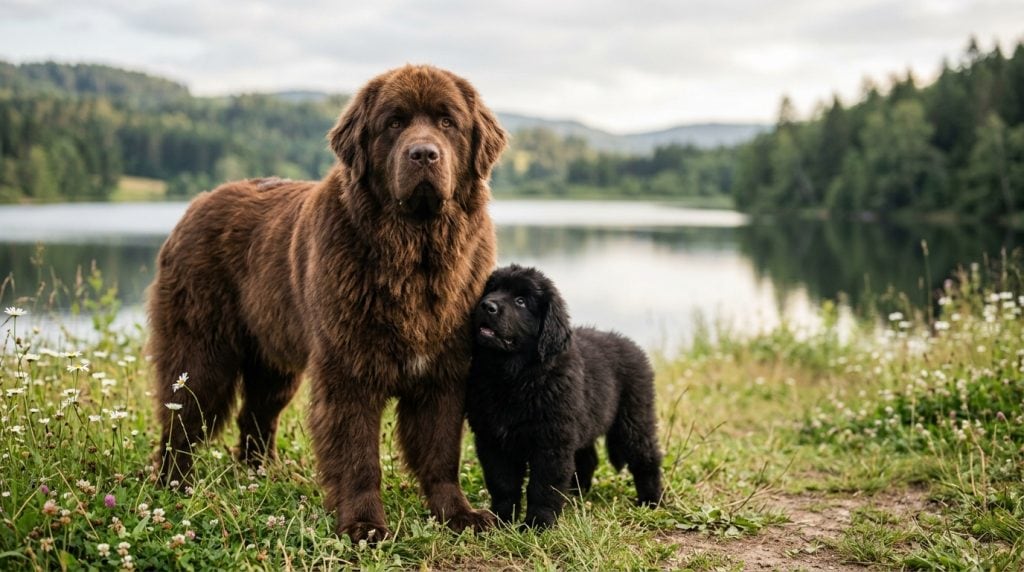
Living with a Newfoundland often feels like having a gentle giant as part of the family. Their calm and affectionate nature makes them a comforting presence in the home. Despite their size, they tend to be surprisingly gentle and are known for their patience and loyalty.
At a glance
Core care
- Size: Giant
- Energy: Moderate
- Grooming: Low
- Shedding: High
Support style
- Sensitivity: Moderate
- Training style: Willing
Breed guide
Choose a section to explore. These notes describe common patterns, but individual dogs vary widely.
Newfoundlands are often recognised for their calm presence and steady temperament. Many owners quickly notice how these large dogs tend to move through family life with patience and quiet attentiveness, often settling nearby while keeping a watchful eye on their surroundings. Their cooperative nature reflects generations of working closely alongside people.
Physically, Newfoundlands are imposing with their large, muscular build and thick double coat. This coat, while beautiful, requires regular maintenance to keep it in good condition. Their size means they need space to move comfortably, and their strength is something owners quickly become aware of. Despite their giant stature, they often move with surprising grace.
Temperamentally, Newfoundlands are known for their calm and patient nature. They tend to form strong bonds with their families, and many owners notice how their dogs prefer to stay close to household activity. While they are generally good-natured, individual Newfoundlands vary in confidence and sociability, with some being more reserved or independent than others.
Living with a Newfoundland requires an understanding of their needs and personality. While they are generally easygoing, they still benefit from regular activity and mental engagement. As with all breeds, individual temperament is shaped by genetics, upbringing, and daily life experiences.
Newfoundlands are often noted for their incredibly social and gentle nature. They tend to form strong bonds with their families, often seeking out companionship and enjoying being part of family activities. This social inclination is likely rooted in their history as working dogs, where cooperation with humans was essential.
Owners frequently observe that Newfoundlands are patient and tolerant, especially with children. Their size might be intimidating at first glance, but many Newfoundlands are known for their gentle and protective instincts. This doesn’t mean they are aggressive protectors; rather, they tend to watch over their families with a calm and steady presence.
Sensitivity in Newfoundlands can vary, but many are attuned to the emotions of their human companions. This sensitivity can make them responsive to training, as they often aim to please. Their trainability is generally high, but it requires a gentle and consistent approach. Harsh methods are unlikely to be effective and can undermine the trust between dog and owner.
Living with a Newfoundland means understanding their social needs and providing them with plenty of interaction. While they are generally good-natured, it’s important to remember that each dog is unique. Some may be more outgoing, while others might be more reserved. The key is to appreciate their individual personalities and provide an environment where they can thrive.
A typical day for a Newfoundland involves moderate exercise balanced with plenty of rest. While they are not as high-energy as some breeds, they do benefit from regular walks and opportunities to stretch their legs. Many enjoy swimming, a nod to their water rescue heritage, which provides excellent low-impact exercise.
Mental enrichment is also important for Newfoundlands. Puzzle toys, training sessions, and interactive games can help keep their minds sharp and prevent boredom. These activities can be particularly beneficial during their adolescence, when they might be more inclined to test boundaries or get into mischief.
As Newfoundlands age, their exercise needs may change. Puppies and young adults often have more energy and require more frequent activity, while older dogs might prefer shorter, more leisurely walks. It’s important to adjust their routine to suit their life stage and physical condition.
Owners should be mindful of the weather, as Newfoundlands can be prone to overheating due to their thick coats. Exercise during cooler parts of the day and ensuring they have access to fresh water can help keep them comfortable. Balancing physical and mental stimulation is key to maintaining a happy and healthy Newfoundland.
Training a Newfoundland often feels like working with a willing and eager participant. Their cooperative nature and desire to please make them generally receptive to training. Positive reinforcement methods, such as treats and praise, tend to work well with this breed.
Consistency is crucial when training Newfoundlands. While they are usually eager to learn, their size and strength mean that establishing good manners early on is important. Teaching basic commands and impulse control can help manage their enthusiasm and ensure they are well-behaved companions.
Adolescence can be a challenging time for Newfoundland owners, as these dogs may test boundaries and exhibit more independent behaviour. Patience and consistency are key during this stage. Continuing training and providing clear boundaries can help guide them through this phase.
Building a strong relationship based on trust and respect is fundamental to successful training. Newfoundlands respond well to a calm and understanding approach, and developing a bond with them can make training a rewarding experience for both dog and owner.
Newfoundlands tend to thrive in homes where they have space to move and relax. Their large size means they need room to stretch out, so a spacious home or garden can be beneficial. Many owners find that their Newfoundlands enjoy spending time outdoors, especially if there’s water nearby.
Families with children often find Newfoundlands to be gentle and patient companions. Their calm demeanor and protective nature can make them good family pets, though supervision is always recommended, especially with younger children. Their size and strength mean that interactions should be monitored to ensure safety for all.
Living with other pets is usually manageable for Newfoundlands, as they tend to be sociable and tolerant. However, early socialisation is important to ensure they are comfortable and well-behaved around other animals. Each dog’s personality will influence how they interact with other pets.
Ultimately, Newfoundlands are adaptable dogs, but they do best in environments where their needs for space, companionship, and exercise are met. Understanding their requirements and providing a suitable lifestyle can help ensure they are happy and well-adjusted members of the family.
Health is a key consideration for Newfoundland owners, as their wellbeing is closely linked to their overall happiness. Regular veterinary check-ups are important to monitor their health and catch any potential issues early. Preventive care, such as vaccinations and parasite control, is essential.
Newfoundlands are prone to certain health issues, including hip dysplasia and heart conditions. Being aware of these potential problems and working with a veterinarian can help manage their health effectively. Maintaining a healthy weight through diet and exercise is also crucial to prevent joint issues.
Owners often notice that their dog’s health can influence their behaviour. A healthy Newfoundland is typically more active and engaged, while health issues might lead to changes in energy levels or temperament. Monitoring their behaviour can provide early clues to any underlying health concerns.
In case of any health worries, seeking veterinary advice promptly is always recommended. Understanding the breed’s health tendencies and being proactive about care can help ensure that Newfoundlands live long, healthy lives. A practical approach to health can make a significant difference in their quality of life.
The Newfoundland’s origins are as fascinating as the breed itself. Developed on the island of Newfoundland in Canada, these dogs were initially bred for their strength and ability to work in harsh conditions. They were used by fishermen for hauling nets and performing water rescues, showcasing their impressive swimming abilities and endurance.
Over time, the Newfoundland’s reputation as a reliable and hardworking dog spread, leading to their use in various roles beyond fishing. Their gentle nature and loyalty made them popular as family companions, and they were often found working alongside humans in different capacities.
The breed’s development was influenced by its working purpose, resulting in the large, strong, and water-loving dogs we know today. Their thick double coat provided protection against cold water, while their webbed feet made them powerful swimmers. These traits are still evident in modern Newfoundlands, who often exhibit a love for water and a calm, steady temperament.
Understanding the Newfoundland’s history helps explain many of their modern traits. Their cooperative nature, strength, and gentle disposition are all rooted in their working heritage. This connection to their past continues to shape their role as beloved companions and working dogs in various settings.
What shapes individual dogs
- Early social experiences
- Training approach
- Environment & routine
- Genetics & breeding
- Health & pain
- Age / life stage
Newfoundlands are often recognised for their calm presence and steady temperament. Many owners quickly notice how these large dogs tend to move through family life with patience and quiet attentiveness, often settling nearby while keeping a watchful eye on their surroundings. Their cooperative nature reflects generations of working closely alongside people.
Physically, Newfoundlands are imposing with their large, muscular build and thick double coat. This coat, while beautiful, requires regular maintenance to keep it in good condition. Their size means they need space to move comfortably, and their strength is something owners quickly become aware of. Despite their giant stature, they often move with surprising grace.
Temperamentally, Newfoundlands are known for their calm and patient nature. They tend to form strong bonds with their families, and many owners notice how their dogs prefer to stay close to household activity. While they are generally good-natured, individual Newfoundlands vary in confidence and sociability, with some being more reserved or independent than others.
Living with a Newfoundland requires an understanding of their needs and personality. While they are generally easygoing, they still benefit from regular activity and mental engagement. As with all breeds, individual temperament is shaped by genetics, upbringing, and daily life experiences.
Newfoundlands are often noted for their incredibly social and gentle nature. They tend to form strong bonds with their families, often seeking out companionship and enjoying being part of family activities. This social inclination is likely rooted in their history as working dogs, where cooperation with humans was essential.
Owners frequently observe that Newfoundlands are patient and tolerant, especially with children. Their size might be intimidating at first glance, but many Newfoundlands are known for their gentle and protective instincts. This doesn’t mean they are aggressive protectors; rather, they tend to watch over their families with a calm and steady presence.
Sensitivity in Newfoundlands can vary, but many are attuned to the emotions of their human companions. This sensitivity can make them responsive to training, as they often aim to please. Their trainability is generally high, but it requires a gentle and consistent approach. Harsh methods are unlikely to be effective and can undermine the trust between dog and owner.
Living with a Newfoundland means understanding their social needs and providing them with plenty of interaction. While they are generally good-natured, it’s important to remember that each dog is unique. Some may be more outgoing, while others might be more reserved. The key is to appreciate their individual personalities and provide an environment where they can thrive.
A typical day for a Newfoundland involves moderate exercise balanced with plenty of rest. While they are not as high-energy as some breeds, they do benefit from regular walks and opportunities to stretch their legs. Many enjoy swimming, a nod to their water rescue heritage, which provides excellent low-impact exercise.
Mental enrichment is also important for Newfoundlands. Puzzle toys, training sessions, and interactive games can help keep their minds sharp and prevent boredom. These activities can be particularly beneficial during their adolescence, when they might be more inclined to test boundaries or get into mischief.
As Newfoundlands age, their exercise needs may change. Puppies and young adults often have more energy and require more frequent activity, while older dogs might prefer shorter, more leisurely walks. It’s important to adjust their routine to suit their life stage and physical condition.
Owners should be mindful of the weather, as Newfoundlands can be prone to overheating due to their thick coats. Exercise during cooler parts of the day and ensuring they have access to fresh water can help keep them comfortable. Balancing physical and mental stimulation is key to maintaining a happy and healthy Newfoundland.
Training a Newfoundland often feels like working with a willing and eager participant. Their cooperative nature and desire to please make them generally receptive to training. Positive reinforcement methods, such as treats and praise, tend to work well with this breed.
Consistency is crucial when training Newfoundlands. While they are usually eager to learn, their size and strength mean that establishing good manners early on is important. Teaching basic commands and impulse control can help manage their enthusiasm and ensure they are well-behaved companions.
Adolescence can be a challenging time for Newfoundland owners, as these dogs may test boundaries and exhibit more independent behaviour. Patience and consistency are key during this stage. Continuing training and providing clear boundaries can help guide them through this phase.
Building a strong relationship based on trust and respect is fundamental to successful training. Newfoundlands respond well to a calm and understanding approach, and developing a bond with them can make training a rewarding experience for both dog and owner.
Newfoundlands tend to thrive in homes where they have space to move and relax. Their large size means they need room to stretch out, so a spacious home or garden can be beneficial. Many owners find that their Newfoundlands enjoy spending time outdoors, especially if there’s water nearby.
Families with children often find Newfoundlands to be gentle and patient companions. Their calm demeanor and protective nature can make them good family pets, though supervision is always recommended, especially with younger children. Their size and strength mean that interactions should be monitored to ensure safety for all.
Living with other pets is usually manageable for Newfoundlands, as they tend to be sociable and tolerant. However, early socialisation is important to ensure they are comfortable and well-behaved around other animals. Each dog’s personality will influence how they interact with other pets.
Ultimately, Newfoundlands are adaptable dogs, but they do best in environments where their needs for space, companionship, and exercise are met. Understanding their requirements and providing a suitable lifestyle can help ensure they are happy and well-adjusted members of the family.
Health is a key consideration for Newfoundland owners, as their wellbeing is closely linked to their overall happiness. Regular veterinary check-ups are important to monitor their health and catch any potential issues early. Preventive care, such as vaccinations and parasite control, is essential.
Newfoundlands are prone to certain health issues, including hip dysplasia and heart conditions. Being aware of these potential problems and working with a veterinarian can help manage their health effectively. Maintaining a healthy weight through diet and exercise is also crucial to prevent joint issues.
Owners often notice that their dog’s health can influence their behaviour. A healthy Newfoundland is typically more active and engaged, while health issues might lead to changes in energy levels or temperament. Monitoring their behaviour can provide early clues to any underlying health concerns.
In case of any health worries, seeking veterinary advice promptly is always recommended. Understanding the breed’s health tendencies and being proactive about care can help ensure that Newfoundlands live long, healthy lives. A practical approach to health can make a significant difference in their quality of life.
The Newfoundland’s origins are as fascinating as the breed itself. Developed on the island of Newfoundland in Canada, these dogs were initially bred for their strength and ability to work in harsh conditions. They were used by fishermen for hauling nets and performing water rescues, showcasing their impressive swimming abilities and endurance.
Over time, the Newfoundland’s reputation as a reliable and hardworking dog spread, leading to their use in various roles beyond fishing. Their gentle nature and loyalty made them popular as family companions, and they were often found working alongside humans in different capacities.
The breed’s development was influenced by its working purpose, resulting in the large, strong, and water-loving dogs we know today. Their thick double coat provided protection against cold water, while their webbed feet made them powerful swimmers. These traits are still evident in modern Newfoundlands, who often exhibit a love for water and a calm, steady temperament.
Understanding the Newfoundland’s history helps explain many of their modern traits. Their cooperative nature, strength, and gentle disposition are all rooted in their working heritage. This connection to their past continues to shape their role as beloved companions and working dogs in various settings.
What shapes individual dogs
- Early social experiences
- Training approach
- Environment & routine
- Genetics & breeding
- Health & pain
- Age / life stage
Want support with this?
This course is particularly useful for Newfoundland owners due to the breed's notable health considerations.