
Brittany
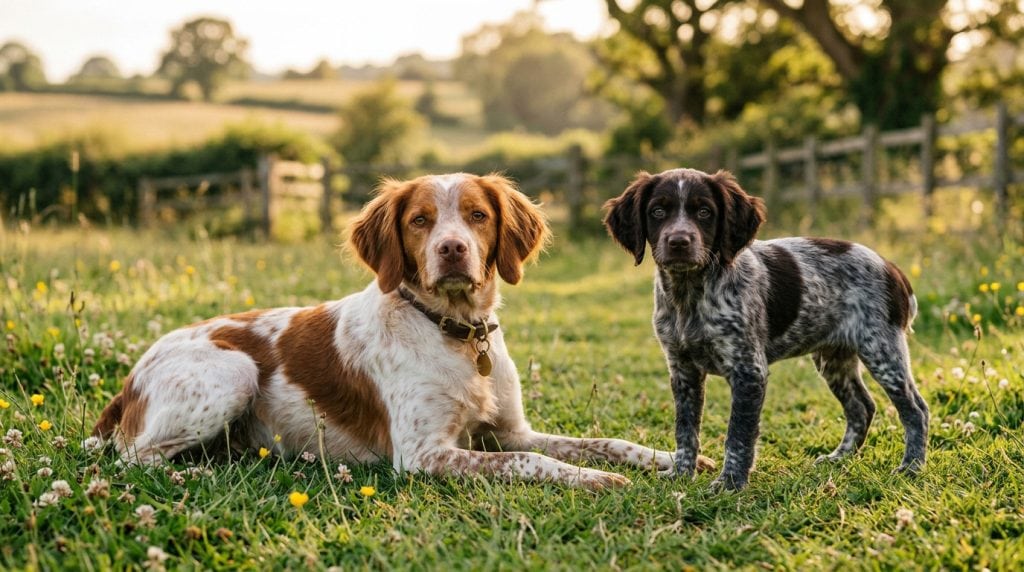
Living with a Brittany is like having a lively companion who thrives on interaction and activity. Their energetic nature often means they're ready for an adventure at a moment's notice, yet they also enjoy being close to their families, forming strong bonds with those they live with. Brittanys are known for their inquisitive and sensitive disposition, making them both engaging and responsive companions.
At a glance
Core care
- Size: Medium
- Energy: High
- Grooming: Low
- Shedding: Moderate
Support style
- Sensitivity: High
- Training style: Willing
Breed guide
Choose a section to explore. These notes describe common patterns, but individual dogs vary widely.
Living with a Brittany often means sharing your home with a dog that is eager to be involved in whatever you’re doing. Many owners notice how these energetic dogs naturally gravitate toward activity, whether that means exploring the outdoors, playing games, or simply accompanying their people throughout the day. Their lively curiosity and responsiveness reflect generations of breeding as close-working hunting companions.
Physically, Brittanys are medium-sized dogs with an athletic build that supports their high energy levels. Their compact and muscular frame allows them to move with agility and speed, traits that are evident in their playful and dynamic nature. Owners often notice how their Brittanys seem to glide effortlessly across the ground, whether chasing a ball or exploring new terrain. Their expressive eyes and alert ears give them a keen, watchful appearance that matches their lively character.
Temperamentally, Brittanys are known for their friendly and outgoing nature. They often form strong attachments to their families, displaying a loyalty that is both endearing and steadfast. While many Brittanys are sociable and enjoy meeting new people and dogs, individual personalities can vary, with some being more reserved or independent. Their high sensitivity means they can be quite responsive to their environment and the emotions of those around them.
It’s important for potential owners to understand that while Brittanys share common traits, each dog is unique. Their behaviour can be influenced by a variety of factors, including genetics, upbringing, and daily experiences. This means that while many Brittanys will exhibit the breed’s characteristic energy and friendliness, others may show different aspects of their personality, making each Brittany a distinct individual.
Brittanys are often described as sociable and eager to please, which can make them delightful companions. Their social nature means they typically enjoy being around people and other dogs, often seeking out interaction and play. This tendency stems from their history as working dogs, where cooperation with humans was key. Owners frequently notice how their Brittanys thrive on companionship, often wanting to be involved in family activities.
The breed’s high sensitivity is another notable characteristic. Brittanys are often very attuned to their surroundings and the emotions of those around them. This can make them quite responsive and adaptable, but it also means they may become anxious in chaotic or stressful environments. Owners often find that providing a stable and supportive home helps their Brittanys feel secure and confident.
Brittanys are known for their willingness to learn, which can make training a rewarding experience. Their eagerness to please and quick intelligence often means they pick up new commands and tricks with relative ease. However, their sensitivity requires a gentle approach, as harsh methods can be counterproductive. Positive reinforcement and consistency are key to fostering their natural trainability.
While many Brittanys are outgoing and friendly, individual dogs can vary in their social preferences. Some may be more reserved or cautious, especially in new situations. It’s important for owners to recognize and respect these differences, allowing each dog to express their personality in their own way. Understanding these nuances helps ensure a harmonious relationship between Brittanys and their families.
A typical day for a Brittany often involves a good deal of activity, as they are a breed that thrives on physical and mental stimulation. Owners usually find that their Brittanys benefit from at least an hour or two of vigorous exercise each day, which can include walks, runs, or play sessions. Their high energy levels mean they are well-suited to active lifestyles, often enjoying activities like hiking or agility training.
In addition to physical exercise, Brittanys also require mental enrichment to keep their intelligent minds engaged. Puzzle toys, scent games, and training sessions can all provide valuable stimulation. Many owners find that incorporating a variety of activities helps keep their Brittanys happy and well-balanced. It’s important to remember that a bored Brittany can become restless or even destructive, so providing adequate enrichment is key.
As Brittanys age, their exercise needs may change. While younger dogs often require more intense physical activity, older Brittanys might appreciate shorter, more frequent outings. Adjusting the level of exercise to suit the dog’s age and health can help maintain their wellbeing throughout their life. Owners often find that even senior Brittanys retain a playful spirit, enjoying gentle games and leisurely walks.
It’s crucial for owners to avoid over-exercising young Brittanys, as their growing bodies need time to develop properly. Gradually increasing the intensity and duration of exercise as they mature can help prevent injury. Understanding these needs ensures that Brittanys remain healthy and content, with their exercise routine tailored to their individual requirements.
Training a Brittany often feels like a partnership, as they are generally eager to learn and responsive to their owners. Their willingness to please makes them receptive to positive reinforcement techniques, where rewards and praise encourage desired behaviours. Many owners find that training sessions are most effective when they are short, fun, and varied, keeping the Brittany engaged and motivated.
Impulse control can sometimes be a challenge for Brittanys, given their energetic and enthusiastic nature. Teaching basic commands like ‘sit’, ‘stay’, and ‘leave it’ can help manage their impulses, especially in stimulating environments. Consistent training from an early age can help Brittanys develop good manners and self-control, making them more enjoyable companions.
Adolescence can bring its own set of challenges, as young Brittanys may test boundaries and exhibit increased independence. Patience and consistency are important during this stage, as is maintaining a strong bond with the dog. Many owners find that continuing training and socialisation throughout adolescence helps their Brittanys mature into well-rounded adults.
The relationship between a Brittany and their owner is central to successful training. Building trust and understanding through regular interaction and positive experiences can enhance the training process. Owners often discover that their Brittanys respond best to a calm and supportive approach, where they feel valued and understood. This nurturing environment helps foster a lifelong connection between the dog and their family.
Brittanys tend to thrive in environments where they have plenty of space to explore and play. Homes with large gardens or access to open spaces are often well-suited to their energetic nature. However, they can also adapt to smaller living spaces if their exercise needs are met through regular outings and activities. Owners often find that a balance of indoor and outdoor time helps keep their Brittanys content.
Families who enjoy an active lifestyle often find that a Brittany fits well into their routine. Their love for outdoor activities makes them excellent companions for hiking, running, or playing fetch. While they are generally good with children, it’s important to supervise interactions, especially with younger kids, to ensure play remains safe and enjoyable for both the dog and the child.
Brittanys can coexist peacefully with other pets, particularly if they are introduced and socialised from a young age. Their friendly and social nature often means they enjoy the company of other dogs, although individual personalities can vary. Some Brittanys may have a higher prey drive, which is worth considering if there are smaller animals in the household.
Understanding the breed’s needs and temperament can help potential owners determine if a Brittany is a good fit for their lifestyle. While they are adaptable, Brittanys require time, attention, and engagement to thrive. Owners who are prepared to meet these needs often find that their Brittany becomes a beloved and integral part of the family, bringing joy and companionship to their daily lives.
Health is a key component of a Brittany’s overall wellbeing, influencing their behaviour and quality of life. Regular veterinary check-ups and preventive care are important to catch any potential health issues early. Common health considerations for Brittanys include hip dysplasia, epilepsy, and ear infections, which owners should be aware of and monitor for signs.
Brittanys’ active lifestyle means they benefit from a balanced diet that supports their energy levels and maintains a healthy weight. Providing high-quality nutrition tailored to their age and activity level can help prevent obesity and related health problems. Owners often find that a well-fed Brittany is a happy and energetic companion, ready for any adventure.
Preventive care, such as vaccinations and parasite control, is essential for keeping Brittanys healthy. Regular grooming and checking for any signs of skin or ear issues can help prevent infections and discomfort. Many owners find that establishing a routine for health care helps ensure their Brittanys remain in good condition, both physically and mentally.
It’s important for owners to be observant of any changes in their Brittany’s behaviour or physical condition, as these can be indicators of underlying health issues. Consulting with a veterinarian when concerns arise can provide peace of mind and ensure that any problems are addressed promptly. With proper care and attention, Brittanys can enjoy a long and healthy life, bringing joy to their families.
The Brittany’s origins can be traced back to the Brittany region of France, where they were developed as versatile hunting dogs. Their history is steeped in the traditions of working alongside hunters to locate and retrieve game, particularly birds. This background has instilled in them a keen sense of smell and a strong drive to explore, traits that are still evident in the breed today.
Originally bred for their agility and endurance, Brittanys were prized for their ability to work tirelessly in the field. Their compact size and athletic build made them well-suited to navigating the varied terrain of their native region. This adaptability and resilience have carried through to modern Brittanys, who often display a similar zest for life and adventure.
The breed’s development was influenced by crossing with other hunting dogs, which helped refine their abilities and temperament. Brittanys became known for their intelligence and cooperative nature, making them popular among hunters and dog enthusiasts alike. Their reputation for being both skilled and amiable companions has contributed to their enduring popularity.
Understanding the Brittany’s history provides insight into their modern traits, such as their high energy levels and eagerness to please. These characteristics are a direct reflection of their working past, where they were valued for their ability to perform and bond with their handlers. Today, Brittanys continue to be cherished for their versatility and spirited nature, making them beloved companions in homes around the world.
What shapes individual dogs
- Early social experiences
- Training approach
- Environment & routine
- Genetics & breeding
- Health & pain
- Age / life stage
Living with a Brittany often means sharing your home with a dog that is eager to be involved in whatever you’re doing. Many owners notice how these energetic dogs naturally gravitate toward activity, whether that means exploring the outdoors, playing games, or simply accompanying their people throughout the day. Their lively curiosity and responsiveness reflect generations of breeding as close-working hunting companions.
Physically, Brittanys are medium-sized dogs with an athletic build that supports their high energy levels. Their compact and muscular frame allows them to move with agility and speed, traits that are evident in their playful and dynamic nature. Owners often notice how their Brittanys seem to glide effortlessly across the ground, whether chasing a ball or exploring new terrain. Their expressive eyes and alert ears give them a keen, watchful appearance that matches their lively character.
Temperamentally, Brittanys are known for their friendly and outgoing nature. They often form strong attachments to their families, displaying a loyalty that is both endearing and steadfast. While many Brittanys are sociable and enjoy meeting new people and dogs, individual personalities can vary, with some being more reserved or independent. Their high sensitivity means they can be quite responsive to their environment and the emotions of those around them.
It’s important for potential owners to understand that while Brittanys share common traits, each dog is unique. Their behaviour can be influenced by a variety of factors, including genetics, upbringing, and daily experiences. This means that while many Brittanys will exhibit the breed’s characteristic energy and friendliness, others may show different aspects of their personality, making each Brittany a distinct individual.
Brittanys are often described as sociable and eager to please, which can make them delightful companions. Their social nature means they typically enjoy being around people and other dogs, often seeking out interaction and play. This tendency stems from their history as working dogs, where cooperation with humans was key. Owners frequently notice how their Brittanys thrive on companionship, often wanting to be involved in family activities.
The breed’s high sensitivity is another notable characteristic. Brittanys are often very attuned to their surroundings and the emotions of those around them. This can make them quite responsive and adaptable, but it also means they may become anxious in chaotic or stressful environments. Owners often find that providing a stable and supportive home helps their Brittanys feel secure and confident.
Brittanys are known for their willingness to learn, which can make training a rewarding experience. Their eagerness to please and quick intelligence often means they pick up new commands and tricks with relative ease. However, their sensitivity requires a gentle approach, as harsh methods can be counterproductive. Positive reinforcement and consistency are key to fostering their natural trainability.
While many Brittanys are outgoing and friendly, individual dogs can vary in their social preferences. Some may be more reserved or cautious, especially in new situations. It’s important for owners to recognize and respect these differences, allowing each dog to express their personality in their own way. Understanding these nuances helps ensure a harmonious relationship between Brittanys and their families.
A typical day for a Brittany often involves a good deal of activity, as they are a breed that thrives on physical and mental stimulation. Owners usually find that their Brittanys benefit from at least an hour or two of vigorous exercise each day, which can include walks, runs, or play sessions. Their high energy levels mean they are well-suited to active lifestyles, often enjoying activities like hiking or agility training.
In addition to physical exercise, Brittanys also require mental enrichment to keep their intelligent minds engaged. Puzzle toys, scent games, and training sessions can all provide valuable stimulation. Many owners find that incorporating a variety of activities helps keep their Brittanys happy and well-balanced. It’s important to remember that a bored Brittany can become restless or even destructive, so providing adequate enrichment is key.
As Brittanys age, their exercise needs may change. While younger dogs often require more intense physical activity, older Brittanys might appreciate shorter, more frequent outings. Adjusting the level of exercise to suit the dog’s age and health can help maintain their wellbeing throughout their life. Owners often find that even senior Brittanys retain a playful spirit, enjoying gentle games and leisurely walks.
It’s crucial for owners to avoid over-exercising young Brittanys, as their growing bodies need time to develop properly. Gradually increasing the intensity and duration of exercise as they mature can help prevent injury. Understanding these needs ensures that Brittanys remain healthy and content, with their exercise routine tailored to their individual requirements.
Training a Brittany often feels like a partnership, as they are generally eager to learn and responsive to their owners. Their willingness to please makes them receptive to positive reinforcement techniques, where rewards and praise encourage desired behaviours. Many owners find that training sessions are most effective when they are short, fun, and varied, keeping the Brittany engaged and motivated.
Impulse control can sometimes be a challenge for Brittanys, given their energetic and enthusiastic nature. Teaching basic commands like ‘sit’, ‘stay’, and ‘leave it’ can help manage their impulses, especially in stimulating environments. Consistent training from an early age can help Brittanys develop good manners and self-control, making them more enjoyable companions.
Adolescence can bring its own set of challenges, as young Brittanys may test boundaries and exhibit increased independence. Patience and consistency are important during this stage, as is maintaining a strong bond with the dog. Many owners find that continuing training and socialisation throughout adolescence helps their Brittanys mature into well-rounded adults.
The relationship between a Brittany and their owner is central to successful training. Building trust and understanding through regular interaction and positive experiences can enhance the training process. Owners often discover that their Brittanys respond best to a calm and supportive approach, where they feel valued and understood. This nurturing environment helps foster a lifelong connection between the dog and their family.
Brittanys tend to thrive in environments where they have plenty of space to explore and play. Homes with large gardens or access to open spaces are often well-suited to their energetic nature. However, they can also adapt to smaller living spaces if their exercise needs are met through regular outings and activities. Owners often find that a balance of indoor and outdoor time helps keep their Brittanys content.
Families who enjoy an active lifestyle often find that a Brittany fits well into their routine. Their love for outdoor activities makes them excellent companions for hiking, running, or playing fetch. While they are generally good with children, it’s important to supervise interactions, especially with younger kids, to ensure play remains safe and enjoyable for both the dog and the child.
Brittanys can coexist peacefully with other pets, particularly if they are introduced and socialised from a young age. Their friendly and social nature often means they enjoy the company of other dogs, although individual personalities can vary. Some Brittanys may have a higher prey drive, which is worth considering if there are smaller animals in the household.
Understanding the breed’s needs and temperament can help potential owners determine if a Brittany is a good fit for their lifestyle. While they are adaptable, Brittanys require time, attention, and engagement to thrive. Owners who are prepared to meet these needs often find that their Brittany becomes a beloved and integral part of the family, bringing joy and companionship to their daily lives.
Health is a key component of a Brittany’s overall wellbeing, influencing their behaviour and quality of life. Regular veterinary check-ups and preventive care are important to catch any potential health issues early. Common health considerations for Brittanys include hip dysplasia, epilepsy, and ear infections, which owners should be aware of and monitor for signs.
Brittanys’ active lifestyle means they benefit from a balanced diet that supports their energy levels and maintains a healthy weight. Providing high-quality nutrition tailored to their age and activity level can help prevent obesity and related health problems. Owners often find that a well-fed Brittany is a happy and energetic companion, ready for any adventure.
Preventive care, such as vaccinations and parasite control, is essential for keeping Brittanys healthy. Regular grooming and checking for any signs of skin or ear issues can help prevent infections and discomfort. Many owners find that establishing a routine for health care helps ensure their Brittanys remain in good condition, both physically and mentally.
It’s important for owners to be observant of any changes in their Brittany’s behaviour or physical condition, as these can be indicators of underlying health issues. Consulting with a veterinarian when concerns arise can provide peace of mind and ensure that any problems are addressed promptly. With proper care and attention, Brittanys can enjoy a long and healthy life, bringing joy to their families.
The Brittany’s origins can be traced back to the Brittany region of France, where they were developed as versatile hunting dogs. Their history is steeped in the traditions of working alongside hunters to locate and retrieve game, particularly birds. This background has instilled in them a keen sense of smell and a strong drive to explore, traits that are still evident in the breed today.
Originally bred for their agility and endurance, Brittanys were prized for their ability to work tirelessly in the field. Their compact size and athletic build made them well-suited to navigating the varied terrain of their native region. This adaptability and resilience have carried through to modern Brittanys, who often display a similar zest for life and adventure.
The breed’s development was influenced by crossing with other hunting dogs, which helped refine their abilities and temperament. Brittanys became known for their intelligence and cooperative nature, making them popular among hunters and dog enthusiasts alike. Their reputation for being both skilled and amiable companions has contributed to their enduring popularity.
Understanding the Brittany’s history provides insight into their modern traits, such as their high energy levels and eagerness to please. These characteristics are a direct reflection of their working past, where they were valued for their ability to perform and bond with their handlers. Today, Brittanys continue to be cherished for their versatility and spirited nature, making them beloved companions in homes around the world.
What shapes individual dogs
- Early social experiences
- Training approach
- Environment & routine
- Genetics & breeding
- Health & pain
- Age / life stage
Want support with this?
This course is relevant for Brittany owners to better understand their dog's complex temperament and sensitive nature.