
Dog First Aid Basics
Most days with a dog follow familiar routines. Walks through the same streets or fields, moments of play, and quiet evenings at home.
But occasionally something unexpected happens.
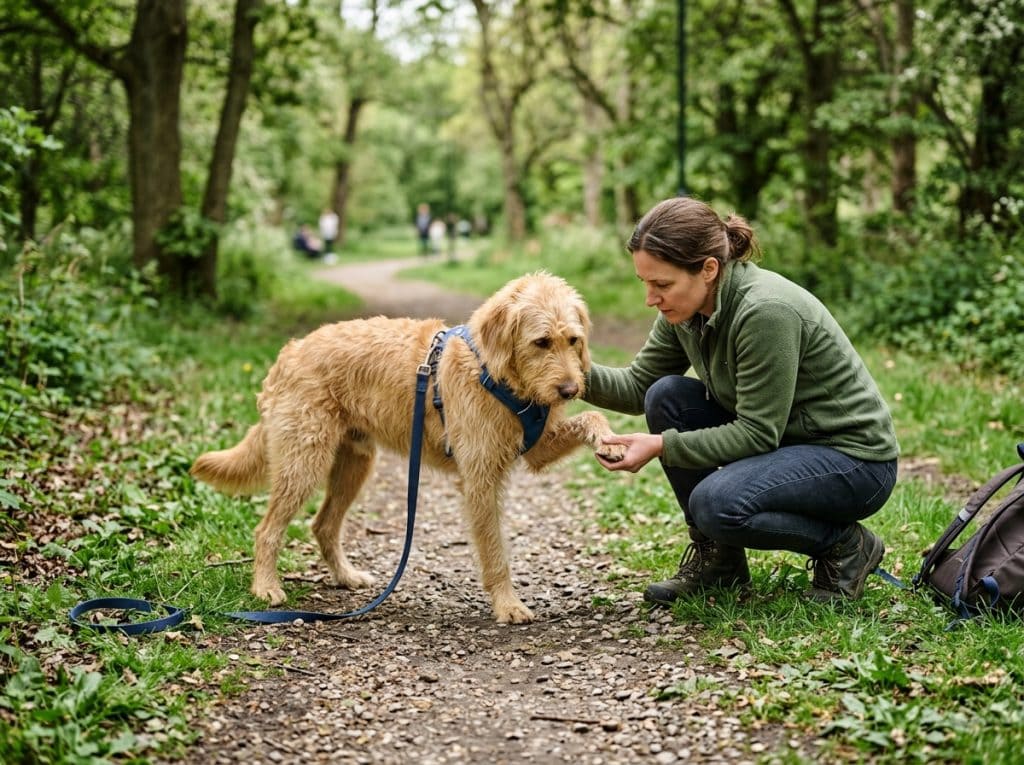
Perhaps your dog suddenly limps during a walk. Maybe they’ve stepped on something sharp or picked up something they shouldn’t have. In those moments, many owners pause for a second, unsure what to do first.
Situations like this are often small, but they can still feel worrying when they happen.
Knowing a little about dog first aid doesn’t mean replacing veterinary care. Instead, it helps owners stay calm, recognise when something might be wrong, and take simple steps that keep their dog safe until proper help is available.
Often it’s that early understanding that makes the biggest difference.

Why Accidents Sometimes Happen
Dogs experience the world very differently from people. They explore through scent, movement, and curiosity, often investigating things we might not notice at all.
A stick on the ground might be something to carry. A rustling sound in the grass might be something to chase. A dropped piece of food might be something to swallow before anyone realises it was there.
Most of the time these curious moments pass without problems. But occasionally a dog may cut a paw, swallow something unusual, overheat in warm weather, or become suddenly unwell.
When something like this happens, the most helpful thing an owner can have is awareness — the ability to recognise that something isn’t right and respond calmly.
Why Understanding First Aid Matters
Dog first aid isn’t about performing complicated medical procedures. In most situations, the role of first aid is simply to protect the dog and prevent things from becoming worse until veterinary care is available.
For example, understanding when a dog may be struggling to breathe, recognising signs of distress, or noticing sudden changes in behaviour can help an owner act quickly.
Sometimes the most helpful response is simply keeping a dog calm, preventing further injury, and seeking professional help.
These early moments can often make a situation much easier for both the dog and the veterinarian who later provides treatment.
Recognising When Something Isn’t Right
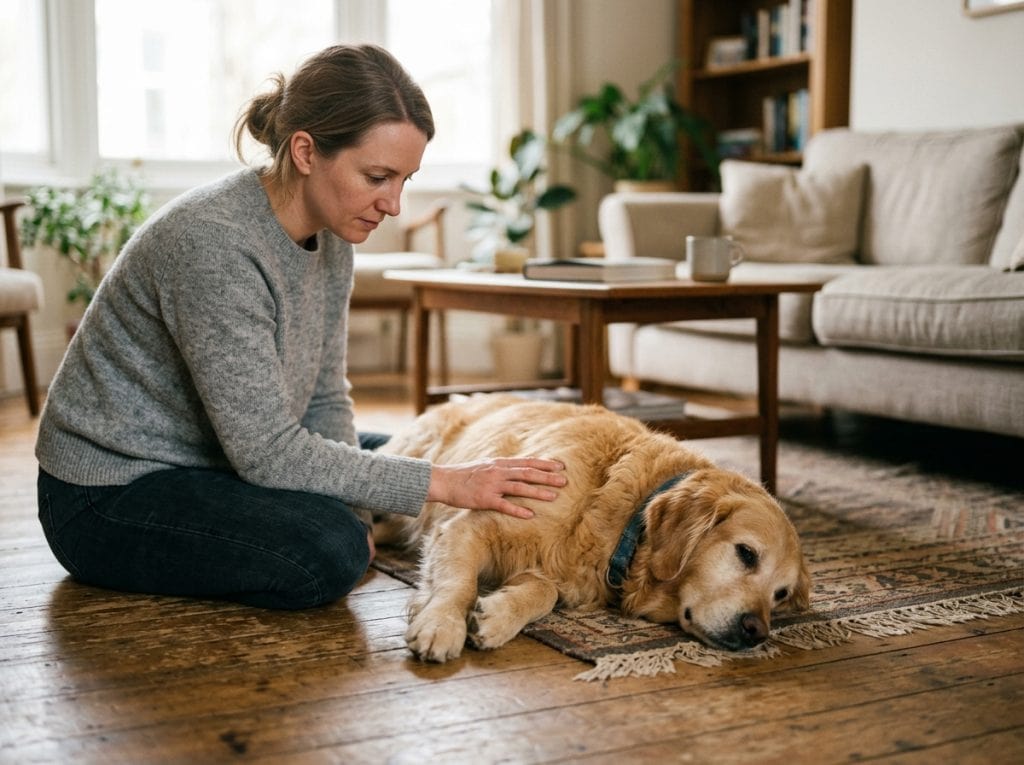
Because dogs cannot explain when they feel unwell, owners often rely on behaviour and physical signs to understand what may be happening.
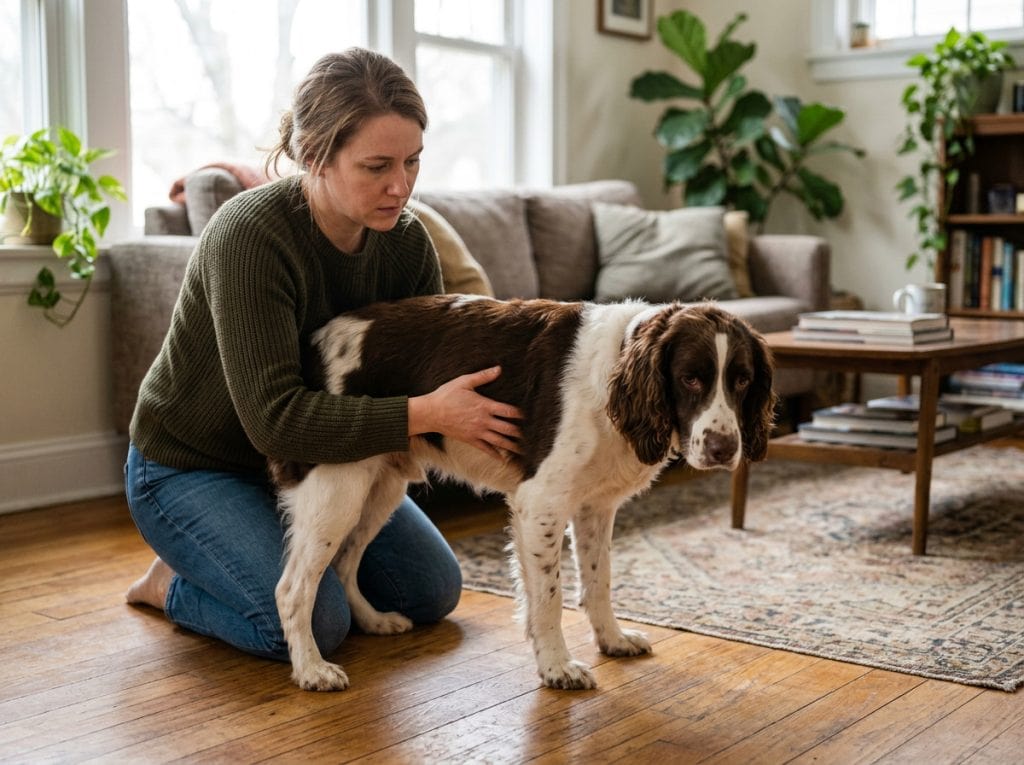
A dog that suddenly becomes very quiet, begins breathing differently, struggles to stand, or reacts strongly to touch may be showing signs that something is wrong.
Other situations may be more obvious, such as visible injuries, vomiting, choking, or sudden weakness.
While not every unusual moment is an emergency, changes in behaviour or physical condition are often a dog’s way of signalling discomfort or distress. Paying attention to these signals helps owners decide when veterinary advice may be needed.
Understanding the Types of Emergencies Dogs May Face
Dogs can encounter many different situations where first aid knowledge becomes useful.
Some emergencies happen suddenly, such as choking or severe injuries. Others develop more gradually, like overheating on a warm day or becoming unwell after eating something harmful.
Even minor injuries can sometimes appear more worrying than they really are, simply because owners aren’t sure what they’re seeing.
Understanding the kinds of situations dogs may face — and how to respond calmly — helps owners feel more prepared when unexpected moments occur.

Learning to Respond with Confidence
One of the most valuable things dog owners can develop is confidence in recognising and responding to unusual situations.
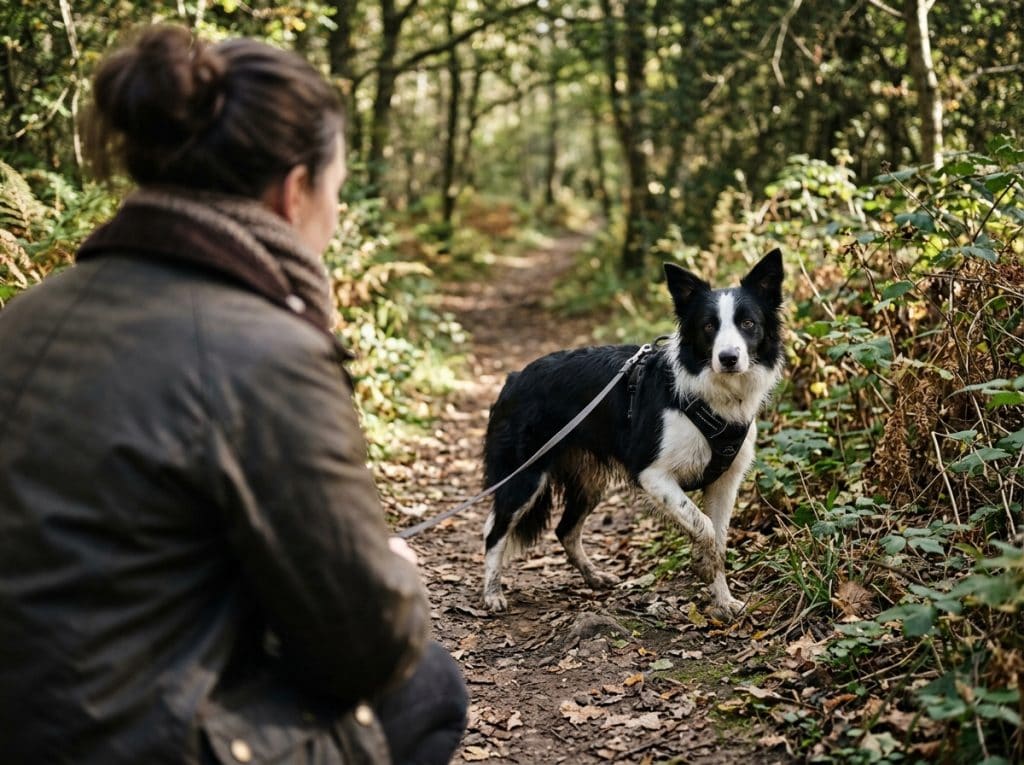
When something unexpected happens, dogs often look to their owners for reassurance. Remaining calm helps keep the dog calmer as well, reducing stress and making it easier to assess what might be happening.
Preparation doesn’t mean expecting emergencies. Instead, it means understanding how to recognise warning signs and knowing when to seek help.
For many owners, learning these skills provides a sense of reassurance. Even simple knowledge can help turn a worrying moment into a situation that feels much more manageable.
Understanding First Aid in More Detail
While awareness is helpful, practical first aid skills involve understanding specific techniques and situations in greater depth.
Knowing how to recognise breathing difficulties, respond to choking, control bleeding, or support an injured dog safely requires careful explanation and guidance.
For owners who want to feel fully prepared for these types of situations, learning these techniques step by step can make a real difference.
Our Dog First Aid course explores these topics in detail, helping owners understand how to recognise emergencies and respond safely when their dog needs help.

Explore More Dog Health & Safety Topics
This topic forms part of our Dog Health & Safety guide, where we explore common risks, prevention, and practical ways owners can help keep their dogs safe and healthy.